Monday morning, you grab a bánh mì (the Vietnamese baguette sandwich). Lunch is an office rice box. Dinner is a bowl of bún, rice noodles, from the stall down the street. A perfectly normal day.
But if someone asked how much protein you ate that day, you would probably scratch your head. Most of us have never counted. And the good news is you do not need to count every gram.
Get a few basics down and you will start seeing your plate differently. This article is the map. Each section points you to a more detailed piece in our Protein series.
In this article
- Protein is the "brick", and your body swaps bricks every day
- How much do you need? One multiplication does it
- Where does protein come from? Every Vietnamese meal has some
- Animal or plant protein: this is not a war
- When to eat it? Spread it out instead of piling it into one meal
- Five common protein myths
- Inside the kOBE kitchen
- Frequently asked questions
Protein is the "brick", and your body swaps bricks every day
Protein is made of long chains built from small pieces called amino acids. There are about 20 kinds. Your body strings them together in thousands of different patterns.
The result is almost everything inside you. Muscle, skin, hair and nails are protein. So are the enzymes that digest your bowl of rice, your antibodies, and the hemoglobin that carries oxygen in your blood.
Here is the surprise: your body does not build once and stop. It keeps taking things apart and putting them back together. An adult breaks down and rebuilds about 250 to 300g of protein every day.
Most of the "old bricks" get reused, like salvaging bricks from an old house to build a new one. But some always go missing along the way. Your daily meals are there to top that up.
Of those roughly 20 amino acids, there are 9 your body cannot make on its own. They are called essential amino acids. You have to get them from food. Keep this detail in mind; it comes back later.
How much do you need? One multiplication does it
According to the recommendations for Vietnamese people from the National Institute of Nutrition (Vietnam), adults need about 0.83g of protein per kilogram of body weight per day. That number also lines up with the WHO and FAO level.
In everyday terms:
| Body weight | Protein per day, about |
|---|---|
| 50kg | 42g |
| 60kg | 50g |
| 70kg | 58g |
| 80kg | 66g |
50g sounds like a lot. In fact it is roughly a palm-sized piece of chicken breast, one egg, one carton of milk and one block of tofu added together.
Some people need more:
- People who train regularly, especially with weights: about 1.2 to 2g per kilogram, according to sports nutrition societies.
- Older adults: the PROT-AGE expert group suggests about 1 to 1.2g per kilogram, because an older body "builds" less efficiently.
- Pregnant and breastfeeding women: the recommendation tables have a separate add-on for them.
Want to work it out properly for yourself? Read How many grams of protein do you need a day.
Where does protein come from? Every Vietnamese meal has some
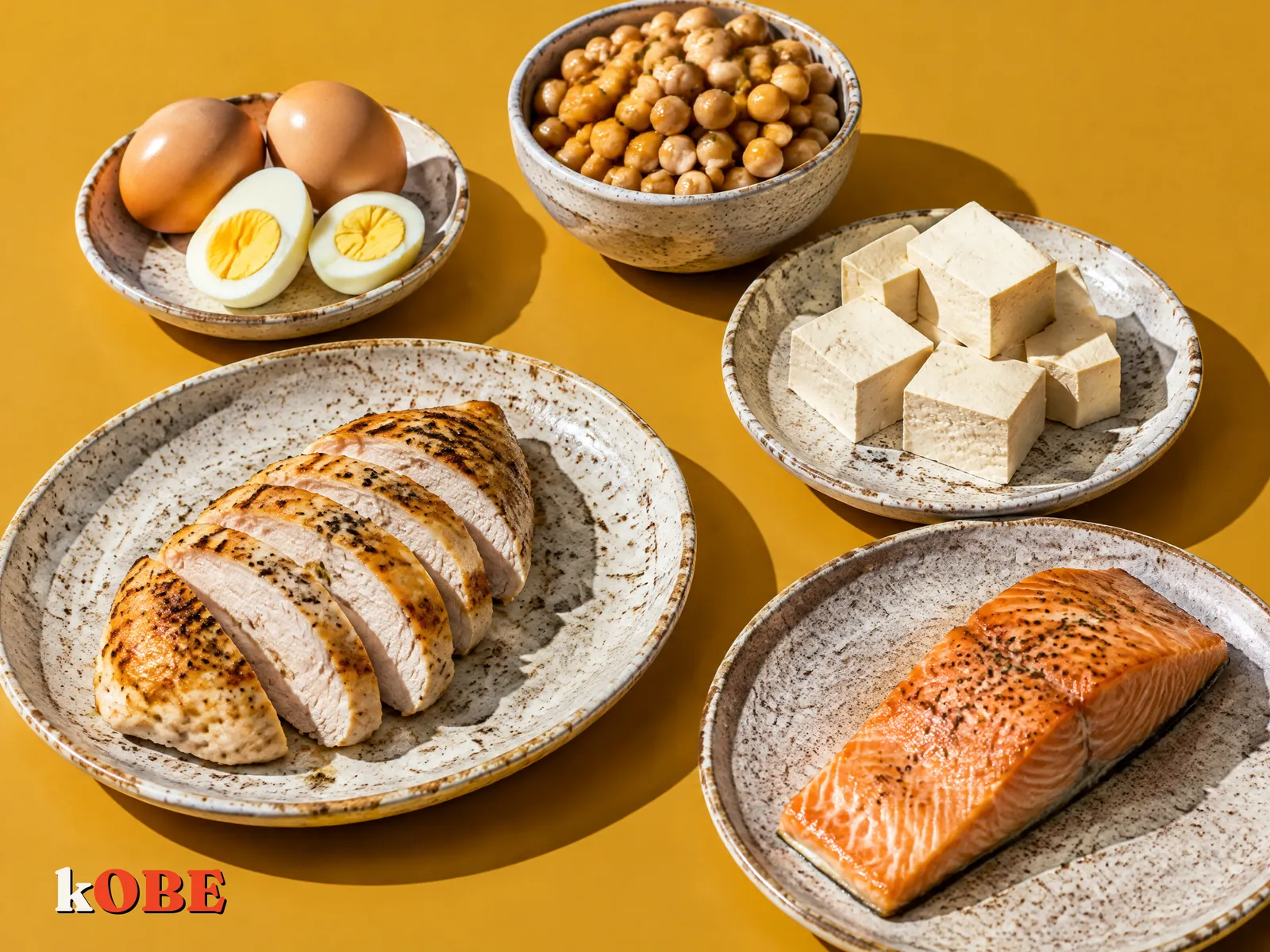
The good news is you need nothing special. Protein is already at the market, at the cơm bình dân (everyday rice stall), and in your fridge.
| Food | Protein, about |
|---|---|
| 1 chicken egg | 6g |
| 100g cooked chicken breast | 31g |
| 100g raw shrimp | 20g |
| 1 block of tofu (about 100g) | 8 to 11g |
| 100g cooked chickpeas | 9g |
| 1 glass of soy milk, 250ml | 7g |
| 1 bowl of white rice | 4g |
Look at the last line: a bowl of rice chips in a little protein too. Three bowls a day already gives you about 12g, nearly a quarter of what you need.
One small note people often get wrong: the protein number changes depending on raw or cooked. Cooked meat loses water, so it becomes more "concentrated" in protein. The article How much protein is in 100g of chicken breast explains it in detail. To compare many foods at once, see the protein table for fish, shrimp, beef, pork and tofu.
And cooking? Heat makes the protein chains unfold, just like egg white turning from clear to opaque white. That makes it easier for your gut to snip the protein apart. But overcook it and the meat fibers tighten and squeeze out all their water, which is why chicken breast ends up bone dry. That is why many kitchens choose sous vide, cooking at a low temperature that is still safe.
Animal or plant protein: this is not a war
Remember the 9 essential amino acids? This is where they come back.
Meat, fish, eggs and dairy have all 9, in proportions fairly close to what you need. These are called complete proteins.
Plant proteins are usually a little short on one or two. Rice is a bit low in lysine. Beans are a bit low in methionine. But the two groups cover for each other beautifully.
Rice with tofu. Xôi đậu xanh (sticky rice with mung beans). Bánh mì with soy milk. Our grandparents were pairing foods this way long before anyone had heard the word lysine.
Even better news: you do not need to eat them in the same meal. Eat a variety across the day and your body puts the pieces together. Soybeans, including edamame, are fairly complete on their own.
Read more: Complete protein and plant protein, What chickpeas bring to the table, and How to get enough protein as a vegetarian.
When to eat it? Spread it out instead of piling it into one meal
Many Vietnamese households eat a quick breakfast, a moderate lunch and a full family tray of food at dinner. That means almost all the protein lands in the evening.
The problem is your body has no "storeroom" for protein the way it has one for fat. Eat a huge amount at once and the extra is not set aside for building muscle tomorrow. It mostly gets burned for energy.
Many studies suggest about 20 to 40g of protein per meal is a reasonable amount for switching the body into muscle-building mode. The exact ceiling is still being debated, and some newer research shows the body can use more than we thought. But one thing is fairly settled: spreading it across three meals beats piling it into one.
The easiest move is to upgrade breakfast. Add an egg to your bánh mì, or a glass of soy milk. See ideas in Which Vietnamese breakfasts are high in protein.
And for people who work out? There is no strict "30-minute window" like the rumor says. How soon after training should you eat protein and What is leucine explain more.
Five common protein myths
- "Lots of protein damages your kidneys." In healthy people, current reviews have not found this. People who already have kidney disease are a different case and should ask their doctor. See Is a high-protein diet bad for your kidneys.
- "You have to drink whey to get enough protein." Not required. Whey is just milk protein in powder form: convenient, not magic. See What is whey protein.
- "Only eat egg whites." The yolk holds almost half the egg's protein, along with plenty of vitamins. See Egg whites or the whole egg.
- "The more protein, the better." Beyond what you need, the extra does not turn into muscle by itself. Muscle also needs the signal that comes from movement.
- "Protein is only for gym people." Everyone needs protein every day. It also helps meals keep you full longer; details in Why high-protein meals keep you full.
Inside the kOBE kitchen
Our Sous Vide Chicken Breast is brined only in sea salt, cooked sous vide at 60°C for 90 minutes, quickly chilled, then frozen. Every 100g of cooked meat has 31g of protein, 165 kcal and 0g of starch.
We also have ready-cooked plant protein. Our Chickpeas have 8.9g of protein per 100g. Our Edamame has 11.9g. Both are cooked and then frozen, so you only need to reheat and eat.
If you like ready meals, the 350g Chicken Kale Namul Poke has 29g of protein, about one full protein serving for a meal. Cooking at home? All 1,480 home recipes on the kOBE site list protein, fat and sugar per 100g, so you can estimate without looking anything up.
Frequently asked questions
Is "đạm" different from protein?
Will eating lots of protein build muscle on its own?
How much protein do children need?
Should I weigh meat raw or cooked to count protein?
Keep reading
Sources
- National Institute of Nutrition (Vietnam) (2016). Recommended Dietary Allowances for Vietnamese People.
- WHO/FAO/UNU (2007). Protein and amino acid requirements in human nutrition. WHO Technical Report Series 935.
- Jäger R. et al. (2017). International Society of Sports Nutrition Position Stand: protein and exercise. Journal of the International Society of Sports Nutrition 14:20.
- Bauer J. et al. (2013). Evidence-based recommendations for optimal dietary protein intake in older people: a position paper from the PROT-AGE Study Group. Journal of the American Medical Directors Association 14(8):542 to 559.
- USDA FoodData Central; National Institute of Nutrition (Vietnam), Vietnamese Food Composition Table.
- Further reading: Understanding Nutrition 16th ed., chapter 6; Campbell B., Sports Nutrition, chapters 5 to 7.