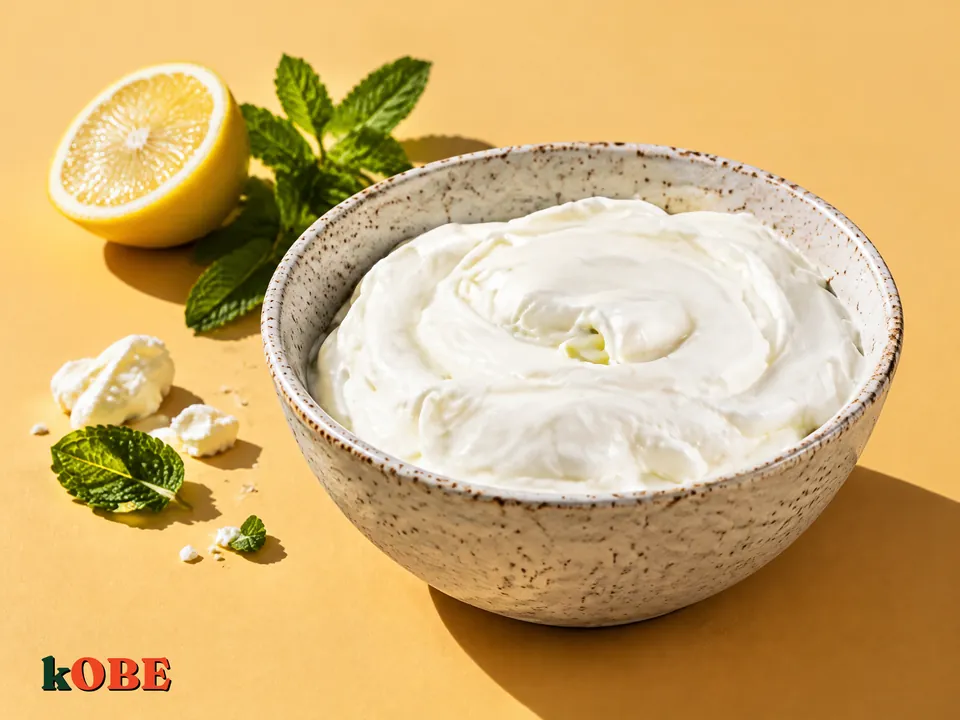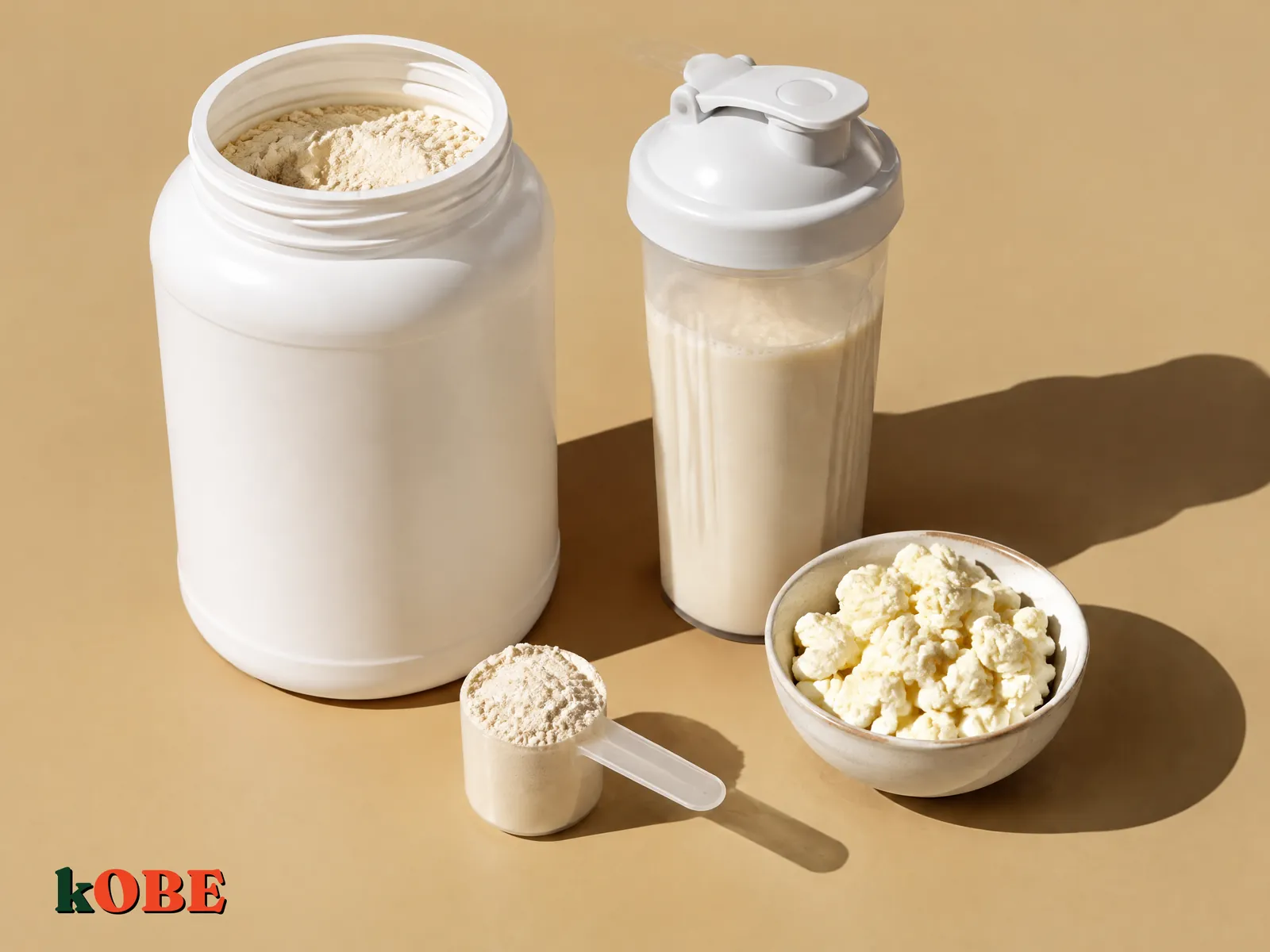
If you've ever made Greek yogurt at home, you probably remember the last step. Pour the yogurt into a cloth strainer and leave it overnight. In the morning, there's a layer of pale yellow liquid at the bottom of the bowl.
Most of us pour it away. But that liquid has a name: whey. And the protein in it is exactly what's sold in those giant tubs of powder at the gym.
So what is whey, and do you need it? We'll give it to you straight, no sales pitch.
In this article
Milk has two protein "teams"
Cow's milk is about 3.3% protein. That protein splits into two main groups:
- Casein, about 80%. When you make cheese or yogurt, casein clumps into a solid mass.
- Whey, about 20%. The protein still dissolved in the yellow liquid that separates off.
In the old days, cheesemakers saw whey as a byproduct and threw it out or fed it to pigs. Then people discovered its protein was very high quality. Filter out some water, milk sugar and fat, dry it, and you get whey protein powder.
A fun fact: Italian ricotta is also made by reheating whey. The name ricotta means "cooked again".
Why do athletes love whey?
Whey has three features:
- A complete protein, with all 9 essential amino acids.
- Rich in leucine, the amino acid that acts like a "switch" for muscle building. See What is leucine.
- Fast digesting. Whey reaches the blood faster than casein, which clumps in the stomach and releases protein slowly.
But remember: those are features of milk protein, not the magic of a tub of powder. A glass of milk or a pot of yogurt has whey too, just less of it and along with water and milk sugar.
Concentrate, isolate, hydrolysate: what's the difference?
These three words often appear on labels. They differ in how much the whey is filtered:
| Type | Protein in the powder, about | Features |
|---|---|---|
| Concentrate (WPC) | 70 to 80% | still has a little lactose (milk sugar) and fat |
| Isolate (WPI) | 90% and up | filtered more, very little lactose |
| Hydrolysate (WPH) | varies | protein already broken into smaller pieces |
People who have trouble digesting lactose may feel better with isolate. For muscle, the differences between types are fairly small if the total protein is the same.
One scoop of powder is usually about 25 to 30g, giving about 20 to 25g of protein. That's close to a small palm-sized piece of chicken breast.
Do you need whey?
The short answer: most people don't.
Remember the number from How many grams of protein do you need a day? A 60kg person needs about 50g. Even for heavy trainers who need double that, normal meals can still cover it if they include enough meat, fish, eggs, dairy and beans.
A large 2018 analysis found that once total protein reaches about 1.6g per kilogram, extra supplemental protein adds almost no more muscle. In other words, whey can't do anything that meals with enough protein can't.
Whey can be a convenient option in a few situations:
- You train hard and find it hard to get enough protein from main meals.
- You're busy and need a quick serving of protein after training.
- You eat small amounts and struggle to get enough protein from solid food.
Convenient, not required. And it can't replace a meal, because it lacks the fiber, vitamins and minerals of fresh food.
If you choose to use it, how do you read the label?
In Vietnam, whey is classed as a supplement, not a medicine. A few things worth checking:
- Protein per scoop compared with the scoop's weight. Low protein means lots of other stuff.
- Sugar and sweeteners. Some products have quite a lot of added sugar.
- Extra ingredients. The shorter the list, the easier it is to know what you're drinking.
- Clear origin and independent testing. Supplements are regulated more loosely than medicines, so third-party testing certification is a plus.
If you have kidney disease, are pregnant or are taking medication, ask your doctor before using it regularly.
Inside the kOBE kitchen
kOBE doesn't make whey. We take the real-food route: getting protein from ready-cooked food.
Our Sous Vide Chicken Breast has 31g of protein per 100g of cooked meat, brined only in sea salt and cooked at 60°C for 90 minutes. One 100g pack has a bit more protein than a typical scoop of whey. Our Edamame has 11.9g of protein per 100g, for those who prefer plant protein.
And if you like something to drink or spoon up? The kOBE site has a recipe for Greek yogurt set in a rice cooker. That's the very dish that opened the whey story at the top of this article.
Frequently asked questions
Does whey cause breakouts or make you feel "heaty"?
When should I drink whey?
Can plant protein powder replace whey?
Keep reading
Sources
- Jäger R. et al. (2017). International Society of Sports Nutrition Position Stand: protein and exercise. Journal of the International Society of Sports Nutrition 14:20.
- Morton R.W. et al. (2018). A systematic review, meta-analysis and meta-regression of the effect of protein supplementation on resistance training-induced gains in muscle mass and strength in healthy adults. British Journal of Sports Medicine 52(6):376 to 384.
- Thomas D.T., Erdman K.A., Burke L.M. (2016). American College of Sports Medicine Joint Position Statement: Nutrition and Athletic Performance. Medicine and Science in Sports and Exercise 48(3):543 to 568.
- USDA FoodData Central: whole cow's milk.
- Further reading: Campbell B., Sports Nutrition, chapter 6; Understanding Nutrition 16th ed., chapter 6.