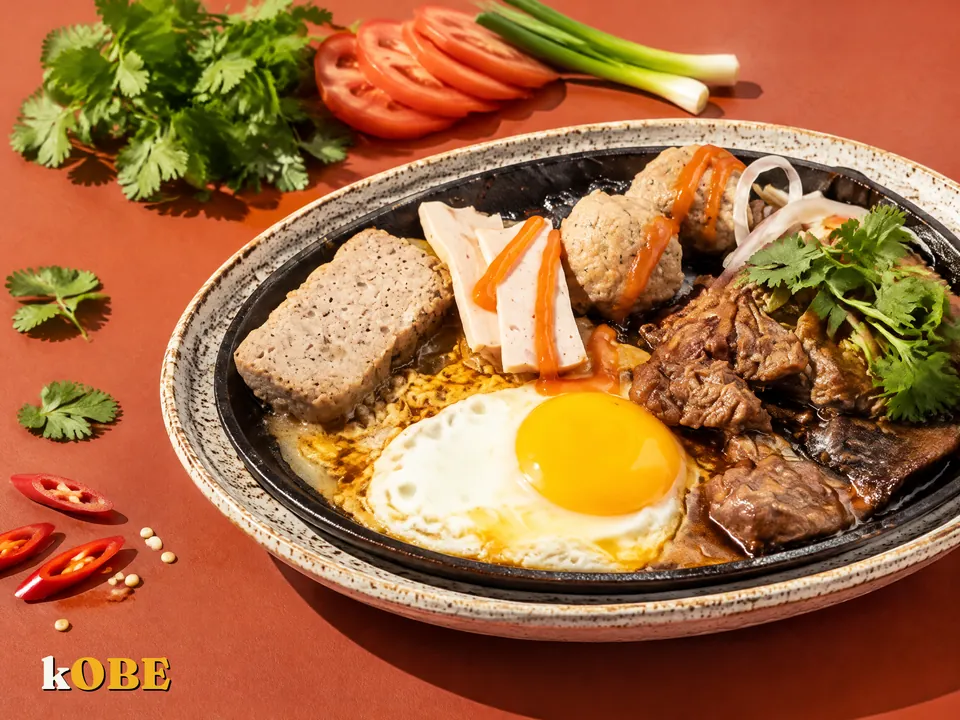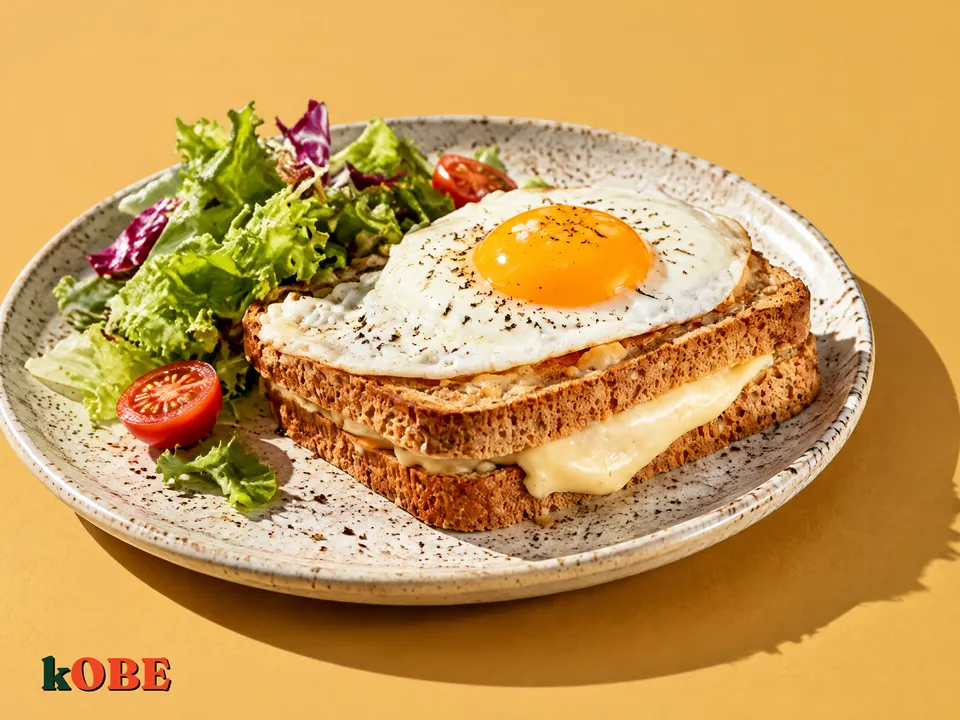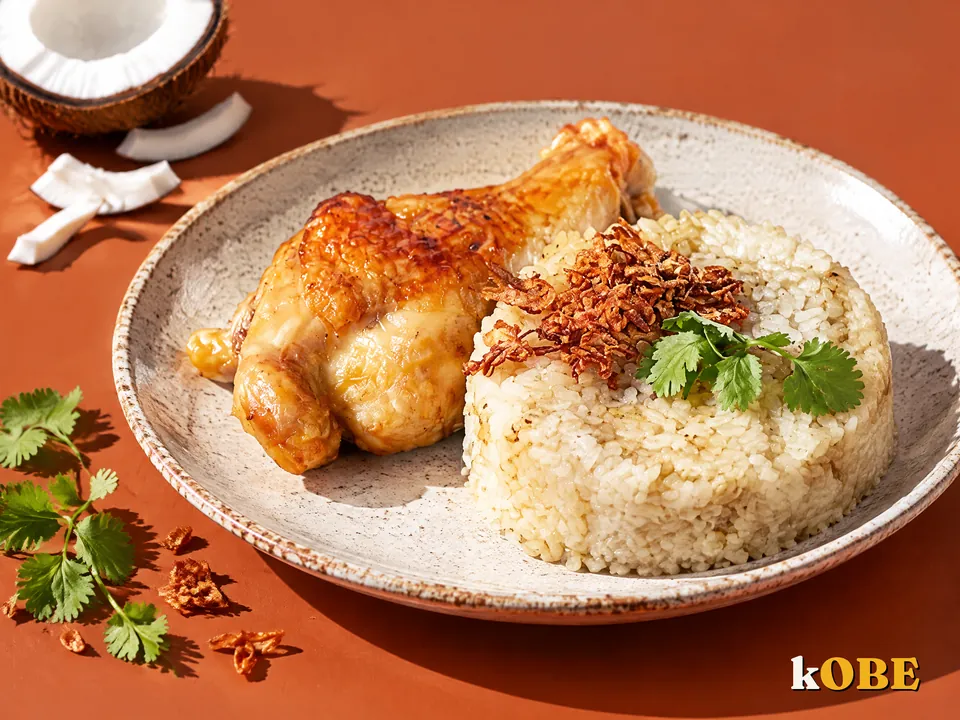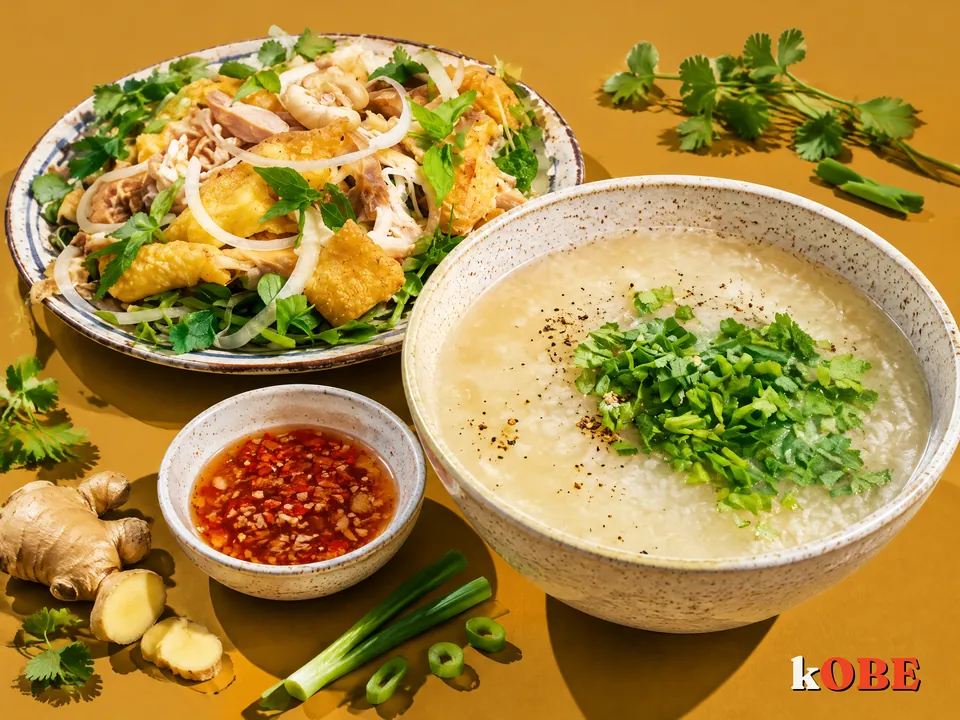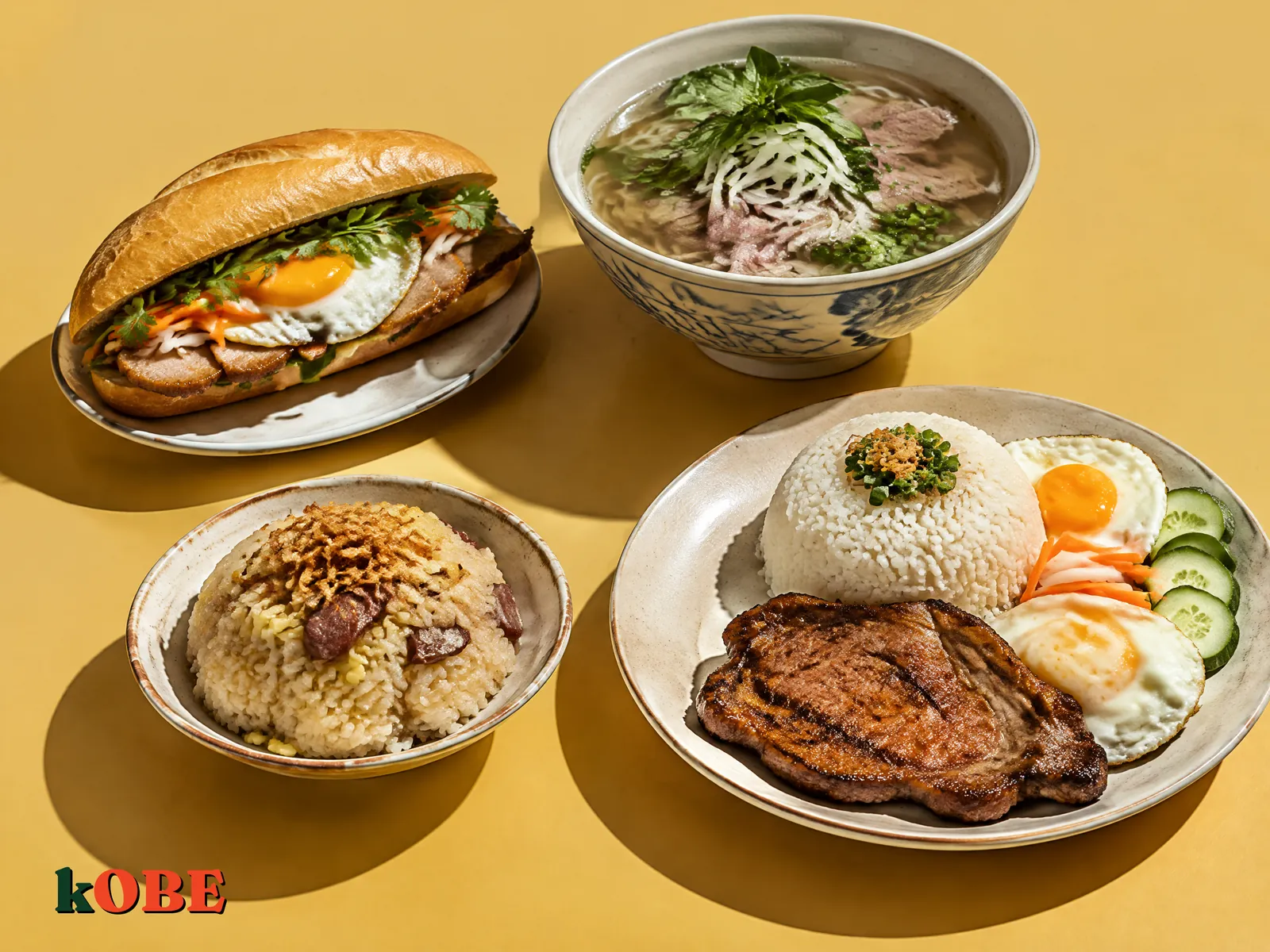
Morning in Saigon is a symphony. The bánh mì cart at the mouth of the alley, the steaming pot of phở, the xôi (sticky rice) seller you've known for years, the cơm tấm (broken rice) stall smelling of grilled pork chops.
Vietnamese breakfasts are among the tastiest and most varied anywhere. But look at them through a protein lens and the dishes differ quite a lot. Some carry a full serving of protein; some are almost pure starch.
Let's try a fun ranking. Not to knock any dish. Just so you know what you're eating, and can easily level it up when you want to.
In this article
- Why is breakfast protein worth noticing?
- Protein estimates for familiar breakfast dishes
- The "high protein" team: cơm tấm, bún, phở
- The "middle" team: bánh mì, xôi mặn, bánh bao
- The "needs a sidekick" team: sweet xôi, bánh cuốn, plain porridge
- At home? Quick high-protein breakfasts
- Inside the kOBE kitchen
- Frequently asked questions
Why is breakfast protein worth noticing?
Many Vietnamese households eat a light breakfast, a moderate lunch and a full family tray at dinner. Protein all piles up in the evening.
Your body has no protein storeroom the way it has one for fat. Spreading protein across meals usually makes more sense than piling it into one. Breakfast is where the shortfall is easiest to miss.
One more everyday reason: a breakfast with protein usually keeps you full longer. Less rummaging for snacks at 10 a.m. See Why high-protein meals keep you full.
Protein estimates for familiar breakfast dishes
These are rough estimates based on typical portions. Every stall is different, especially in how much meat they give you.
| Breakfast dish | Protein, about |
|---|---|
| Cơm tấm sườn, ốp la (broken rice, pork chop, fried egg) | 30 to 40g |
| Bún bò Huế (spicy Huế beef noodle soup) | 20 to 30g |
| Hủ tiếu Nam Vang (Phnom Penh style noodle soup) | 20 to 25g |
| Phở bò, medium bowl | 15 to 25g |
| Bánh mì ốp la with two eggs | 18 to 20g |
| Bánh mì thịt, chả lụa (pork and pork roll) | 12 to 18g |
| Xôi mặn (savory sticky rice with pork roll, Chinese sausage, pork floss) | 10 to 15g |
| Bánh bao (steamed bun) with pork and quail egg | 10 to 12g |
| Plain rice porridge with salted duck egg | 8 to 10g |
| Xôi đậu phộng, xôi đậu xanh (peanut or mung bean sticky rice) | 6 to 10g |
| Bánh cuốn (steamed rice rolls) without pork roll | 5 to 8g |
A 60kg person needs about 50g of protein a day. A breakfast with about 15 to 25g already covers a third to a half.
The "high protein" team: cơm tấm, bún, phở
Cơm tấm sườn tops the chart thanks to the big pork chop plus an egg. But it's also often heavy in calories, scallion oil and sweet fish sauce. Delicious, but no need to have it every morning.
Noodle soups like phở, bún bò and hủ tiếu get their protein from meat, beef balls and shrimp. A little trick: order your bowl "extra meat, fewer noodles" if you want more protein without adding starch. The broth is usually quite salty, so you don't have to drink it all.
The "middle" team: bánh mì, xôi mặn, bánh bao
The bánh mì is the champion of flexibility. The filling is everything.
- Plain bánh mì, or bánh mì dipped in condensed milk: protein mostly from the wheat flour, about 6 to 8g.
- Add one egg: plus about 6g.
- Add two eggs: nearly 20g, a proper protein meal.
Xôi mặn with pork roll, Chinese sausage and pork floss has extra protein. But Chinese sausage and pork floss are often high in salt and sugar. A braised or fried egg is a simpler "upgrade".
The "needs a sidekick" team: sweet xôi, bánh cuốn, plain porridge
These dishes are tasty and easy on the stomach, but mostly starch. Don't drop them. Just add a protein-rich "sidekick":
- A glass of soy milk, 250ml: adds about 7g.
- A carton of fresh milk, 180ml: adds about 5 to 6g.
- A boiled egg: adds about 6g.
- A pot of yogurt: adds about 4 to 5g, more if it's Greek yogurt.
- Bánh cuốn with extra chả lụa: adds a few grams, depending on how much.
A parcel of mung bean xôi at 8g plus a glass of soy milk gets you close to 15g. No need to give up your favorite dish.
At home? Quick high-protein breakfasts
No time to head out? A few 5-minute ideas:
- Bánh mì with a fried egg and a few slices of chicken breast.
- Two eggs boiled the night before, plus a glass of soy milk.
- Greek yogurt with fruit and a spoonful of seeds.
- Oatmeal cooked with milk, plus an egg.
A tip for busy people: boil 5 to 6 eggs at the start of the week and keep them in the fridge. Every morning you'll have a grab-and-go serving of protein.
Inside the kOBE kitchen
If you love bánh mì, our Sous Vide Chicken Breast makes a handy morning filling. The night before, move a pack from the freezer to the fridge. In the morning, warm it in the microwave on low, slice it and tuck it into your bánh mì with a fried egg.
Every 100g of cooked meat has 31g of protein, 165 kcal and 0g of starch. Just 50g of chicken breast adds about 15 to 16g of protein to your bánh mì.
Like a sauce? The 80% version of kOBE Signature Lean Mayo is an egg-based creamy sauce with 118 kcal per 100g, much lighter than regular mayo, which is about 75% oil. A thin spread on your bánh mì is enough to carry the flavor.
Frequently asked questions
Is it okay to skip breakfast?
Does morning milk tea have protein?
Which has more protein, a pork roll bánh mì or an egg bánh mì?
Keep reading
Sources
- National Institute of Nutrition (Vietnam). Vietnamese Food Composition Table (glutinous rice, bread, eggs, meat, tofu, soy milk).
- National Institute of Nutrition (Vietnam) (2016). Recommended Dietary Allowances for Vietnamese People.
- USDA FoodData Central: chicken egg, cow's milk, yogurt, roasted chicken breast.
- Dhillon J. et al. (2016). The Effects of Increased Protein Intake on Fullness: A Meta-Analysis and Its Limitations. Journal of the Academy of Nutrition and Dietetics 116(6):968 to 983.
- Further reading: Understanding Nutrition 16th ed., chapter 6; Campbell B., Sports Nutrition, chapter 5.