Ask ten people "how much protein do you need a day" and you will get ten answers. One says 50g. Another says it has to be 150g. A third has never heard the question.
The truth is much simpler. All you need is your body weight and one multiplication. Ten seconds and you are done.
In this article
The 10-second sum
According to the National Institute of Nutrition (Vietnam), healthy adults need about 0.83g of protein per kilogram of body weight per day. WHO and FAO use almost the same figure.
How to work it out: multiply your weight by 0.83. Can't be bothered with decimals? Multiply by 0.8 and add a little.
| Body weight | Protein per day, about | Picture it as |
|---|---|---|
| 45kg | 37g | 6 eggs |
| 55kg | 46g | 1 chicken breast and 3 eggs |
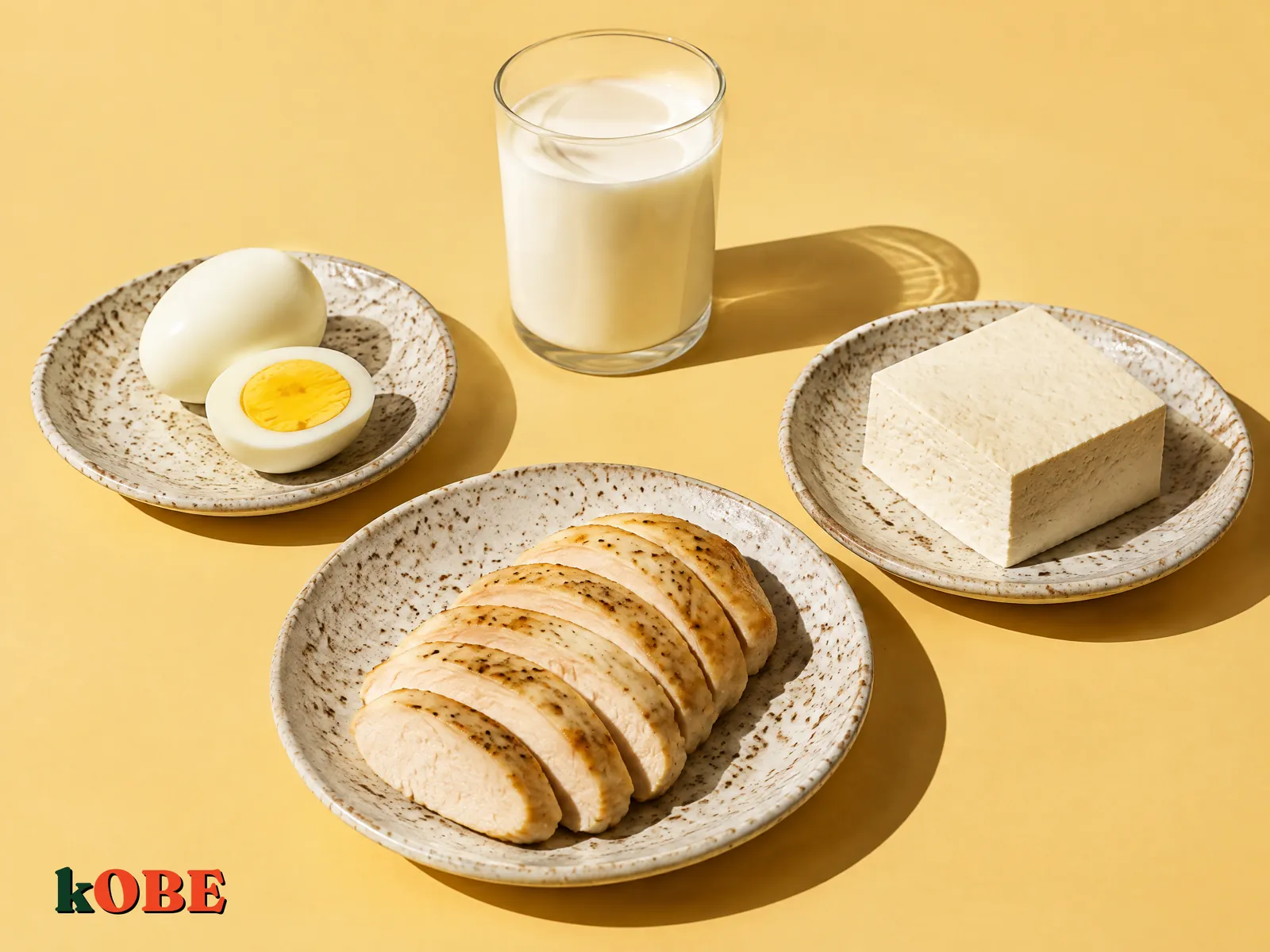
| 65kg | 54g | 1 chicken breast, 2 eggs, 1 block of tofu |
| 75kg | 62g | add 1 glass of soy milk |
The "picture it as" column is only there to show you the size. In real life, protein comes from many foods at once, and even your bowl of rice adds a few grams.
This number is a floor, not a ceiling
This is where many people get it wrong. The 0.83g figure is enough for nearly all healthy, fairly inactive adults. It is set to keep you from falling short, not to optimize everything.
According to the US Institute of Medicine, protein can make up anywhere from 10 to 35% of your daily energy and still sit in a reasonable range. That is quite a wide band.
In other words: 50g is enough. 70g or 80g is fine too for a healthy person. There is no single "perfect number" for everyone.
Who needs more?
People who train regularly. The International Society of Sports Nutrition (ISSN) suggests about 1.4 to 2g per kilogram for people who train hard. For a 60kg person, that is 85 to 120g. A large 2018 analysis found that beyond about 1.6g per kilogram, the extra benefit for muscle pretty much levels off.
Older adults. An older body responds less strongly to muscle building. The PROT-AGE expert group suggests 1 to 1.2g per kilogram for healthy people over 65. Grandparents often eat small portions, so every bite should carry some protein.
Pregnant and breastfeeding women. They need an add-on that depends on the stage. The exact amounts are in the National Institute of Nutrition recommendation tables, and an obstetrician will give more detailed guidance.
People with a chronic condition, especially kidney disease. Their needs can be quite different. Ask your doctor, and don't calculate from a general table.
Which body weight should you use?
Good question. For most people, your current weight works fine.
One small note. Protein mainly serves your muscle and "lean" tissue, not body fat. So for someone whose weight is much higher than their height would suggest, experts often calculate from a reasonable weight instead of the current one. If you are unsure, a nutrition professional can help you pick the right number.
How do you spread 50g across a day?
Your body has no protein storeroom. So spreading it out usually makes more sense than piling it into one big dinner.
A Vietnamese-style day that reaches about 55g:
| Meal | Food | Protein, about |
|---|---|---|
| Breakfast | Bánh mì ốp la (baguette with a fried egg), 1 egg, 1 glass of soy milk | 6 + 4 + 7 = 17g |
| Lunch | 1 bowl of rice, cá kho (braised fish) the size of your palm, vegetable soup | 4 + 18 = 22g |
| Dinner | 1 bowl of rice, tofu in tomato sauce, fried egg | 4 + 9 + 6 = 19g |
Nothing exotic here. Each meal just has a clear "protein star".
A shortcut that needs no scale: a portion of protein the size of your palm (not counting fingers) usually carries about 20 to 30g of protein if it is meat or fish. One palm per meal and you have already covered a lot of ground.
Signs you are not eating enough?
Serious protein deficiency is very rare in people who eat normally. It shows up more often in people on very strict diets, older adults who eat very little, or vegetarians whose meals are mostly noodles, bread and vegetables.
If you notice that every meal is all starch and vegetables, with little meat, fish, eggs or beans, that is the moment to add a "protein star" to your plate. Don't self-diagnose from your hair or nails; those signs have many different causes.
Inside the kOBE kitchen
An easy way to know how much protein you are eating is to use food with the numbers already on it. Our Sous Vide Chicken Breast has 31g of protein per 100g of cooked meat. A 100g pack is 31g, already more than half a day's needs for a 55kg person.
Want more plant protein? Our Edamame has 11.9g of protein per 100g, and our Chickpeas have 8.9g. A handful tossed into rice or salad adds a few grams without any fuss.
If you cook at home, all 1,480 home recipes on the kOBE site list protein per 100g. One look tells you which dish can be the "protein star" of your meal.
Frequently asked questions
Is it a problem to eat more than you need?
Should I count the protein in rice and vegetables?
Do I need extra protein for light exercise like walking?
Keep reading
Sources
- National Institute of Nutrition (Vietnam) (2016). Recommended Dietary Allowances for Vietnamese People.
- Institute of Medicine (2005). Dietary Reference Intakes for Energy, Carbohydrate, Fiber, Fat, Fatty Acids, Cholesterol, Protein, and Amino Acids. National Academies Press.
- Jäger R. et al. (2017). International Society of Sports Nutrition Position Stand: protein and exercise. Journal of the International Society of Sports Nutrition 14:20.
- Morton R.W. et al. (2018). A systematic review, meta-analysis and meta-regression of the effect of protein supplementation on resistance training-induced gains in muscle mass and strength in healthy adults. British Journal of Sports Medicine 52(6):376 to 384.
- Bauer J. et al. (2013). PROT-AGE Study Group. Journal of the American Medical Directors Association 14(8):542 to 559.
- Further reading: Understanding Nutrition 16th ed., chapter 6; Campbell B., Sports Nutrition, chapter 5.