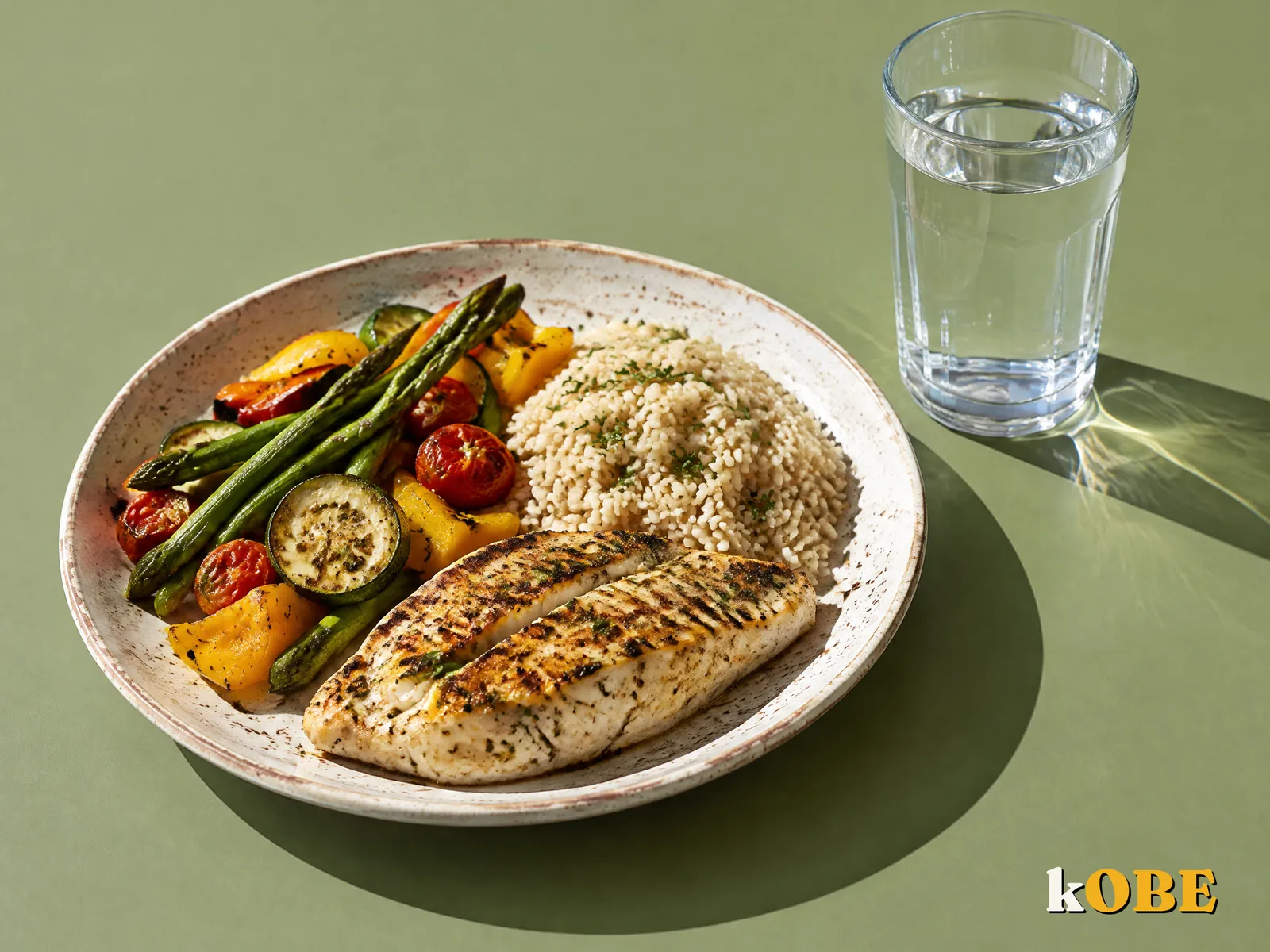
"All that meat is going to wreck your kidneys, sweetheart."
You've probably heard this at least once, from your mom, an aunt, or someone at the gym. It's said with real concern.
So what does science say? We'll sum up what's fairly clear, what's still being debated, and be clear about when you should ask a doctor instead of reading an article.
A note first: this article is about healthy adults. If you have kidney disease or a chronic condition, follow the advice of the doctor who's looking after you.
In this article
- What do kidneys have to do with protein?
- Kidneys "speed up" after a high-protein meal: is that a bad sign?
- What do reviews say about healthy people?
- For people with kidney disease, it's a completely different story
- How can healthy people eat protein comfortably?
- Inside the kOBE kitchen
- Frequently asked questions
What do kidneys have to do with protein?
Every day, your body breaks down and rebuilds hundreds of grams of protein. When amino acids are broken down to be burned for energy, the nitrogen-containing part has to be removed.
Your liver turns that nitrogen into urea. Then your kidneys filter the urea out of the blood and flush it out in urine.
Eat more protein and there's more urea. Your kidneys have to filter more. That's the root of the worry about "overworking the kidneys".
Kidneys "speed up" after a high-protein meal: is that a bad sign?
After a high-protein meal, your kidneys' filtering rate goes up for a while. This is called glomerular hyperfiltration.
It sounds alarming, but picture it this way. When you climb stairs, your heart beats faster. That doesn't mean your heart is failing. It means your heart is adapting to what you're doing.
In healthy people, the kidneys can also speed up when needed, then return to normal. The real question is: does doing this for many years cause harm?
What do reviews say about healthy people?
In 2018, Devries's group pooled trials comparing high-protein diets with lower or normal-protein diets. They found no meaningful difference in kidney function in healthy adults.
The European Food Safety Authority (EFSA) made a similar assessment when setting its protein recommendations. For healthy adults, protein intake up to about double the recommended level is considered safe. That's about 1.7g per kilogram per day, more than 100g for a 60kg person.
We need to be clear about the limits: most studies lasted months to a few years, not a lifetime. For very high protein intakes over very long periods, data is still limited. So "no harm found yet" doesn't mean "the more the better".
For people with kidney disease, it's a completely different story
This is the most important point in the article.
When the kidneys are already weakened, filtering extra urea can be a burden. Professional guidelines for chronic kidney disease usually adjust protein intake for each person. How much, and what kind, depends on the stage of the disease and many other factors.
So if you:
- have kidney disease, or have been told by a doctor that your kidney function is reduced,
- have a chronic condition such as high blood pressure or diabetes,
- have had kidney stones,
- or have family members with kidney disease,
ask your doctor before significantly increasing your protein, or before using protein powder supplements.
Worth knowing: early-stage kidney disease often has no obvious symptoms. If you're in a risk group, regular check-ups and blood and urine tests as your doctor advises are how you find out how your kidneys are doing.
How can healthy people eat protein comfortably?
Nothing extreme. A few simple habits:
- Eat enough; no need to go "huge". Most people only need about 0.83g per kilogram. Hard trainers usually do fine on 1.2 to 2g. See How many grams of protein do you need a day.
- Drink enough water. Your kidneys need water to flush out urea. In hot Saigon, where you sweat a lot, you need even more.
- Vary your protein sources. Rotate fish, chicken, eggs, tofu and beans, not just red meat.
- Watch the salt. Many Vietnamese protein dishes are very salty: dried fish and meat, chà bông (pork floss), thịt kho (braised pork), nước chấm (dipping sauce). Too much salt deserves just as much attention as the amount of protein.
- Spread it across meals, instead of piling it into one huge meal.
Inside the kOBE kitchen
We don't sell kidney health solutions. What we can do is help you know exactly what you're eating.
Every one of the 1,480 home recipes on the kOBE site lists calories, protein, fat and sugar per 100g. One look tells you roughly how much protein a portion has, so you can balance things yourself, or take those numbers to your doctor or a nutrition professional.
For example, our Sous Vide Chicken Breast lists 31g of protein per 100g of cooked meat. A 100g pack is 31g, no guessing required.
Frequently asked questions
Is 2g of protein per kilogram okay for gym-goers?
Is plant protein "gentler" on the kidneys than animal protein?
Should I worry about foamy urine after eating lots of protein?
Keep reading
Sources
- Devries M.C. et al. (2018). Changes in Kidney Function Do Not Differ between Healthy Adults Consuming Higher- Compared with Lower- or Normal-Protein Diets: A Systematic Review and Meta-Analysis. Journal of Nutrition 148(11):1760 to 1775.
- EFSA NDA Panel (2012). Scientific Opinion on Dietary Reference Values for protein. EFSA Journal 10(2):2557.
- KDIGO. Clinical Practice Guideline for the Evaluation and Management of Chronic Kidney Disease.
- National Institute of Nutrition (Vietnam) (2016). Recommended Dietary Allowances for Vietnamese People.
- Further reading: Understanding Nutrition 16th ed., chapter 6; Diet Cults, chapter 13.