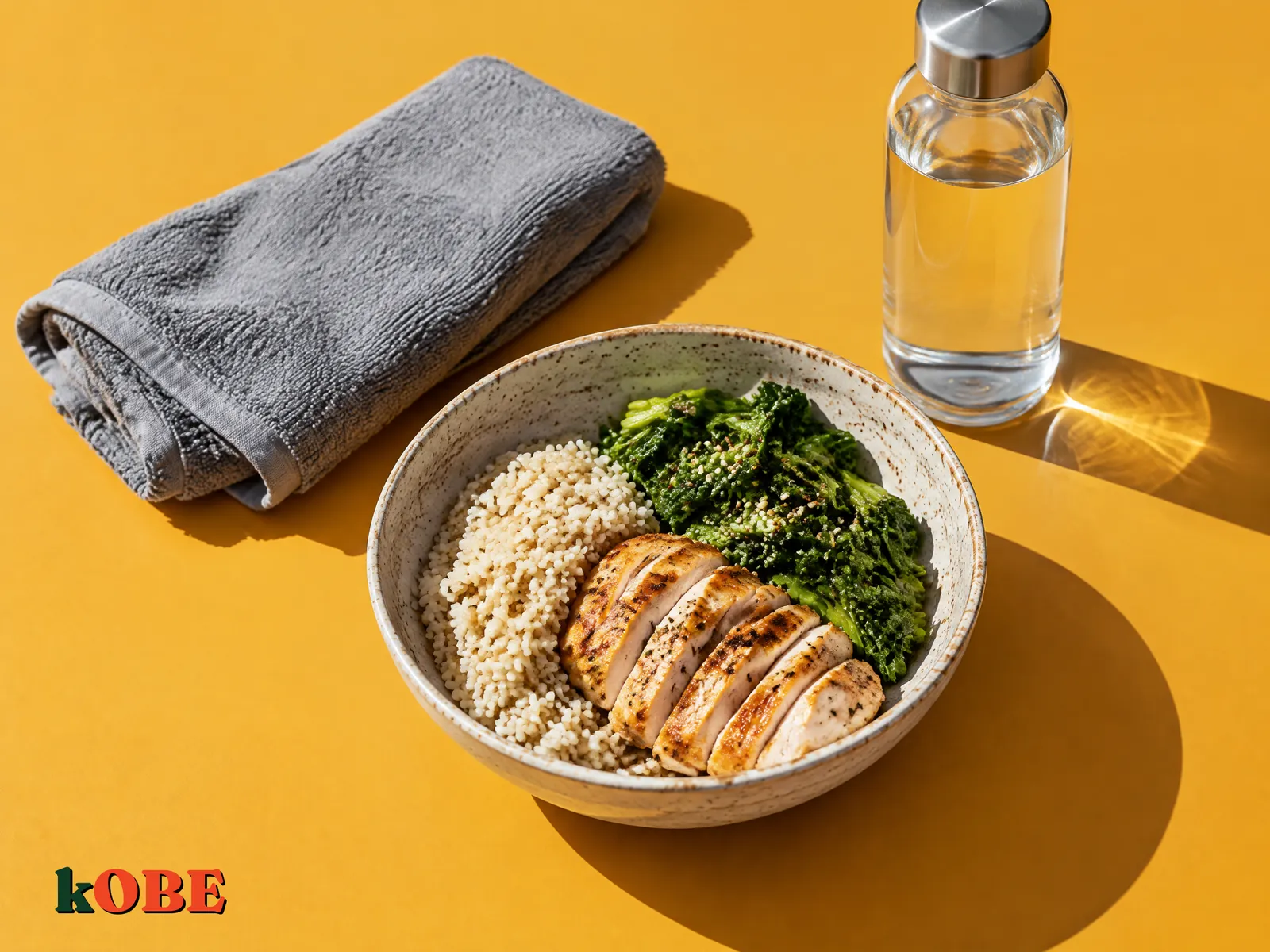
A familiar gym scene: the weights barely touch the floor and someone is already shaking a protein bottle. As if a few minutes' delay would wipe out the whole session.
It's called the "anabolic window". Rumor says the window is only open for 30 minutes after training. Miss it and it's gone.
Good news for the forgetful: the window is real, but it's much wider. More like a wide-open door than a crack under it.
In this article
What are your muscles doing after a workout?
When you train, especially with weights, your muscle fibers get tiny "tears". Sounds scary, but it's a good signal. Your body understands it needs to repair them and build them back a little stronger.
That repair is called muscle protein synthesis. It needs two things: the signal from training, and raw material in the form of amino acids from the protein you eat.
The key point: after training, your muscles stay "sensitive" to protein for quite a long time. Many studies show this state lasts up to 24 hours, maybe more. Not 30 minutes.
So where did the 30-minute window come from?
Partly from older studies, where participants often trained on an empty stomach. In that case, eating soon after training really does bring a clearer benefit.
But real life is different. Most of us eat something a few hours before training. Then the amino acids from that earlier meal are still circulating in the blood. Your muscles aren't "starving" the moment you walk out of the gym.
In 2013, Schoenfeld, Aragon and Krieger pooled many studies on protein timing. The conclusion: when total daily protein is the same, eating close to your workout or not makes almost no meaningful difference for muscle.
In other words: total daily protein is king; timing is a sidekick.
Practical tips for different situations
Aragon and Schoenfeld suggest an easy rule of thumb: your protein meal before training and your protein meal after training should be about 4 to 6 hours apart.
| Situation | What to do |
|---|---|
| Early morning training on an empty stomach | Eat a protein meal soon after, within about 1 hour |
| Lunch at 12, training at 3 p.m. | No rush; dinner at 6 to 7 p.m. is fine |
| Late evening training, dinner before | You can add a light serving of protein before bed |
The International Society of Sports Nutrition (ISSN) says something similar: eating protein within a few hours around your workout is sensible. No stopwatch needed.
How much protein after training?
The number most often mentioned is about 20 to 40g of protein per post-workout meal, or about 0.25 to 0.4g per kilogram of body weight.
To picture it:
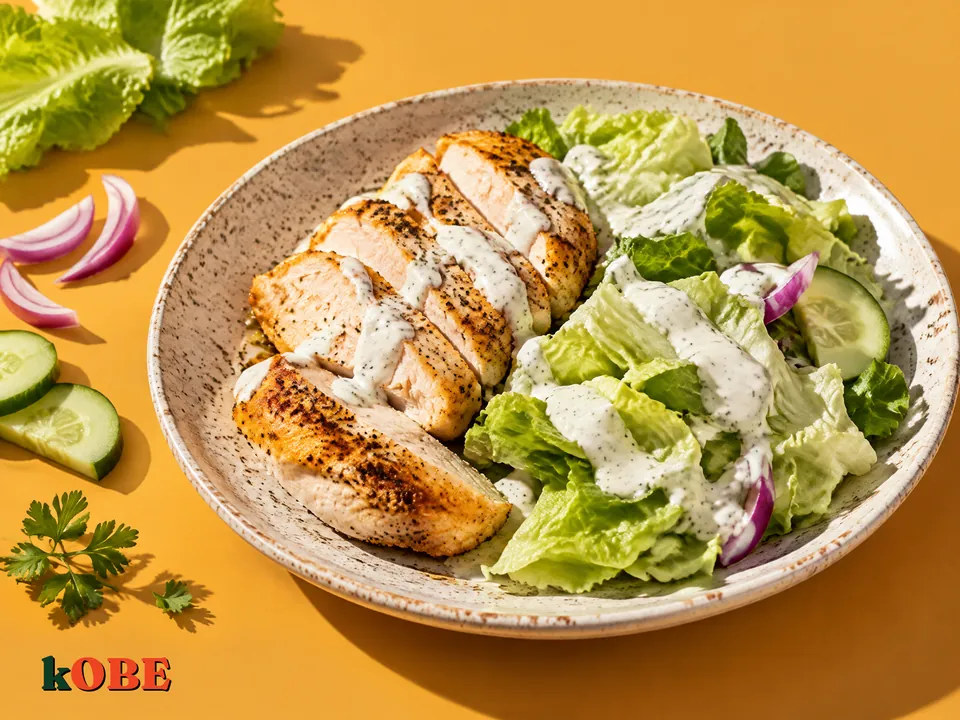
- 100g cooked chicken breast: about 31g of protein.
- 3 eggs: about 19g of protein.
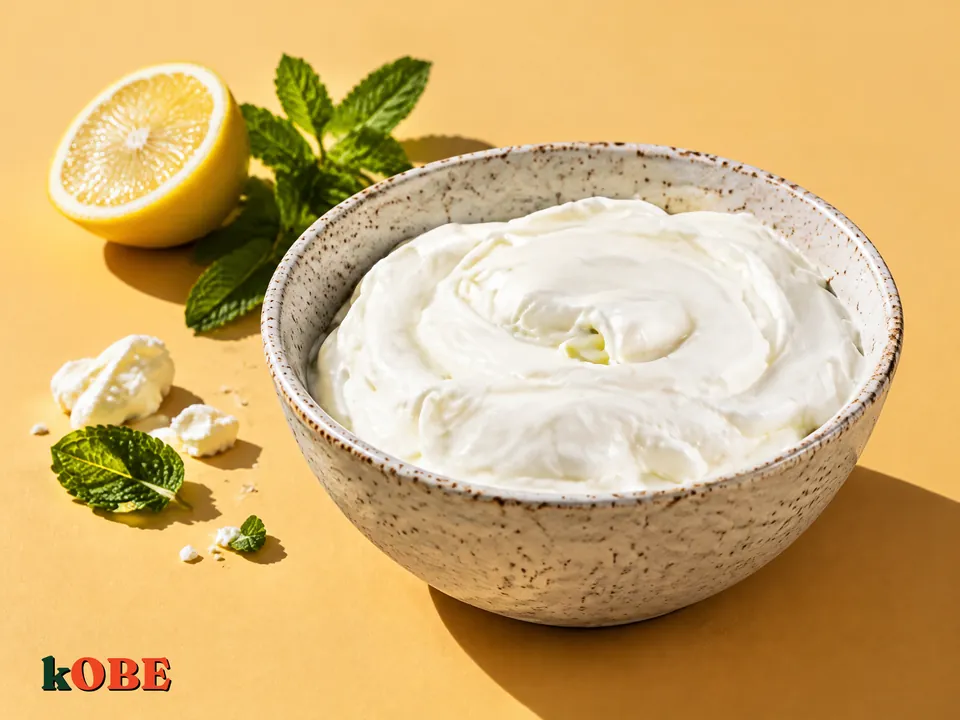
- 1 pot of Greek yogurt, 170g: about 15 to 17g of protein.
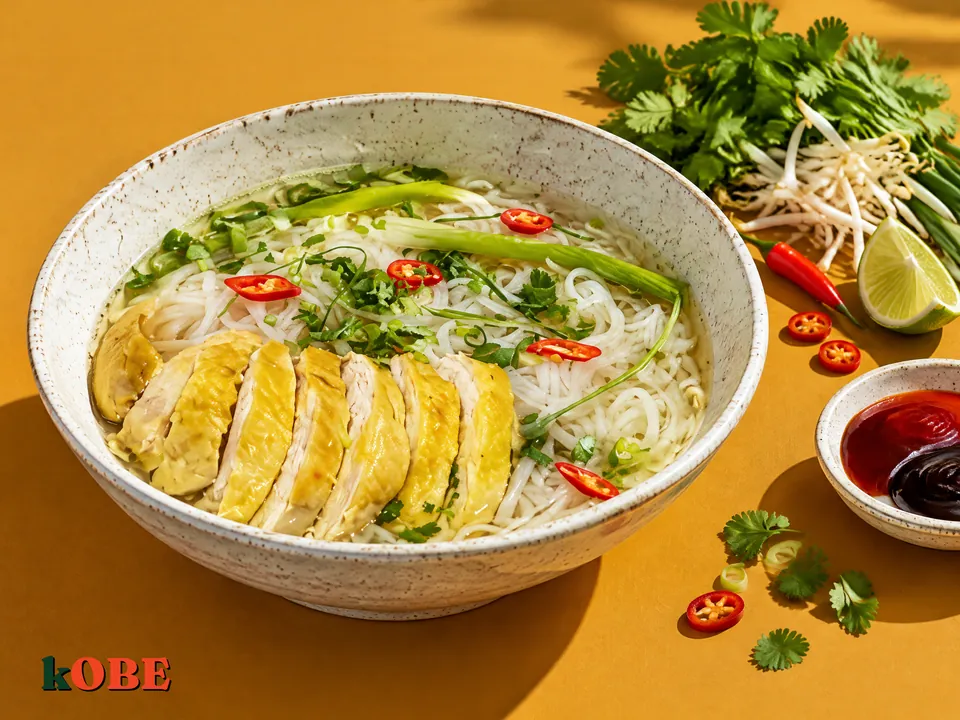
- 1 bowl of phở gà (chicken noodle soup): about 20 to 25g, depending on how much chicken.
A newer 2023 study by Trommelen's group caught people's attention. They found that when people ate a very large amount of protein, up to 100g, the body could still use it for building muscle; it just took longer. This challenges the idea that "you only absorb 30g per meal". But this is still an area of active research. Spreading protein across meals remains the safe and easy approach.
Don't forget carbs and water
Protein is the raw material for repairing muscle. Carbs are the fuel that refills your muscles' energy after a long session.
If you run, play football or train hard for more than an hour, a post-workout meal with both protein and carbs makes sense. Cơm gà (chicken rice), phở and bánh mì with egg are all familiar examples.
And water. If you sweat buckets in hot, humid Saigon, drink to replace fluids before, during and after training.
Want to know why some proteins flip the muscle-building "switch" harder than others? Read What is leucine.
Inside the kOBE kitchen
If you often get home from training hungry but too tired to cook, a pack of ready-cooked chicken is a handy shortcut. Our Sous Vide Chicken Breast has 31g of protein per 100g of cooked meat, 165 kcal and 0g of starch.
Pair it with Red Brown Rice or roasted Japanese Sweet Potato and you have both protein and carbs. Everything is cooked and frozen. For a quick reheat, use the microwave on low.
For those who want to eat right away: the 350g Chicken Kale Namul Poke has 29g of protein, sitting neatly inside the 20 to 40g range above.
Frequently asked questions
Is eating protein before training good?
Is it okay to eat protein before bed?
If I don't train, do I need protein after light activity?
Keep reading
Sources
- Schoenfeld B.J., Aragon A.A., Krieger J.W. (2013). The effect of protein timing on muscle strength and hypertrophy: a meta-analysis. Journal of the International Society of Sports Nutrition 10:53.
- Aragon A.A., Schoenfeld B.J. (2013). Nutrient timing revisited: is there a post-exercise anabolic window? Journal of the International Society of Sports Nutrition 10:5.
- Kerksick C.M. et al. (2017). International Society of Sports Nutrition position stand: nutrient timing. Journal of the International Society of Sports Nutrition 14:33.
- Trommelen J. et al. (2023). The anabolic response to protein ingestion during recovery from exercise has no upper limit in magnitude and duration in vivo in humans. Cell Reports Medicine 4(12):101324.
- Res P.T. et al. (2012). Protein ingestion before sleep improves postexercise overnight recovery. Medicine and Science in Sports and Exercise 44(8):1560 to 1569.
- Further reading: Campbell B., Sports Nutrition, chapters 6 and 7.