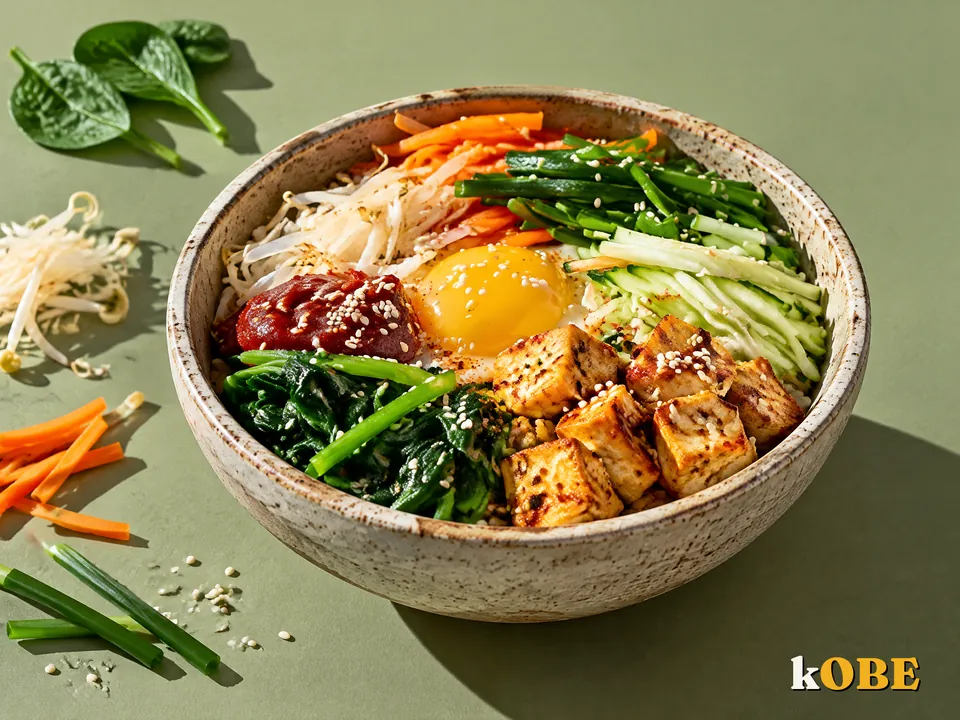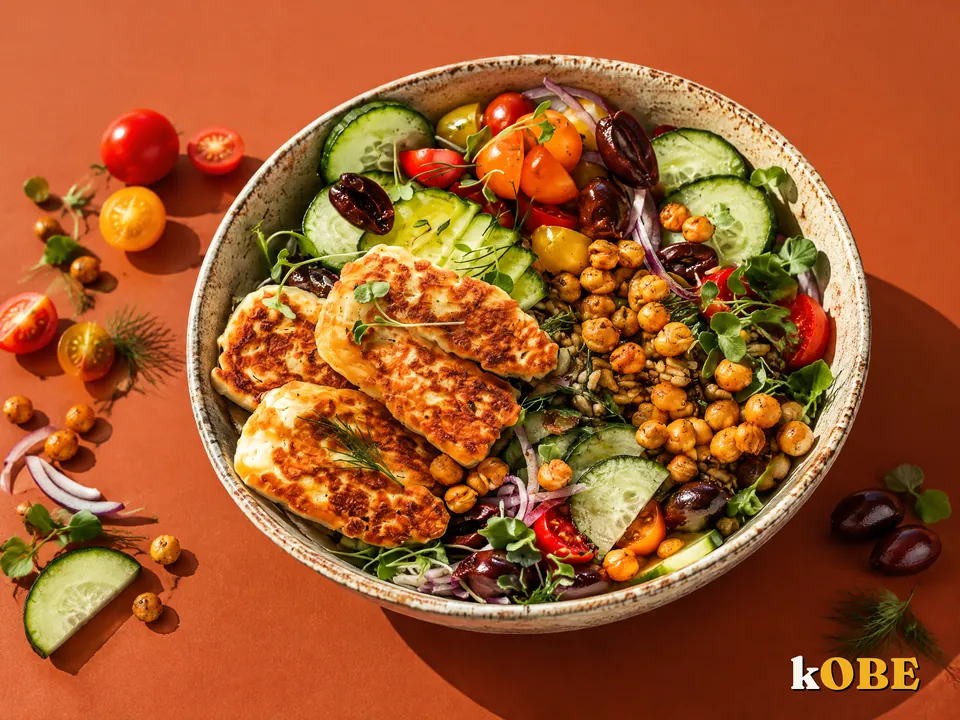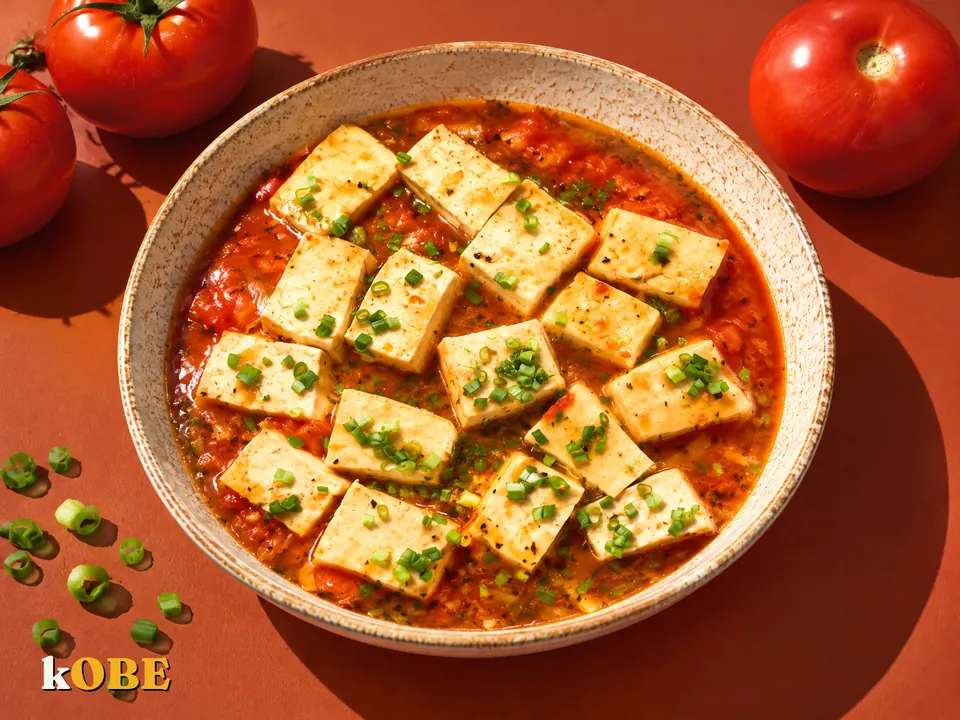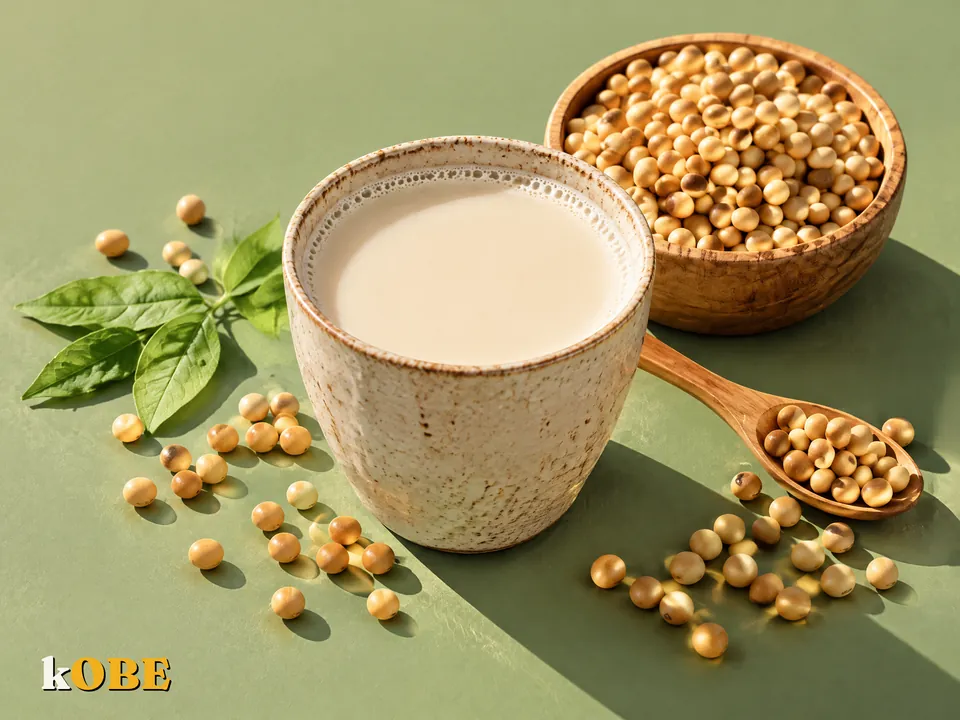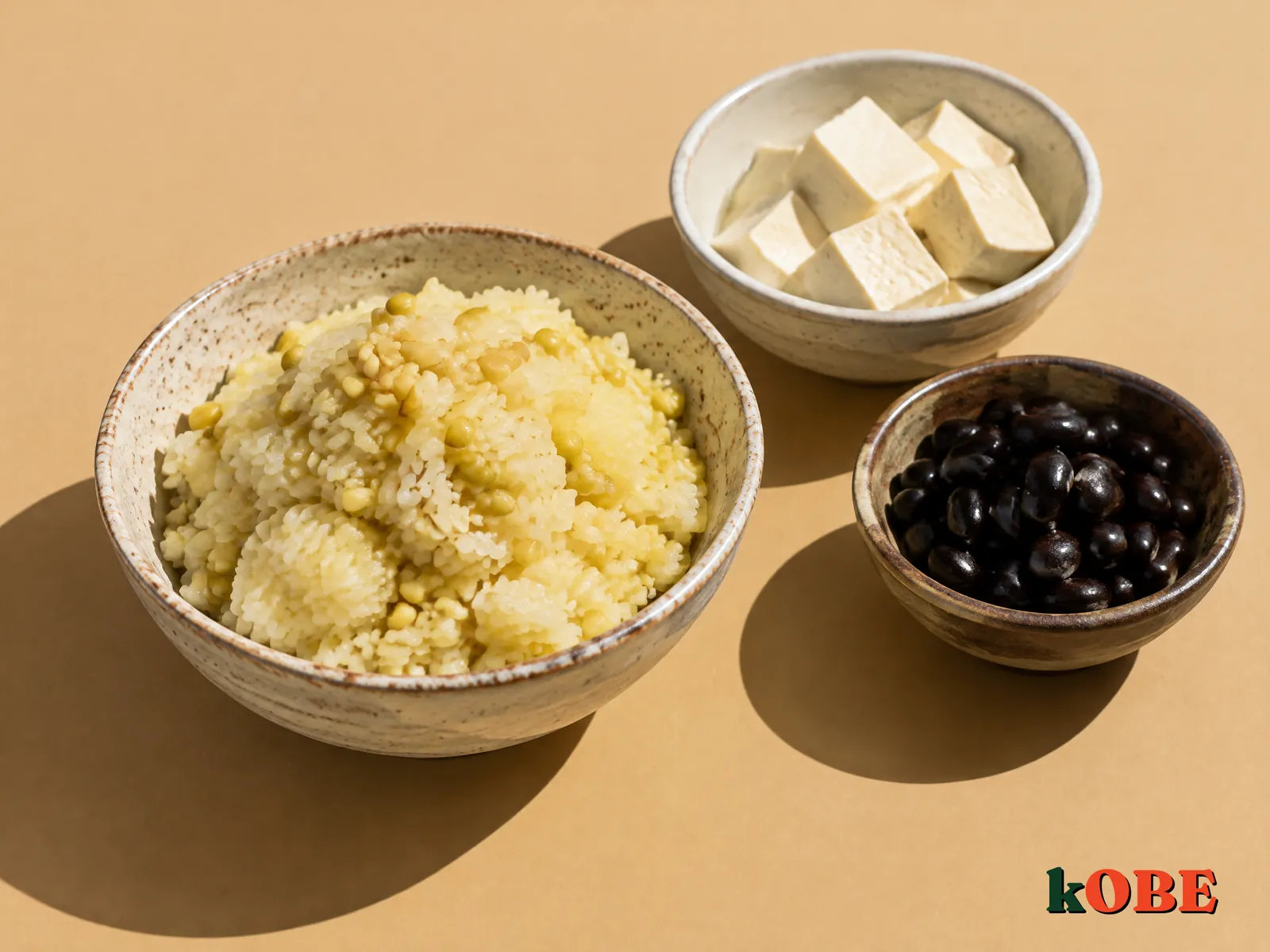
A morning parcel of xôi đậu xanh (sticky rice with mung beans). A bowl of rice with tofu in tomato sauce. Chè đậu đen, the sweet black bean soup, eaten with sticky rice.
Vietnamese people have been eating rice with beans for hundreds of years. Nobody was taught about amino acids. And yet it turns out to be one of the cleverest ways to combine plant protein.
To see why, we need to talk about a wooden barrel.
In this article
9 bricks your body cannot make
Protein is built from about 20 kinds of amino acids. Your body can make most of them. But 9 it cannot, so they have to come from food.
Those nine are called essential amino acids: histidine, isoleucine, leucine, lysine, methionine, phenylalanine, threonine, tryptophan and valine. You don't need to remember the names. Just remember the number 9.
A protein source with all 9 in proportions close to what your body needs is called a complete protein. Meat, fish, eggs and dairy are all in this group. So are soybeans.
The story of the wooden barrel
Picture a barrel made from 9 wooden staves, each one an essential amino acid. The water you pour in only rises to the shortest stave. However tall the others are, it makes no difference.
Amino acids work the same way. Your body builds protein to a fixed recipe. If one is short, building is capped by that one. It's called the limiting amino acid.
Most plant proteins have one stave that runs a bit short:
| Group | Short stave | Examples |
|---|---|---|
| Grains | lysine | rice, sticky rice, bread, rice noodles |
| Beans and legumes | methionine | mung beans, black beans, chickpeas |
| Soybeans | almost complete | tofu, soy milk, edamame |
One look at the table and you see it: rice's short stave is the beans' tall stave, and the other way round.
Rice and beans: a couple that patch each other's barrels
Pair rice with beans and the two barrels "borrow" staves from each other. Every stave is tall. That's exactly what xôi đậu xanh, rice with tofu and black bean chè with sticky rice are.
Many cuisines around the world have this pairing too. Mexicans eat corn tortillas with beans. Indians eat rice with lentil dal. In the Middle East, bread gets dipped in chickpea hummus. Nobody planned it, and yet they all landed in the same place.
Do you have to eat them in the same meal?
This is the happiest news of all: no, you don't.
Years ago, vegetarians were told to combine rice and beans in the same meal. Now major nutrition bodies, such as the US Academy of Nutrition and Dietetics, say this isn't necessary. Your body keeps a "pool" of amino acids that is constantly circulating. Sticky rice in the morning, tofu at night, and your body still puts the pieces together.
What matters is eating a variety across the day and eating enough in total. If you eat only noodles and vegetables all day, no amount of pairing will fill the gap.
Is plant protein "worse"?
Honestly, there are a few differences, but none of them are a reason to worry.
- Slightly lower absorption. Plant protein is tangled up with fiber and plant cell walls, so it's a bit harder for your gut to break down. Soaking, cooking well and fermenting (as in tương, the fermented soybean paste, chao, fermented tofu, or tempeh) all help.
- Less leucine. Leucine is the amino acid that works like a "switch" for muscle-building mode. Plant proteins usually have a lower share of leucine than dairy or egg protein. The simple fix is to eat a slightly bigger portion. See What is leucine.
- Lots of good things come along. Beans bring fiber, while meat has none at all.
FAO introduced a newer way of scoring protein quality called DIAAS, which factors in how well each amino acid is digested. Under this score, dairy and egg protein usually rank high, soy fairly high, and grains on their own lower. Pair grains with beans and the score clearly goes up.
Want to go deeper for vegetarians? Read How to get enough protein as a vegetarian.
Inside the kOBE kitchen
The kOBE freezer has ready pieces for building your own "barrel". Our Chickpeas have 8.9g of protein per 100g. Our Edamame has 11.9g. Quinoa has 4.4g, and Black Brown Rice has 4g.
A bowl of brown rice with a handful of chickpeas and you have the grain and bean couple. Everything is cooked then frozen; thaw in the fridge overnight and it's ready.
We also make kOBE Signature Lean Mayo, Vegan, from soy tofu, with no egg and no dairy, and 3.5g of protein per 100g. Our Vegan Chickpea Sweet Roots Poke is a ready bowl for days when you want to eat plant-based but don't feel like cooking.
Frequently asked questions
Can plant protein build muscle?
Is quinoa a complete protein?
Are mushrooms high in protein?
Keep reading
Sources
- FAO (2013). Dietary protein quality evaluation in human nutrition. FAO Food and Nutrition Paper 92.
- Melina V., Craig W., Levin S. (2016). Position of the Academy of Nutrition and Dietetics: Vegetarian Diets. Journal of the Academy of Nutrition and Dietetics 116(12):1970 to 1980.
- WHO/FAO/UNU (2007). Protein and amino acid requirements in human nutrition. WHO Technical Report Series 935.
- Harvard T.H. Chan School of Public Health, The Nutrition Source. Protein.
- Further reading: Understanding Nutrition 16th ed., chapter 6; Plant-Based Sports Nutrition.