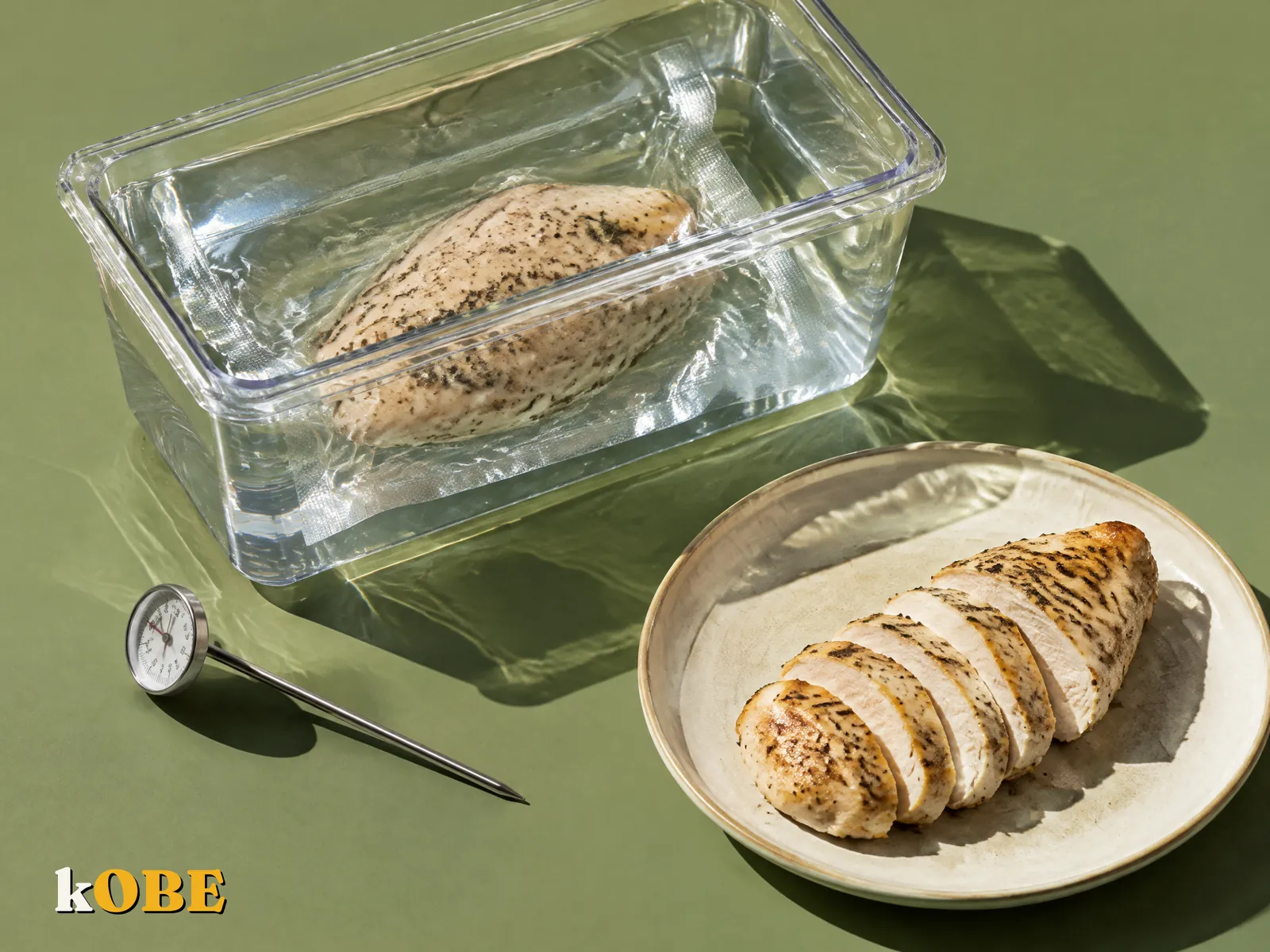
Mom always said: boil the chicken all the way through, poke it with a chopstick and make sure no pink juice runs out. And Mom was right, for the way our family cooked.
But now you hear people cooking chicken breast at 60°C. That's a full 40 degrees below boiling water. It sounds like eating rare chicken.
It turns out food safety doesn't only ask "how hot". It asks a second question too: "for how long".
In this article
Bacteria don't die with the flick of a switch
Many people think there is a magic temperature, and once you pass it every bacterium drops dead. That's not how it works.
Picture bacteria as a crowd standing in the sun. When the sun is scorching, everyone runs for shade very quickly. When it is mild, they can stand it longer, but stay out long enough and they will leave too.
Heat works the same way. The higher the heat, the faster bacteria die. At lower heat, you need more time to reach the same level of safety.
That's why there are two roads to the same destination: hot and fast, or warm and slow.
The actual numbers for chicken
The USDA Food Safety and Inspection Service (USDA FSIS) has a temperature and time table for poultry. In short:
| Temperature at the center of the meat | Hold for about |
|---|---|
| 74°C | almost instant |
| 65°C | a few minutes |
| 60°C | about 30 to 35 minutes |
74°C is the familiar number in home cooking guidelines. It was chosen because it is safe instantly, with no need to watch the clock.
Sous vide takes the "warm and slow" road. At 60°C, if the center of the chicken holds that temperature for about half an hour, Salmonella drops to an equivalent safe level.
The most important phrase: "at the center of the meat"
This is where many people go wrong when cooking at home.
The time in the table counts from when the core of the meat reaches temperature, not from when the bag goes into the pot. And heat travels from the outside in quite slowly.
The thicker the piece, the longer the core takes to heat up. A chicken breast 2 to 3cm thick can take a full hour to heat evenly to the middle. Only then does the holding time start.
So home sous vide recipes usually list a total time much longer than the number in the table. That extra is there so the core has time to heat up.
The danger zone: don't cook too low
There is a temperature range bacteria love, called the danger zone. According to the USDA, it is about 5 to 60°C. In this range, bacteria can multiply quickly.
So sous vide experts advise: don't cook meat for long at temperatures below about 54°C. At that level, some bacteria don't die and may even grow.
For chicken, the common range is 60 to 65°C. Anything lower is territory for experienced cooks with precise equipment.
Five things to remember when you sous vide at home
- Have a thermometer. A pot of water on a gas stove swings around a lot. Guessing by hand won't do.
- Use food-safe, heat-resistant bags. Check the bag is sealed before it goes into the pot.
- Time it by thickness. Thicker pieces need longer. If unsure, cook longer, since sous vide doesn't overcook.
- Chill fast if you aren't eating right away. Drop the bag into a bowl of ice water to cool it quickly, then store it in the fridge or freezer. Don't let it cool slowly on the kitchen counter.
- People who need extra care should choose a higher temperature. Pregnant women, older adults, young children and people with weakened immune systems can choose 65°C or above for peace of mind.
Why chill fast? Sous vide kills most bacteria, but not all. Some types form very stubborn "spores" that survive low heat. Chilling quickly and keeping cold is how you keep them asleep.
Inside the kOBE kitchen
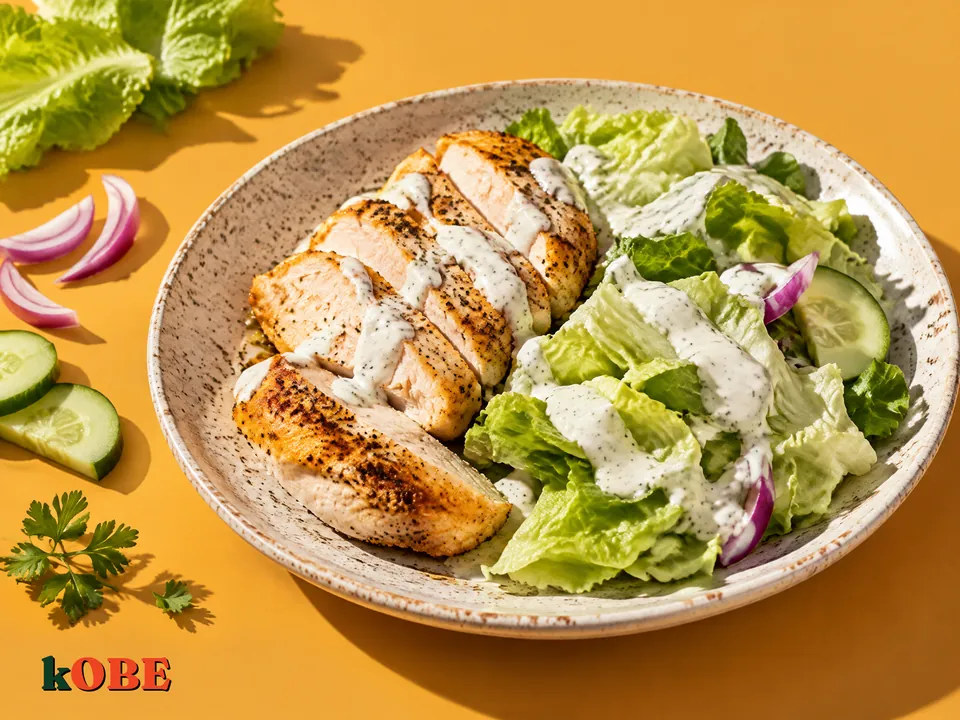
Our Sous Vide Chicken Breast is brined only in sea salt, then cooked sous vide at 60°C for 90 minutes. After cooking it is quickly chilled and frozen straight away.
Remember the two ideas above: lower heat is made up for with time, and after cooking you chill fast. 60°C, 90 minutes, then a quick chill: that's how we cook every batch.
Every 100g of cooked meat has 31g of protein and 165 kcal. To reheat, thaw in the fridge overnight, or use the microwave on low. The chicken is already cooked, so reheating is just to warm it, not to cook it again.
Frequently asked questions
Sous vide chicken is slightly pink. Is it still raw?
How long can sous vide food sit out?
Do jammy eggs follow the same principle?
Keep reading
Sources
- USDA FSIS (2021). Appendix A: Compliance Guidelines for Meeting Lethality Performance Standards.
- USDA FSIS. Danger Zone (40°F to 140°F) and Safe Minimum Internal Temperature Chart.
- Baldwin D.E. (2012). Sous vide cooking: A review. International Journal of Gastronomy and Food Science 1(1):15 to 30.
- WHO (2006). Five Keys to Safer Food Manual.
- Further reading: Culinary Nutrition, section on food safety.