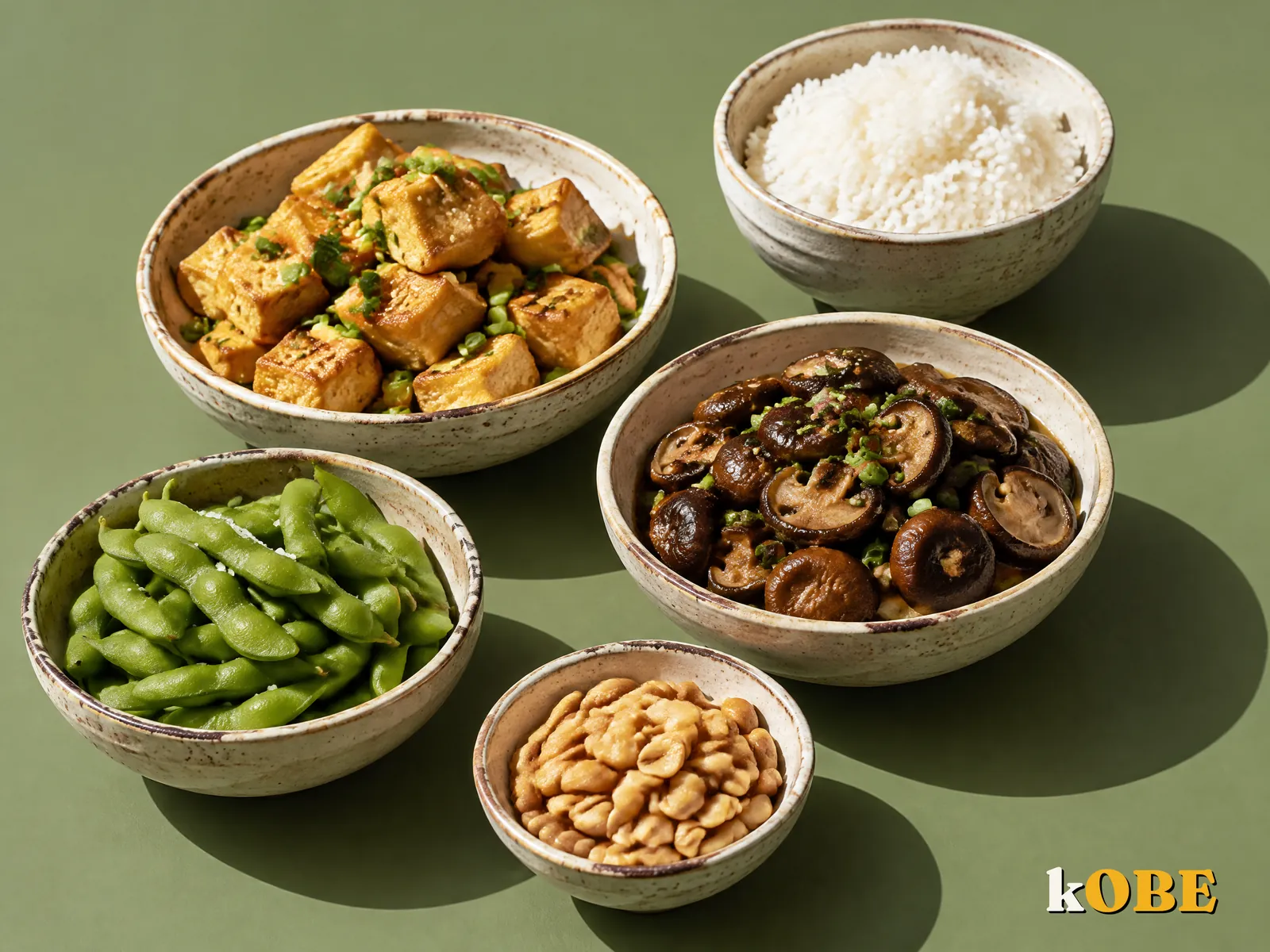
On the full moon and the first day of the lunar month, many Vietnamese households eat vegetarian. Some people go meat-free a few meals a week. Others are lifelong vegetarians who never touch meat or fish all year.
The familiar question is always: "Eating vegetarian like that, where do you get your protein?"
Good news: it's completely doable. But there's one trap Vietnamese vegetarian tables often fall into. We'll point it out, and show how to avoid it.
In this article
The trap of the Vietnamese vegetarian table
Look at a familiar vegetarian meal: a bowl of vegetarian bún, a plate of fried noodles with vegetables, a bowl of rice with boiled greens and soy sauce. Tasty and light. But very little protein.
Noodles and rice are mostly starch. Vegetables have plenty of fiber and vitamins, but negligible protein. Same with mushrooms, just a few grams per 100g.
The problem with vegetarian eating usually isn't that "plant protein isn't good enough". It's that the vegetarian table has no clear protein dish at all.
The "protein stars" of the vegetarian kitchen
Here are vegetarian protein sources familiar to Vietnamese cooks. Figures are rounded, per 100g:
| Vegetarian food | Protein, about |
|---|---|
| Tofu | 8 to 11g |
| Dried tàu hũ ky (yuba, tofu skin) | very high, since it's dried |
| Mì căn (seitan, made from wheat gluten) | 20 to 25g, depending on type |
| Cooked edamame | 12g |
| Cooked chickpeas | 9g |
| Cooked black, red or mung beans | 7 to 9g |
| Roasted peanuts | about 25g |
| Soy milk (1 glass, 250ml) | about 7g |
If you eat eggs and dairy, you also have eggs (6g each), milk and yogurt. Getting enough protein becomes much easier.
A note on peanuts: lots of protein, but also lots of fat and calories. A small handful is plenty; don't count on them as your main protein.
A vegetarian day with about 50g of protein
For someone around 60kg, eating vegan (no eggs or dairy):
| Meal | Food | Protein, about |
|---|---|---|
| Breakfast | 1 parcel of xôi đậu xanh (sticky rice with mung beans), 1 glass of soy milk | 6 + 7 = 13g |
| Lunch | 1 bowl of rice, 150g tofu in tomato sauce, vegetable soup | 4 + 14 = 18g |
| Afternoon | 1 handful of edamame, 100g | 12g |
| Dinner | Bowl of bún with 50g seitan stir-fried with lemongrass | 3 + 11 = 14g |
| Total | about 57g |
Nothing unusual here. The trick is that every meal has at least one dish made from soy, beans or seitan.
A few rules to help plant protein "work" better
1. Pair grains with beans. Rice is a bit low in lysine, beans a bit low in methionine. Eat both during the day and they cover for each other. You don't need them in the same meal. Details in Complete protein and plant protein.
2. Favor soy. Tofu, soy milk, yuba and edamame all come from soybeans, one of the few plant proteins with the full set of 9 essential amino acids. Read more about edamame.
3. Eat a little more. Plant protein is absorbed slightly less well than animal protein, because it comes with fiber. Some experts suggest vegans eat a little above the general recommendation.
4. Soak, cook well, ferment. Soak beans overnight and cook them really soft. Fermented foods like tương (fermented soybean paste), chao (fermented tofu) and tempeh are also easier to digest.
5. Watch out for fried mock meats. Vegetarian sausage, mock chicken and mock ribs are often deep-fried in lots of oil, and can be salty. Read the label if you buy them ready-made.
Besides protein, what should vegetarians watch?
Long-term vegetarians should pay attention to a few other nutrients, according to the US Academy of Nutrition and Dietetics:
- Vitamin B12: found almost only in animal foods. Vegans should get B12 from fortified foods or supplements. Ask a doctor or nutrition professional what suits you.
- Iron and zinc: found in beans, seeds and leafy greens. Eating them with fruit rich in vitamin C helps iron absorption.
- Calcium: tofu made with calcium salts, leafy greens and calcium-fortified soy milk.
- Omega-3: flaxseed, chia seeds and walnuts.
None of this is meant to worry you. It's just to make your vegetarian table more complete.
Inside the kOBE kitchen
For busy vegetarian days, the kOBE freezer has a few ready-cooked plant proteins. Our Edamame has 11.9g of protein per 100g. Our Chickpeas have 8.9g. Our Green Peas have 5.4g. All are cooked then frozen; thaw in the fridge overnight and they're ready to use.
Our Vegan Chickpea Sweet Roots Poke is a ready bowl for vegetarians. And our kOBE Signature Lean Mayo, Vegan is made from soy tofu, with no egg, no dairy and no preservatives, and has 3.5g of protein and 49 kcal per 100g. Toss it with chickpeas, kale and brown rice for a vegetarian bowl with both grains and beans.
Frequently asked questions
Can vegetarians build muscle?
What is mì căn?
Can vegetarian children get enough protein?
Can mushrooms replace meat?
Keep reading
Sources
- Melina V., Craig W., Levin S. (2016). Position of the Academy of Nutrition and Dietetics: Vegetarian Diets. Journal of the Academy of Nutrition and Dietetics 116(12):1970 to 1980.
- FAO (2013). Dietary protein quality evaluation in human nutrition. FAO Food and Nutrition Paper 92.
- USDA FoodData Central: tofu, edamame, chickpeas, black beans, peanuts, soy milk.
- National Institute of Nutrition (Vietnam). Vietnamese Food Composition Table.
- Further reading: Plant-Based Sports Nutrition; The Vegan Athlete's Nutrition Handbook; Understanding Nutrition 16th ed., chapter 6.