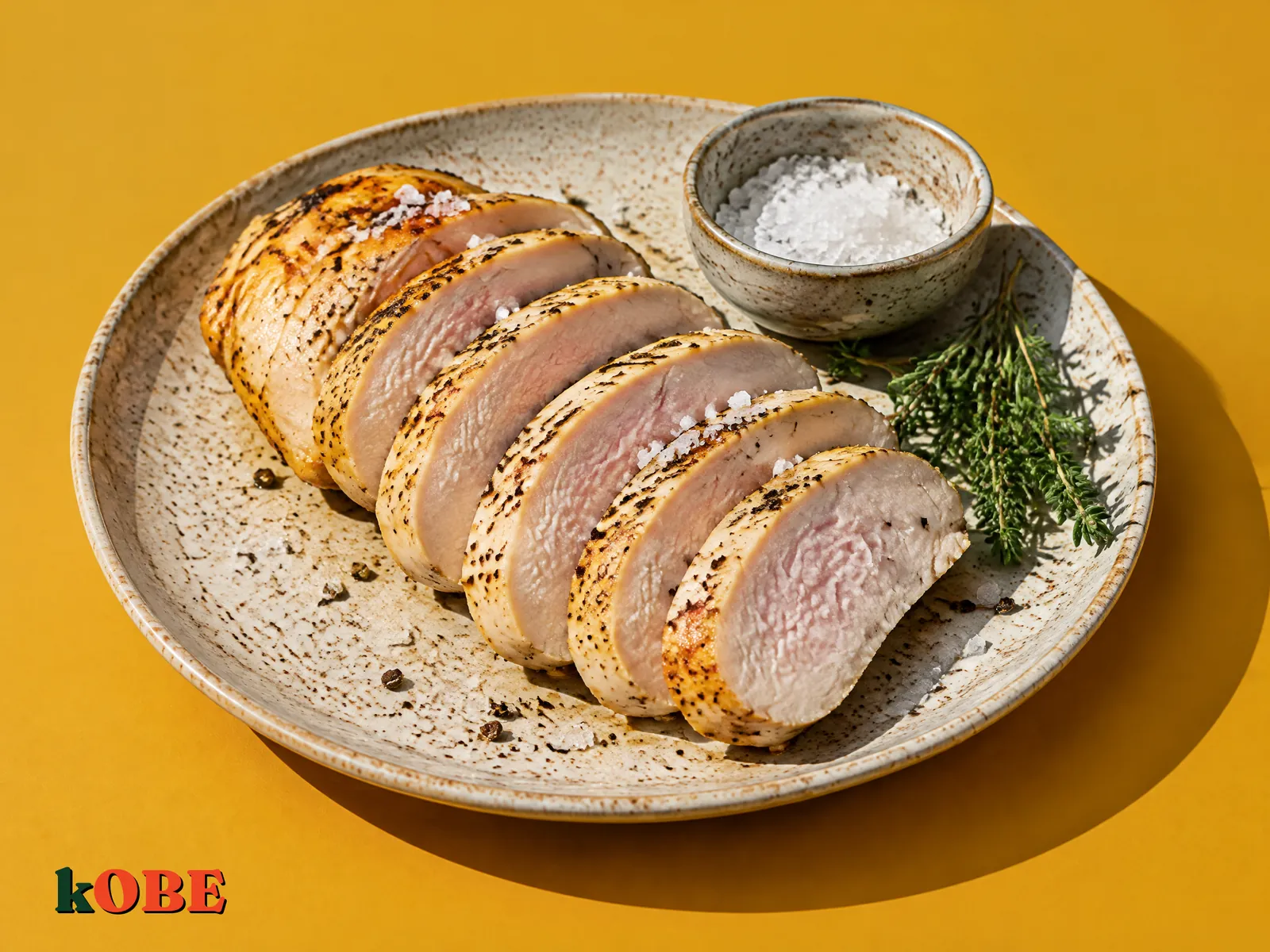
Quick question: how much protein is in 100g of chicken breast?
Look it up online and you will find two numbers: 22g and 31g. Both are correct. And precisely because both are correct, a lot of people get their sums wrong.
In this article
Protein does not grow in the pan
Here are the numbers for skinless chicken breast, from the US Department of Agriculture (USDA) food database:
| 100g chicken breast | Protein | Calories |
|---|---|---|
| Raw | about 22g | about 120 kcal |
| Grilled, cooked through | about 31g | about 165 kcal |
Looking at the table, it seems grilling adds 9g of protein. It doesn't.
Think of khô bò, Vietnamese beef jerky. A kilo of fresh beef turns into less than half a kilo of jerky. All the water leaves, but the protein stays right where it was. So, gram for gram, jerky is far more "protein dense" than fresh beef.
Chicken breast works the same way, just less dramatically. After grilling, the chicken loses about a quarter of its weight as water. In other words: the 100g of grilled chicken you eat started as about 135g of raw chicken.
The most common counting mistake
You weigh your cooked chicken: 100g. Then you look up the raw number: 22g of protein.
You actually just ate about 31g. You undercounted by almost a third.
The opposite mistake is common too: weighing raw chicken but using the grilled figure of 31g. This time you overcount.
The golden rule: weigh it raw, use raw numbers; weigh it cooked, use cooked numbers. That's it.
Batch cooking for the whole week? There is an even more accurate way:
- Weigh the whole batch raw and multiply out the total protein.
- After cooking, weigh the whole batch again.
- Divide the total protein by the cooked weight in grams. Now you have the exact protein figure for your own batch.
Boiled, grilled or sous vide: the number changes with the method
The more a cooking method dries out the meat, the higher the protein per 100g cooked:
- Grilled, pan-seared: loses the most water. About 31g of protein per 100g.
- Boiled: loses a bit less water. About 28 to 31g, depending on how long it boils.
- Sous vide: loses almost no water, so the meat stays the most tender and juicy.
What is sous vide? You put the meat in a vacuum-sealed bag, then sit it in a pot of water held at a steady temperature, about 60 to 65°C for chicken breast. That is far lower than a grill pan, so the meat fibers tighten less and hold on to their water. That is the secret behind juicy chicken breast that isn't bone dry.
And is it cooked enough, is it safe? At 60°C, Salmonella in chicken is killed if the heat is held long enough. According to USDA guidelines, that is about 35 minutes after the center of the meat reaches 60°C. Lower heat is made up for with time.
How much protein do you need a day? Less than you think
A 60kg person needs about 50g of protein a day.
50g may sound like a lot. But look at an ordinary day:
| What you eat | Protein, about |
|---|---|
| 1 egg at breakfast | 6g |
| 1 carton of milk, 200ml | 6g |
| 1 palm-sized piece of chicken breast | 25 to 30g |
| 1 block of tofu at dinner | 8 to 10g |
| Total | about 50g |
That's enough, and we haven't even counted the bit of protein in your rice. People who train regularly need a little more.
A few fun facts about protein:
- Your hair and nails are made of protein. That protein is called keratin.
- Your body has no protein "storeroom" the way it has one for fat. So spreading protein across the day's meals makes more sense than saving it all for dinner.
- Meals with protein usually keep you full longer. That is why an egg at breakfast helps you snack less at 10 a.m.
Inside the kOBE kitchen
Our Sous Vide Chicken Breast is brined only in sea salt, then cooked sous vide at 60°C for 90 minutes. After cooking it is quickly chilled and frozen, so the meat stays tender and juicy.
Every 100g of cooked meat has 31g of protein, 165 kcal, 3.6g of fat and 0g of starch. We portion it into 90 to 120g packs, or sell it in 1kg bags for people who cook for the whole week.
Want to count the protein in your meal? Multiply the grams on the pack by 0.31. A 100g pack, for example, is 31g of protein, about the same as 5 eggs. See Sous Vide Chicken Breast on the Ingredients page.
Frequently asked questions
What about chicken breast with the skin on?
Does freezing chicken breast destroy protein?
How much chicken breast is a good portion?
Keep reading
Sources
- USDA FoodData Central, SR Legacy: chicken breast, raw (FDC 171077); chicken breast, roasted (FDC 171477).
- USDA FSIS (2021). Appendix A: Compliance Guidelines for Meeting Lethality Performance Standards.
- National Institute of Nutrition (Vietnam) (2016). Recommended Dietary Allowances for Vietnamese People (about 0.83g protein/kg/day).
- National Institute of Nutrition (Vietnam). Vietnamese Food Composition Table (eggs, milk, tofu).
- Further reading: Campbell B., Sports Nutrition, chapters 5 and 6; Understanding Nutrition 16th ed., chapter 6.