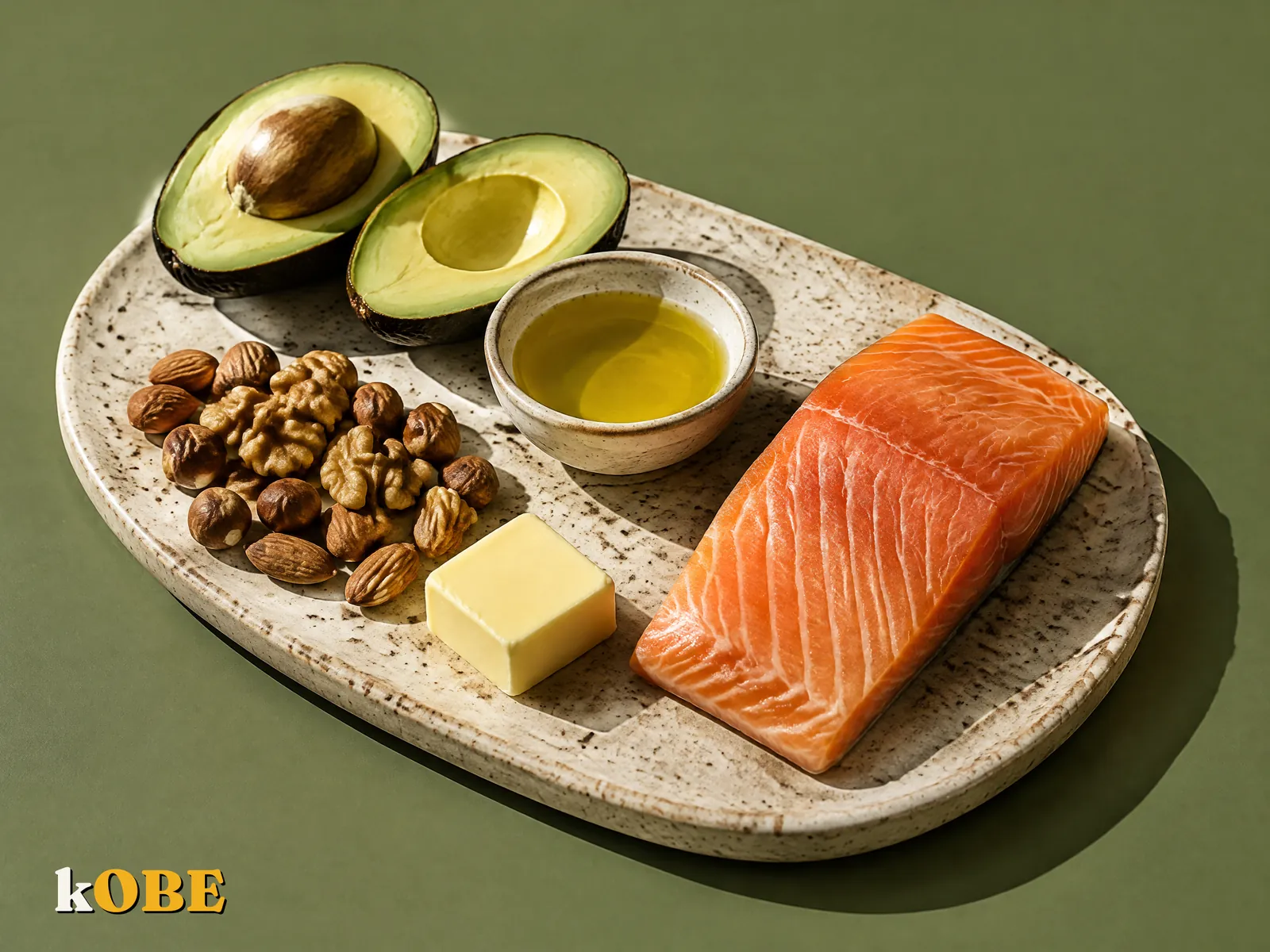
In the 1990s, America declared war on fat. Supermarket shelves filled up with cookies, yogurts and cakes stamped low fat.
Here's the funny part: many of those products added sugar to make up for the lost flavor. People ate less fat, but more sweet stuff. Decades later, nutrition experts admitted the war had picked the wrong target.
In Vietnam the story is gentler. Many of us grew up with a little bowl of mỡ hành (scallion oil) spooned over cơm tấm (broken rice), a bottle of cooking oil next to the gas stove, and a swipe of mayo inside a bánh mì. Fat is everywhere, and most of the time we don't even notice it.
This article is a map. We'll take a tour: what fat is, what your body does with it, how much is enough, and where fat likes to hide in a Vietnamese meal.
In this article
One gram of fat carries double the calories
Your body gets energy from three big groups: carbs, protein and fat. Carbs and protein give about 4 calories per gram. Fat gives about 9 calories per gram, more than double.
Picture it this way:
- 1 tablespoon of cooking oil (about 14g) has about 120 calories.
- 100g of cooked white rice, around two thirds of a rice bowl, has about 130 calories.
So one tiny spoon of oil almost matches a whole portion of rice. The difference: the rice fills you up, while the oil quietly melts into your stir-fry.
That's why fat slips past us so easily. Not because fat is bad, but because it's energy-dense and hard to see.
What does your body need fat for?
If you only look at calories, you'd think less fat is always better. But your body really does need it, for plenty of reasons:
- It carries vitamins. Vitamins A, D, E and K only dissolve in fat. Eat vegetables with zero fat and your body gets noticeably less out of them.
- It builds cell walls. Every cell in your body is wrapped in a membrane made from fat.
- It's raw material. Some hormones are made from fat and cholesterol.
- It keeps you full longer. Fat slows down how fast your stomach empties, so a meal with a little fat tends to hold you longer.
- It carries flavor. Many aromas only dissolve in fat. Fried shallots smell amazing because the oil pulled the aroma out.
Fun fact: the brain is one of the fattiest organs in the body. Take away all the water, and roughly half of what's left is fat.
There are two fats your body can't make on its own, so they have to come from food: omega-3 and omega-6 (more in What are omega-3 and omega-6).
Three fat families you can spot by eye
Open your fridge and you'll get a free chemistry lesson.
A jar of pork lard in the fridge sets into an opaque white block. A stick of butter is as hard as a bar of soap. And the bottle of soybean oil? Still clear and runny. The difference comes from the shape of the fat chains inside:
| Fat family | At room temperature | Where you find it |
|---|---|---|
| Saturated fat | Usually solid | Lard, beef fat, butter, coconut oil, palm oil |
| Monounsaturated fat (MUFA) | Liquid, cloudy when chilled | Olive oil, peanut oil, avocado |
| Polyunsaturated fat (PUFA) | Liquid | Soybean oil, sunflower oil, oily fish, sesame, nuts and seeds |
There's a fourth family nobody wants to meet: trans fat. The industrial kind forms when liquid oil is partly hardened, and it used to be common in old-style margarine and factory-fried foods. The World Health Organization (WHO) has called for it to be removed from the food supply.
The surprise: no food contains just one type of fat. Lard sounds "saturated", yet it actually has more monounsaturated fat than saturated fat. The details are in Saturated, unsaturated and trans fat.
How much is enough? Easy numbers to remember
WHO gives three markers for adults:
- Total fat no more than about 30% of the day's energy.
- Saturated fat under 10%.
- Trans fat under 1%, and the less the better.
Let's turn that into food. For someone eating about 2,000 calories a day:
- Total fat tops out at about 65g.
- Saturated fat stays under about 22g.
65g sounds like a lot, but remember that fat is already built into meat, eggs, milk and nuts, not just the oil bottle. Let's add up a fairly normal day:
| What you eat | Fat, roughly |
|---|---|
| 1 fried egg | 7 to 10g |
| 1 plate of cơm tấm with pork chop and scallion oil | 20 to 30g |
| 1 bánh mì with pâté and mayo | 15 to 25g |
| 1 plate of stir-fried greens at dinner | 7 to 10g |
| Total | about 50 to 75g |
The numbers swing a lot because every shop cooks its own way. But you can see it: hitting 65g is easier than you'd think, and that's before any fried food or a cheese-foam milk tea.
We don't suggest counting every gram. Just know that fat is energy-dense, then spend it where it's worth it.
How to cook: the right oil, the right amount
How you cook decides how much fat you eat, and whether that fat stays in good shape.
Pick the oil by the heat. Every oil has a temperature where it starts to smoke, called the smoke point. Your salad oil isn't automatically your frying oil. The full table is in Smoke points of cooking oils. And if you've heard "you can't fry with olive oil", read Can you fry with olive oil. The answer might surprise you.
Don't keep frying oil too long. Oil fried again and again changes color, changes smell and builds up plenty of odd compounds. Signs it's time to toss it are in Is reusing frying oil safe.
Measure instead of pouring. Straight from the bottle, it's easy to pour double what you think. A few small tricks:
- Measure oil with a tablespoon, at least for the first few weeks until your hand learns.
- A good nonstick pan needs far less oil than an old one.
- Swap a few fried meals for steamed, boiled, foil-baked or air-fried ones.
- For stir-fries: sizzle the aromatics in a little oil, then add a splash of water to cook the greens, instead of more oil.
Sauces: where fat hides best
Lots of people watch out for fried food but forget the little bowl of sauce beside it.
Mayonnaise is the clearest example. Regular mayo can be about 75% oil, so one tablespoon is close to 100 calories. It's rich without tasting greasy, because the oil has been "hidden" as millions of tiny droplets. That secret is told in What is mayonnaise made of, and how many calories.
Want a creamy sauce with less oil that's still thick? That's a whole science of emulsions, explained in How low-fat mayo works. And if you eat plant-based and wonder what holds a sauce together without eggs, read Eggless vegan mayo.
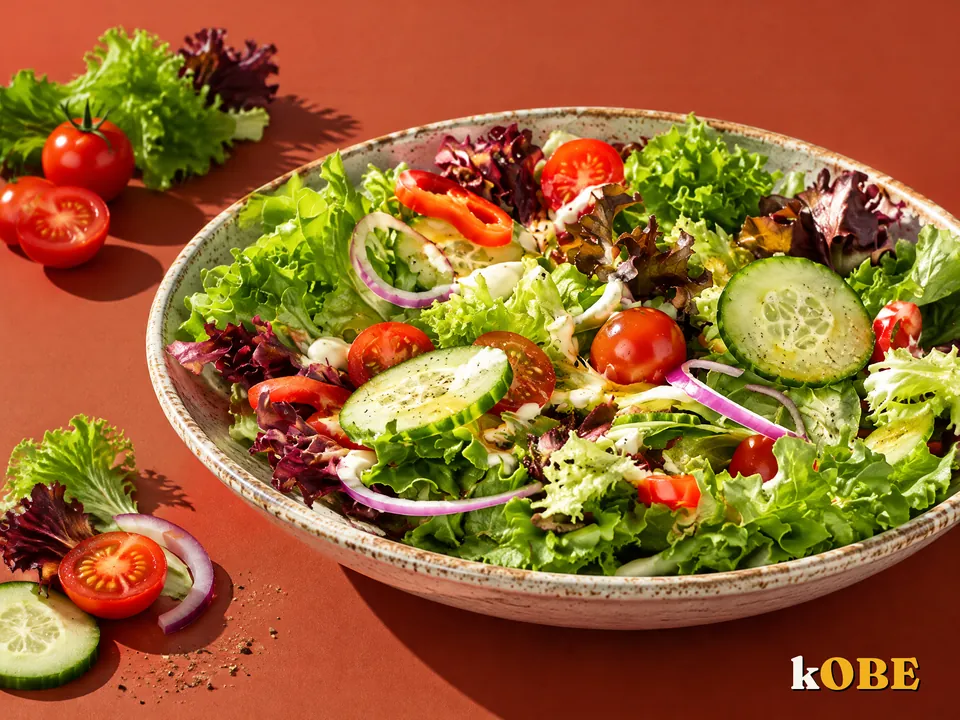
Salad dressing works the same way. A plate of greens drizzled with roasted sesame dressing can carry more calories than a bowl of rice. Yet greens with zero fat make vitamins harder to absorb. How to balance it is in Salad dressings.
Finally, sesame and nuts: small, fragrant, full of good fats, but a single handful packs plenty of energy. See Sesame and nuts. And for eggs, shrimp, pig brain and cholesterol, head to Cholesterol in food.
Inside the kOBE kitchen
We don't try to erase fat from meals. We just put it in the right place.
Our Japanese, Purple and Honey Sweet Potatoes are roasted with a little olive oil. Remember the fat-soluble vitamins above? Beta-carotene in sweet potato belongs to that group too, so that bit of oil isn't wasted. Our Sesame Kale is massaged with sesame oil and toasted sesame, Korean namul style.
For sauces, we make kOBE Signature Lean Mayo: a creamy egg-based sauce, thick and clingy like regular mayo. The 80% version has 118 calories and 8.7g of fat per 100g. The plant-based kOBE Signature Lean Mayo, Vegan is made from soybean tofu, with no eggs and no dairy, at 49 calories and 2g of fat per 100g.
Want to mix your own sauces at home? Visit the Sauce Library. And every dish in our 1,480 home recipes lists calories, protein, fat and sugar per 100g, so you can see where the fat sits on your plate.
Frequently asked questions
Does eating fat make you gain weight?
Is a low-fat diet healthier?
Is every vegetable oil better than animal fat?
Should kids eat as little fat as adults?
Keep reading
Sources
- WHO (2023). Saturated fatty acid and trans-fatty acid intake for adults and children: WHO guideline.
- WHO. Healthy diet, Fact sheet (total fat under 30% of energy, saturated under 10%, trans under 1%).
- FAO (2010). Fats and fatty acids in human nutrition: Report of an expert consultation. FAO Food and Nutrition Paper 91.
- USDA FoodData Central: soybean oil, pork lard, cooked white rice.
- Harvard T.H. Chan School of Public Health, The Nutrition Source. Fats and Cholesterol.
- Further reading: Understanding Nutrition 16th ed., chapter 5; Culinary Nutrition, chapter 6; Food Lipids.