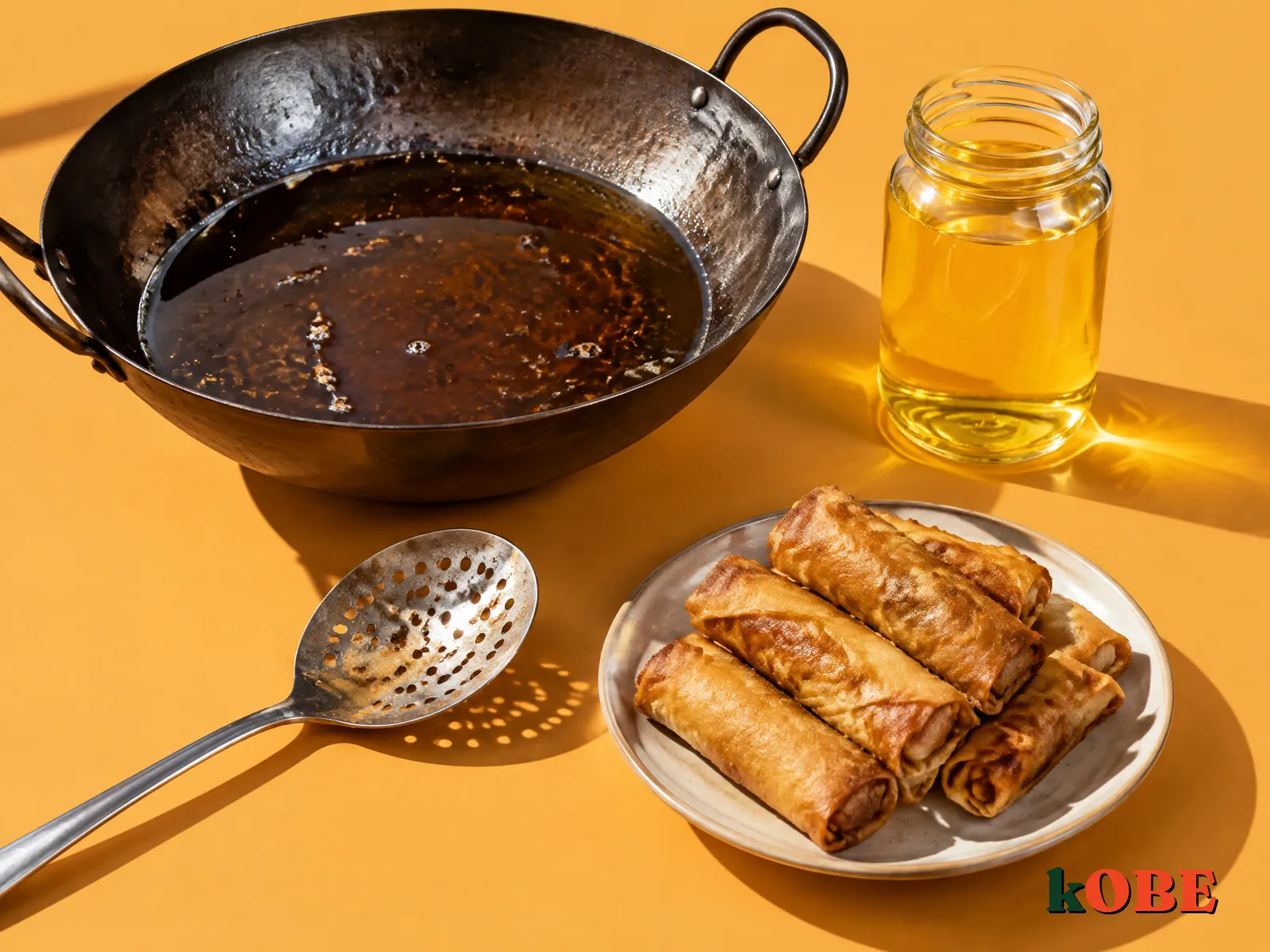
Walk past a bánh chuối chiên (fried banana fritter) cart in the afternoon and you'll see a big wok of oil, bubbling gently. In the morning the oil was clear and golden. By afternoon it's as dark as strong tea.
It's the same at home. After frying a fish, mom can't bear to pour the oil away. She strains it into a jar and uses it next time to stir-fry greens or fry eggs.
Reusing frying oil is an everyday, thrifty habit. The question is: how does oil change after each fry, and when is it time to say goodbye?
In this article
Every batch ages the oil a little
In the frying pan, oil faces three "enemies" at once:
- Heat: deep-frying usually happens at about 170 to 190°C.
- Oxygen: the surface of the oil is constantly touching air.
- Water from food: drop in a piece of fish or potato and it sizzles as water steams up through the oil.
Together, these cause three kinds of change:
- Oxidation: oxygen attacks the fat, creating compounds that smell rancid or burnt.
- Hydrolysis: water splits fat into free fatty acids. The oil smokes more easily.
- Polymerization: broken pieces stick together into big molecules. The oil gradually turns thick and syrupy.
On top of that, crumbs of batter and meat sink to the bottom, burn black and make the oil break down even faster.
Six signs it's time to toss the oil
You don't need a lab. Your eyes, nose and hands are enough:
- Much darker color, like strong tea or coffee.
- Thick and syrupy, pours slowly, clings to the bottle.
- Lots of foam that doesn't settle when you add food.
- Smokes early, at a heat level that used to be fine.
- Odd smell: foul, burnt, rancid like candle wax, or fishy from last time.
- Fried food darkens fast without getting crisp, and soaks up more oil.
Spot two or three of these signs, and it's time to pour the oil out.
So how many times can you reuse it?
We'd love to give you a number. But honestly: there's no fixed number. How fast oil breaks down depends on lots of things:
| Factor | Oil lasts longer when | Oil spoils faster when |
|---|---|---|
| What you fry | Potatoes, vegetables, few crumbs | Battered, breaded, fish, sugar-marinated meat |
| Temperature | Kept moderate, never smoking | Too hot, smoking |
| After frying | Strained clean, tightly covered | Left in the pan with crumbs |
| Type of oil | Heat-stable, refined oil | Oil rich in polyunsaturated fat |
In restaurants, people measure something called polar compounds, the total of all compounds formed as oil breaks down. Some European countries require frying oil to be changed once this passes about 24 to 27%. At home, just rely on the six signs above.
The health side: what we know and don't know
What's fairly certain:
- The longer oil is used for frying, the more oxidation products it builds up, including aldehydes.
- Old oil soaks into food more, so fried food absorbs more oil.
- Frying at high heat for a long time can create a small amount of extra trans fat.
What's still being studied: how these compounds affect people over the long term, at normal amounts in a diet. Animal experiments show plenty of unfavorable signs, but human data is still limited.
So the sensible advice sits in the middle: reusing oil a few times while it's still in good shape is fine; don't keep a pot of oil until it's black and thick. And swap a few fried meals for other cooking methods.
If you reuse oil, do it right
- Let the oil cool completely before handling it. Hot oil burns very easily.
- Strain it through a fine sieve lined with paper towel or cheesecloth to catch every crumb.
- Store it in a tightly sealed glass jar in a dark, cool place. Light and air age oil quickly.
- Keep oils by dish. Oil from frying fish stays separate, for fish dishes. Oil from frying potatoes goes to vegetables.
- Salt food away from the pan, not directly over the oil. Salt is thought to make oil break down faster.
- Topping up old oil with new oil only slows things down; it doesn't "refresh" the pot.
When throwing oil away: don't pour it down the sink. Cooled oil solidifies and clogs the pipes. Let it cool, pour it into an old plastic bottle, cap it and put it in the trash.
Fry less, stay crispy
A few ways to get crispy, fragrant food without a big pot of oil:
- Air fryer: blows hot air around the food. A thin brush of oil is enough for crunch.
- Oven: set food on a rack so hot air circulates, and flip once halfway.
- Pan-sear with little oil: use a nonstick pan, one spoon of oil for the whole pan.
- Foil-bake or steam: great for fish, keeping all its natural sweetness.
Inside the kOBE kitchen
kOBE's ready-cooked ingredients are made with methods that don't need a pan full of oil.
Our Sous Vide Chicken Breast is simply brined in sea salt, then cooked sous vide at 60°C for 90 minutes, quickly chilled and frozen. Our Japanese, Purple and Honey Sweet Potatoes are roasted with a little olive oil, diced and frozen.
To eat, thaw them in the fridge overnight or reheat in the microwave on low. No frying pan required. See them on our Ingredients page.
Frequently asked questions
Can oil from frying fish be used for other dishes?
Buying fried food from a stall, how can I tell if the oil is still good?
Should I worry about oil in an air fryer?
Keep reading
Sources
- Choe E., Min D.B. (2007). Chemistry of deep-fat frying oils. Journal of Food Science 72(5):R77 to R86.
- USDA FSIS. Deep Fat Frying and Food Safety.
- EFSA. Scientific opinions on trans fatty acids and lipid oxidation products in food (verify the specific links).
- Further reading: Food Lipids (section on deep-fat frying and oxidation); Culinary Nutrition, chapter 6.