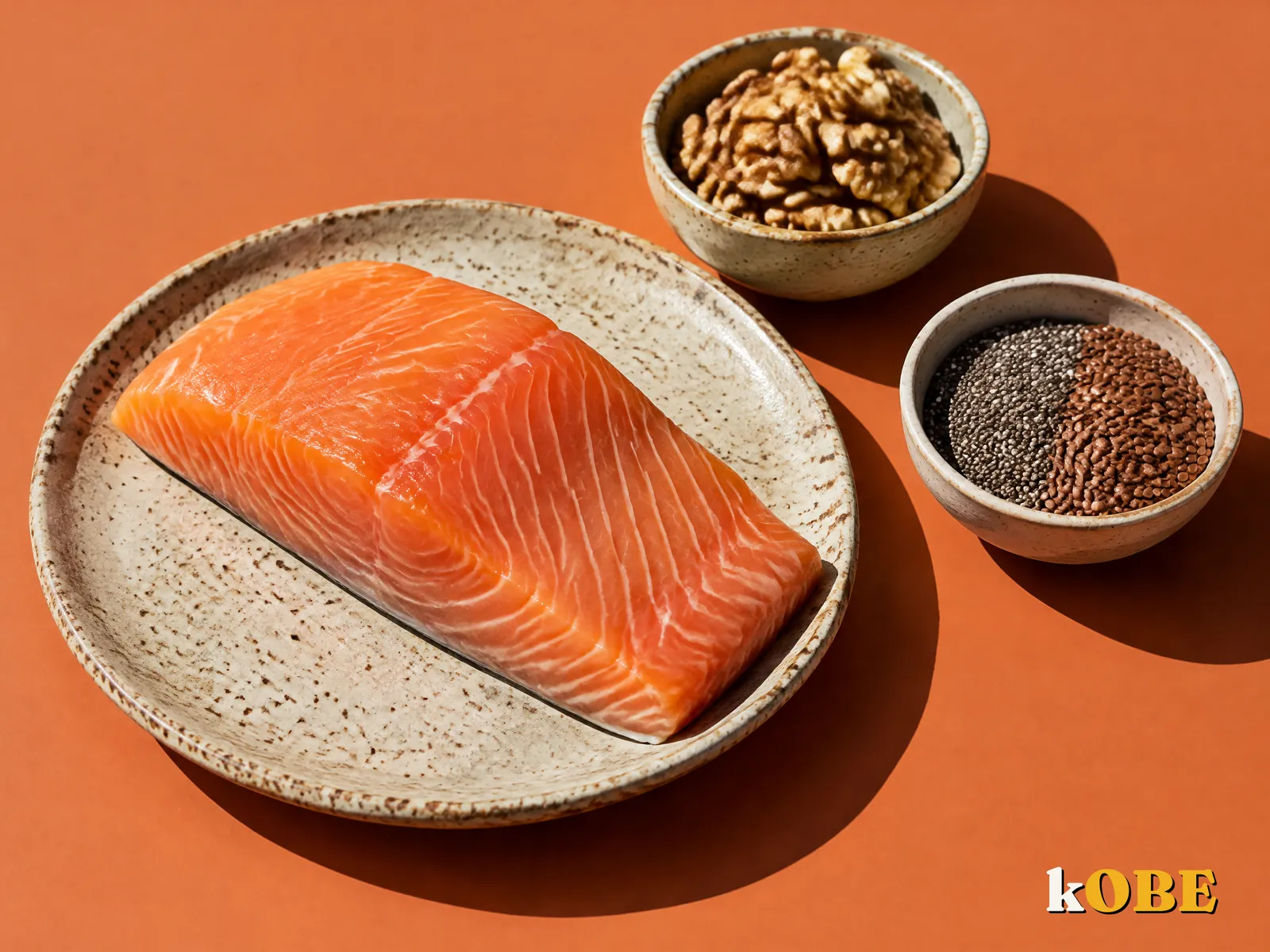
Open the medicine cabinet in plenty of homes and you'll find a jar of glossy golden capsules: omega-3 fish oil. Sometimes it was a gift, sometimes bought after an ad.
But ask what omega-3 actually is, or why it's called "3", and few people can answer.
Here's an even bigger surprise: salmon, famous for being rich in omega-3, doesn't make omega-3 itself. It gets it from food, exactly like we do. Let's start from the beginning.
In this article
What does the name "omega-3" mean?
Omega (ω) is the last letter of the Greek alphabet. In fat chemistry, "omega" refers to the tail end of a fat chain.
Remember the article on saturated and unsaturated fat? Unsaturated fats have "kinks" in their chains. Omega-3 means the first kink sits at position 3, counting from the tail. Omega-6 means it sits at position 6.
Just three steps apart, yet your body uses these two for quite different jobs.
Two fats your body has to "buy in"
Your body can make most of the fats it needs. But there are two it can't:
- ALA (alpha-linolenic acid), from the omega-3 family.
- LA (linoleic acid), from the omega-6 family.
These are called essential fatty acids, meaning they must come from food.
What do they do? They're building material for cell membranes. They're also raw material for small "messenger" molecules that help steer many processes, like blood vessels widening and narrowing, or the inflammation response.
Fun fact: DHA, a type of omega-3, is found in large amounts in the brain and the retina of the eye. That's why omega-3 comes up so often in nutrition for pregnant women and young children.
Omega-3 has three siblings: ALA, EPA, DHA
| Name | Where you find a lot of it |
|---|---|
| ALA | Flaxseed, chia seeds, walnuts, soybean oil, canola oil |
| EPA | Oily fish, seafood, algae |
| DHA | Oily fish, seafood, algae |
Your body can turn ALA into EPA and DHA. But it's pretty bad at it. Studies estimate only a small share of ALA becomes EPA, and even less becomes DHA, usually just a few percent.
So where does fish get its EPA and DHA? From algae. Algae make omega-3, plankton eat the algae, small fish eat the plankton, and big fish eat the small fish. Omega-3 climbs up the food chain and builds up in the fish.
Good news for plant-based eaters: oil extracted from algae is also a source of EPA and DHA, no fish required.
Is omega-6 the bad guy?
Online you'll often see advice to "cut omega-6 because it causes inflammation". The real story is more complicated.
Omega-6 is plentiful in soybean oil, sunflower oil, corn oil, sesame and peanuts. Modern diets carry far more omega-6 than omega-3, which is why people talk about the "omega-6 to omega-3 ratio".
Where scientists broadly agree:
- Omega-6 is still essential. Your body needs it.
- Major organizations haven't advised healthy people to cut omega-6. Some reviews even found that using omega-6-rich oils in place of saturated fat benefits blood lipid levels.
- The "ideal ratio" is still being debated, with no settled number.
So the most practical approach: don't fear omega-6, add omega-3. Adding a few fish meals a week is easier and more useful than rationing every drop of soybean oil.
How much per week? In fish meals
The European Food Safety Authority (EFSA) suggests adults get about 250mg of EPA plus DHA a day, or about 1.75g a week. Many guidelines, like those of the NHS (UK), turn that into: at least 2 portions of fish a week, one of them oily.
Picture it with food:
| Food | Omega-3, roughly |
|---|---|
| 100g cooked salmon | 2g EPA and DHA |
| 100g canned sardines | 1g EPA and DHA |
| 1 tablespoon chia seeds | 2g ALA |
| 1 handful of walnuts (about 28g) | 2.5g ALA |
| 1 tablespoon ground flaxseed | 1.6g ALA |
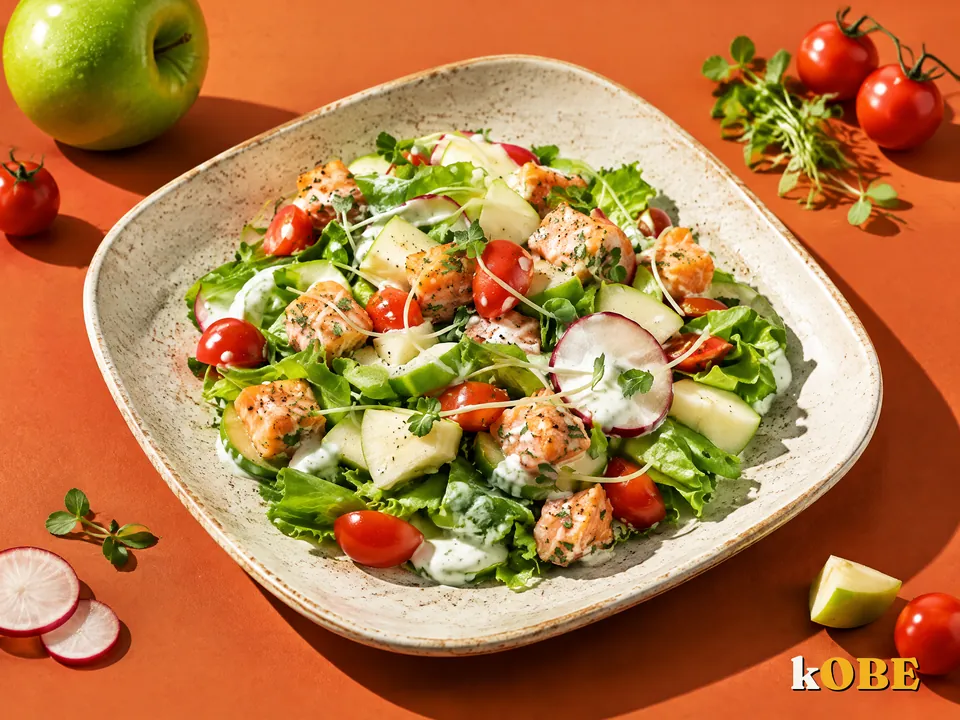
So a palm-sized piece of salmon already comes close to the suggested EPA and DHA for a whole week. Saba (Japanese mackerel), herring and anchovies are also rich in omega-3. Lean white fish like basa and tilapia have far less.
Chia seeds and walnuts give you ALA. Great, but remember only a small share of ALA turns into EPA and DHA.
Fish, seeds or fish oil capsules?
We put food first. A fish meal isn't just omega-3; it also brings protein, vitamin D, iodine and selenium.
Fish oil capsules are a personal decision. If you're considering them, ask a health professional who knows your situation, especially if you take medication.
A few tips to protect omega-3 when cooking and storing:
- Steaming, grilling and pan-searing keep omega-3 better than deep-frying in oil that's been used over and over.
- Grind flaxseed fresh, or grind it and keep it in the fridge. Whole seeds tend to pass through the gut undigested.
- Omega-3 oxidizes easily. Keep flaxseed and walnut oils in the fridge, out of the sun. If they smell rancid, toss them.
Inside the kOBE kitchen
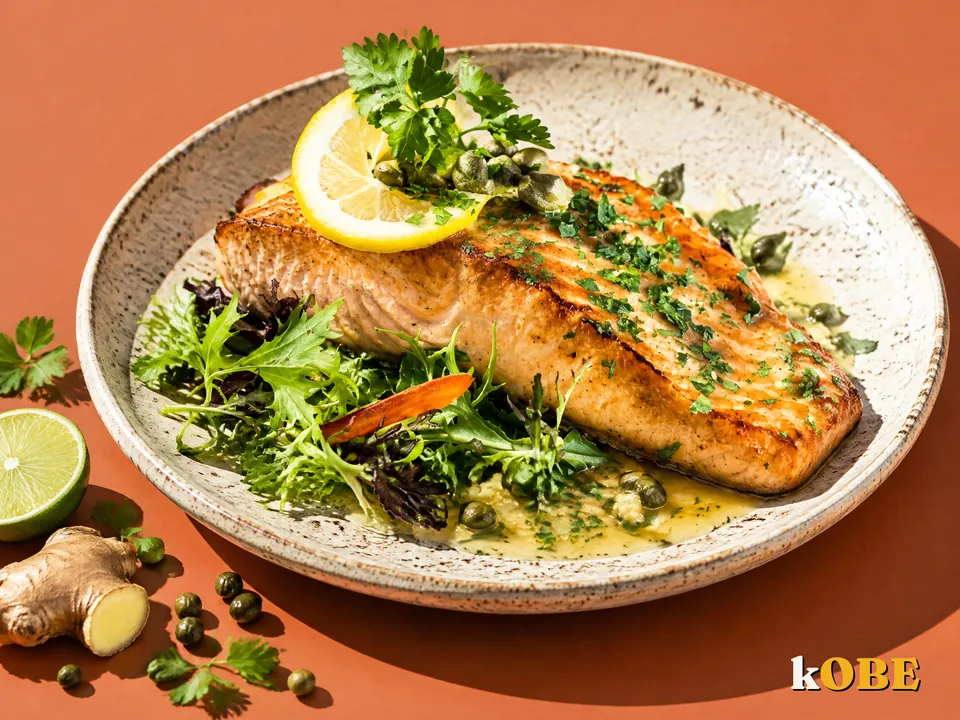
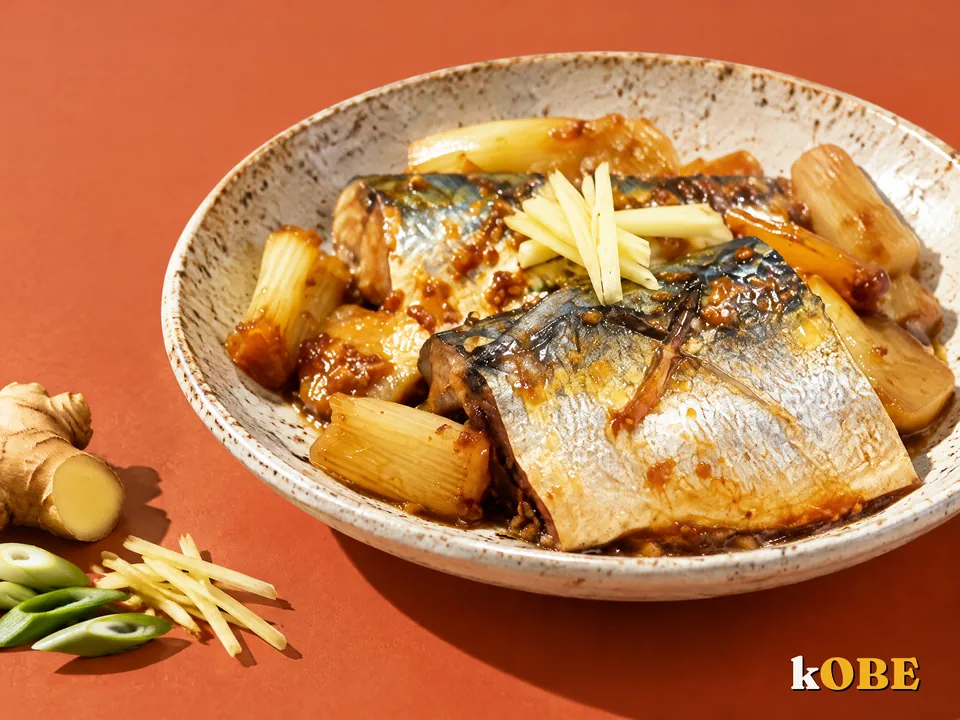
Our 1,480 home recipes include plenty of oily fish dishes: pan-seared salmon, grilled salmon, saba braised in miso. Each one lists calories, protein, fat and sugar per 100g.
A tip from our kitchen: most of the fat in a salmon fillet is the good kind, so don't sear it until it's dry and shriveled. Keep the heat medium, crisp the skin, cook the flesh just through, and it tastes great without losing much fish fat to the pan.
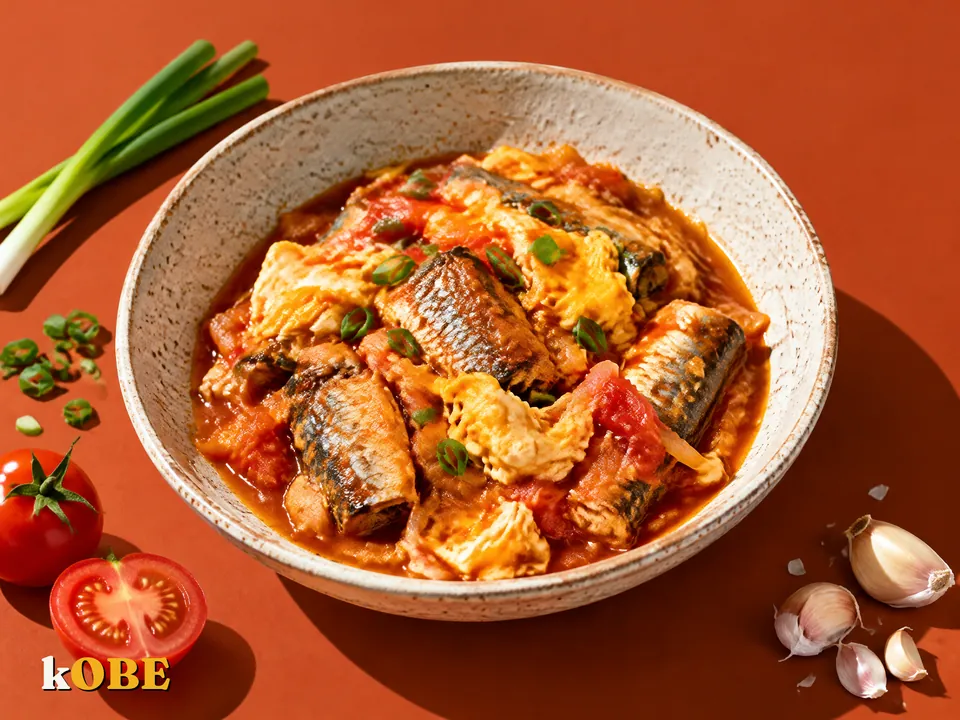
Cá kho (Vietnamese caramel-braised fish) is also a great way to eat oily fish the Vietnamese way. kOBE recipes cook it with monk fruit sweetener instead of cane sugar, so the pot stays rich with less sugar.
Frequently asked questions
Where do vegetarians get omega-3?
Does canned fish still have omega-3?
What are "omega-3 enriched" eggs?
Keep reading
Sources
- EFSA Panel on Dietetic Products, Nutrition and Allergies (2010). Scientific Opinion on Dietary Reference Values for fats. EFSA Journal 8(3):1461.
- Burdge G.C., Calder P.C. (2005). Conversion of alpha-linolenic acid to longer-chain polyunsaturated fatty acid derivatives in human adults. Reproduction Nutrition Development 45(5):581 to 597.
- Harris W.S. et al. (2009). Omega-6 fatty acids and risk for cardiovascular disease: a science advisory from the American Heart Association. Circulation 119(6):902 to 907.
- NHS (UK). Fish and shellfish (2 portions of fish a week, 1 of them oily).
- USDA FoodData Central: cooked Atlantic salmon, canned sardines, chia seeds, walnuts, flaxseed.
- Further reading: Understanding Nutrition 16th ed., chapter 5; Food Lipids (nutrition section).