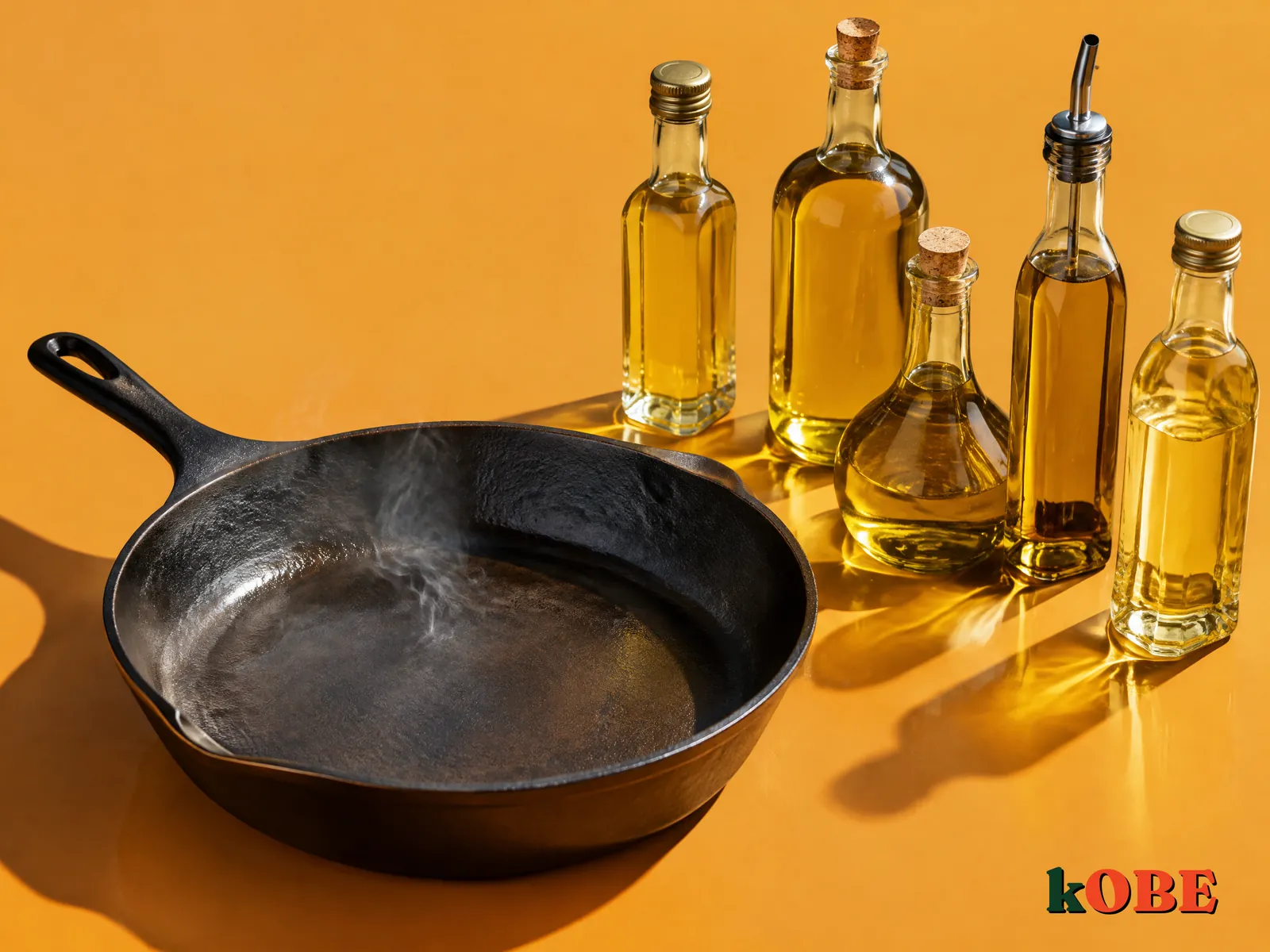
You put the pan on the stove, pour in the oil, and turn around to grab the fish. When you turn back, a thin bluish smoke is rising from the pan. Your eyes sting and the whole family starts sneezing.
That smoke is more than a bad smell. It's a sign the oil is starting to break down. Every oil has its own temperature for this, called the smoke point.
Once you know about smoke points, you'll understand why grandma fried in lard, why Japanese restaurants dress greens with sesame oil, and why fried chicken shops stick to certain oils.
In this article
The smoke point is when oil "calls for help"
As oil heats up, nothing happens at first. Then at a certain temperature, the fat molecules start to break apart and drift off as smoke.
One of the compounds formed at this point is called acrolein. It's the culprit behind stinging eyes and a scratchy throat when you stand near a smoking pan.
At the same time, the oil oxidizes faster. Food picks up a burnt smell and a bitter taste. In short: smoke is the signal you've gone too far, so turn down the heat or switch oils.
Smoke point chart for common oils
The numbers below are rough estimates. Smoke points shift with the plant variety, pressing method, level of refining and even how fresh the bottle is. Different sources can disagree by a few dozen degrees.
| Oil or fat | Smoke point, roughly |
|---|---|
| Butter | 150°C |
| Sesame oil, virgin coconut oil | 170 to 180°C |
| Lard | 190°C |
| Extra virgin olive oil | 190 to 210°C |
| Refined soybean, sunflower, canola oil | about 230°C |
| Refined peanut oil | about 230°C |
| Rice bran oil | 230 to 250°C |
| Refined (light) olive oil | about 240°C |
For comparison, here are home kitchen temperatures:
- Deep-frying: usually about 170 to 190°C.
- Pan-searing, stir-frying: depending on the flame, the bottom of the pan can run from about 150 to over 200°C.
- Salad dressing, drizzling: no heat needed.
Put the two lists side by side and you'll see most oils in a Vietnamese kitchen can handle everyday cooking. Only butter and sesame oil smoke easily over high heat.
Same seed, different smoke points?
The secret is the word refined.
Oil pressed from seeds or fruit still carries tiny particles, a bit of protein and some free fatty acids. These "passengers" burn first and drag the smoke point down.
Refining filters them out. The oil turns clearer, milder in smell, and handles higher heat. The trade-off: it loses some of its signature flavor.
That's why:
- Toasted sesame oil smells incredible but smokes easily. It's usually drizzled at the end.
- Refined soybean oil has almost no smell, but stands up to frying and stir-frying.
- Butter contains milk proteins that brown and burn. Strip them out to make ghee, and the smoke point jumps.
The smoke point isn't everything
Many people choose oil by smoke point alone: the higher the number, the better. But there's another factor just as important: how stable the oil stays under long heating.
Remember the article on saturated and unsaturated fat? Polyunsaturated fat has lots of kinks, lots of "weak points" for oxygen to attack. The more poly fat an oil has, the more easily it oxidizes under long heating, even with a high smoke point.
On the other hand, oils rich in monounsaturated fat, like olive oil and peanut oil, are fairly stable. Extra virgin olive oil also comes with some natural antioxidants, which help it hold up better than its smoke point suggests. That story gets its own article: Can you fry with olive oil.
Bottom line: when picking an oil, look at all three: smoke point, stability, and the flavor you want.
Which oil for which job?
A simple split for the home kitchen:
- Deep-frying: refined, heat-stable, neutral oils. For example peanut oil, rice bran oil, soybean oil, canola oil.
- High-heat stir-frying: the refined oils above. Extra virgin olive oil works too, as long as you don't let the pan smoke.
- Pan-searing, oven-roasting, medium-heat stir-frying: olive oil, lard, or butter mixed with a little oil so it doesn't burn.
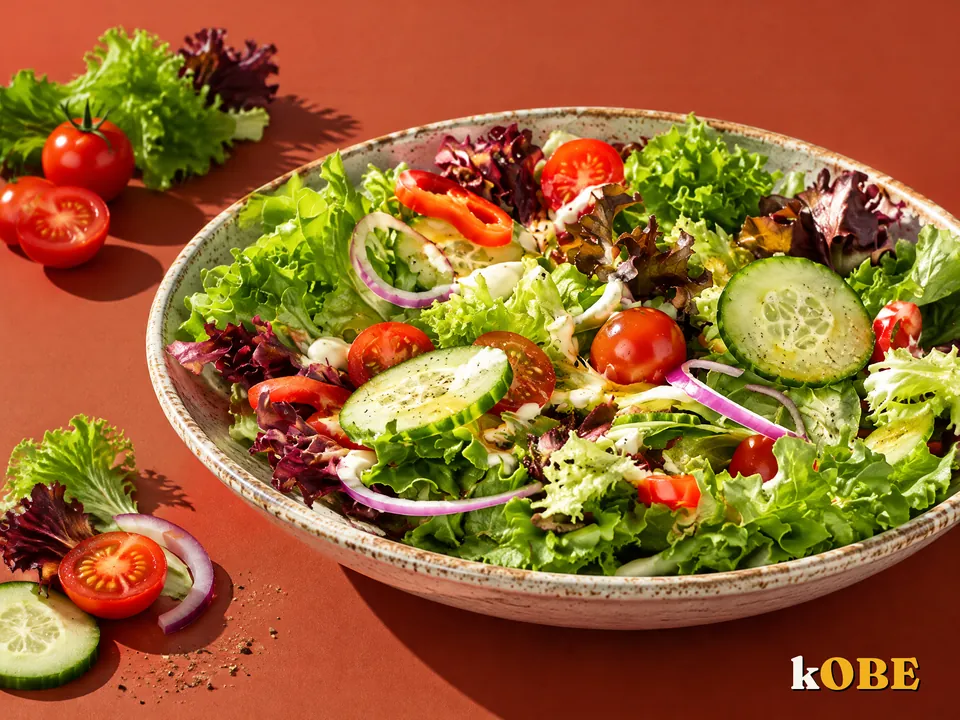
- Dressing, drizzling, dipping: extra virgin olive oil, toasted sesame oil. This is where flavor takes the stage.
Every oil has its strengths. You don't need ten bottles at home. Two is enough: a refined one for frying and stir-frying, and a fragrant one for dressing.
The chopstick trick and a few small things
No thermometer? Grandma has a way:
- Dip the tip of a dry bamboo chopstick into the oil. Small, steady bubbles around it mean the oil is hot enough to fry. Wild, furious bubbling means it's a bit too hot.
- The pan starts to smoke faintly: turn down the heat right away. Don't wait for thick smoke.
- The oil catches fire: turn off the stove and cover the pan tightly with a lid. Never throw water on it.
- Store oil in a dark, cool place, tightly capped. Light and heat age oil quickly, and the smoke point creeps down over time.
Inside the kOBE kitchen
For our ready-cooked ingredients, we use two oils for two different jobs.
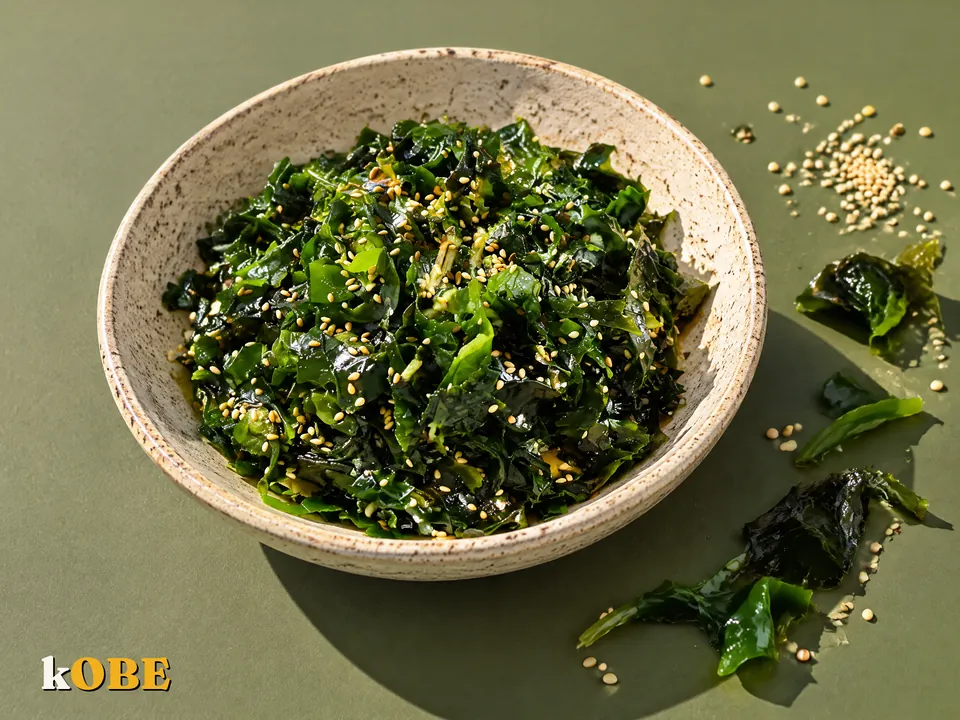
Our Japanese, Purple and Honey Sweet Potatoes are roasted with a little olive oil. Our Sesame Kale uses sesame oil the way Koreans make namul: massaged into the greens with toasted sesame, so the sesame aroma is the star. Just like the chart above says: fragrant oils are for dressing.
These are cooked, then frozen. Just thaw them in the fridge overnight, or reheat in the microwave on low. See them on our Ingredients page.
Frequently asked questions
Can you fry with sesame oil?
Can I keep using oil that has already smoked?
What's special about rice bran oil?
Keep reading
Sources
- Choe E., Min D.B. (2007). Chemistry of deep-fat frying oils. Journal of Food Science 72(5):R77 to R86.
- USDA FoodData Central: fatty acid composition of soybean oil, peanut oil, olive oil, sesame oil.
- Harvard T.H. Chan School of Public Health, The Nutrition Source. Fats and Cholesterol.
- Further reading: Food Lipids (section on lipid oxidation); Culinary Nutrition, chapter 6.