On full-moon days, the vegetarian bánh mì outside the pagoda still comes fully loaded: vegan chả lụa (Vietnamese sausage), pickles, fresh herbs. It's missing just one thing: that rich, smooth layer of sauce swiped inside the bread.
The reason is simple. Traditional mayonnaise needs egg yolk. Lifelong vegetarians, vegans and people with egg allergies all have to skip it.
So how does vegan mayo keep oil and water from splitting? The answer involves the familiar soybean, plus a delightful discovery by home cooks.
In this article
What does egg do in mayo?
In What is mayonnaise made of, we explained that mayo is an emulsion: billions of tiny oil droplets suspended in a little water.
To stop the droplets from merging, you need an emulsifier, a kind of "interpreter" with one end that loves water and one that loves oil. Egg yolk does this job thanks to lecithin and some proteins.
To drop the egg, you just need another interpreter. The plant world has plenty of candidates.
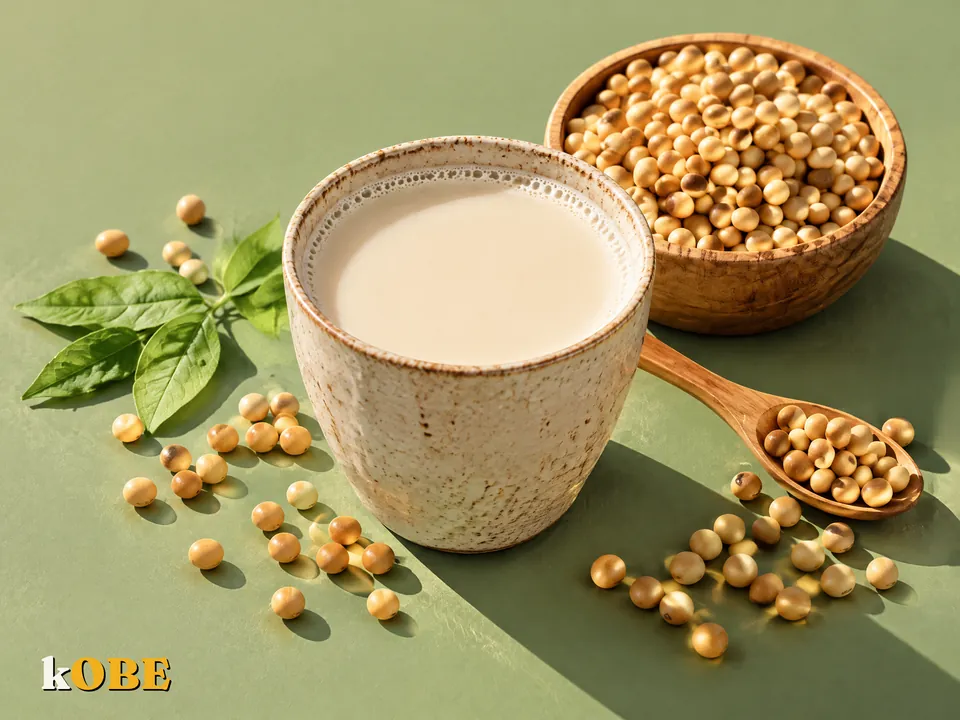
Soy: the "egg yolk" of the plant world
Soy is the strongest candidate, because it has both skills:
- Soy lecithin: from the same family as egg lecithin. It's one of the most common emulsifiers in the food industry, found in everything from chocolate bars to cookies.
- Soy protein: when it meets an oil droplet, the protein molecules unfold and cling around it, forming a protective coat.
That gives us two common kinds of soy-based vegan mayo:
- Soy milk style: soy milk blended with oil, lemon and salt. Made exactly like egg mayo, and almost as oily as egg mayo.
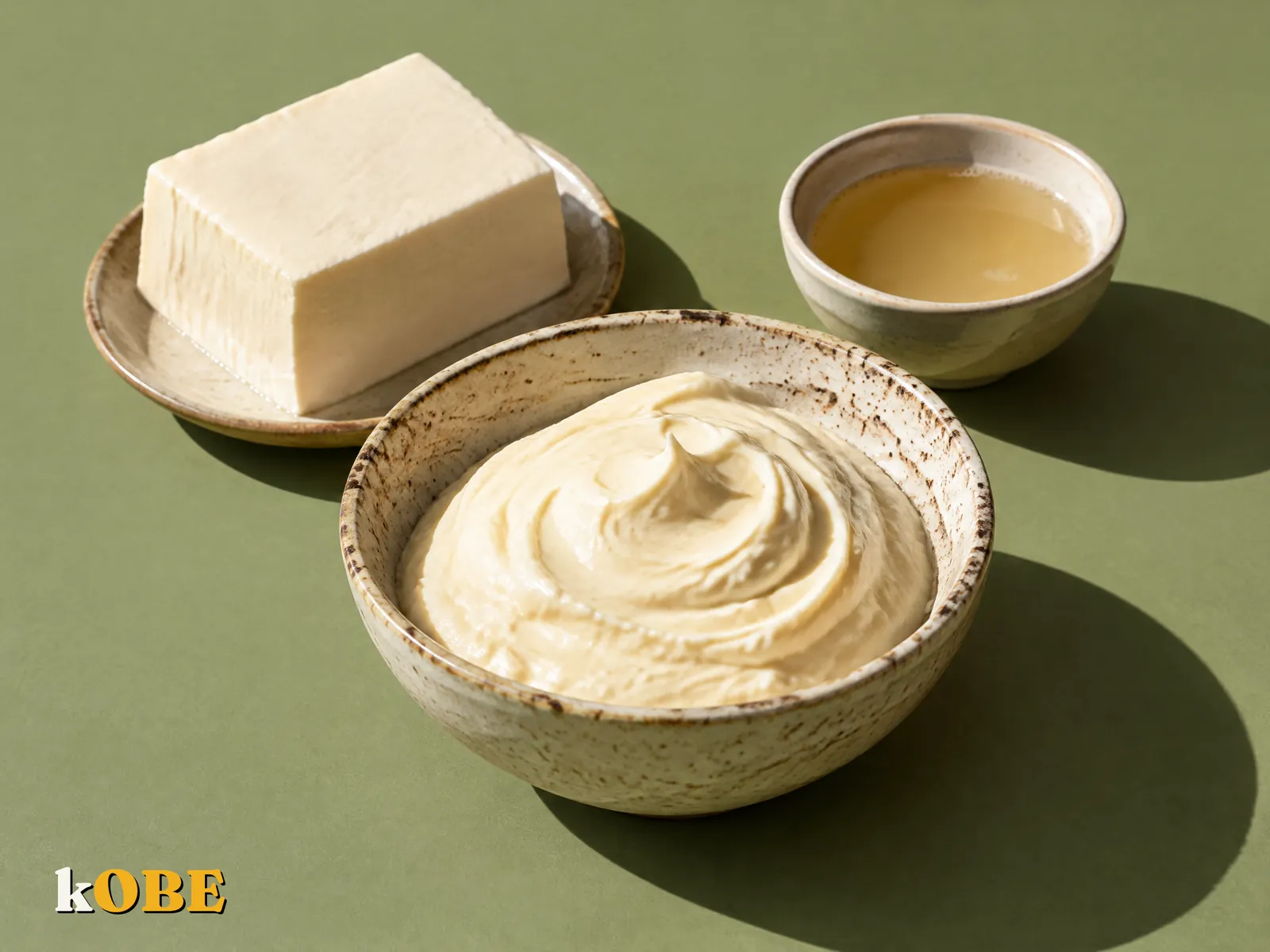
- Tofu style: blended silken tofu as the base. Tofu is already a block of protein holding water, so it needs very little oil to stay thick.
These two look alike, but their nutrition panels are worlds apart. We'll come back to this below.
Chickpea cooking water: a home cook's discovery
This is our favorite fun fact in the article.
Around the mid-2010s, the online vegan cooking community discovered that chickpea cooking water, the liquid everyone pours down the drain, can be whipped into white, fluffy foam just like egg white. They named it aquafaba, meaning "bean water".
Why does it work? During boiling, some protein, starch and saponins from the beans dissolve into the water. Saponins are natural foaming agents, a bit like a mild soap. The protein and starch help hold the foam and hold the oil droplets.
Since then, people have used aquafaba to make vegan meringue, vegan mousse and, of course, vegan mayo.
Other "sauce keepers"
Besides soy and chickpeas, there are a few more ways to hold a sauce together without eggs:
- Mustard: the mustard seed coat has a mucilage that makes emulsions more stable. That's why vinaigrette recipes so often add a spoon of mustard.
- Soaked, blended cashews: make a thick cream thanks to the nut's own fat and protein.
- Starch and gums: thicken the water, just like low-fat sauces in Low-fat mayo.
Is vegan mayo automatically lighter?
No. This is a common misunderstanding.
"Vegan" describes where the ingredients come from, not how many calories they carry. Soy milk style vegan mayo is still mostly oil, so its calories can be close to egg mayo: about 100 calories per tablespoon.
The real differences:
- No cholesterol, since cholesterol only exists in foods from animals.
- The fat comes from vegetable oil; check the ingredient list for which kind.
If you want truly light, look at the nutrition panel: how much fat per 100g, and whether the base is oil or tofu and vegetables.
Make vegan mayo in 5 minutes
Soy milk style, with a stick blender:
- In a tall cup, add about 1 part unsweetened soy milk, chilled.
- Add a splash of lemon juice or vinegar, a pinch of salt and half a teaspoon of mustard.
- Blend while slowly pouring in about 2 parts mild vegetable oil.
- The sauce thickens in about a minute. Adjust the tang and salt.
For something lighter, go tofu style: blend silken tofu with lemon, salt, mustard and just one spoon of oil.
Buddhist vegetarians often avoid onion and garlic. Homemade vegan mayo makes that easy: just skip the garlic and add a little pepper or fresh herbs.
Once made, keep it in the fridge and use within a few days.
Inside the kOBE kitchen
kOBE Signature Lean Mayo, Vegan has a soybean tofu base, which makes it closer to the second style above than the soy milk style. No eggs, no dairy, no preservatives.
Per 100g it has 49 calories, 3.5g of protein, 6.5g of carbs, 2g of fat and 1.2g of sugar. That 2g of fat tells you it isn't an oil-heavy sauce.
Swipe it on a vegetarian bánh mì, toss it into salads, or dip boiled vegetables in it. Want to mix more sauces for plant-based meals? Visit the Sauce Library.
Frequently asked questions
Can people with egg allergies eat vegan mayo?
Can I use aquafaba from canned chickpeas?
Does vegan mayo have as much protein as egg mayo?
Keep reading
Sources
- EFSA Panel on Food Additives and Nutrient Sources added to Food (2017). Re-evaluation of lecithins (E 322) as a food additive. EFSA Journal.
- USDA FoodData Central: silken tofu, unsweetened soy milk, boiled chickpeas.
- Harvard T.H. Chan School of Public Health, The Nutrition Source. Fats and Cholesterol (cholesterol is found only in animal foods).
- Further reading: McClements D.J., Food Emulsions: Principles, Practices, and Techniques; Food Lipids (section on emulsions); Plant-Based Sports Nutrition.