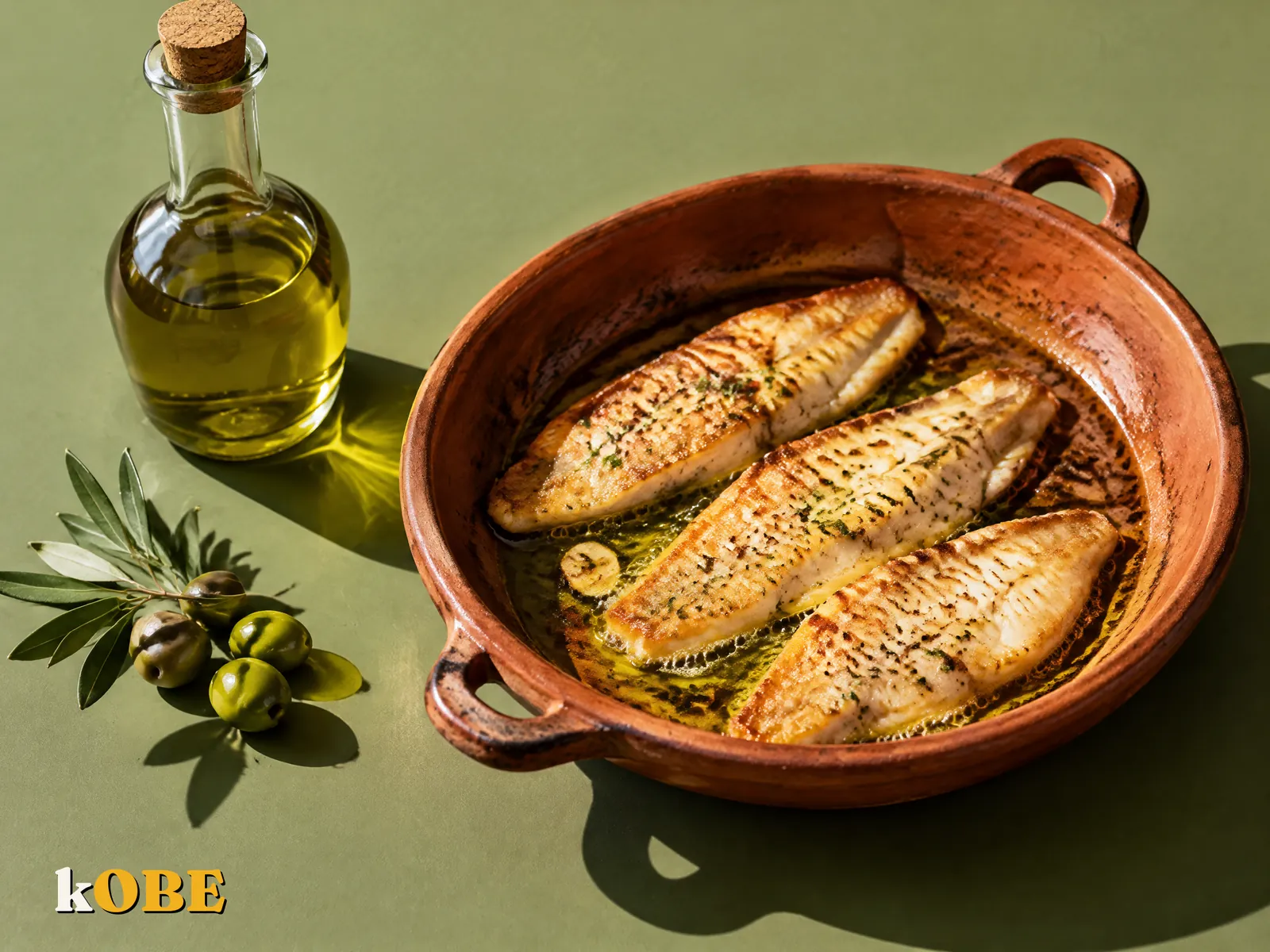
"Olive oil is only for salads. Fry with it and it turns toxic." You've probably heard this, maybe from a relative, maybe from a video online.
Yet in southern Spain, people have been frying little battered fish in olive oil for generations. In Greece, vegetables, eggs and potatoes all go into a pan of olive oil.
So who's right? The short answer: you can fry and stir-fry with olive oil, as long as you understand it a little. The long answer is a lot more interesting.
In this article
The rumor starts with one number
The rumor comes from the smoke point, the temperature where oil starts to smoke and break down.
Extra virgin olive oil has a smoke point of about 190 to 210°C. Refined seed oils like soybean and sunflower usually sit around 230°C. Looking at the numbers, people concluded that olive oil is "weaker" and shouldn't be used for frying.
But look at real kitchen temperatures. Deep-frying usually happens at about 170 to 190°C. Pan-searing and medium-heat stir-frying run even lower. So most everyday cooking stays below the smoke point of extra virgin olive oil.
Lower smoke point, higher staying power
In Smoke points of cooking oils, we said the smoke point isn't everything. Just as important is how stable an oil stays under long heating.
Olive oil has two advantages:
- About 73% is monounsaturated fat. This fat has only one "kink" in its chain, so it offers fewer weak spots for oxygen to attack than polyunsaturated fat.
- The extra virgin kind comes with natural antioxidants, including polyphenols and vitamin E. They act like guards, taking some of the hits for the fat when it's heated.
Some experiments that heated oils for hours on end found that extra virgin olive oil produced fewer breakdown products than several seed oils with higher smoke points. To be fair: there aren't many of these experiments yet, and most were done in labs, not home kitchens. But they're enough to show that "frying makes it toxic" is an exaggeration.
Extra virgin, light, pomace: reading the label
At the supermarket, you'll find a whole shelf of olive oils with all kinds of words on them. Here's a quick guide:
| On the label | What it means | Good for |
|---|---|---|
| Extra virgin | Mechanically pressed, unrefined, very low acidity, most aromatic | Dressing, drizzling, pan-searing, medium-heat stir-frying |
| Virgin | Mechanically pressed, unrefined, one step lower on flavor standards | Everyday cooking |
| Olive oil, pure | Refined olive oil blended with a little virgin oil | Stir-frying, frying |
| Light | Refined, pale in color, mild in smell | Frying, baking |
| Pomace | Extracted from the olive pulp left after pressing, then refined | Frying |
A fun fact worth remembering: "light" means light in flavor, not light in calories. A tablespoon of light olive oil still has about 120 calories, just like any other oil.
Under international standards, extra virgin oil must have no more than 0.8% free acidity, and it must pass a tasting test by an expert panel. The lower the acidity, the fresher the olives and the more carefully they were pressed.
So how should you fry with it?
A few ground rules for using olive oil without wasting it:
- Pan-searing, medium-heat stir-frying, oven-roasting: use extra virgin freely. Just don't let the pan smoke.
- Deep-frying: fine, but it uses a lot. Pure or light olive oil costs you less and tastes milder too.
- Very high heat, restaurant-style wok tossing: choose a heat-stable refined oil.
- Don't reuse it too many times. Every oil degrades with each batch. Signs it's time to toss it are in Reusing frying oil.
What gets lost when you heat it?
Honestly, so you can choose well: heat does make extra virgin olive oil lose some of its aroma and polyphenols. The longer it's heated, the more it loses.
The monounsaturated fat is still there. The calories don't change either. Only the "floral notes" fade.
So here's a small trick: cook with regular olive oil, and save your best extra virgin bottle for drizzling once the dish is done. A swirl over grilled fish or a salad bowl is the fullest way to enjoy it.
Choosing and storing olive oil
Olive oil fears three things: light, heat and air.
- Pick dark glass bottles or metal tins. Clear bottles sitting under supermarket lights for a long time age the oil faster.
- Check the harvest or best-before date. Olive oil doesn't get better with age like wine. The fresher, the more fragrant.
- Buy a size you'll finish in a few months. Once opened, the oil starts meeting air.
- Don't keep it right next to the stove. A dark, cool kitchen cabinet is ideal.
Put olive oil in the fridge and it turns cloudy and grainy. That's just some of the fat solidifying in the cold, not spoilage. Leave it out for a while and it clears up again.
Inside the kOBE kitchen
kOBE's Japanese, Purple and Honey Sweet Potatoes are roasted with a little olive oil, diced, then frozen. Per 100g they come to about 122, 114 and 139 calories respectively.
That bit of oil isn't just for flavor. Beta-carotene, the orange pigment in sweet potato, is fat-soluble. With a little oil alongside, your body is in a better position to absorb it.
To eat, thaw them in the fridge overnight or reheat in the microwave on low, then toss into a salad or serve with chicken breast. See them on our Ingredients page.
Frequently asked questions
Does olive oil work for Vietnamese cooking?
Does olive oil have fewer calories than other oils?
Olive oil that feels peppery or bitter in the throat, is it spoiled?
Keep reading
Sources
- International Olive Council. Trade standard applying to olive oils and olive pomace oils (grades extra virgin, virgin, refined, pomace; free acidity).
- USDA FoodData Central, SR Legacy: olive oil (fatty acid composition, energy).
- Choe E., Min D.B. (2007). Chemistry of deep-fat frying oils. Journal of Food Science 72(5):R77 to R86.
- Harvard T.H. Chan School of Public Health, The Nutrition Source. Types of Fat.
- Further reading: Food Lipids (section on lipid oxidation); Culinary Nutrition, chapter 6.