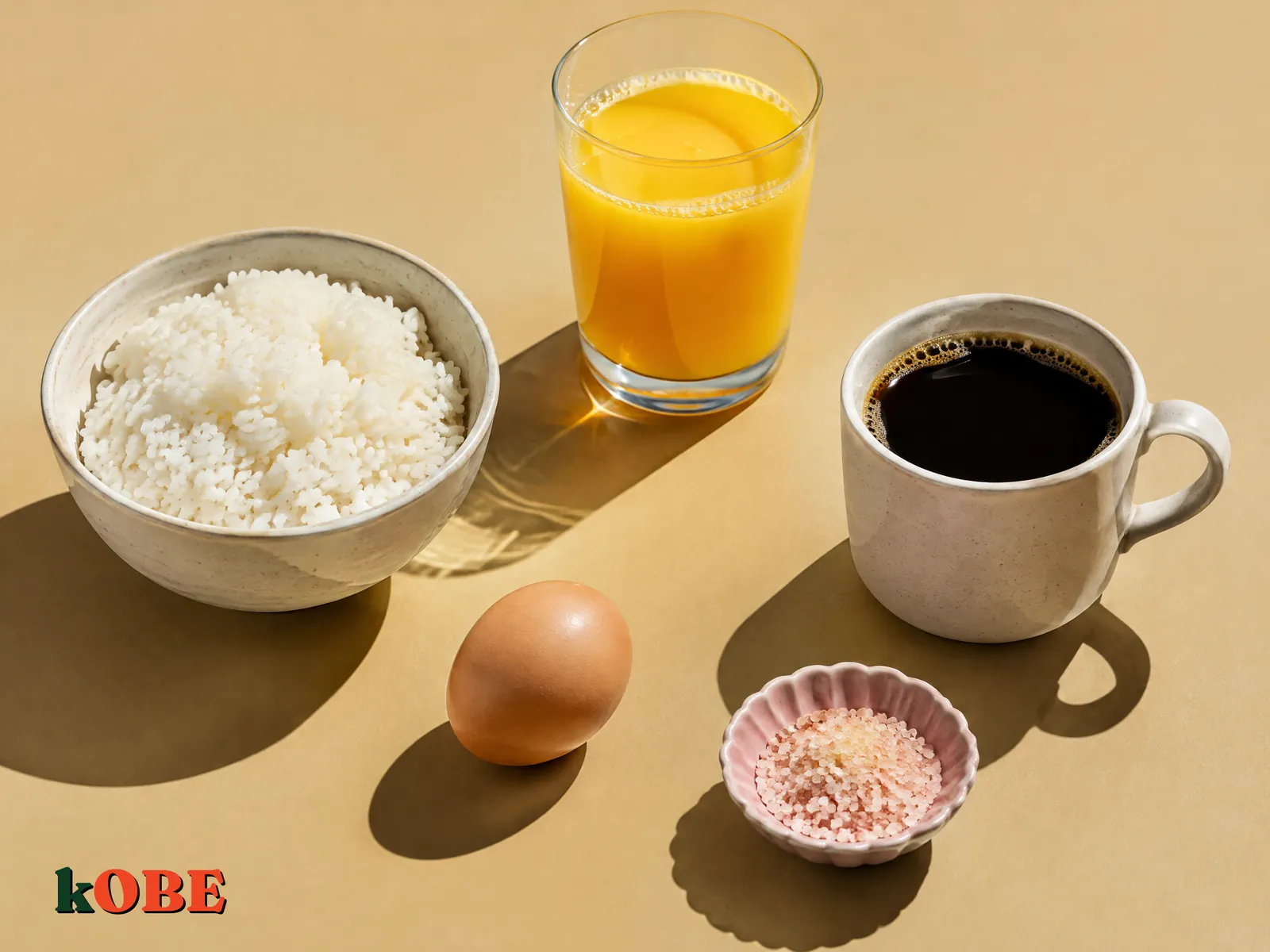
The family group chat just got a forwarded message: "Eat dinner after 8pm and it all goes straight to your belly." The colleague at the next desk has gone keto and quit rice completely. And Mum just bought a juicer, so every morning starts with a glass of celery juice "to flush out toxins".
Next week there is a new message. This time carbs are harmful, or fruit has too much sugar, or pink salt beats white salt. Sometimes two pieces of advice flatly contradict each other.
If you feel confused, you are not alone. This article is a stroll through eight common food myths. For each one, we look at why people believe it, what the science says, and where the debate is still open.
Nobody gets judged here. Most myths start from a grain of truth.
In this article
Why do food rumours travel faster than facts?
Compare two sentences. One: "Sugar is poison." Two: "Eating a lot of free sugars over a long time is linked to several health problems, depending on the amount and the rest of the meal."
Which one sticks? Sentence one, easily. Sentence two is more accurate, but it sounds like meeting minutes.
Food rumours win for three reasons:
- They split food into good guys and bad guys. Our brains love a story with a hero and a villain.
- They promise a shortcut. Drop one food, or add one food, and everything is fixed.
- They hold a grain of truth. Too much added sugar really is worth cutting back. The rumour then blows that up into "everything sweet is bad".
Here is a fun thing about looking around the world. Japanese people eat a lot of rice. Mediterranean people eat plenty of olive oil and bread. Many communities in Africa eat lots of grains and beans. Those very different diets can all keep people healthy.
So it is hard to find one single right diet for everyone. What good eating patterns share tends to be simple: mostly minimally processed food, plenty of vegetables, not too much added sugar, eating until comfortably full. The rest depends on taste, culture and each person's body.
Keep that in mind, and let's walk through the eight myths.
Myths 1 and 2: all about the clock
Myth 1: "Eating dinner after 8pm makes you fat."
The grain of truth: your body has a body clock (circadian rhythm). Some studies show the same meal raises blood sugar more when eaten late than when eaten early. Lying down right after a big meal also invites heartburn.
But no clock strikes 8 and turns calories into fat. How much you eat across the whole day is still the big factor. Someone finishing a shift at 9pm cannot have dinner at 6. For them, a moderate dinner 2 to 3 hours before bed is perfectly sensible. Read more in is eating after 8pm bad for you.
Myth 2: "Skip breakfast and the whole day is ruined."
"Breakfast is the most important meal of the day" sounds very familiar. But when scientists randomly assign people to eat or skip breakfast, the results are far less clear than the saying. A 2019 review in the BMJ did not find that eating breakfast helped people manage their weight better.
So skipping is fine? It depends on the person. Some people skip breakfast, then eat double at lunch and crash by afternoon. Others are not hungry in the morning, eat an early lunch and feel great. Schoolchildren are a different case: breakfast gives them energy for lessons. Details in is skipping breakfast bad.
Myths 3, 4 and 5: the wrongly accused
Myth 3: "Carbs are the villain."
White rice takes the most blame. Yet Vietnamese people have eaten rice for centuries. The problem usually lies in the amount, the type, and what comes alongside it.
A bowl of rice with cá kho (caramelised braised fish) and a plate of boiled greens is a world away from three pastries and a milk tea, even though both contain carbs. Carbs from whole grains, sweet potatoes and beans come with fibre and digest more slowly. See good carbs and bad carbs.
Myth 4: "Gluten-free is healthier."
Gluten is a protein found in wheat and barley. For people with coeliac disease, avoiding gluten is essential, following a doctor's guidance. For people without it, there is no clear evidence that dropping gluten makes you healthier.
A "gluten-free" biscuit can still be as full of sugar and butter as any other. Good news for Vietnamese food lovers: cơm (rice), bún (rice vermicelli), phở and bánh cuốn (steamed rice rolls) are all made from rice to begin with. Read on in is gluten-free healthier.
Myth 5: "Fruit is full of sugar, so avoid it."
Fruit does contain sugar. But whole fruit keeps its fibre, water and vitamins, and you have to chew it. The World Health Organization (WHO) does not count sugar in fresh whole fruit as the "free sugars" we are told to limit.
It is a different story when fruit is juiced, dried and coated in sugar, or blended with condensed milk. See does fruit have too much sugar.
Myths 6, 7 and 8: the overhyped miracle foods
Myth 6: "A juice detox flushes out toxins."
Your body already has a 24-hour cleanup crew: liver, kidneys, lungs and gut. No serious research shows that three days of juice helps that crew do a better job.
The "lighter" feeling after a few detox days is real, but mostly it comes from eating less and cutting fried food and alcohol. One 250ml glass of orange juice has about 5 teaspoons of sugar, close to two thirds of a can of soda. Read does a juice detox work.
Myth 7: "Superfoods exist."
Chia seeds, kale and blueberries are all good foods. But "superfood" is a marketing word, not a scientific term. The European Union even restricts health-flavoured words like this on packaging unless there is an approved basis for them.
Rau muống (water spinach), rau ngót (sweet leaf), black sesame and mung beans from the local market are "super" in their own way too. No single food can carry a whole diet. See are superfoods real.
Myth 8: "Celery is a negative calorie food."
The rumour: chewing celery burns more calories than it gives you. The truth: digestion uses only about one tenth of a meal's energy. 100g of celery has roughly 15 kcal, and digesting it costs under 2 kcal. There is still some left over, even if it is tiny.
Watery, fibre-rich vegetables fill you up lightly, but none of them are "negative". Details in negative calorie foods.
Keto, fasting, vegetarian: diets are tools, not teams
Some topics are not quite myths. They are trends with a real side and an overblown side.
- Keto (ketogenic diet): carbs go very low so the body switches to burning fat as its main fuel. Some people feel great on it, some feel wiped out. When calories are matched, its long-term edge over other eating styles is unclear. Read what is keto and who is it for.
- 16:8 intermittent fasting: eat within 8 hours, rest for 16. Useful for people who like a tidy eating window. But large trials have not found it clearly better than simply eating the right amount the usual way. See 16:8 intermittent fasting.
- Vegetarian eating can be very wholesome when well planned. But a vegetarian spread of fried food, starchy mock meats and heavy seasoning is another matter. See is vegetarian healthier.
If you have an underlying condition, take medication, or are pregnant or breastfeeding, check with your doctor before overhauling your diet. This is not a throwaway line. Cutting carbs suddenly or fasting for long stretches can change how medication works.
A few more frequently asked questions, each with its own article:
- Is coconut oil good or bad? It is richer in saturated fat than even lard.
- Is coffee bad for you? For most healthy adults, a few cups a day is nothing to worry about. The condensed milk in the glass deserves more attention.
- How is pink salt different from regular salt? Mostly just the colour.
- What does "healthy" on a package tell you? Usually less than you think.
Check a rumour in 30 seconds
Next time a forwarded message lands, ask these five questions:
- Does it split food into "miracle foods" and "poison"? Food is rarely that black and white.
- Does it promise big, fast results? The bigger the promise, the more suspicious you should be.
- Who is talking, and are they selling something alongside it?
- Is the evidence from studies in humans, in mice, in test tubes, or just an anecdote?
- Does it say "how much"? Almost everything depends on the dose. Salt, sugar, coffee, even water.
One more tip: nutrition science moves slowly. If a piece of advice flips everything you knew overnight, it is usually clickbait, not consensus.
Inside the kOBE kitchen
We do not sell a diet. We believe in one simple line: "Eat what fits." Eat what suits your body, your schedule and your taste.
So instead of labelling foods good or bad, we write down the numbers. Every dish in our 1,480 home recipes on the Recipes page lists calories, protein, fat and sugar per 100g. Sweet dishes use monk fruit sweetener instead of refined sugar.
Whether you eat keto, eat vegetarian or eat three regular meals, you can use those numbers to plan your own plate. Our ready-cooked ingredients on the Ingredients page, such as Sous Vide Chicken Breast, Red Brown Rice or Sesame Kale, also list their numbers per 100g so you can build meals your way.
Frequently asked questions
How can I tell if nutrition advice is trustworthy?
Why does nutrition science seem to keep changing its mind?
Should I try keto or intermittent fasting?
Do Vietnamese people need to abandon traditional eating?
Keep reading
Sources
- WHO (2015). Guideline: Sugars intake for adults and children.
- WHO. Healthy diet (fact sheet).
- Sievert K. et al. (2019). Effect of breakfast on weight and energy intake: systematic review and meta-analysis of randomised controlled trials. BMJ 364:l42.
- Klein A.V., Kiat H. (2015). Detox diets for toxin elimination and weight management: a critical review of the evidence. Journal of Human Nutrition and Dietetics 28(6).
- Harvard T.H. Chan School of Public Health, The Nutrition Source (Healthy Eating Plate section).
- Further reading: Diet Cults (Matt Fitzgerald), chapters 1 and 6; Nutrition: Concepts and Controversies 16th ed., chapters 1 and 2.