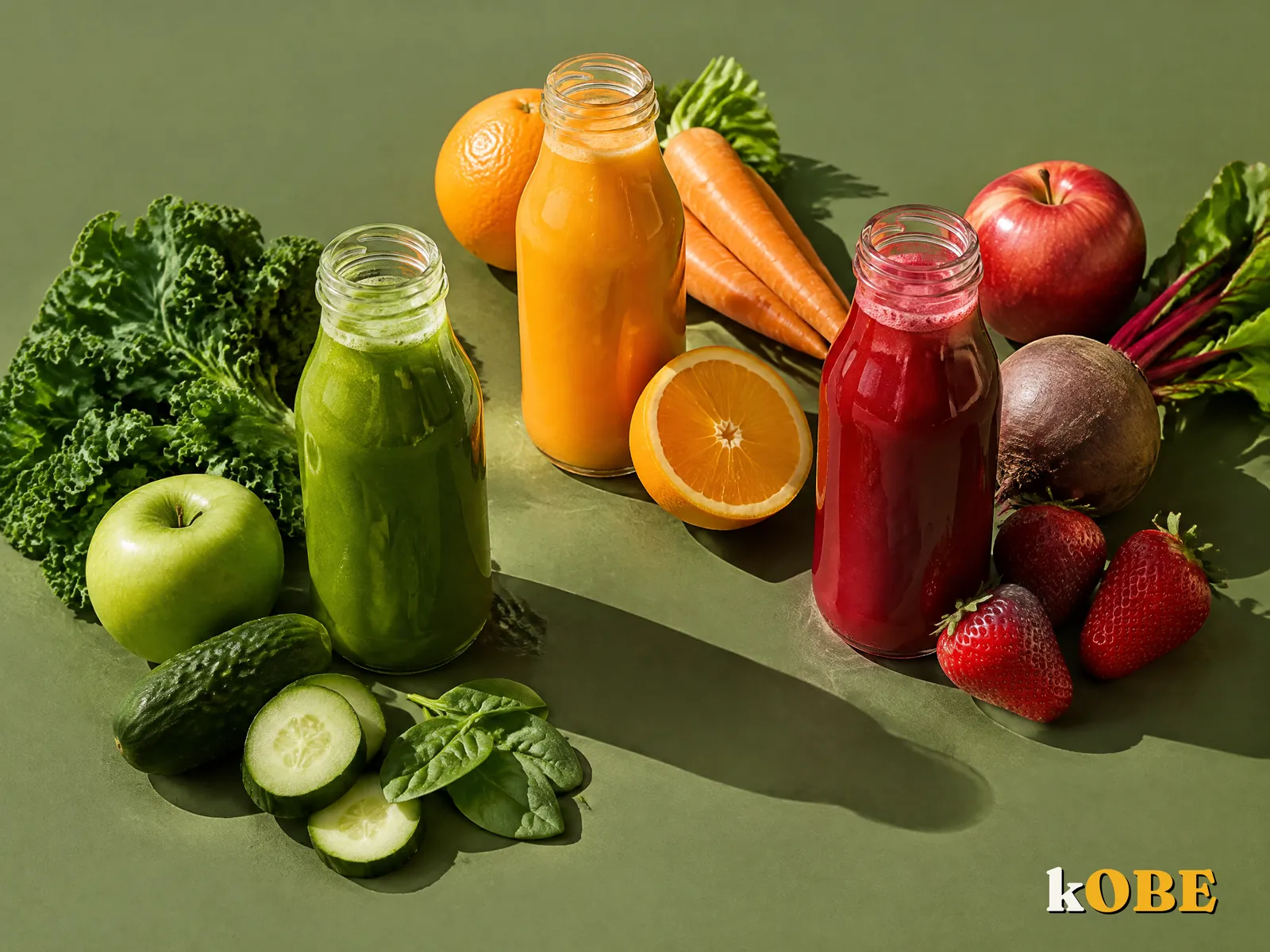
After the Tết holiday (Lunar New Year), every desk seems to have a bottle of bright green juice. Celery, apple, cucumber, lime. The "3-day detox" packs arrive at the office, six bottles a day.
People who drink them say their stomach feels lighter, their skin looks brighter, their head feels clearer. It sounds tempting. Especially after a week of bánh chưng (square sticky rice cake), thịt kho (caramelised braised pork) and beer.
But what exactly is the "toxin" here? And how does juice get it out? Once you ask that, the story gets interesting.
In this article
You already have a cleanup crew working 24 hours a day
The human body comes with a very sophisticated waste disposal system:
- The liver transforms many foreign substances, medicines and alcohol into forms that are easier to get rid of.
- The kidneys filter the blood constantly, about 180 litres a day, and send the excess out as urine.
- The lungs release CO2 every time you breathe out.
- The gut moves out whatever cannot be digested.
- The skin chips in through sweat, though only a little.
This crew works nonstop and needs no detox pack to switch it on. Only when an organ is ill do people need medical care, and that is a job for a hospital, not a bottle of juice.
So what are the "toxins" in detox ads?
Scientists have asked exactly this question. And the answer is surprising: detox ads rarely say which substance they mean.
In 2015, two researchers reviewed the evidence on detox diets. They found almost no quality studies showing that detox helps remove a specific toxin. The few studies that existed were small and weakly designed.
A proper experiment needs to do three things: name the toxin, measure it before, then measure it after. Very few detox products manage that.
Why does a detox make you feel lighter, then?
That feeling is not imaginary. But the reasons differ from the advertising:
- You eat a lot less. Six bottles of juice usually carry less energy than three meals.
- You take a break from heavy stuff. No alcohol, no fried food, nothing salty. That alone makes your stomach happier.
- You drink a lot of fluid. Many people normally drink too little.
- The quick drop on the scale is water and food in the gut, not fat. Eat normally again and the number comes back.
In other words, what helps is a break from old habits, not magic in a bottle.
The side of juice that rarely gets mentioned
Vegetable and fruit juices contain vitamins and minerals. But when you juice, most of the fibre stays behind in the pulp.
Without fibre, the sugar in fruit reaches your blood faster. And because there is no chewing, it is easy to drink several times more fruit than you would normally eat.
| What you have | Sugar, roughly |
|---|---|
| 1 whole orange, peeled and eaten | 9 to 12g |
| 1 glass of orange juice, 250ml (takes 3 to 4 oranges) | 20 to 22g |
| 1 can of soda, 330ml | about 35g |
A glass of orange juice holds about 5 teaspoons of sugar. The WHO puts the sugar in juice in the free sugars group, the group to limit, just like added sugar.
Juice is not filling either. An hour later, you are hungry again. Detox packs that last several days can also leave you short on protein.
Want a "reset"? Here is what actually helps
If you feel heavy after the holidays, there are simple things your body's cleanup crew will thank you for:
- Eat whole fruit instead of juicing it. If you want a drink, blend a smoothie that keeps the pulp, with no added sugar.
- Add vegetables to every meal. Fibre helps your gut work regularly.
- Drink enough water.
- Cut back on alcohol and fried food for a few weeks.
- Sleep enough. It sounds simple, but sleep is when the body rests and recovers.
No 3-day pack needed. Just go back to normal meals with vegetables, protein and moderate carbs.
Inside the kOBE kitchen
We do not sell detox packs. We would rather have a plate of real greens than a bottle of juice.
kOBE Sesame Kale is kale massaged with sesame oil and toasted sesame seeds, namul style, 78 kcal and 4g protein per 100g, with all the leaf's fibre intact. Japanese Sweet Potato, roasted with a little olive oil and diced, is a fibre-rich carb to go with it.
And when you crave something cool to drink, try the smoothie recipes on our site. Each one lists calories and sugar per 100g, so you know what you are drinking. See more on the Ingredients page.
Frequently asked questions
Does celery juice have any special effect?
Is it OK to drink juice every day?
Is a smoothie different from juice?
Keep reading
Sources
- Klein A.V., Kiat H. (2015). Detox diets for toxin elimination and weight management: a critical review of the evidence. Journal of Human Nutrition and Dietetics 28(6).
- WHO (2015). Guideline: Sugars intake for adults and children.
- USDA FoodData Central: fresh oranges, orange juice.
- NHS (UK). The Eatwell Guide (juice and smoothies combined, a maximum of about 150ml a day).
- Further reading: Nutrition: Concepts and Controversies 16th ed., chapters 3 and 4.