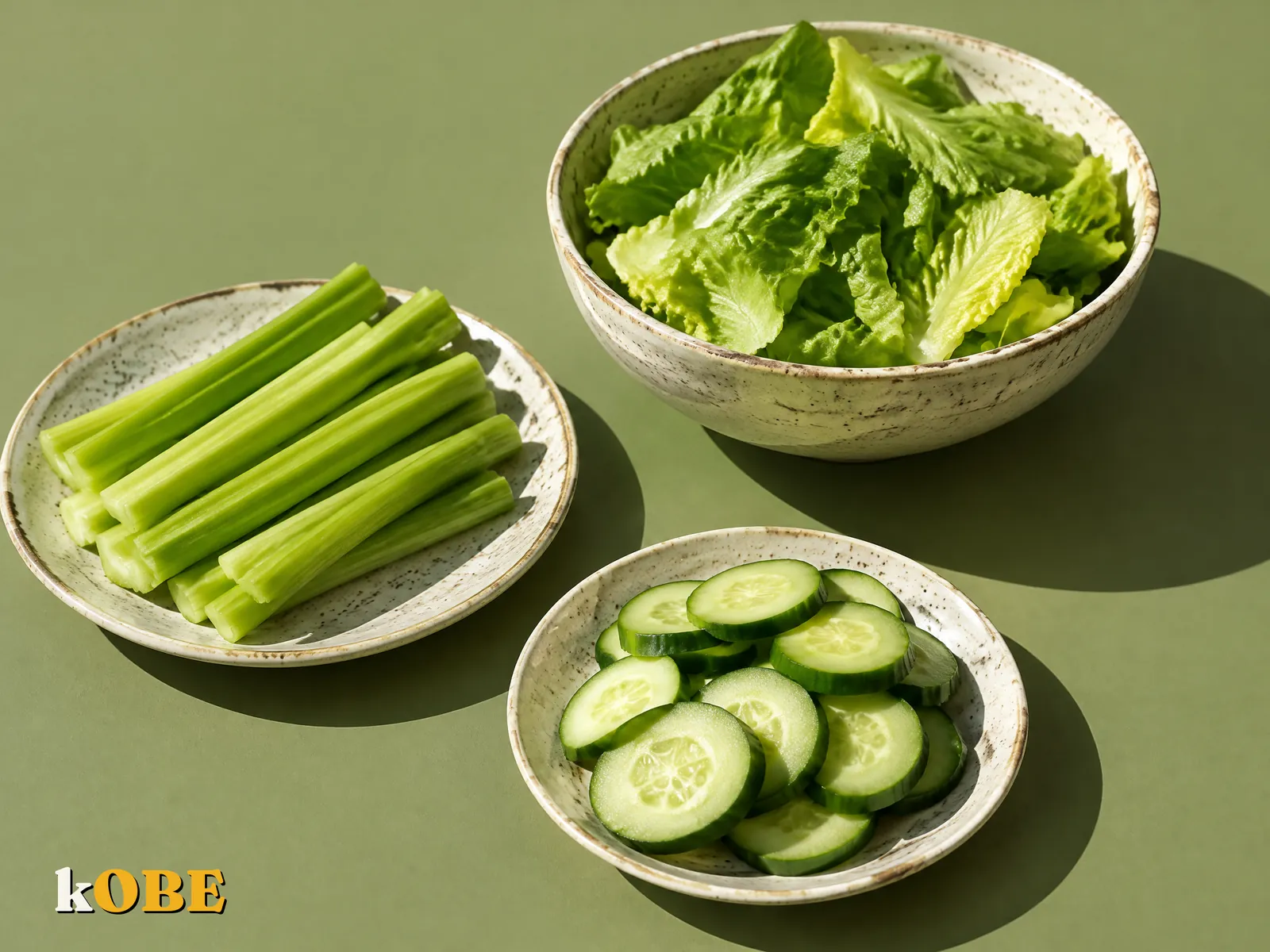
There is a rather charming rumour: eating celery leaves you calories "in the red". Chewing those crunchy stalks supposedly burns more energy than the celery contains. The more you eat, the more you burn.
The list of "negative calorie foods" goes on: cucumber, pomelo, lettuce, cabbage, tomato. It sounds like a loophole in the body's rulebook.
If it were true, it would be one of the most fascinating discoveries in nutrition. Let's do the maths.
In this article
Digestion does cost energy, but how much?
The grain of truth in the rumour: digesting food really does use energy.
Your body has to chew, churn the stomach, release enzymes, then absorb and process nutrients. Scientists call this energy the thermic effect of food.
But the numbers are smaller than we think:
| Nutrient | Energy used to digest it |
|---|---|
| Protein | about 20 to 30% of its calories |
| Starch, sugar | about 5 to 10% |
| Fat | about 0 to 3% |
| A typical mixed meal overall | about 10% |
In other words, eat 100 kcal and your body spends about 10 kcal processing it. That still leaves 90 kcal.
The maths for a celery stalk
Now apply it to celery.
100g of raw celery, about two large stalks, has roughly 14 to 16 kcal. Most of the rest is water, plus a little fibre.
Even if digesting celery cost 10%, or even 20%, that is only about 2 to 3 kcal. And the chewing? A small study measured the energy used chewing gum nonstop: only about 11 kcal an hour. Nobody spends an hour chewing two celery stalks.
The result: you still come out about 10 to 13 kcal "ahead". Not in the red, even if only slightly in the black.
No study in humans has shown that any food has negative calories. The rumour spreads easily because it is half logical and fun to repeat.
But watery vegetables do have a real "superpower"
The rumour is wrong, but its spirit is partly right. The foods called "negative calorie" share one trait: low energy density.
That means each gram carries very few calories, because it is mostly water and fibre. You can eat a big amount, feel full, yet take in little energy.
| Food | Calories per 100g, roughly |
|---|---|
| Cucumber | 15 |
| Celery | 15 |
| Tomato | 18 |
| Rau muống (water spinach) | 20 |
| Cabbage | 25 |
| White rice | 130 |
| Biscuits | 450 to 500 |
To picture it: the energy in one small biscuit is about the same as a big plate of cucumber.
Researchers have tried giving people a bowl of vegetable soup before their main meal. They then ate less during the rest of the meal, without being told to. The bowl of canh (light vegetable soup) on the Vietnamese family table turns out to be a very clever habit.
Careful: vegetables can turn into high-calorie dishes too
Vegetables have low energy density, but cooking can flip that completely:
- Vegetables stir-fried in lots of oil. One tablespoon of oil has about 120 kcal, several times more than the whole plate of greens.
- Salad with rich, sweet dressing. A few spoonfuls of regular mayonnaise or sesame dressing can outweigh the whole plate of vegetables.
- Battered and fried vegetables. Fried squash blossoms and vegetable tempura soak up lots of oil.
- Dried vegetable crisps. The water leaves, the dry part stays, often with added oil and salt.
So if you want to make the most of vegetables' "superpower", favour boiling, steaming, soups and light dressings.
So what do we do with this information?
A few easy ideas:
- Do not expect a food to burn calories for you. No such food exists.
- Use vegetables to make meals more filling. Add half a plate of greens to every meal.
- Have vegetable soup or greens first. With water and fibre in your stomach first, you will eat the rest more slowly.
- Watch the oil and sauces. That is often where calories hide.
- Remember that protein takes the most energy to digest, and keeps you full longer. A meal with enough protein is a smart choice.
Inside the kOBE kitchen
We prefer flavourful greens to "negative calorie" greens. kOBE Sesame Kale has 78 kcal and 4g protein per 100g. That is higher than cucumber because of the sesame oil and toasted sesame, but that fat is what makes it tasty and easy to eat.
Our ready-cooked Green Peas have 84 kcal and 5.4g protein per 100g, great for bulking up a stir-fry or fried rice.
And every recipe on the kOBE site lists calories per 100g. You can compare for yourself how different a bowl of vegetable soup is from a plate of stir-fried greens. See more on the Ingredients page.
Frequently asked questions
Does drinking ice water burn calories?
Does pomelo melt fat?
Is it good to replace meals with lots of vegetables?
Keep reading
Sources
- USDA FoodData Central: raw celery, cucumber, tomato, cabbage.
- Westerterp K.R. (2004). Diet induced thermogenesis. Nutrition & Metabolism 1:5.
- Levine J., Baukol P., Pavlidis I. (1999). The energy expended in chewing gum. New England Journal of Medicine 341:2100.
- Flood J.E., Rolls B.J. (2007). Soup preloads in a variety of forms reduce meal energy intake. Appetite 49(3):626 to 634.
- Further reading: Nutrition: Concepts and Controversies 16th ed., chapter 9.