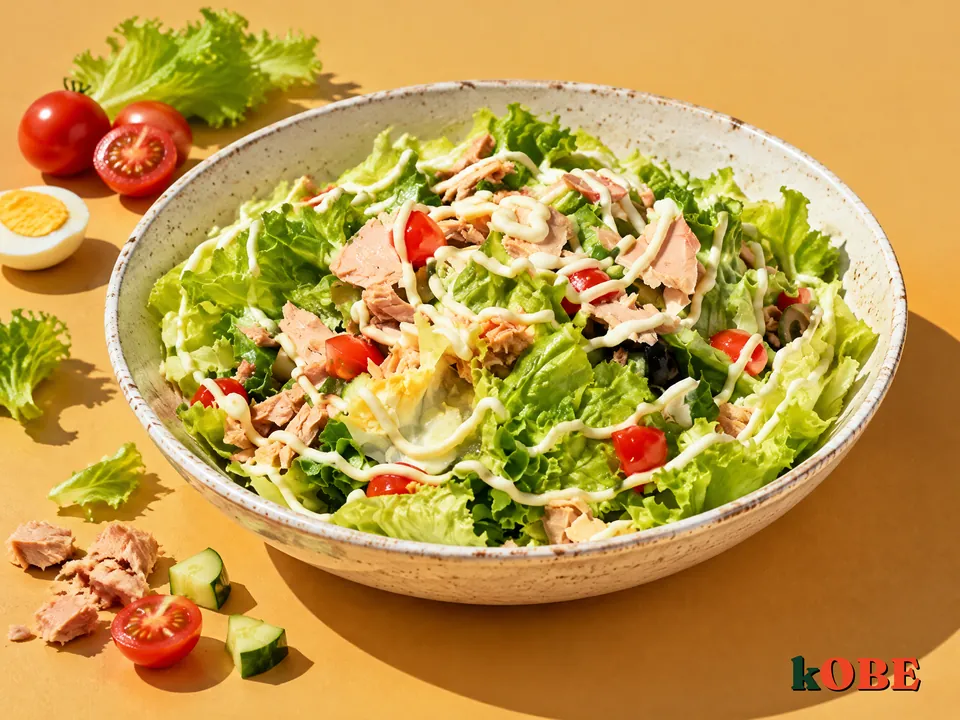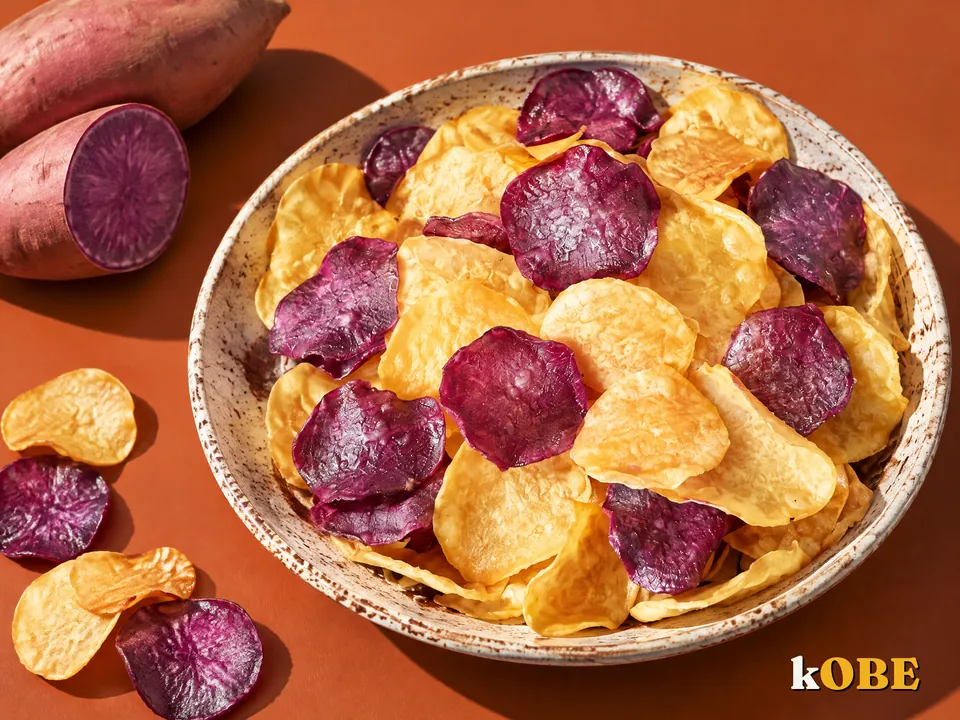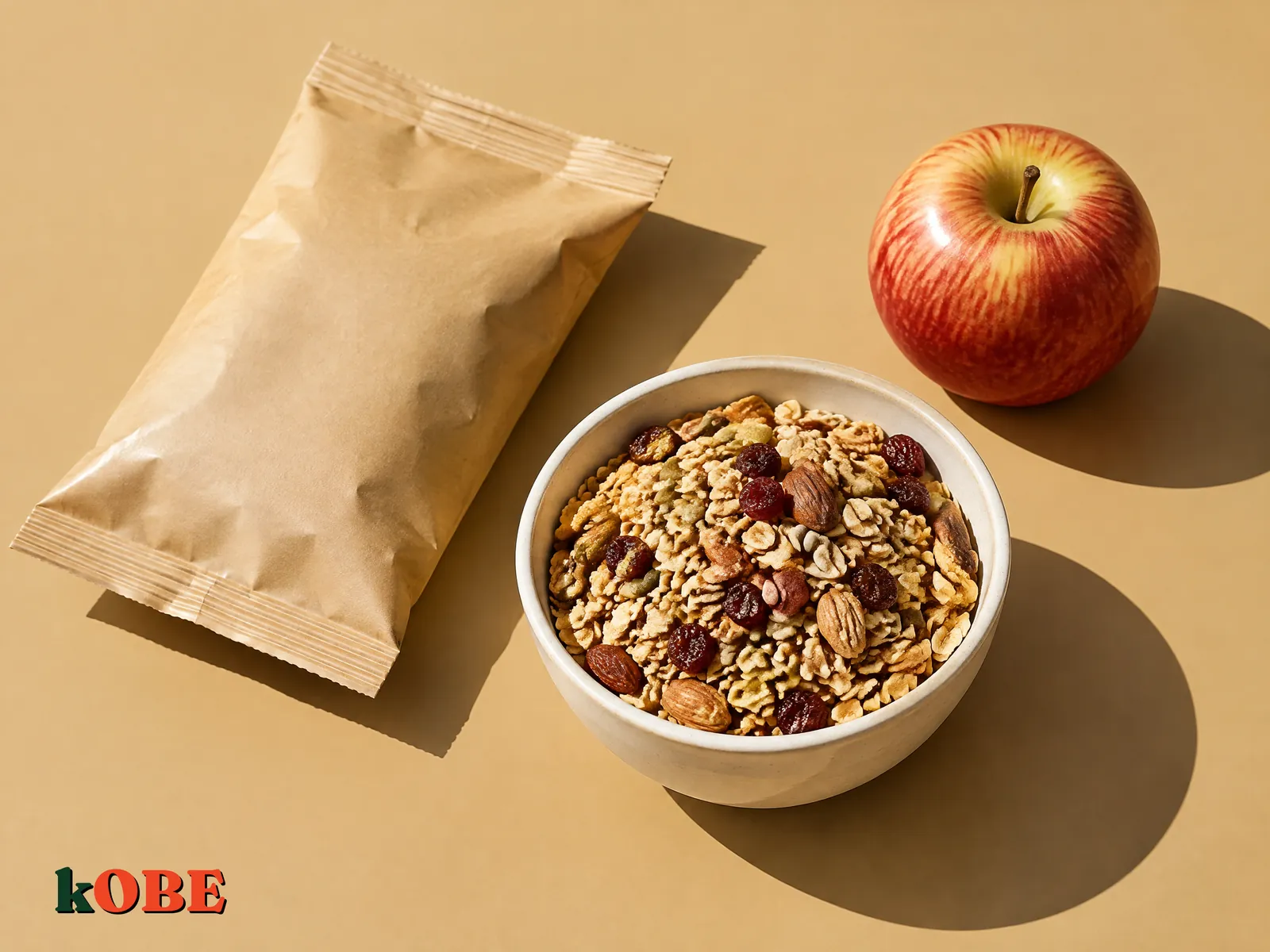
The snack aisle in the supermarket now looks like a word contest. "Healthy." "Eat clean." "100% natural." "High protein." "Low fat." Green packaging, pictures of leaves, pictures of grains.
You pick up a bag of granola that says "healthy", feel reassured and pop it in the basket. At home you flip it over and see that sugar is second on the ingredient list.
Nobody lied to you, technically. It is just that the front of the package is written to sell, and the back is written to inform.
In this article
The front sells, the back tells
Think of a package as a two-sided business card.
The front is where the manufacturer picks the nicest thing to show off. Big letters, pretty colours, tempting illustrations. Not wrong, but carefully chosen.
The back has two far more important things: the ingredient list and the nutrition facts panel. This part has to follow labelling rules, and leaves little room for flowery language.
A packet of biscuits may say "high in fibre" on the front. That may well be true. But the back may show it is also high in sugar and palm oil. Both are facts; one is just printed bigger.
A little dictionary of common label words
Every word on a package has its own range of meaning. Some are tightly regulated, some are almost anything goes.
| Word on the package | Usually means | What it does not tell you |
|---|---|---|
| Healthy, eat clean | Usually a marketing word, regulated only in some places | That the food is low in sugar or salt |
| Natural | Ingredients come from natural sources | That the food is low in calories or sugar |
| Low fat | Fat is below the regulated threshold | That sugar was not added to make up for it |
| High protein | A meaningful amount of protein per serving | That it is not high in sugar or fat |
| Wholegrain, multigrain | Contains some whole grain ingredients | How much of it is actually whole grain |
| No added sugar | No sugar was added during production | That there is no naturally present sugar |
Interestingly, in the US the word "healthy" on food has its own rule from the Food and Drug Administration (FDA), updated at the end of 2024. But "eat clean" is defined almost nowhere. And "natural" is one of the vaguest words of all: cane sugar is very natural too.
The halo effect: why do we trust the word "healthy"?
Behavioural researchers have a name for this: the health halo.
When a food carries one positive word, we tend to assume everything else about it is good too. See "organic", and we guess it is low in calories. See "low fat", and we eat more because we feel safe.
The halo often shows up around:
- Granola and breakfast cereals: they contain oats and nuts, but are often sweetened and baked with oil.
- Drinking yoghurts and fruit yoghurts: easily loaded with added sugar.
- Energy bars and "protein" snacks: they have protein, but can also be high in sugar and syrup.
- Bottled "100% fruit" juice: no added sugar, but the natural sugar is still high and the fibre low.
- Dried vegetable crisps: can be fried and salted just like potato crisps.
That does not mean these foods are bad. Just that the words on the package are not enough to judge.
Read the label in 30 seconds
Next time you hold something "healthy", flip it over and look at three spots:
- The first three ingredients. Ingredients are listed by weight, largest first. If sugar, syrup or oil is in the top three, that is mostly what the food is.
- Sugar per 100g. Compare products using the same 100g unit, not "per serving", because every brand sizes its servings differently.
- Sodium (salt). Savoury "healthy" foods like seaweed snacks and salted roasted nuts can carry quite a lot of salt.
A little tip: sugar goes by many names. Glucose syrup, corn syrup, malt, maltose, dextrose, honey and concentrated fruit juice are all sugar. A product can split its sugar across several names so each one sits lower on the list.
What about food with no package?
Here is a funny thing: the most wholesome foods often have no package to print "healthy" on.
A bunch of rau muống (water spinach), a mackerel scad, an egg or a guava at the market carries no label. They do not need one.
That does not mean packaged food is always worse. Unsweetened milk, tofu, frozen vegetables and fish canned in water are very handy packaged foods. Just remember: the more a front label shows off, the more carefully you should read the back.
Inside the kOBE kitchen
We chose to write numbers instead of the word "healthy". Every one of our 1,480 home recipes lists calories, protein, fat and sugar per 100g. The kOBE tag system and the kOBE standard are explained on the kOBE Standard page.
And we say the less "pretty" things plainly too. For example, kOBE Oat Milk, Coconut Nectar is sweetened with coconut nectar sugar. That is still sugar, so enjoy it in moderation.
kOBE Signature Monk Fruit Blend lists its five ingredients clearly: erythritol, allulose, monk fruit, stevia and inulin. See it on the sweetener page.
Frequently asked questions
Is "organic" food healthier than regular food?
What is the difference between "sugar free" and "no added sugar"?
Should I only buy food labelled "healthy"?
Keep reading
Sources
- U.S. FDA (2024). Food Labeling: Nutrient Content Claims; Definition of Term "Healthy" (Final Rule, December 2024).
- Regulation (EC) No 1924/2006 on nutrition and health claims made on foods.
- WHO (2015). Guideline: Sugars intake for adults and children.
- Harvard T.H. Chan School of Public Health, The Nutrition Source: Added Sugar.
- Further reading: Nutrition: Concepts and Controversies 16th ed., chapter 2.