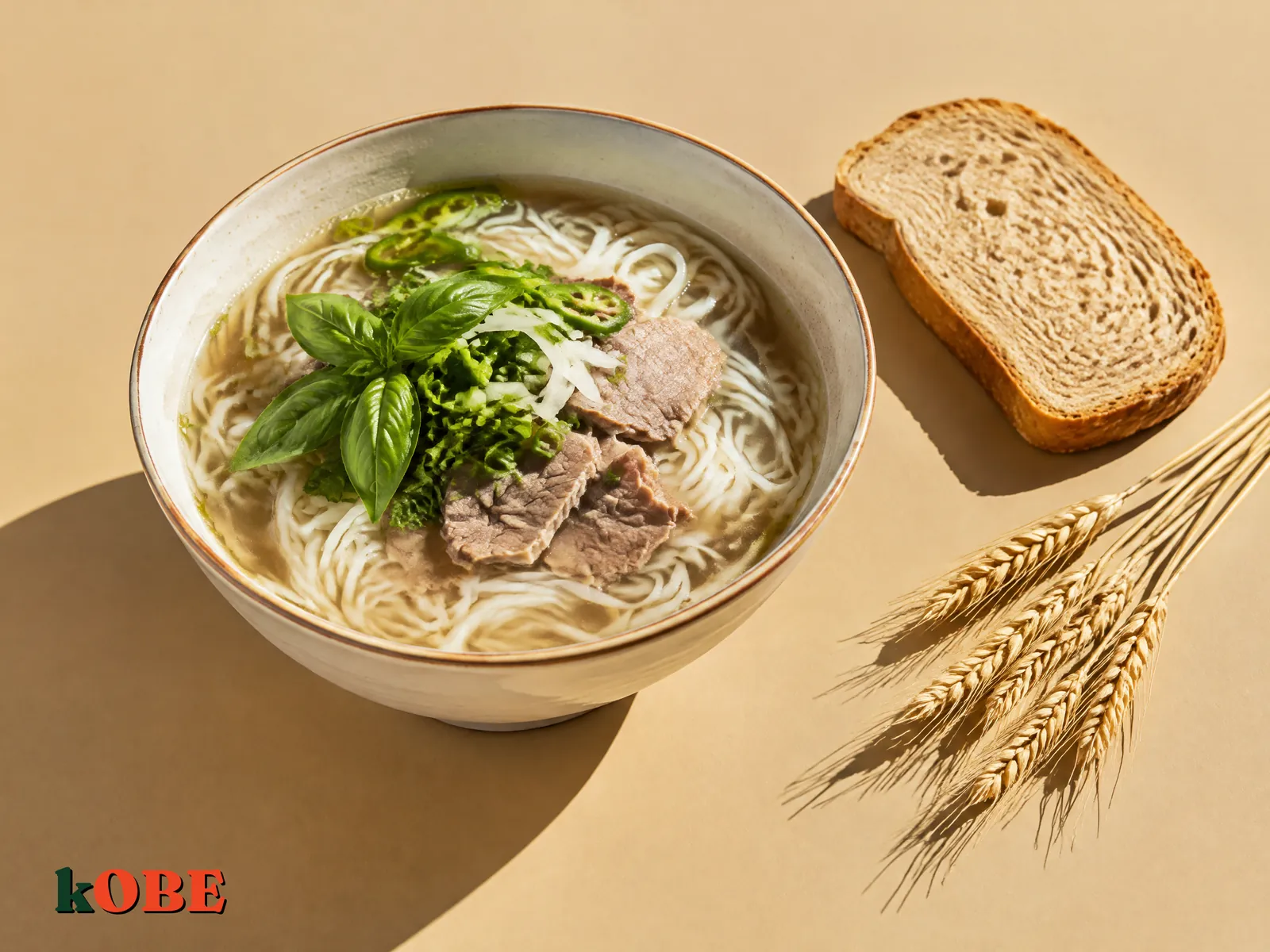
Walk through a supermarket and you will see "gluten free" everywhere. On biscuits, on pasta, sometimes even on a bottle of mineral water.
Many people assume gluten-free means healthier. Some give up bread because they have heard gluten makes you bloated and tired.
But what is gluten? Who really needs to avoid it? And do Vietnamese people who eat rice, bún (rice vermicelli) and phở every day need to worry? The answer comes with a surprising bit of good news.
In this article
What is gluten? The stuff that makes bread chewy
Gluten is a group of proteins found in wheat, barley and rye.
When you knead wheat flour with water, these proteins link up into a stretchy, elastic net. That net traps gas bubbles as the dough rises, which is why a loaf puffs up light with a chewy crumb. Chewy yellow egg noodles owe their bite to gluten too.
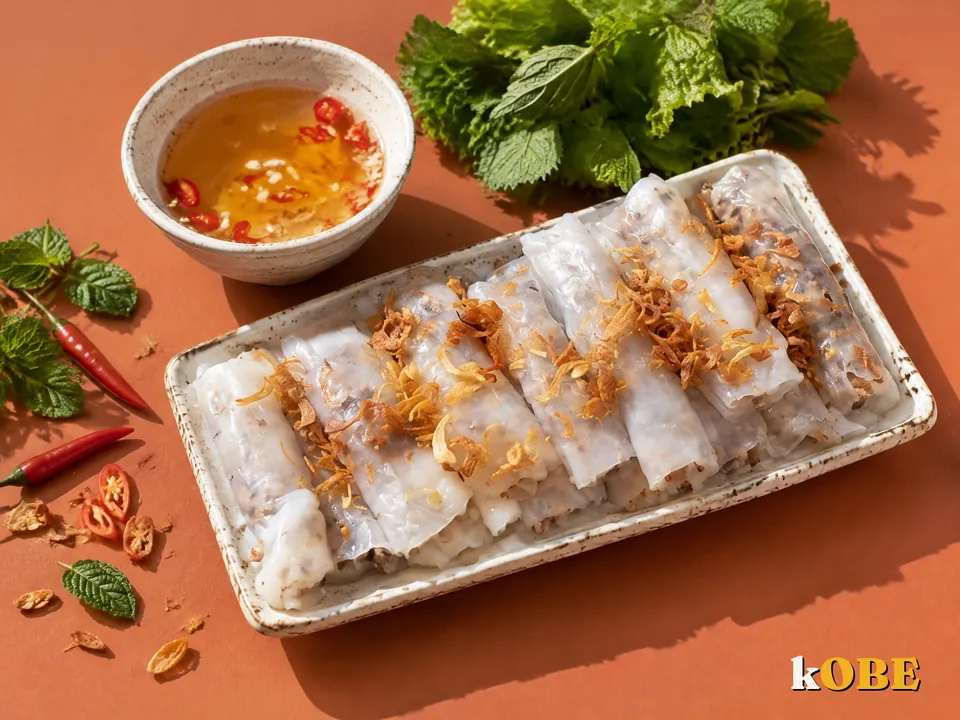
Here is the fun part: rice has no gluten. That is why rice flour cannot be kneaded into a puffy loaf. Bánh cuốn (steamed rice rolls), bánh xèo (crispy rice pancakes) and bánh bèo (little steamed rice cakes) get their soft, crisp or springy textures in a completely different way.
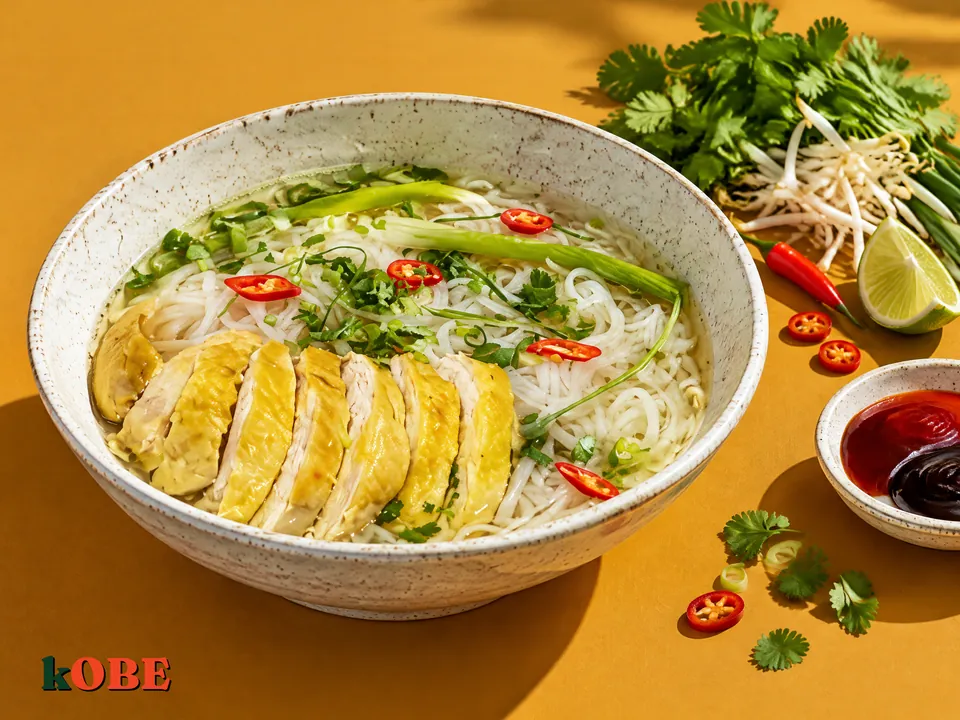
So your bowl of phở, bowl of bún or plate of cơm tấm (broken rice) comes from rice, not wheat. Vietnamese people have been eating "low gluten" for ages without needing any label.
Who really needs to avoid gluten?
A few groups need to avoid gluten for clear health reasons:
- People with coeliac disease. For them, gluten triggers the immune system to attack the lining of the small intestine. Pooled estimates suggest about 1 in 100 people worldwide have it. In Asia, data are still limited. They must avoid gluten completely, even tiny crumbs, following a doctor's guidance.
- People with a wheat allergy. This is a food allergy, different from coeliac disease.
- People whose doctor has identified non-coeliac gluten sensitivity.
The important bit: if you suspect gluten is a problem for you, see a doctor before cutting it out yourself. Dropping gluten before testing can make the diagnosis inaccurate.
"Gluten sensitivity": still a hotly debated zone
Some people do not have coeliac disease or a wheat allergy, yet still feel bloated and tired after eating bread. This is called non-coeliac gluten sensitivity.
The science here is not settled. A 2013 study put people who described themselves as gluten sensitive on a tightly controlled diet. When a group of fermentable carbs called FODMAPs was removed, their symptoms eased. When gluten was then added back, most noticed no clear difference.
Wheat contains both gluten and fructans (a type of FODMAP). So for some people, the real cause of bloating may be fructans rather than gluten. Onions and garlic are rich in fructans too.
In short: your discomfort may be completely real. But the cause is not necessarily gluten, and a qualified professional can help you find it.
A gluten-free biscuit is still a biscuit
This is the most commonly misunderstood part.
When you take gluten out of baked goods, manufacturers have to make up for the chewiness and lightness. They often use rice starch, tapioca starch and cornflour, plus extra sugar and fat for flavour.
As a result, many gluten-free products have:
- Less fibre than regular versions made from whole wheat.
- No less sugar and fat, sometimes more.
- Fewer B vitamins and less iron, because wheat flour in many countries is fortified with these.
"Gluten free" on the package says one thing: no gluten. It does not say the food is lower in sugar, lower in calories or more nutritious. It is like a bottle of mineral water labelled "cholesterol free": true, but it never had any to begin with.
And for healthy people, wholemeal bread, oats and barley are good sources of fibre.
Where should gluten watchers look in Vietnamese food?
If you need to avoid gluten for health reasons, Vietnamese food is fairly friendly. But gluten still hides in a few surprising places:
- Soy sauce: many brands are fermented from soybeans and wheat.
- Yellow egg noodles, instant noodles, wonton, bánh bao (steamed buns) and há cảo (dumplings), all made from wheat flour.
- Tempura batter and breadcrumbs in fried dishes.
- Chả (Vietnamese sausage) and hot dogs may contain wheat flour as a filler.
- Oats are naturally gluten free, but easily get mixed with wheat during processing.
Meanwhile cơm, bún, phở, bánh cuốn, bánh tráng (rice paper) and miến dong (glass noodles) are usually made from rice, canna starch or beans. Still read the label, because recipes vary from place to place.
Inside the kOBE kitchen
kOBE's ready-cooked carbs such as White Rice, Red Brown Rice, Black Brown Rice, Quinoa and Sweet Potatoes start from rice, quinoa and sweet potato, not wheat.
But we will be clear: if you must avoid gluten completely because of coeliac disease, ask carefully about ingredients and preparation before ordering, from any kitchen. The accompanying sauces need checking too.
For people who do not need to avoid gluten, sugar and fibre are more worth watching. Every recipe on the kOBE site lists sugar per 100g so you can compare. See more on the Ingredients page.
Frequently asked questions
Does cutting gluten reduce bloating?
Does sticky rice contain gluten?
Should children eat gluten-free to be healthier?
Keep reading
Sources
- Singh P. et al. (2018). Global prevalence of celiac disease: systematic review and meta-analysis. Clinical Gastroenterology and Hepatology 16(6):823 to 836.
- Biesiekierski J.R. et al. (2013). No effects of gluten in patients with self-reported non-celiac gluten sensitivity after dietary reduction of fermentable, poorly absorbed, short-chain carbohydrates. Gastroenterology 145(2):320 to 328.
- Harvard T.H. Chan School of Public Health, The Nutrition Source: Gluten: A Benefit or Harm to the Body?
- NHS (UK). Coeliac disease.
- Further reading: Diet Cults (Matt Fitzgerald), chapter 1; Nutrition: Concepts and Controversies 16th ed., chapter 3.