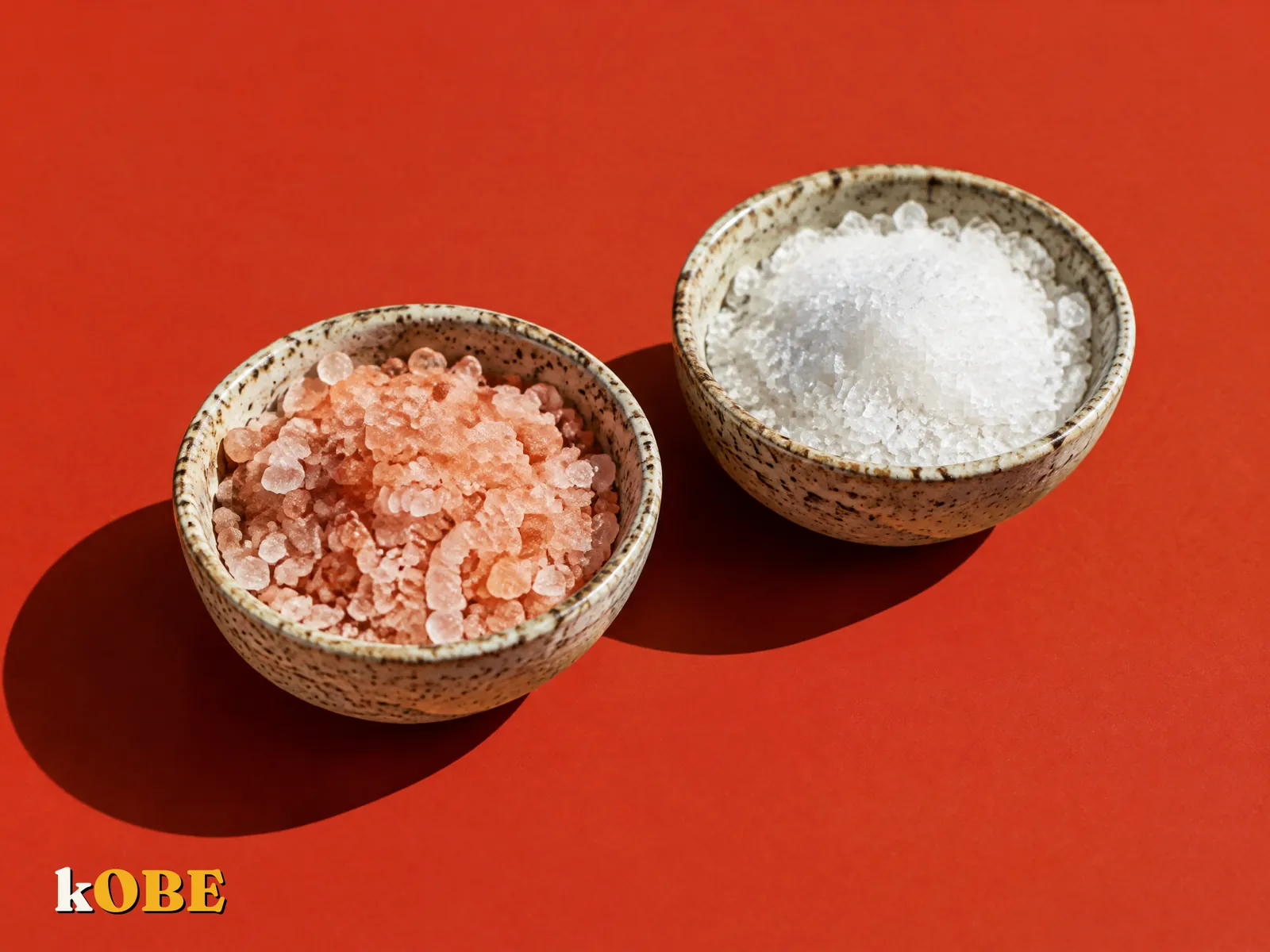
There may be a jar of pink salt in your kitchen right now. Those blush-pink crystals look gorgeous in a grinder, perfect over a steak or a salad.
The package often says things like "84 trace minerals", "pure from the Himalayas", "better than table salt". And it costs several times more than a bag of iodised salt from the corner shop.
Is pink salt really different? Let's do a little maths, and you will spot a surprising detail that few people notice.
In this article
What is pink salt, and why is it pink?
Himalayan pink salt is actually mined mostly from rock salt mines in Pakistan, near the foothills of the Himalayas. It comes from an ancient sea that dried up millions of years ago.
The pink colour comes from a very small amount of mixed-in minerals, mainly iron oxide. Just as rust is reddish brown, only a trace is needed to tint a whole block of salt pink.
The rest, about 95 to 98%, is sodium chloride. Exactly the same thing as in white salt, sea salt, and Grandma's coarse muối hột (sea salt crystals).
In other words: pink salt is salt, wearing a little makeup.
84 minerals sounds like a lot, but how much is enough?
Pink salt does contain calcium, potassium, magnesium, iron and many other elements. But the key question is: how much?
In 2020, a group of researchers in Australia analysed samples of pink salt on sale. They calculated that for the minerals in pink salt to make a meaningful nutritional contribution, a person would need to eat about 30g of salt a day. That is six times the recommended amount.
Picture it this way: to get the potassium of one banana from pink salt, you would have to eat so much salt that nobody could stand it.
The researchers also noted one sample with lead above the permitted limit in Australia. That does not mean all pink salt is like this. It is just a reminder that "natural" does not mean "pure".
Want calcium, potassium and magnesium? Leafy greens, beans, dairy and fruit give you far, far more.
The detail few people notice: iodine
This is the most meaningful difference between pink salt and regular salt.
Iodine is a mineral the body needs for the thyroid gland to work normally. Iodine deficiency affects the development of young children and unborn babies.
Because it is hard to get enough iodine from everyday food, many countries, including Vietnam, add iodine to table salt. The bag of iodised salt at the corner shop is one of the simplest and most effective public health measures around.
Pink salt is usually not iodised, unless the package clearly says so. The same goes for regular sea salt.
If a whole household switches to pink salt and eats little seafood, seaweed, dairy or eggs, iodine intake may fall short. Pregnant and breastfeeding women need more iodine, so they should pay special attention.
A quick comparison of salts in the kitchen
| Type of salt | Main component | Iodised? | What sets it apart |
|---|---|---|---|
| Iodised salt | Sodium chloride | Yes | Supplies iodine for the whole family |
| Sea salt, muối hột | Sodium chloride | Usually not | Large crystals, bold taste |
| Pink salt | Sodium chloride | Usually not | Pretty colour, traces of minerals |
| Low-sodium salt | Partly replaced with potassium | Depends on the brand | Less sodium; people with kidney conditions should ask a doctor |
A fun detail: large crystals like muối hột or coarse pink salt take up more room in a spoon. So a spoonful of coarse salt has less sodium than a spoonful of fine salt. But gram for gram, they are almost the same.
Bigger than the colour of salt: how much you eat
Pink or white, what matters most is still the amount.
The WHO recommends adults eat less than 5g of salt a day, about one level teaspoon. Surveys show the average Vietnamese person eats around 9 to 10g, nearly double.
Salt in Vietnamese meals comes from far more places than the salt jar:
- Nước mắm (fish sauce): one tablespoon has sodium equal to about 3 to 3.5g of salt.
- Soy sauce, seasoning powder and MSG also contain sodium.
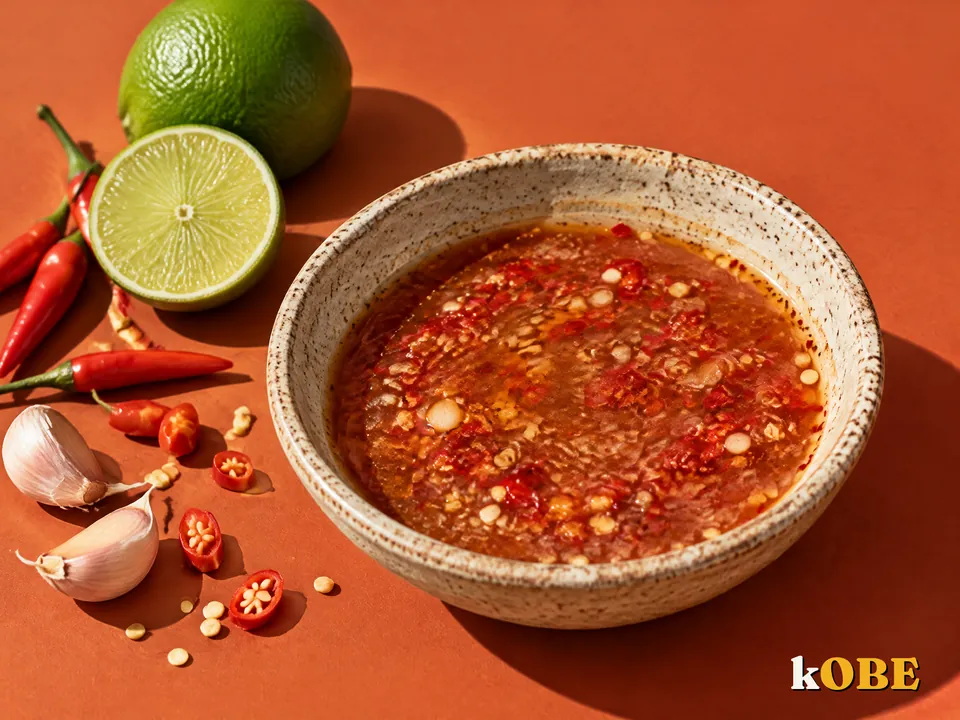
- Dips: muối ớt (chilli salt), muối tôm (shrimp salt), mắm nêm (fermented anchovy sauce).
- Processed foods: instant noodles, chả lụa (Vietnamese pork roll), sausages, pickles.
- Broth in phở, bún and hủ tiếu (noodle soup).
A few tips for cutting salt without losing flavour:
- Season with lime, garlic, ginger, fresh herbs and pepper to boost flavour.
- Dip instead of pouring. A separate bowl of fish sauce helps you control how much you use.
- Leave some of the broth in the bowl.
- Cut down gradually. Your taste buds adapt to milder flavours after a few weeks.
Inside the kOBE kitchen
kOBE Sous Vide Chicken Breast is simply brined in sea salt, then cooked sous vide at 60°C for 90 minutes. The salt is there to season the meat, not because of any "superpower" of that particular salt.
Sea salt or pink salt, in our kitchen it is all salt. What we care about is using just enough.
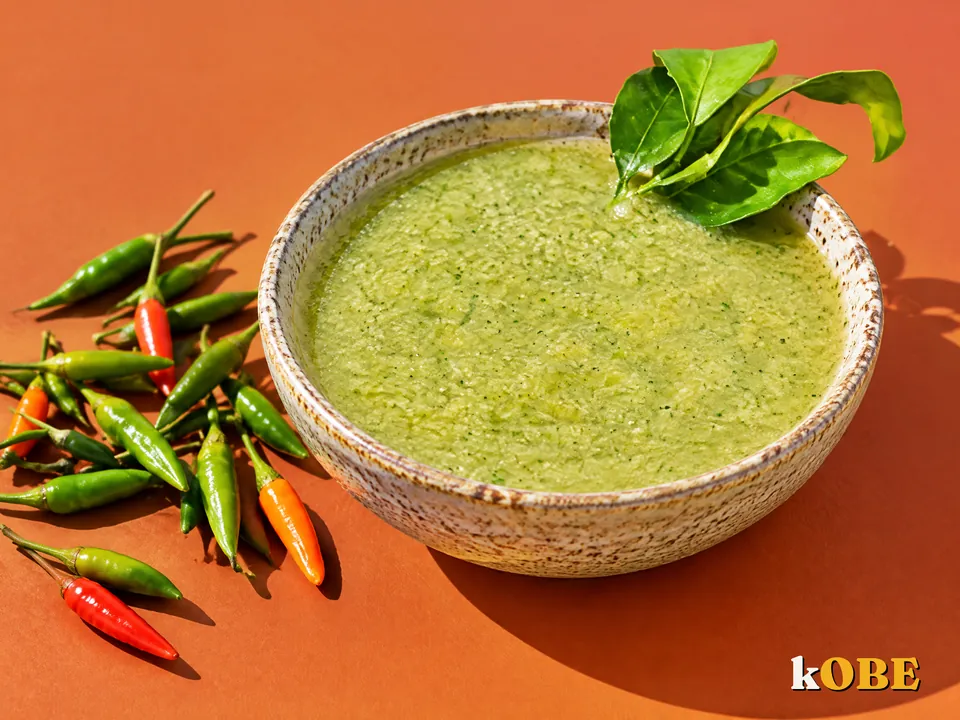
The kOBE site has plenty of homemade dipping salt recipes, like green chilli salt and shrimp salt. You can make them yourself and adjust the saltiness to taste. See more ingredients on the Ingredients page.
Frequently asked questions
Does pink salt balance electrolytes better?
Should I drink pink salt water in the morning?
What salt should a family with young children use?
Keep reading
Sources
- Fayet-Moore F. et al. (2020). An analysis of the mineral composition of pink salt available in Australia. Foods 9(10):1490.
- WHO. Salt reduction (fact sheet): less than 5g of salt a day for adults.
- Ministry of Health (Vietnam) (2016). National Survey on the Risk Factors of Non-Communicable Diseases (STEPS) 2015.
- WHO. Iodization of salt for the prevention and control of iodine deficiency disorders (guideline 2014).
- Further reading: Nutrition: Concepts and Controversies 16th ed., chapter 8.