Lunchtime at the office. Everyone orders cơm tấm (broken rice with grilled pork chop), but one person pushes all the rice to the side and eats only the pork, the egg and the cucumber. "I'm doing keto."
Some people are curious, some are worried. "How do you survive without rice?" Then someone remembers a friend who tried keto and loved it. Someone else knows a person who felt completely drained after a week.
Both stories could be true. To see why, we need to look at what keto actually does inside the body.
In this article
- Your body is a car that runs on two kinds of fuel
- What do 20 to 50g of carbs look like?
- Where did keto come from, and why do people love it?
- What science is fairly sure of, and what is still debated
- Who should be careful, and who should ask a doctor first?
- Inside the kOBE kitchen
- Frequently asked questions
Your body is a car that runs on two kinds of fuel
Normally, your body prefers to burn glucose, which comes from the starch and sugar in your meals. The brain is especially fond of glucose.
When the carbs in your diet drop very low, the body has to switch fuel. The liver starts turning fat into small molecules called ketone bodies. The brain and muscles can use ketones in place of some of their glucose.
This state is called ketosis. A diet designed to keep the body there is called keto (the ketogenic diet).
A typical keto diet usually looks like this:
- Very low carbs, often around 20 to 50g a day.
- Fat supplies most of the energy, about 70 to 80%.
- Moderate protein.
What do 20 to 50g of carbs look like?
That number feels abstract. Translated onto a Vietnamese table, it is easier to picture.
| Food | Carbs, roughly |
|---|---|
| 1 bowl of white rice (about 150g) | 40g |
| 1 medium banana | 25g |
| 1 bowl of phở | 50 to 60g |
| 1 bubble milk tea | can be over 50g |
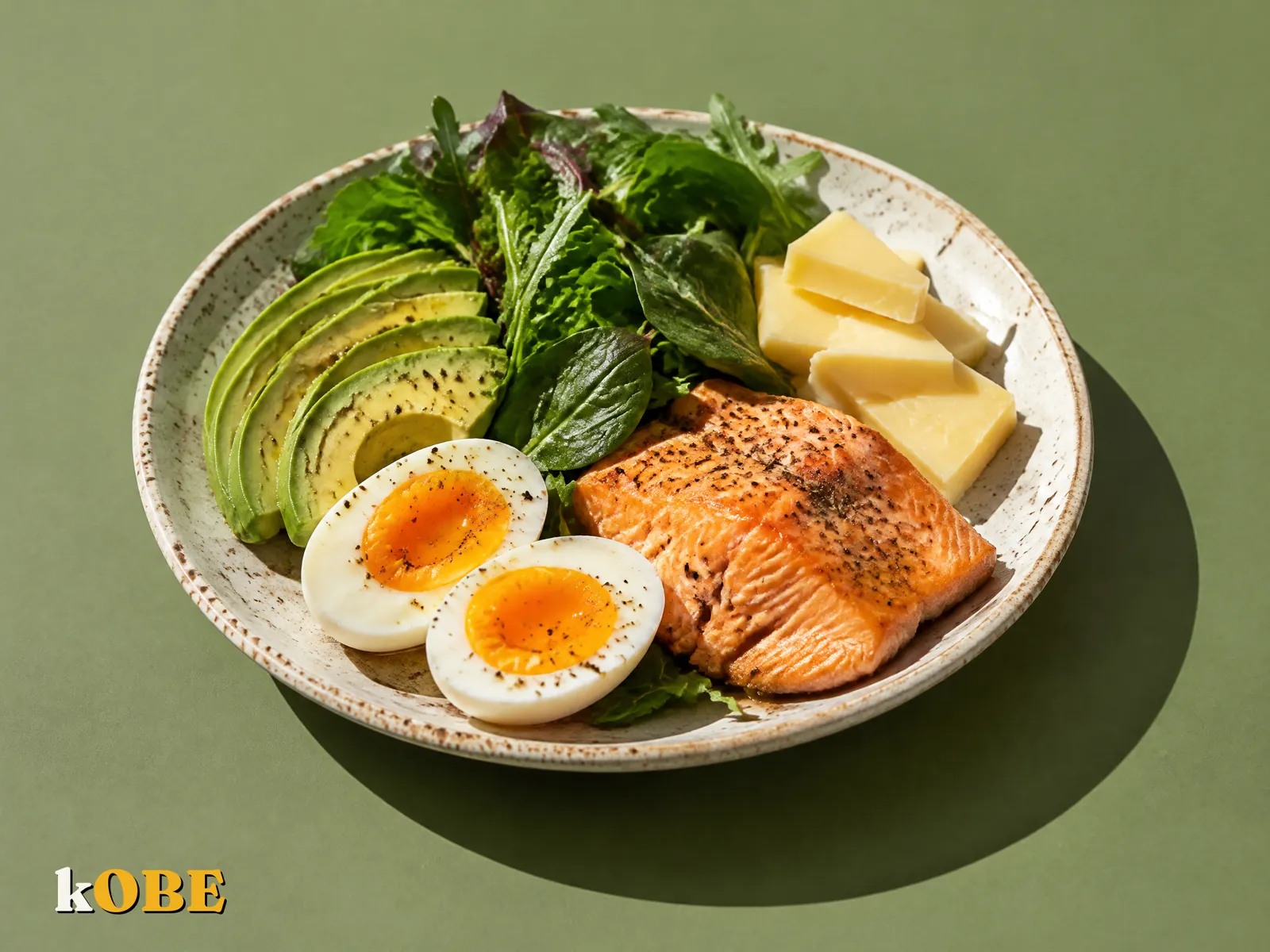
So a single bowl of rice nearly hits the daily limit for many keto eaters. That is why people on keto drop rice, noodles, bread, sweet fruit and sugary drinks altogether. Meals revolve around meat, fish, eggs, leafy greens, oils, butter and nuts.
Put simply, keto is not "eating less rice". Keto is almost a whole day without a single bowl of rice.
Where did keto come from, and why do people love it?
Keto was not invented by social media. It appeared in the 1920s as a medical diet for children with epilepsy, closely supervised by doctors. It is still used in medicine for some cases today.
Then, over the past few decades, keto became a food trend. Fans usually say:
- Fewer snack cravings. Meals rich in protein and fat tend to keep you full for longer. Ketones may also blunt hunger in some people.
- Clear rules. No need to count every calorie, just avoid carbs. For many people, a simple rule is easier to follow.
- The number on the scale moves fast in the first few weeks. But most of that is water, not fat. Every gram of glycogen (the body's stored form of glucose) holds onto about 3 grams of water. Cut carbs, glycogen stores shrink, and the water goes with them.
These experiences are real. The question is what happens in the long run.
What science is fairly sure of, and what is still debated
Fairly sure:
- When calories are matched, keto does not burn fat more "magically" than other ways of eating. A large 2018 trial (DIETFITS) compared low-carb and low-fat diets over 12 months. The two groups ended up nearly the same.
- A 2021 inpatient trial let participants eat freely. On a low-fat, plant-rich diet, they ate fewer calories on their own than when they followed keto. Every body responds differently; there is no one answer.
- In the first few days, many people feel tired, headachy and foggy. People jokingly call it "keto flu". It usually passes within a week or two.
- Dropping fruit, grains and beans makes it easy to fall short on fibre, which can lead to constipation.
Still debated:
- How keto affects heart health over the long term. In some people, LDL cholesterol rises clearly when they eat a lot of saturated fat. But the size of that change varies hugely between people.
- Whether keto is easy to stick with. Many studies find participants struggle to keep it up, especially in rice-eating cultures.
In short: keto is a tool. It suits some people, at some stages of life. It is not the one true path, and it is not the enemy either.
Who should be careful, and who should ask a doctor first?
Keto changes how the body runs quite dramatically. So the people below should talk to a doctor before trying it:
- People with underlying conditions, especially of the kidneys, liver, pancreas or heart.
- People taking medication for blood sugar or blood pressure. Cutting carbs suddenly can make an existing dose no longer fit.
- Women who are pregnant or breastfeeding.
- Children and teenagers who are still growing.
- Anyone with a history of disordered eating. A diet full of forbidden foods can easily pull old habits back.
If you are healthy and want to try it, a few tips: drink enough water, eat plenty of leafy greens for fibre, and favour fats from fish, olive oil and nuts rather than only lard and processed meat. And listen to your body. If the tiredness drags on, do not push through.
Inside the kOBE kitchen
We do not have a dedicated keto menu. But every ready-cooked ingredient lists its numbers per 100g, which helps you count carbs yourself if you are on keto.
For example, Sous Vide Chicken Breast has 31g protein, 3.6g fat and 0g carbs per 100g cooked. Sesame Kale has 78 kcal and 4g protein per 100g. Red Brown Rice has 25.6g carbs per 100g, so keto eaters will skip that one.
If you are not on keto but want fewer carbs, an easy move is to keep half your usual rice and add more vegetables and protein. You can find more on the Ingredients page.
Frequently asked questions
Do you need to count calories on keto?
How long does it take to get into ketosis?
Can athletes do keto?
Is keto a meat-heavy diet?
Keep reading
Sources
- Gardner C.D. et al. (2018). Effect of low-fat vs low-carbohydrate diet on 12-month weight loss in overweight adults and the association with genotype or insulin secretion: the DIETFITS randomized clinical trial. JAMA 319(7):667 to 679.
- Hall K.D. et al. (2021). Effect of a plant-based, low-fat diet versus an animal-based, ketogenic diet on ad libitum energy intake. Nature Medicine 27:344 to 353.
- Harvard T.H. Chan School of Public Health, The Nutrition Source: Diet Review: Ketogenic Diet for Weight Loss.
- Further reading: Diet Cults (Matt Fitzgerald), chapter 4; Nutrition: Concepts and Controversies 16th ed., chapters 4 and 9.