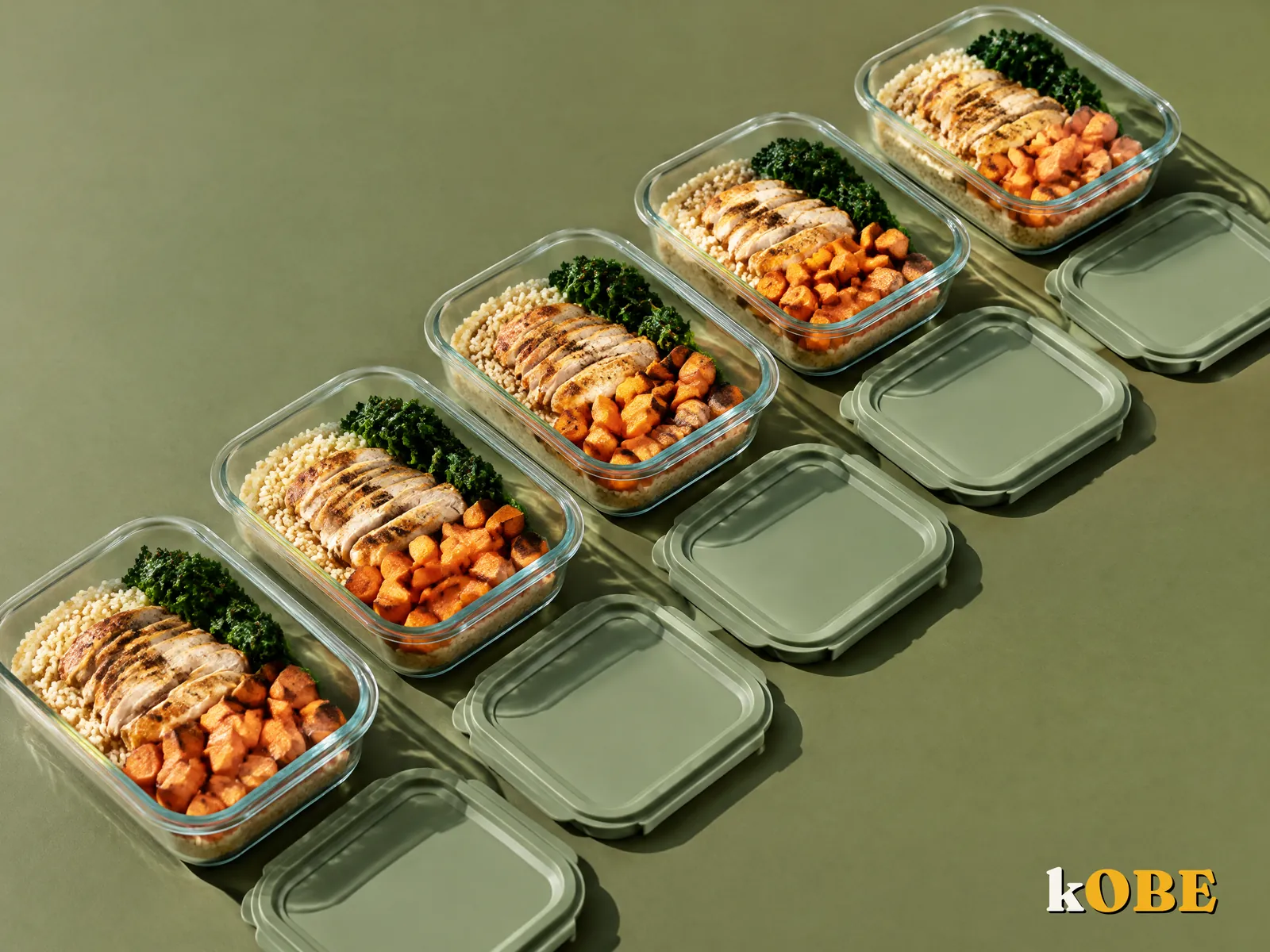
Seven in the evening. You just got home, your stomach is growling, and your head is empty. You open the fridge: one egg, half a bunch of spring onions, a bottle of chili sauce.
So you open the delivery app again. Thirty minutes later: a greasy box of rice and a milk tea "to get over the day".
This isn't about willpower. It's about not being prepared. When you're tired and hungry at the same time, your brain almost always picks the fastest option.
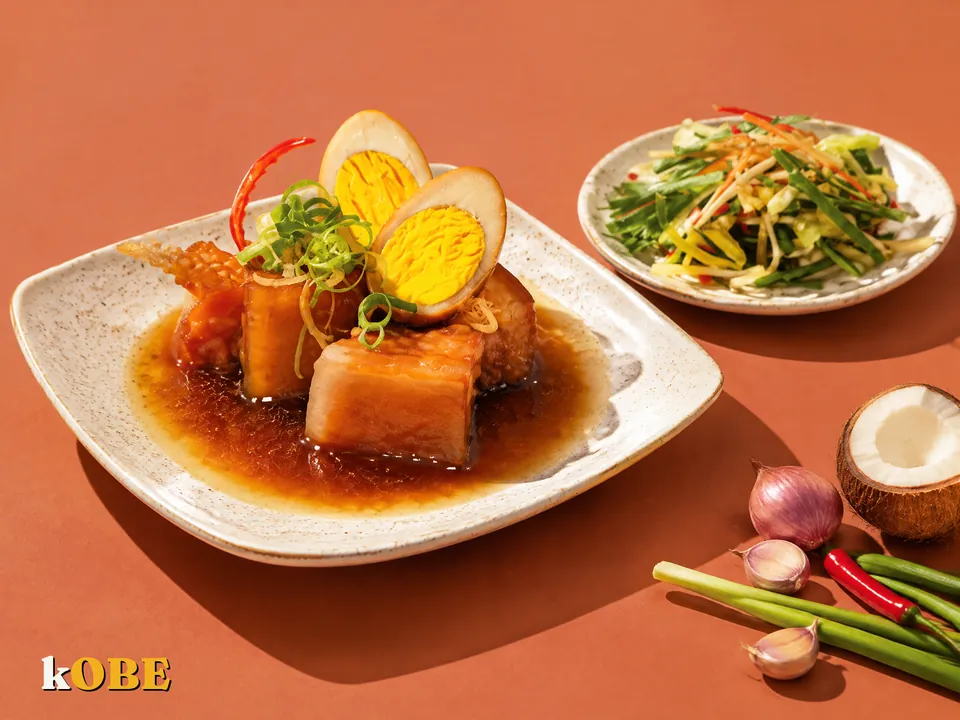
Meal prep (preparing meals ahead) is the answer to that problem. It sounds like a big English buzzword, but our grandmothers and mothers have done it forever: one pot of thịt kho trứng (pork and eggs braised in coconut water), cooked once, eaten for three days.
This article is the map for the whole series. By the end, you'll know where to start, how long food keeps, and when to call in the freezer.
In this article
- Meal prep doesn't mean 20 identical boxes
- The assembly formula: one protein, one starch, two veggies, one sauce
- Four numbers that keep your lunchbox safe
- Fridge for early in the week, freezer for later
- The WHO's five keys, home kitchen edition
- How should your first week start?
- Inside the kOBE kitchen
- Frequently asked questions
Meal prep doesn't mean 20 identical boxes
Online, you often see photos of dozens of plastic boxes lined up perfectly. Every box holds chicken breast, broccoli and brown rice. Just looking at them is tiring.
In reality there are three styles of meal prep, and you pick the one that suits you:
- Cook full meals, then portion them into boxes. Each box is a complete meal you grab in the morning. Convenient, but it gets boring fast.
- Cook separate ingredients, then "assemble" at mealtime. Poach chicken, cook rice, blanch vegetables, mix a sauce, and store each one in its own box. Every meal becomes a new combination. This is the style we usually suggest for beginners.
- Cook a big batch, then freeze it. A pot of curry or bò kho (Vietnamese beef stew) split into small portions and stored in the freezer. On busy days, you take one out.
Many households mix all three. Cook one session on the weekend, eat part of it early in the week, freeze the rest for later. The step-by-step version is in cooking one session for 5 days.
The assembly formula: one protein, one starch, two veggies, one sauce
The assembly style is easy because you only need to remember one frame for each box:
| Slot in the box | Suggested amount | Easy examples |
|---|---|---|
| Protein | Palm-sized | Chicken breast, fish, eggs, tofu, chickpeas |
| Starch | Fist-sized | Brown rice, sweet potato, rice vermicelli, quinoa |
| Veggies | Two fists | Boiled veggies, stir-fried veggies, cucumber, tomato |
| Sauce | One to two tablespoons | Ginger fish sauce, sesame sauce, yogurt sauce |
The beauty of this frame: change one slot and you have a new dish. Monday: sesame chicken breast with brown rice. Tuesday: the same chicken, shredded into a cabbage salad. Wednesday: switch to braised tofu.
A small tip: keep the sauce separate and pour it on at mealtime. The veggies don't go soggy, and the rice doesn't turn mushy.
So what should you assemble? Not every dish survives a few days in the fridge. The table below is kitchen experience, not law:
| Food group | Good for cooking ahead? | Notes |
|---|---|---|
| Braised dishes, curries, bò kho | Very good | Taste even richer the next day, freeze well |
| Cooked chicken, fish | Good | Keep in whole pieces, slice at mealtime so they stay moist |
| Rice, potatoes, beans | Good | Portion small. Rice kept longer than 1 day is better frozen |
| Firm veggies (broccoli, carrots, green beans) | Good | Blanch until just tender, don't boil them soft |
| Soft leafy greens (morning glory, choy sum) | So-so | Good for 1 to 2 days, see how long boiled vegetables keep |
| Crispy fried food | Not great | Goes limp. Reheating in an air fryer helps |
| Raw veggies, dressed salads | No | Dressing too early makes them soggy. Keep greens and sauce apart |
Four numbers that keep your lunchbox safe
If you cook ahead, you need to keep it safe. These four numbers come from public guidance by the US Department of Agriculture (USDA) and the UK's National Health Service (NHS). They're general rules for home kitchens, not the use-by date on any specific dish.
- 2 hours. Cooked food shouldn't sit out longer than 2 hours. Above 32°C, only 1 hour. In Saigon, your home kitchen is often that hot.
- Below 5°C. The fridge should sit around 0 to 4°C. USDA recommends 4°C or below; the NHS says below 5°C.
- 3 to 4 days. That's how long USDA suggests for leftovers in the fridge. The NHS is more cautious: eat them within 2 days, and cooked rice within 1 day.
- 74°C. Reheat until the food is hot all the way through, with the center reaching about 74°C. No thermometer? Heat until the middle is steaming hard.
Why these numbers? Because bacteria multiply fastest between 5 and 60°C. That range is called the "danger zone", and it has its own article: what is the temperature danger zone. For how long each food group keeps, see how long cooked food lasts in the fridge.
Rice has its own story. We told it in cold rice and resistant starch and in the cooked rice storage article of the Rice, grains & starch series, so we won't repeat it here.
Fridge for early in the week, freezer for later
Put "3 to 4 days" next to a 5-day work week and you'll see the problem. A Friday lunchbox cooked on Sunday is already 5 days old.
The fix is simple:
- Monday to Wednesday: keep in the fridge.
- Thursday and Friday: put in the freezer on Sunday. The night before, move it to the fridge to thaw.
A freezer at around minus 18°C is like pressing "pause" on bacteria. They don't die, they just sleep. So frozen food stays safe for a very long time, while the flavor slowly fades over the months.
Many people fear freezing "kills the nutrients". It's far less than you think; the numbers are in does freezing food lose nutrients. And for thawing the right way, see three safe ways to thaw.
The WHO's five keys, home kitchen edition
The World Health Organization (WHO) has a guide called "Five Keys to Safer Food". Applied to meal prep, it boils down to this:
- Keep clean. Wash your hands, cutting boards and boxes before portioning food. Dry freshly washed boxes thoroughly.
- Separate raw and cooked. Don't use the board you just cut raw meat on to chop boiled chicken. In the fridge, raw food goes on the lower shelves, cooked food on the upper ones.
- Cook thoroughly. Especially chicken, minced meat and eggs.
- Keep food at safe temperatures. After cooking, split food into shallow boxes so it cools quickly, then refrigerate within 2 hours. No need to wait until it's fully cold.
- Use safe water and raw materials. Choose fresh ingredients, check dates, rinse veggies under running water.
It sounds like common sense. But trouble in home kitchens usually comes from exactly these familiar spots: a pot left cooling on the stove all evening, a shared cutting board.
How should your first week start?
Don't cook 20 boxes in week one. Try this small version first:
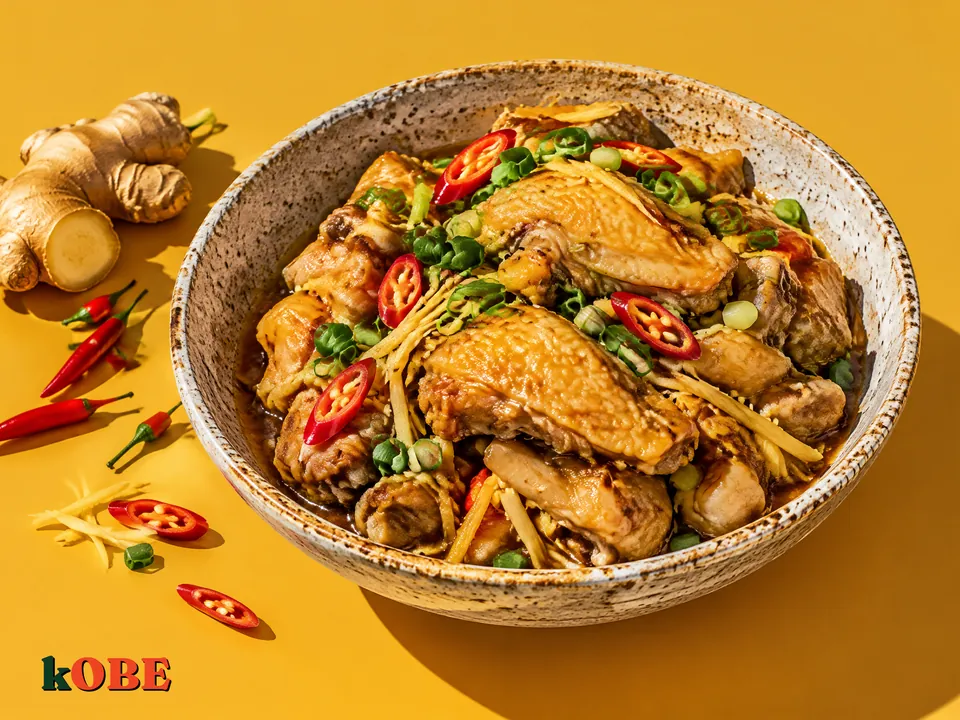
- Pick 1 protein, 1 starch, 2 veggies. For example, gà kho gừng (ginger braised chicken), brown rice, blanched broccoli, cucumber.
- Cook for only 3 lunches. Monday to Wednesday.
- Get your boxes ready. Airtight lids, reheatable. Plastic or glass food containers helps you choose.
- Label with the cooking date. A strip of masking tape is enough.
No fridge at the office? Read packing lunch for work without a fridge. Only a microwave? See reheating in the microwave the right way.
Two more for tastier cooking: steaming, boiling, roasting, stir-frying: which keeps vitamins and air fryer dos and don'ts.
Inside the kOBE kitchen
The most time-consuming part of meal prep is usually cooking the protein and the starch. That's exactly the part we prepare for you on the Ingredients page.
Our Sous Vide Chicken Breast is brined only in sea salt, cooked sous vide at 60°C for 90 minutes, rapidly chilled, then frozen. Red Brown Rice, Black Brown Rice, White Rice, Quinoa, Chickpeas and diced roasted Sweet Potato are also cooked, then frozen. For veggies there's Sesame Kale, Green Peas and Edamame.
That means the "one protein, one starch, two veggies" frame can come together in a few minutes. To reheat: thaw in the fridge overnight, or use the microwave on a low setting. See our ready-cooked ingredients.
For weeks that are just too busy, our meals by calorie are already worked out for you.
Frequently asked questions
Is it okay to put hot food in the fridge?
Is meal prep more expensive than eating out?
Won't I get bored eating the same dish three days in a row?
If food still smells good, is it safe?
Keep reading
Sources
- WHO (2006). Five Keys to Safer Food Manual.
- USDA FSIS. Leftovers and Food Safety.
- USDA FSIS. "Danger Zone" (40°F to 140°F).
- NHS (UK). How to store food and leftovers safely.
- Further reading: Culinary Nutrition; Understanding Nutrition 16th ed., chapter on food safety.