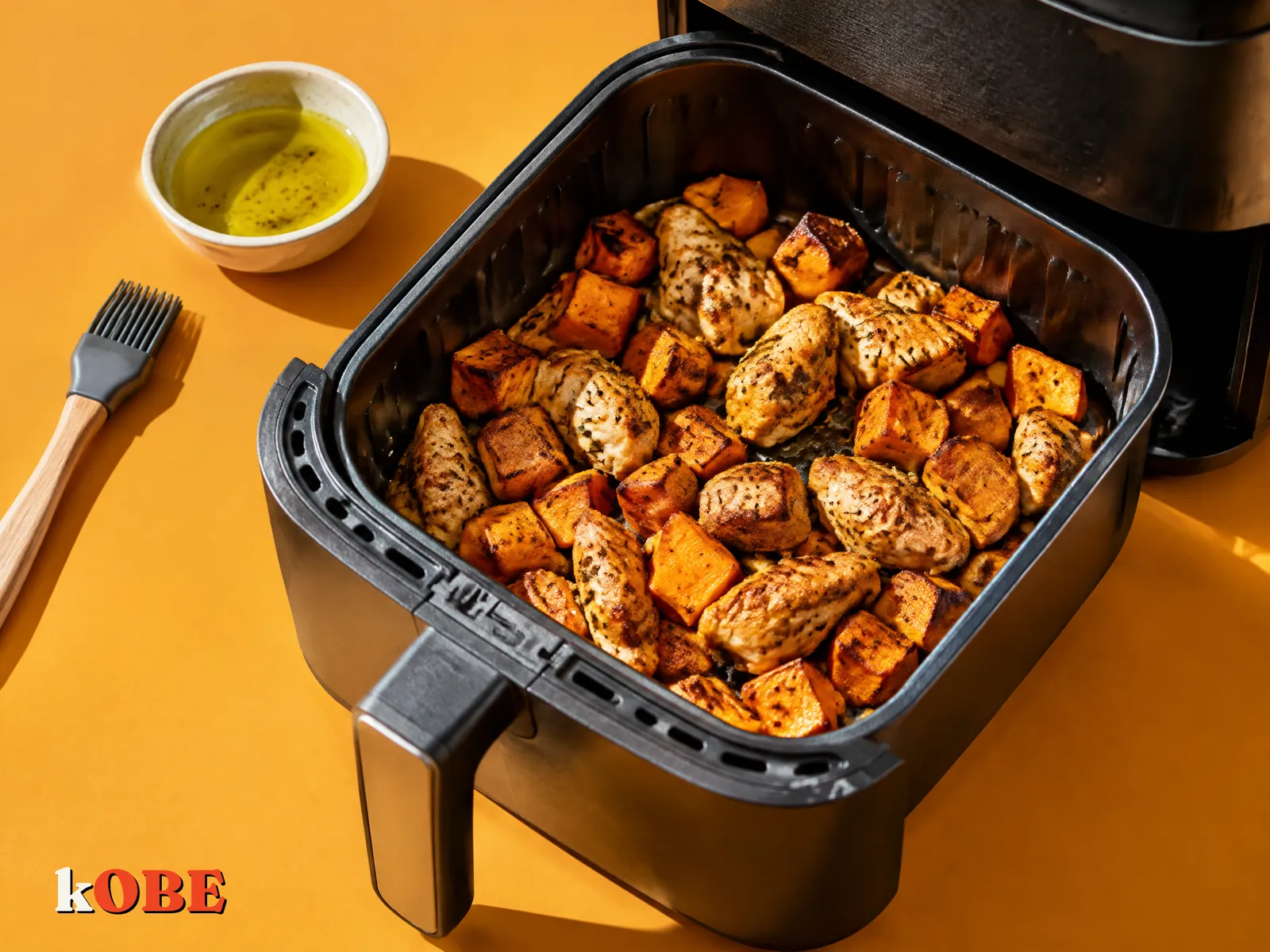
A few years ago, the air fryer was a novelty. Now almost every home has one, sitting proudly next to the rice cooker.
It was bought on the promise of "crispy frying with no oil". Then, after a while, many households only use it to warm up bánh mì, roast sweet potatoes, and occasionally scorch a few chicken wings.
Let's look at what this machine actually does, what it's great at, and when it's better to put it away.
In this article
It doesn't fry, it "wind-roasts"
Here's the first fun fact: an air fryer doesn't fry anything.
Real frying means dropping food into hot oil at around 170 to 190°C. The oil surrounds the food, transfers heat very quickly, and crisps up the outside.
An air fryer is different. Inside there's a heating element and a fan. The fan blasts hot air swirling around the food at high speed. At heart, it's a miniature convection oven.
Because the chamber is small and the airflow strong, the surface of the food dries and browns quickly. That fragrant golden-brown color comes from the Maillard reaction, the same reaction that makes toast smell amazing and gives seared meat its brown crust.
So air-fried food is closer to roasted than fried. Crispy, but a dry kind of crispy, not the rich crunch of a pan of oil.
Really less oil, and what that means
This is its clearest strength.
When deep frying, a piece of potato or chicken soaks up a significant amount of oil. Each tablespoon of cooking oil has about 120 calories. A plate of deep-fried food can carry several of those tablespoons without you noticing.
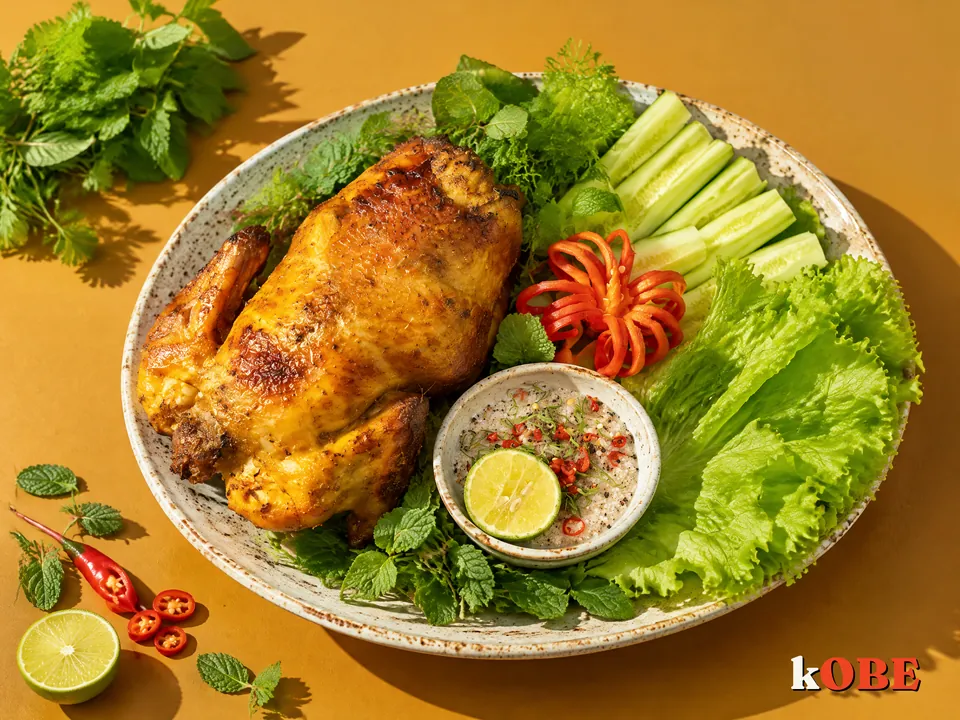
An air fryer only needs a thin coat of oil, or none at all if the food already has its own fat, like chicken wings or pork belly. That means the same dish gets far less added fat.
But to be fair:
- An air fryer doesn't turn a fatty dish into a lean one. Pork belly is still pork belly. Some fat drips into the tray, but most stays in the meat.
- It doesn't make processed food any better for you. Sausages and meatballs cooked in an air fryer are still sausages and meatballs.
What it does do is give you something crispy and fragrant without a whole pan of oil.
Golden is enough, don't let it scorch
There's one substance worth knowing by name: acrylamide.
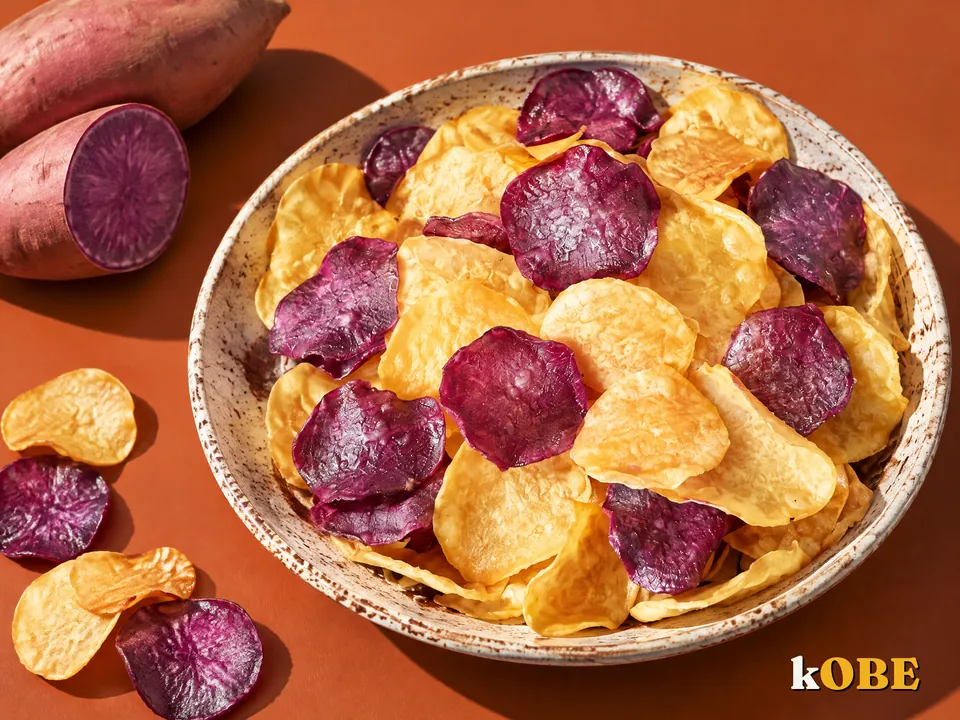
It forms naturally when starchy foods like potatoes, sweet potatoes and bread are cooked at high temperatures, usually above about 120°C, by frying, baking or roasting. The darker the color, the more acrylamide there usually is.
The European Food Safety Authority (EFSA) considers acrylamide something to keep as low as reasonably possible in the diet.
Some studies suggest air frying potatoes may produce less acrylamide than deep frying. But that doesn't mean none. Overdo it and things scorch just the same.
A simple tip that the UK's food safety agency calls "go for gold":
- Stop at golden yellow, don't wait for dark brown or black.
- Soak sliced potatoes in water for about 15 to 30 minutes, then pat dry before cooking.
- Cut evenly so everything cooks at the same pace, with no thin pieces burning first.
- Scrape off any blackened bits, no regrets.
What suits it, and what doesn't?
| Good fit | Not a great fit |
|---|---|
| Sweet potatoes, potatoes cut into sticks or cubes | Wet, runny batters: they drip and stick to the basket |
| Chicken wings, chicken thighs, pork belly (their own fat) | Soft leafy greens: they blow around and dry to a crisp |
| Tofu, fish fillets, shrimp | Soups, very saucy dishes |
| Firm veggies: broccoli, squash, carrots, green beans | Big quantities for the whole family: needs many batches |
| Reheating fried food, bread, pizza to crisp them up again | Uncovered cheese: melts down and burns |
| Frozen pre-cooked veggies | Small amounts of nuts: blow around and burn easily |
The air fryer is especially handy for meal prep in one way: reheating food that's meant to be crispy. A microwave makes fried food limp, while an air fryer brings back the crunch. For everything else, see reheating in the microwave the right way.
Five common mistakes
- Overfilling the basket. Hot air can't get in, so food steams instead of roasting. Arrange in one layer with gaps, and shake the basket halfway through.
- Skipping the preheat. A few minutes of preheating browns the outside quickly without drying out the inside.
- Trusting the golden color and forgetting to check doneness. Golden outside doesn't guarantee cooked inside. Chicken needs to reach about 74°C at the thickest part, according to the US Department of Agriculture (USDA). A food thermometer settles it.
- Putting loose baking paper in during preheating. Light paper gets blown up onto the heating element. Only line the basket when food is weighing the paper down, and don't block the air vents.
- Scraping the basket with metal utensils. The nonstick coating gets scratched and food sticks more. Use silicone or wooden tongs, and wash the basket after every use so old grease doesn't smoke next time.
Inside the kOBE kitchen
kOBE's Japanese, Purple and Honey Sweet Potato are roasted with a little olive oil, diced and then frozen. Per 100g they have 122, 114 and 139 calories respectively.
How we suggest reheating: thaw in the fridge overnight, or use the microwave on a low setting. If you like slightly crispy edges, after thawing you can pop them in the air fryer for a few minutes. Remember "go for gold": the sweet potato is already cooked, so it only needs to heat through and firm up on the surface, not roast until dark.
Pair it with Sous Vide Chicken Breast and Sesame Kale, and you have a box with protein, starch and veggies in a few minutes. See our ready-cooked ingredients.
Frequently asked questions
Do I need to add oil to an air fryer?
Is an air fryer bad for you?
Can an air fryer replace an oven?
Keep reading
Sources
- EFSA CONTAM Panel (2015). Scientific Opinion on acrylamide in food. EFSA Journal 13(6):4104.
- U.S. FDA. Acrylamide: Information on Diet, Food Storage, and Food Preparation.
- Food Standards Agency (UK). Acrylamide: Go for gold.
- Sansano M. et al. (2015). Effect of pretreatments and air-frying, a novel technology, on acrylamide generation in fried potatoes. Journal of Food Science 80(5).
- Further reading: Food Lipids; Culinary Nutrition.