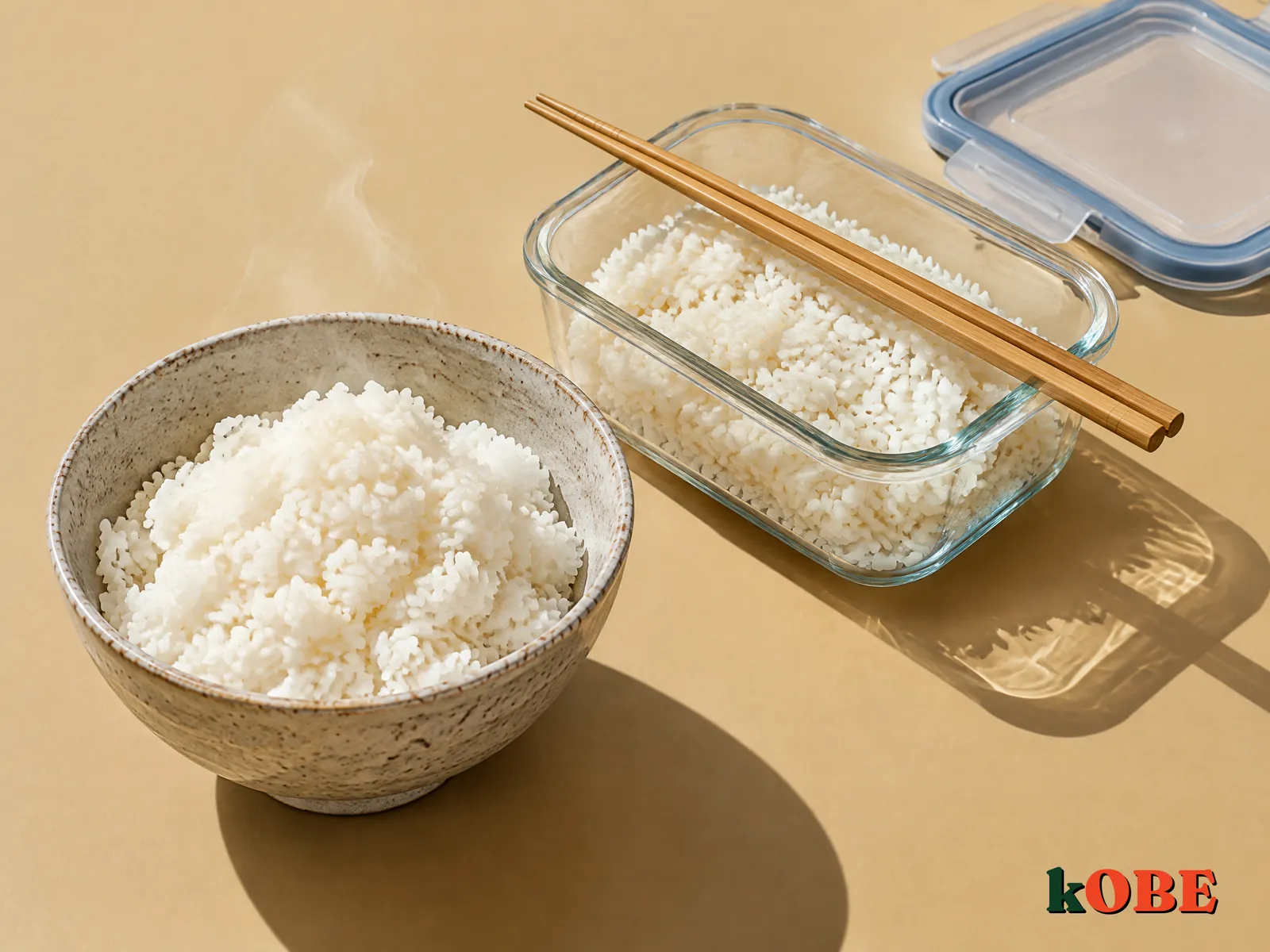
Every home has a box of leftover rice in the fridge. In the morning it becomes fried rice, or gets a quick reheat before work.
Have you noticed? Rice straight from the fridge is hard and dry, the grains stiff and separate. Yet rice left on the cooker's warm setting all day stays soft. Same pot of rice, so why the difference?
The answer leads somewhere rather fun. Cold rice really is a little different from hot rice, right down to how your body digests it.
In this article
Rice grains know how to "line up"
Inside a grain of rice is starch, packed into very tight clusters. That is why raw rice is as hard as gravel.
During cooking, water and heat pull these clusters apart. They soak up water and swell. The rice turns soft and tender, and very easy to digest. Your gut cuts it into glucose as easily as slicing soft cake.
Then the rice cools. The loosened starch chains begin to huddle together and line back up. The straighter the lines, the harder the rice. That is exactly the dry, firm feel of fridge rice.
Some starch manages to "sneak past" the small intestine
As the chains line up again, some of the starch packs so tightly that digestive enzymes cannot cut it.
This part has its own name: resistant starch. It travels through the small intestine without turning into sugar. In the large intestine, it becomes food for beneficial bacteria, much like fiber.
Put simply: cold rice has a little extra starch that "goes in without becoming sugar".
Fridge, freezer or warm mode: who wins?
How fast starch lines up depends on where you keep your rice. Scientists have compared them and ranked them like this:
| Where the rice is kept | Starch lines up | What happens to the rice |
|---|---|---|
| Fridge | Fastest | Hardest, most resistant starch |
| On the kitchen counter | Moderately | Do not leave it long, see below for why |
| Freezer | Very slowly | Like pressing "pause" |
| Rice cooker on warm | Slowest | Stays soft, almost unchanged |
Two surprises:
- The warm setting keeps rice soft because at around 70°C the starch is too "hot" to settle into line.
- The freezer works like a pause button. Freeze rice quickly and the starch has no time to line up. One study kept rice in the freezer for 5 months and the starch barely changed.
And the fridge, at around 4 to 5°C, happens to be the temperature starch likes best for lining up.
So how much extra is there? The real numbers
A 2015 study measured it in white rice:
- Freshly cooked rice: about 0.6g of resistant starch per 100g of rice.
- Rice kept in the fridge for 24 hours, then reheated: about 1.7g.
The good news is that reheating does not erase it. People who ate the reheated rice also had lower blood sugar after the meal than those who ate freshly cooked rice.
But to be fair and honest: 100g of rice has about 28g of starch. An extra gram or so of resistant starch is real, but small. It is like adding a slice of cucumber to your plate of rice: nice, but the plate of rice is still a plate of rice.
So think of cold rice as a small bonus trick, not magic. Eating your vegetables first, pairing rice with meat or fish, and choosing a comfortable portion still do far more.
"Fried rice syndrome": why rice should never sit out overnight
It sounds like a joke, but it is real. In the medical literature, food poisoning from rice left out too long is nicknamed "fried rice syndrome".
The culprit is a bacterium called Bacillus cereus. Its spores survive the boiling rice cooker. If the rice sits at room temperature for a long time, they wake up and make toxins. Reheating does not destroy those toxins.
To enjoy cold rice safely, just remember four things:
- Put rice in the fridge within about 1 hour of cooking. Spread it in a shallow container so it cools faster.
- Never leave rice out overnight, even in a cooker that is switched off.
- Eat it within about 1 day if it is in the fridge. For longer, use the freezer.
- Reheat it until piping hot, and reheat only once.
Inside the kOBE kitchen
Our Red Brown Rice, Black Brown Rice and White Rice are cooked and frozen right away. Remember the "pause button" above? That is why a pack of our rice reheats as soft as freshly cooked.
We will be upfront about the other side: because it is "paused", frozen rice does not gain much extra resistant starch.
Want to try the cold rice trick? The night before, move a pack of rice from the freezer to the fridge. The next morning, reheat it until piping hot and eat. The rice will be a little firmer, with a little extra resistant starch.
Frequently asked questions
Do sweet potatoes, potatoes and noodles work the same way as rice?
Will eating cold rice help me lose weight?
What about fried rice made from leftover rice?
Keep reading
Sources
- Sonia S., Witjaksono F., Ridwan R. (2015). Effect of cooling of cooked white rice on resistant starch content and glycemic response. Asia Pacific Journal of Clinical Nutrition 24(4):620 to 625.
- Tian J. et al. (2023). Science of Rice: Chemistry and Nutrition. Springer. Chapter 9 (summarizing Matsunaga and Kainuma 1981; Yu et al. 2009, 2010, 2012).
- NHS (UK). Can reheating rice cause food poisoning?
- Further reading: Understanding Nutrition 16th ed., section 4.5.