Seven in the morning, before you wheel your motorbike out for work, you pull a bag of meat from the freezer and drop it in the kitchen sink. By evening it's soft and ready to cook.
This scene is so familiar that almost every household has done it. Some even soak the bag in a bowl of hot water to speed things up, or set it in front of a fan.
Sounds handy, but this is exactly the thawing method the US Department of Agriculture (USDA) says not to use. The reason comes down to one tiny detail: the outside and the core of the meat don't thaw at the same time.
In this article
Why the counter is a bad place to thaw
Picture frozen meat as a big ice cube. The core stays rock hard, but the outer layer softens very early.
That outer layer gradually warms up until it sits between 5 and 60°C. This is the temperature danger zone, where bacteria multiply fast. While you wait for the core to finish thawing, the outside has been sitting in that zone for hours.
In Saigon, kitchen temperatures during the day easily go above 30°C. Ten hours in the sink is far too long.
Hot water is even worse: the outer layer warms up faster still. Sometimes the surface starts to cook while the core is still frozen.
So how should you thaw? USDA names exactly three safe methods.
Method 1: the fridge, slow but sure
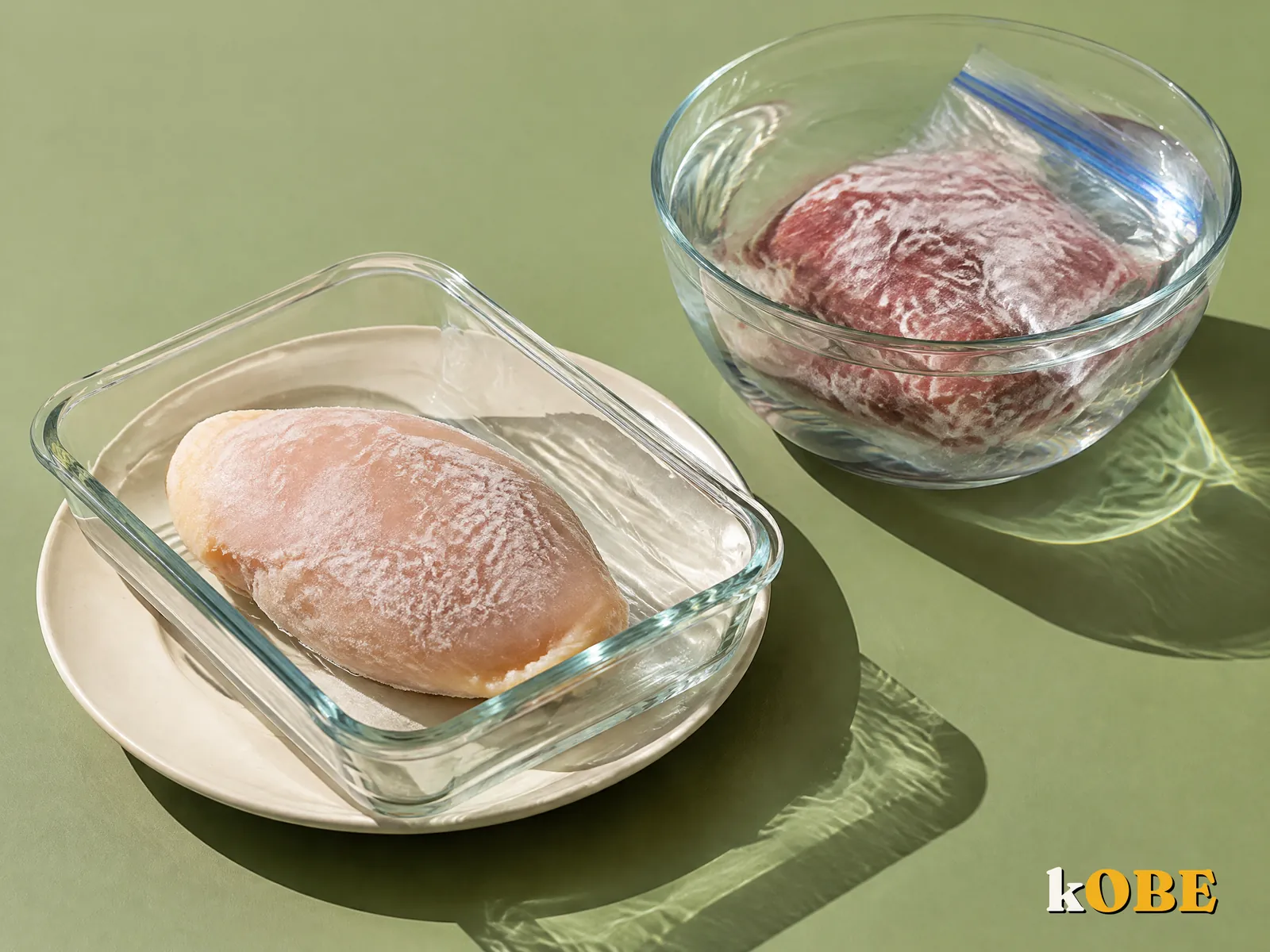
Move the frozen food from the freezer down to the fridge and let it thaw on its own.
- How long: small items like a pack of meat or a box of soup usually need one night. Large pieces need about one day for every 2.3kg.
- Pros: the food stays below 5°C the whole time and never slips into the danger zone. Once thawed, it can stay in the fridge a little longer.
- Cons: you have to plan ahead. Move it tonight, use it tomorrow.
Small tip: set the bag on a plate or in a container on the bottom shelf. Any drips won't land on other food.
This is also the method that fits meal prep most naturally. On Sunday night, move Monday's box to the fridge, and by Monday morning it's done.
Method 2: cold water, changed every 30 minutes
Forgot to move it to the fridge last night? This one is much faster.
- Put the food in a sealed, leak-proof bag. Water getting into the bag makes the meat soggy and invites contamination.
- Submerge the bag completely in a bowl of cold tap water.
- Change the water every 30 minutes. Water left standing slowly warms up to room temperature.
- Once thawed, cook it right away, don't put it back in the fridge.
According to USDA, a pack of about 450g can thaw in an hour or less. A 1.5 to 2kg pack takes about 2 to 3 hours.
Why does cold water thaw faster than open air? Because water transfers heat far better than air. It's the same reason a 25°C lake feels cold when you jump in, while a 25°C room feels pleasant.
Method 3: the microwave, then cook immediately
The fastest option, with one condition.
Microwaves heat unevenly. While thawing, a few thin parts of the meat can warm up or even start to cook. Those spots are sitting right in the temperature range bacteria love.
That's why USDA says: after thawing in the microwave, cook immediately. Don't thaw it in the morning and leave it until the afternoon.
A few tips for more even thawing:
- Use the defrost setting or a low power level.
- Take the food out of supermarket foam trays and plastic wrap. Put it in a microwave-safe container or plate.
- Halfway through, flip it and separate pieces that are stuck together.
For more on microwaves, see reheating in the microwave the right way.
No time to thaw? Cooking straight from frozen is fine
Many people don't know this: cooking straight from frozen is safe.
USDA says you can cook frozen meat, chicken and fish without thawing first. Just allow more time, about one and a half times as long as for thawed food.
This works well for stews, soups, steaming or oven roasting. Pan-frying is trickier, since the outside can burn before the core cooks through.
Can you refreeze after thawing?
The most common question of all. The answer depends on how you thawed:
| Thawing method | Refreeze before cooking? | Notes |
|---|---|---|
| Fridge | Yes | May be a bit drier and less tasty due to moisture loss |
| Cold water | Cook it first | Once cooked, refreezing is fine |
| Microwave | Cook it first | Once cooked, refreezing is fine |
| Left on the counter over 2 hours | No | Throw it out, whether refreezing or cooking |
Every thaw and refreeze costs the food a bit more moisture and juiciness. So a good trick is to portion small before freezing. Thaw only as much as you need.
Inside the kOBE kitchen
kOBE's ready-cooked ingredients, like Sous Vide Chicken Breast, Red Brown Rice, Chickpeas and roasted Sweet Potato, are all cooked and then frozen. The reheating methods we suggest are exactly two of the three above: thaw in the fridge overnight, or use the microwave on a low setting.
Sous Vide Chicken Breast comes in 90 to 120g packs, about one meal each. So you only need to move the packs you plan to eat tomorrow into the fridge, not the whole bag.
If you go with the microwave, remember the rule: thaw it, then eat it. See our ready-cooked ingredients.
Frequently asked questions
Is it okay to thaw in hot water to speed things up?
Is pink liquid from thawed meat a sign it's gone bad?
Does frozen cooked food need reheating, or can I eat it cold?
Keep reading
Sources
- USDA FSIS. The Big Thaw: Safe Defrosting Methods.
- USDA FSIS. Freezing and Food Safety.
- USDA FSIS. "Danger Zone" (40°F to 140°F).
- WHO (2006). Five Keys to Safer Food Manual.
- Further reading: Culinary Nutrition.