Half past seven in the morning, you drop your lunchbox into the motorbike seat compartment and ride for half an hour through sun and traffic. At the office, the lunchbox sits under your desk until noon.
The office has a microwave but no fridge. So you tell yourself: "I'll just heat it up at lunch."
Four and a half hours, in Saigon temperatures. Let's look at what happens inside that lunchbox, and how to keep it safe without a fridge.
In this article
Four hours under the desk: what's going on?
The general guidance from the US Department of Agriculture (USDA) and the World Health Organization (WHO) is pretty clear:
- Cooked food shouldn't sit at room temperature for more than 2 hours.
- Above 32°C, only 1 hour.
The reason is that bacteria multiply fast between 5 and 60°C. We explain it in detail in the temperature danger zone.
Your lunchbox has been in that zone since it left your fridge at home. A seat compartment in the sun is even hotter than the air outside. By noon, it's way past the 2-hour mark.
And as we said in the previous article, reheating doesn't erase everything. Some bacteria leave behind heat-resistant toxins.
The good news: with just a few cheap items, your lunchbox can stay out of the danger zone right up to lunchtime.
A cooler bag only holds the cold, it doesn't make it
Many people buy an insulated bag and happily drop their lunchbox inside. But an insulated bag isn't a fridge. It only slows down how fast the lunchbox warms up.
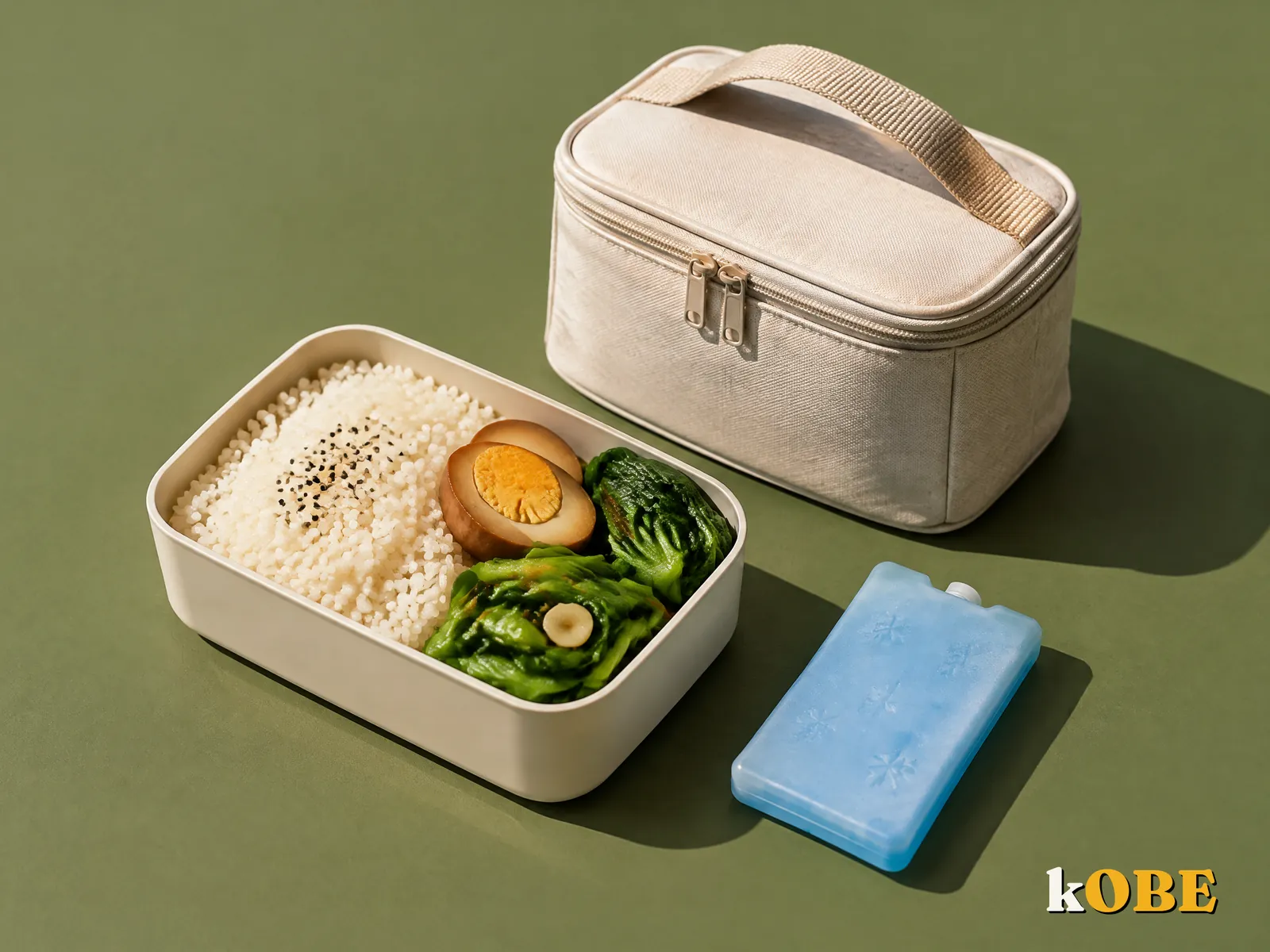
For the bag to actually keep things cold, you need a cold source inside. USDA recommends:
- Use an insulated bag, not a paper bag or a thin plastic one.
- Put at least two cold sources in the bag. For example, two frozen gel ice packs, one above and one below the lunchbox.
- The food must already be cold when it goes in. Cook the night before, refrigerate overnight, and pack the bag in the morning. A still-warm lunchbox makes the ice packs work very hard to bring the temperature down.
- Keep the bag in the coolest spot you can. Avoid a seat compartment in the sun and avoid the windowsill.
A cheap trick: freeze a bottle of water to use as an ice pack. By lunchtime the ice has melted, and you have cold water to drink.
The lunchbox that is its own ice pack
This is our favorite trick for office workers with a microwave.
Instead of bringing a cold lunchbox, bring a frozen lunchbox. On Sunday night, portion your boxes and put them in the freezer. Each morning, take one out and put it in your insulated bag.
A rock-solid frozen lunchbox is one big ice block all by itself. It slowly thaws in the bag through the morning but stays cold. At lunch, reheat it in the microwave on a low setting, then step up the power until it's hot all the way through.
A few notes to make this trick work properly:
- Still add one ice pack. Especially in the hot season or on a long commute.
- Reheat until it's steaming all the way to the middle, about 74°C. If there's still ice in the center, stir and heat some more.
- The box must be microwave safe. Or tip the food into a porcelain bowl at the office.
Details on reheating evenly are in reheating in the microwave the right way.
Prefer it hot? Use a thermos the right way
No microwave at the office either? A thermos food jar is the other option. But you have to use it properly, because a thermos that slowly cools off drops right back into the danger zone.
USDA suggests:
- Preheat the thermos. Fill it with boiling water, close the lid, wait a few minutes, then pour it out.
- Add food that's piping hot right away, freshly cooked or just brought to a boil.
- Seal it and don't peek until lunchtime.
- The goal is for the food to still be above 60°C when you open it.
A thermos suits soups, cháo (rice porridge), stews and curries best. These hold heat better than dry rice.
Remember to pick a thermos that matches the amount of food. A full thermos stays hot longer than a half-empty one.
Which foods can handle the trip?
No food gets a full pass on the 2-hour rule. But some groups are much lower risk when they sit out for a few hours:
| Group | Examples | Risk when left out a few hours |
|---|---|---|
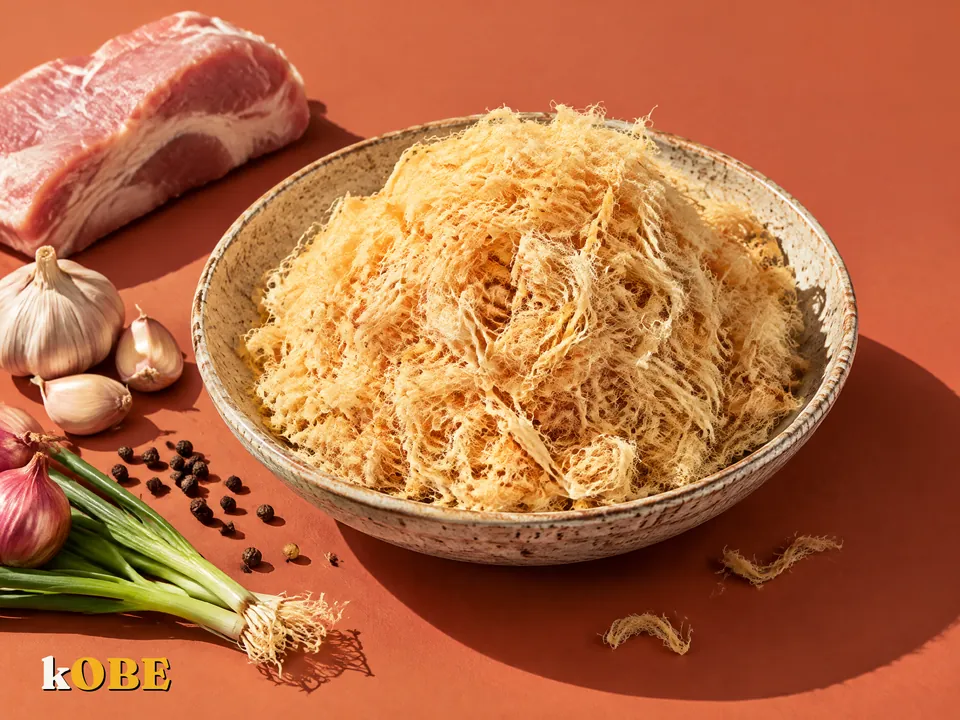
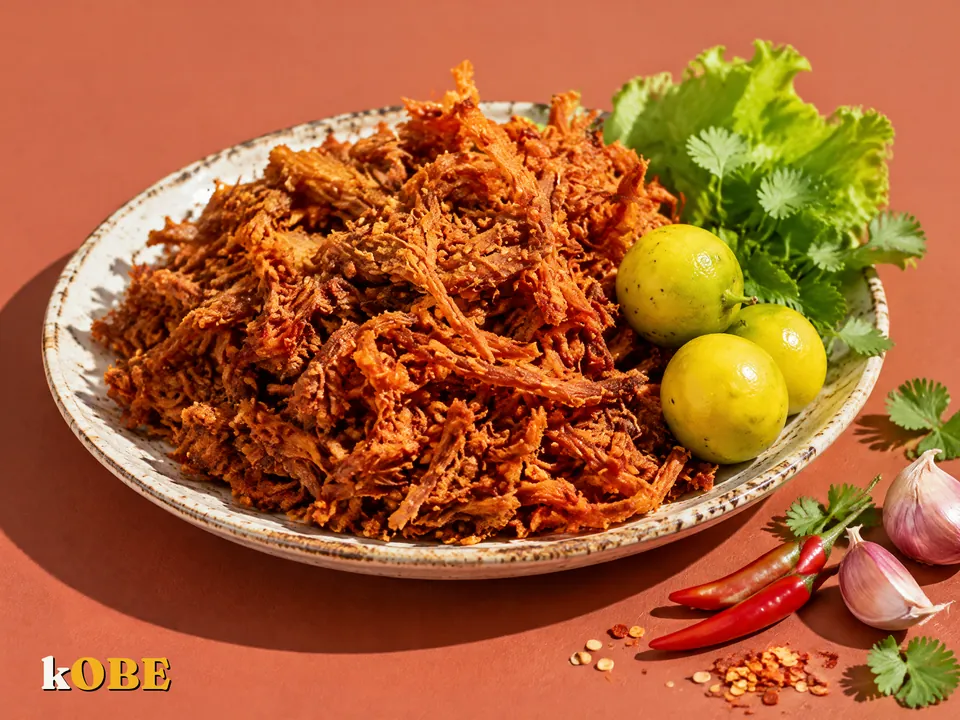
| Dry, low-moisture foods | Chà bông or ruốc (meat floss), beef jerky, roasted nuts, bread | Lower, since bacteria need water to multiply |
| Whole fruit | Bananas, oranges, apples | Low, as long as the peel is intact |
| Cooked rice, noodles | Rice boxes, bún trộn (noodle salad) | High, needs to be kept cold or hot |
| Cooked meat, fish, eggs | Poached chicken, boiled eggs, braised fish | High, needs to be kept cold or hot |
| Creamy or mayonnaise dressed dishes | Egg salad, potato salad | High, keep cold |
| Cut fruit | Sliced watermelon, papaya | Medium to high, keep cold |
Leftovers after lunch? USDA recommends throwing out leftover perishable food, rather than taking it home for dinner. It's already been through the whole morning and midday.
Inside the kOBE kitchen
The "lunchbox that is its own ice pack" trick works really well with kOBE's ready-cooked ingredients, since they're already cooked and then frozen.
For example, a box you can put together quickly the night before: one 90 to 120g pack of Sous Vide Chicken Breast, a portion of Red Brown Rice, and some Sesame Kale. Put it in the freezer, and in the morning drop it into your insulated bag with an ice pack. At lunch, microwave on low, then step up until it's hot all the way through.
If you'd rather not assemble anything, kOBE's frozen poke bowls and frozen rice bowls are ready-made meals. For example, the 350g Chicken Kale Namul Poke has 379 calories and 29g of protein. See our ready-cooked ingredients.
Frequently asked questions
Does a lunchbox last longer in an air-conditioned room?
Can I cook in the morning, pack it while still hot and head out?
Is one ice pack enough for several lunchboxes in one bag?
Keep reading
Sources
- USDA FSIS. Keeping "Bag" Lunches Safe.
- USDA FSIS. "Danger Zone" (40°F to 140°F).
- WHO (2006). Five Keys to Safer Food Manual.
- USDA FSIS. Leftovers and Food Safety.
- Further reading: Understanding Nutrition 16th ed., chapter on food safety.