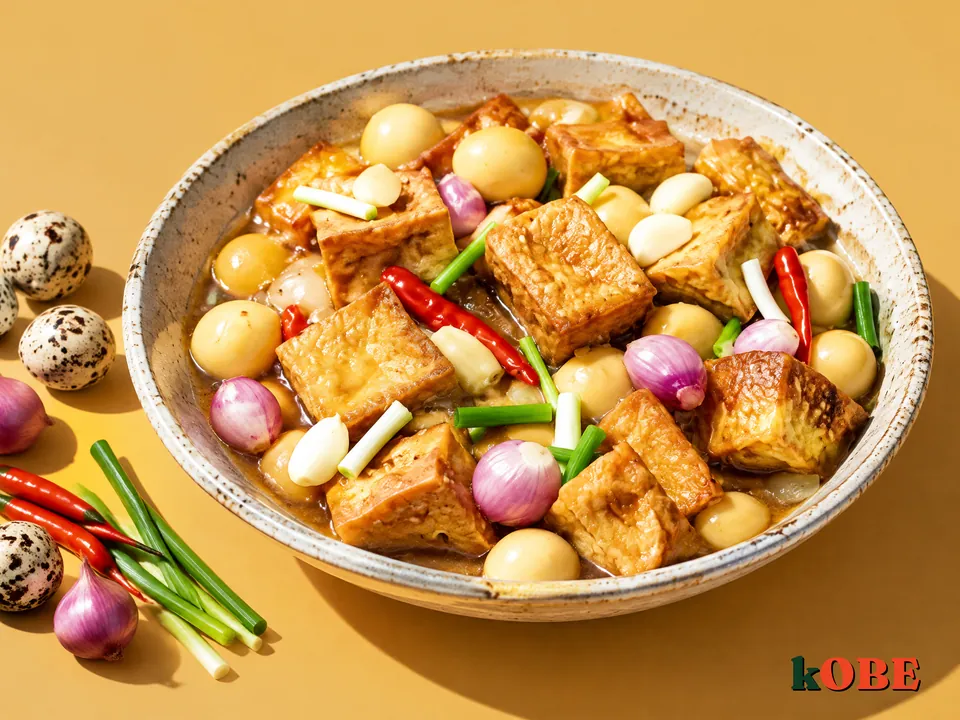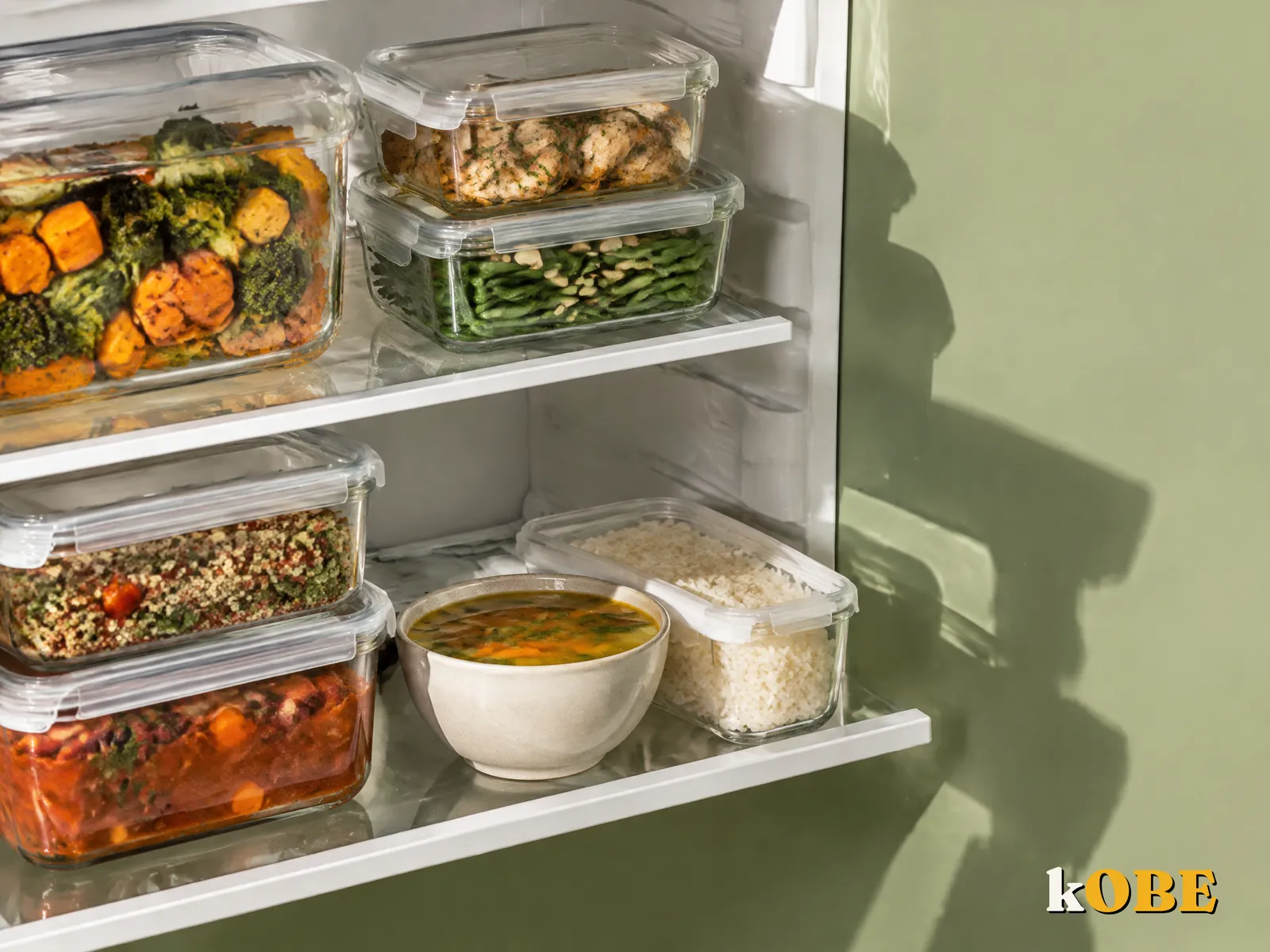
On Sunday, Mom sends you a box of thịt kho trứng (pork and eggs braised in coconut water). On Thursday, you finally remember it's still sitting in the back of the fridge.
You open the lid and lean in for a sniff. Smells great. Looks normal too. So it's fine to eat, right?
Not so fast. And here's the fun part: your nose is sniffing for the wrong thing.
In this article
The fridge slows bacteria down, it doesn't stop them
At room temperature, bacteria in cooked food multiply very quickly. A fridge below 5°C slows them to a tortoise's pace. But tortoises still crawl.
Some even handle the cold quite well. Listeria, for example, is a bacterium that can still multiply in the fridge, just very slowly.
So the fridge buys you time, but not forever. That's why the day counts below exist.
A reference table for home kitchens
This table pulls together public guidance from the US Department of Agriculture (USDA) and the UK's National Health Service (NHS). It's general guidance, assuming the food went into the fridge promptly and the fridge is cold enough.
| Cooked food | Fridge (0 to 4°C) | Freezer (minus 18°C), for best quality |
|---|---|---|
| Cooked meat, chicken, fish (braised, simmered, poached, grilled) | 3 to 4 days | About 2 to 6 months |
| Soups, broths, curries, bò kho (Vietnamese beef stew) | 3 to 4 days | About 2 to 3 months |
| Cooked vegetables | 3 to 4 days, leafy greens nicest within 1 to 2 days | Depends on the vegetable |
| Hard-boiled eggs (peeled or unpeeled) | About 1 week | Don't freeze |
| Sliced chả lụa or giò (Vietnamese pork roll) | About 3 to 5 days, like opened cold cuts | 1 to 2 months |
| Cooked rice | See the separate article on rice | See the separate article on rice |
Two things worth adding.
First, the NHS is more cautious than USDA. It recommends eating leftovers within 2 days. If your household includes older people, pregnant women or young children, going with the shorter window makes sense.
Second, rice has its own story with the bacterium Bacillus cereus. We told it in cold rice and resistant starch, and there's a separate cooked rice storage article in the Rice, grains & starch series.
Why smelling fine doesn't mean safe
This is the part that surprises people most.
Food carries two completely different groups of bacteria:
- Spoilage bacteria. They make food sour, slimy and smelly. Unpleasant, but usually not the ones behind food poisoning.
- Pathogenic bacteria. Like Salmonella and Listeria. They can be present without changing the smell, color or taste of the food.
In other words, your nose can detect the first group. The second group stays silent.
So a box of braised pork that still smells lovely on day five is perfectly normal. It doesn't prove the pork is still safe. USDA has a neat little line for this: when in doubt, throw it out.
When does the clock start?
From the moment cooking ends, not from the moment it goes in the fridge.
The time the pot sits on the stove cooling counts. The time the rice box sits on the dinner table all evening counts. That's why food should go into the fridge within 2 hours of cooking, and within 1 hour if it's above 32°C.
A few common myths:
- "Reheating resets the clock." Not true. Reheating kills most bacteria, but it doesn't extend shelf life. Pork cooked on Sunday and reheated on Tuesday is still pork cooked on Sunday.
- "Boil it again every day and it keeps all week." Not reliably. Some bacteria leave behind heat-resistant toxins that boiling can't fully destroy. There's more on this in the temperature danger zone.
- "Reheating over and over is fine." The NHS recommends reheating only once. Every trip out of the fridge and back is another pass through the warm zone. Take out just the portion you'll eat and leave the rest alone in the fridge.
Is your fridge as cold as you think?
Every timeline above only holds if your fridge is truly below 5°C. Plenty of home fridges don't make it, especially when:
- It's overstuffed. Cold air needs room to circulate. In a packed fridge, the back corners stay warm.
- The door keeps opening. In the evening, the whole family opens and closes it, and the temperature swings up and down.
- Food lives in the door. That's the warmest spot in the fridge. Great for water bottles and fish sauce, not for a box of braised pork.
A fridge thermometer costs less than a milk tea. Put it on the middle shelf and check after a few hours. If it reads above 5°C, turn the dial one notch colder.
One more small tip: write the cooking date on the lid. Everyone at home knows which box to eat first, and nobody has to lean in and sniff.
Inside the kOBE kitchen
kOBE's ready-cooked ingredients, like Sous Vide Chicken Breast, Red Brown Rice, Chickpeas and roasted Sweet Potato, are all cooked and then frozen. They stay in the freezer until you need them.
How we suggest reheating: thaw in the fridge overnight, or use the microwave on a low setting.
A tip from our kitchen: only thaw what you plan to eat in the next day or two. One 90 to 120g pack of Sous Vide Chicken Breast is just right for one meal, so take out one pack at a time and leave the rest sitting in the freezer. See our ready-cooked ingredients.
Frequently asked questions
Do salty braised dishes keep longer?
What if a box of food was left on the table all night?
How do I count takeaway food?
Keep reading
Sources
- USDA FSIS. Leftovers and Food Safety.
- USDA FSIS / FoodSafety.gov. Cold Food Storage Chart.
- NHS (UK). How to store food and leftovers safely.
- USDA FSIS. Refrigeration and Food Safety.
- Further reading: Understanding Nutrition 16th ed., chapter on food safety.