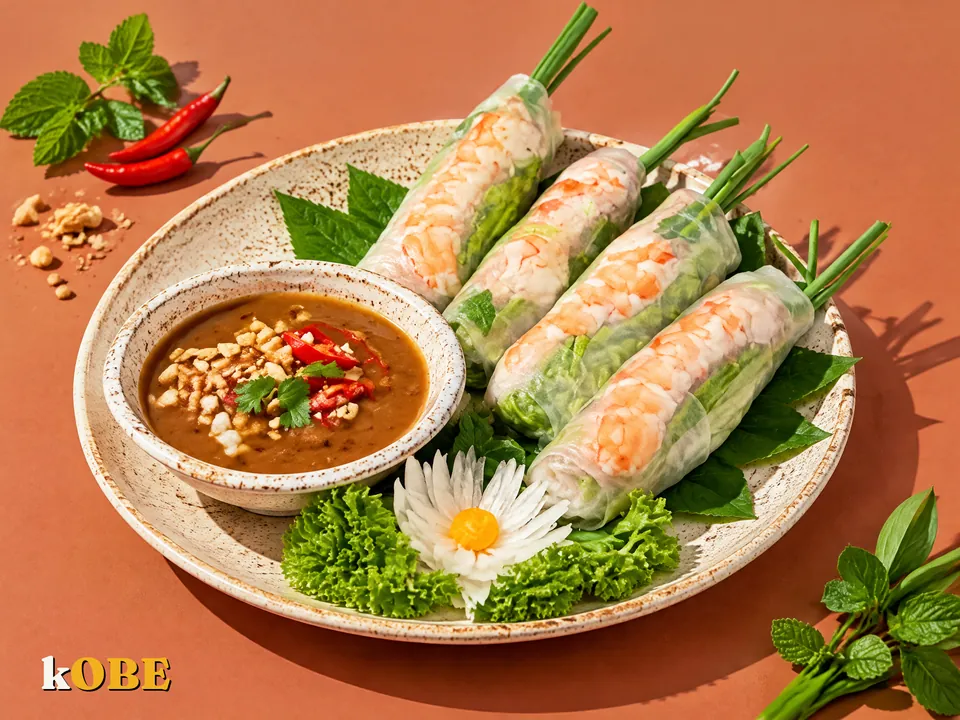
A đám giỗ (death anniversary feast) back in the home village. The food is laid out at ten in the morning. Guests drift in and out, eating until three in the afternoon. Poached chicken, giò lụa (Vietnamese pork roll) and fresh spring rolls sit on the tray for five hours.
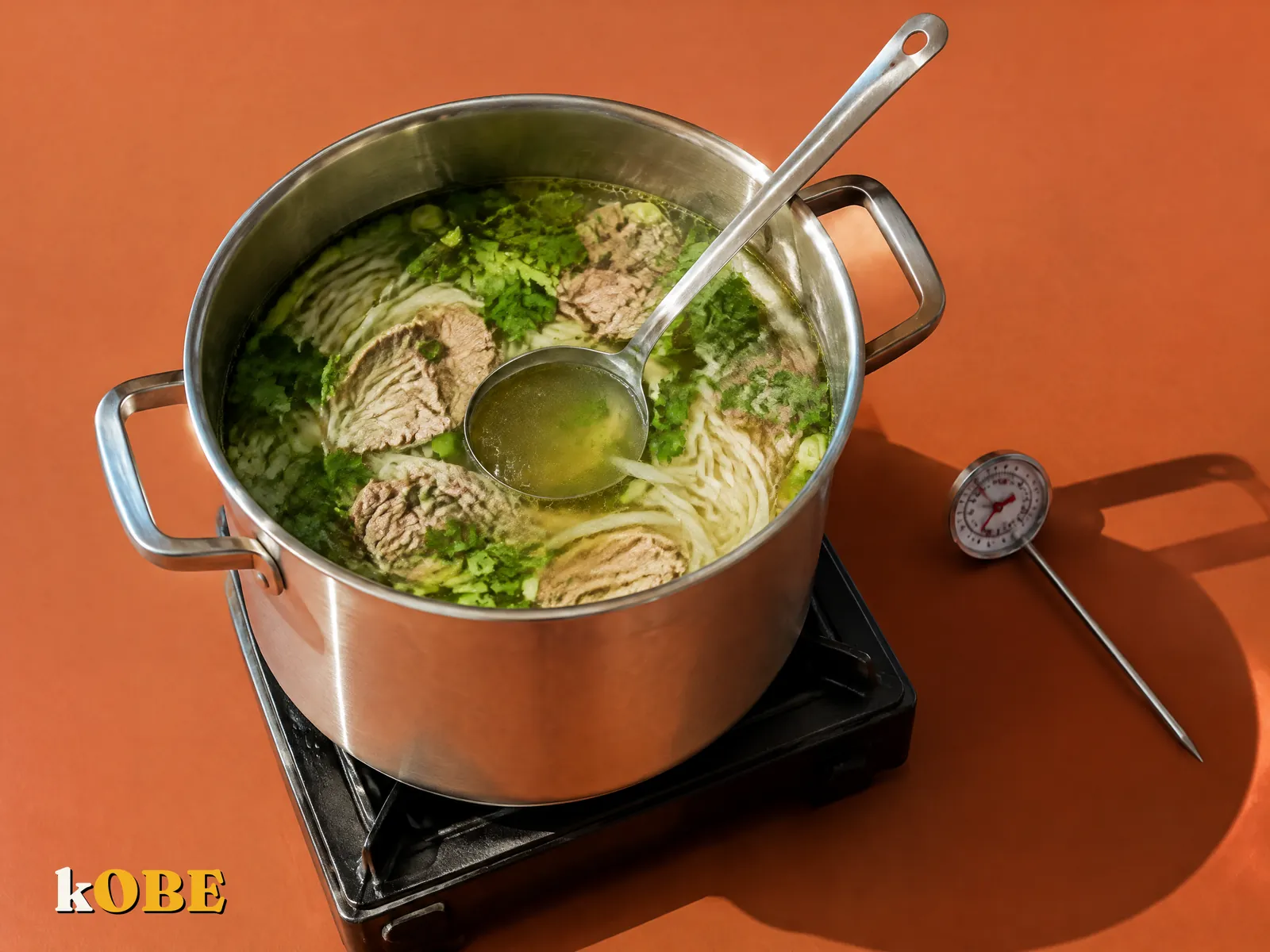
That night, the leftover soup stays in its pot on the stove. Next morning, you turn on the flame and bring it back to a boil, and now it's "safe".
Sounds very familiar. But in the world of food safety, both of these scenes fall into an area with a slightly scary name: the temperature danger zone.
In this article
From 5 to 60°C: the bacteria playground
Bacteria have their "favorite temperatures" too, just like people who prefer cool weather.
- Below 5°C (the fridge): they slow down a lot.
- Minus 18°C (the freezer): they're basically asleep.
- Above 60°C (a pot being kept hot): most can't multiply.
- From 5 to 60°C: this is the playground. They eat, grow and multiply fast.
The World Health Organization (WHO) uses 5 to 60°C. The US Department of Agriculture (USDA) uses 4 to 60°C, converted from Fahrenheit. The two are nearly identical.
And room temperature in Saigon, about 28 to 35°C? That's right in the middle of the playground. Human body temperature, around 37°C, is also a temperature many disease-causing bacteria love.
The doubling math that will make you jump
According to USDA, in the danger zone, bacteria numbers can double in as little as about 20 minutes.
Twenty minutes doesn't sound like much. Let's do the math under ideal conditions for bacteria:
| Time left out | Number of doublings | 100 bacteria become |
|---|---|---|
| 1 hour | 3 | about 800 |
| 2 hours | 6 | about 6,400 |
| 4 hours | 12 | about 400,000 |
| 8 hours | 24 | over 1 billion |
To be fair: this is a theoretical calculation. In real life, bacteria don't always double this neatly; it depends on the type and the food. But the table shows why time matters. Two hours versus eight hours isn't four times the difference, it's hundreds of thousands of times.
Food left out too long is a cause often mentioned in food poisoning cases after parties and feasts.
Why reboiling can't fix everything
"Boiling makes it clean" is only half true.
Boiling kills most living bacteria. But there are two things it can't fully deal with:
- Heat-resistant toxins. Some bacteria, like golden staph (Staphylococcus aureus) or Bacillus cereus, release toxins as they multiply. The bacteria die, the toxins remain, and boiling doesn't break them all down.
- Spores. Some bacteria form spores, like a heat-proof shell. A boiling pot doesn't kill them all. Once it cools back into the danger zone, the spores "wake up" and keep multiplying.
Rice left out in the kitchen is the famous Bacillus cereus example; we told that story in cold rice and resistant starch.
So a pot of soup left on the stove overnight and reboiled in the morning is not the same as a pot put in the fridge the night before. The time spent in the danger zone is what really counts.
The 2-hour rule, and a 1-hour version for hot weather
Here's a simple rule that USDA, WHO and the UK's National Health Service (NHS) all mention:
- Cooked food shouldn't sit at room temperature for more than 2 hours.
- Above 32°C, only 1 hour. In Saigon's hot season, a kitchen without air conditioning or a delivery bike under the midday sun can easily pass that limit.
The clock adds up every stretch of time: laying the food out, sitting down to eat, letting it cool. It doesn't restart each time you take it out.
If you want food out longer, for example at a buffet, keep it hot above 60°C (a warming pot or chafing dish) or cold below 5°C (a tray of ice).
How do you cool a big pot quickly?
This is where many households get stuck. You cook a big pot of bò kho (Vietnamese beef stew), you're afraid putting it in hot will damage the fridge, so you leave it to cool on the stove until evening.
The problem: big pots cool very slowly. The middle can sit in the danger zone for hours.
Restaurant kitchens in the US follow cooling rules in the FDA Food Code: from 57°C down to 21°C within 2 hours, then down to 5°C within the next 4 hours. Home kitchens don't need to measure that precisely, but can borrow their tricks:
- Split into shallow boxes. A 20cm deep pot cools much more slowly than three 5cm shallow boxes.
- Set the pot in a bowl of ice water. Stir for a few minutes and the heat escapes much faster.
- Cut big pieces of meat smaller. A whole slab of boiled pork cools more slowly than sliced pork.
- Refrigerate while still warm. USDA is clear: no need to wait until it's fully cool. Just avoid shoving a whole big boiling pot into a full fridge.
Inside the kOBE kitchen
kOBE's ready-cooked ingredients are cooked and then frozen, which means they go straight from the kitchen into the "sleeping" zone of the freezer.
With Sous Vide Chicken Breast, after cooking at 60°C for 90 minutes, the meat is rapidly chilled before freezing. That's the same spirit as the cooling tips above: pass through the 5 to 60°C zone as quickly as possible.
At home, you just keep that spirit going: thaw in the fridge overnight or in the microwave on low, eat it once it's reheated, and don't leave a reheated box sitting on the table all afternoon. See our ready-cooked ingredients.
Frequently asked questions
Is it safe to keep food in a rice cooker on the keep-warm setting?
Does putting hot food in the fridge damage it?
At a long feast, which dishes are most worrying?
Keep reading
Sources
- USDA FSIS. "Danger Zone" (40°F to 140°F).
- WHO (2006). Five Keys to Safer Food Manual.
- U.S. FDA. Food Code (2022), section 3-501.14 on cooling.
- NHS (UK). How to store food and leftovers safely.
- Further reading: Understanding Nutrition 16th ed., chapter on food safety.