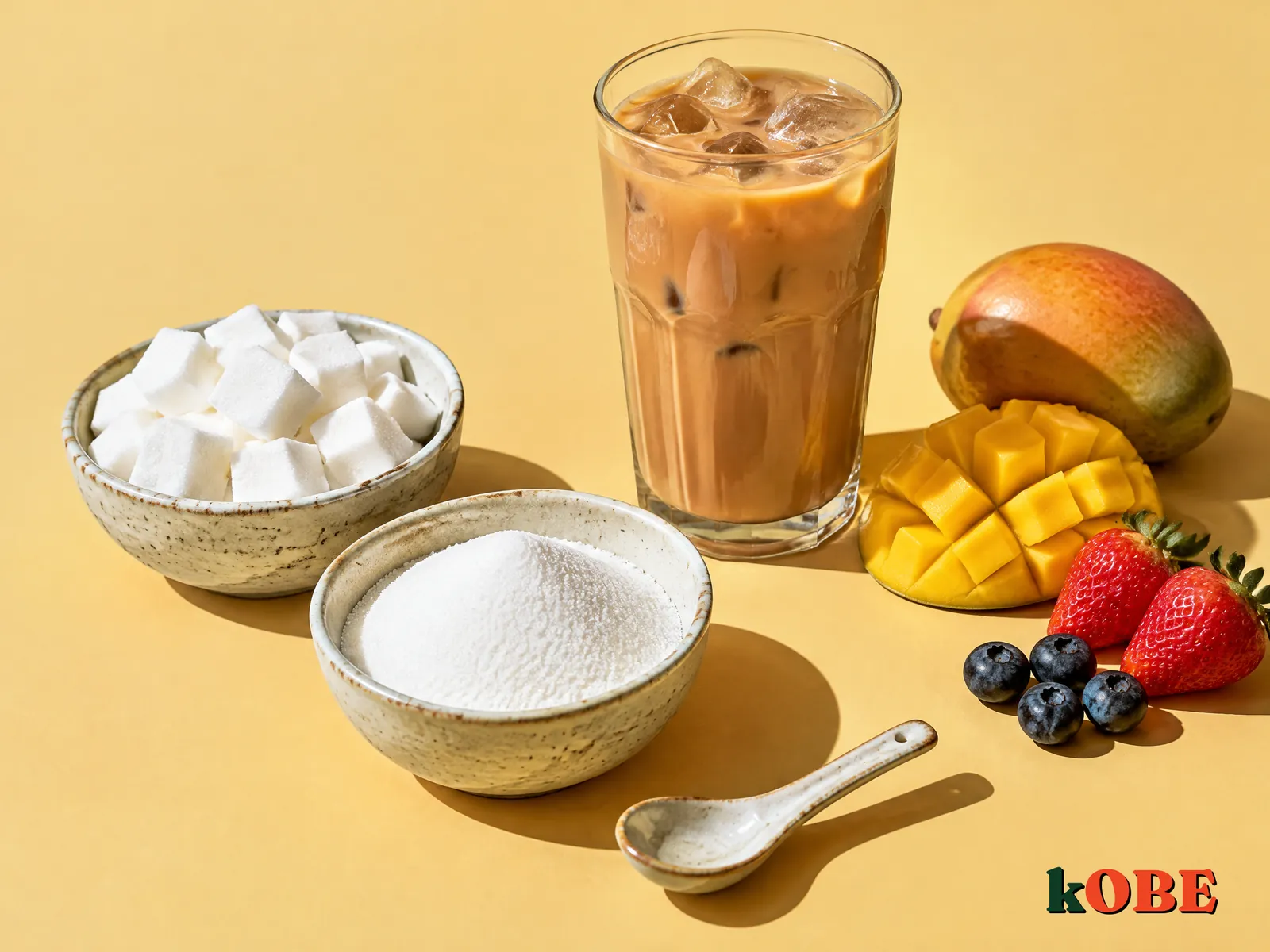
Quick question: how much sugar do you eat in a day?
Most of us would say "not much." We hardly ever eat cake or candy, right? Now try counting an ordinary day.
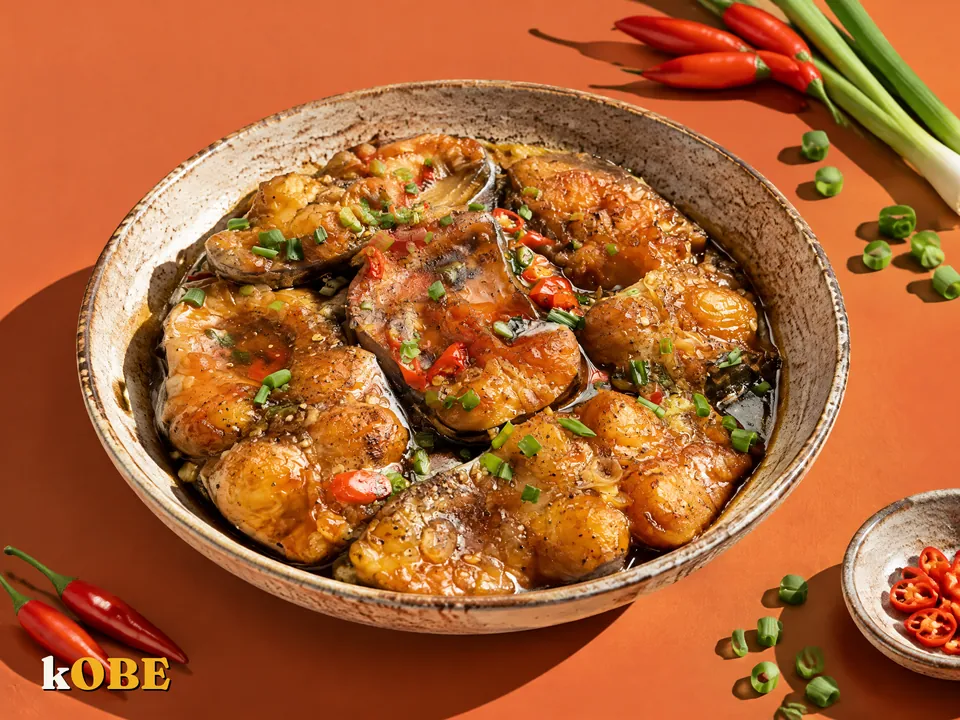
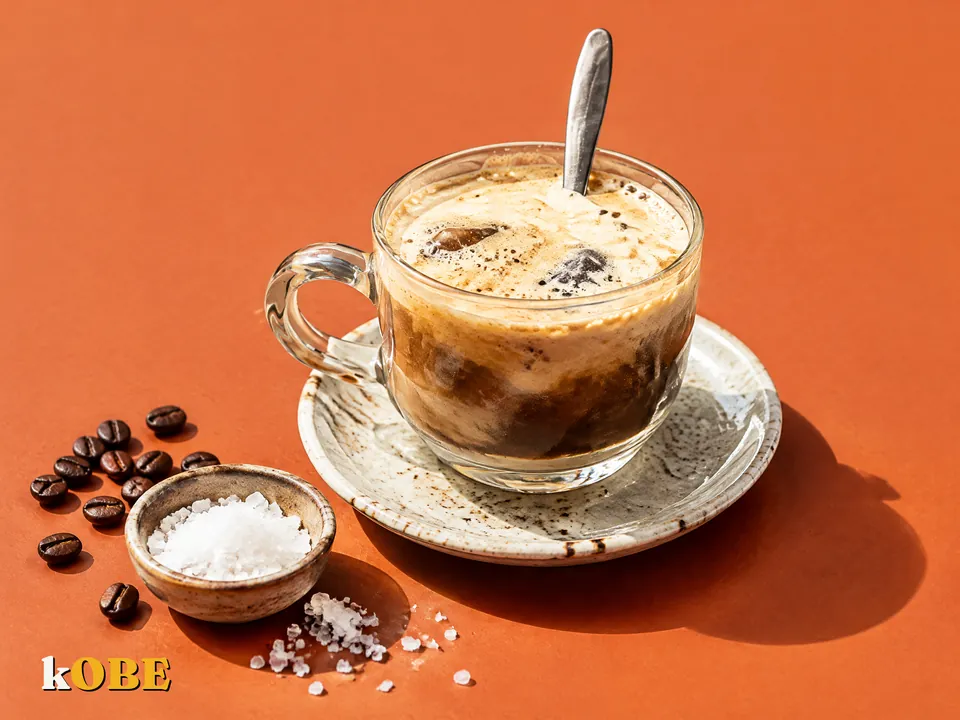
In the morning, a cà phê sữa đá (Vietnamese iced coffee with condensed milk). At lunch, a plate of cơm tấm (broken rice with grilled pork), dipped in a little bowl of nước chấm, the everyday fish sauce dip. In the afternoon a coworker suggests ordering bubble tea. At dinner, a pot of thịt kho (caramelized braised pork) from Mom, the sauce thick and glossy.
Not a single slice of cake. Yet that day may already have gone past the recommended sugar limit. Sugar is better at hiding than you think. This article is a map for finding it, then swapping it out in ways that keep meals just as much fun.
In this article
- Cutting sugar is not cutting all sweetness
- How much is moderate? Let's count it in teaspoons
- Where does sugar hide in a Vietnamese meal?
- Read a label in 30 seconds: three steps are enough
- What can replace sugar? A map of the sweetener "families"
- Beyond counting spoons: blood sugar and a tongue that relearns
- Inside the kOBE kitchen
- Frequently asked questions
Cutting sugar is not cutting all sweetness
First, let's separate two kinds of "sugar" that often get lumped together.
The first kind sits naturally inside whole foods. Think of the sugar in a banana, a glass of fresh milk, a sweet potato. It comes packaged with water, fiber, protein and vitamins.
The second kind is what the World Health Organization (WHO) calls free sugars. That means:
- Sugar added to food and drinks: white sugar, rock sugar, palm sugar, condensed milk.
- Sugar that comes ready-made in honey, syrups and malt syrup.
- Sugar in fruit juice, even the "100% pure" kind.
When we say "cut sugar," we mean the second kind. Nobody is asking you to give up fruit or milk.
Sweetness isn't the villain either. Humans love sweet from the day they are born. The job is simply to bring free sugars down to a moderate level, and to find other sources of sweetness for the dishes you love.
How much is moderate? Let's count it in teaspoons
WHO advises adults to keep free sugars below 10% of daily energy. Getting below 5% is even better.
Percentages are hard to picture. Here it is in spoons, for someone eating about 2,000 kcal a day:
| Limit | Grams of sugar | Roughly equals |
|---|---|---|
| Below 10% of energy | about 50g | about 12 teaspoons of sugar |
| Below 5% of energy | about 25g | about 6 teaspoons of sugar |
A teaspoon of white sugar weighs about 4g. Now let's put a few familiar things on the scale:
- One 330ml can of soda: usually about 35g of sugar. Almost 9 teaspoons.
- One iced coffee made with 2 tablespoons of condensed milk: about 20g of sugar. Sweetened condensed milk is more than half sugar.
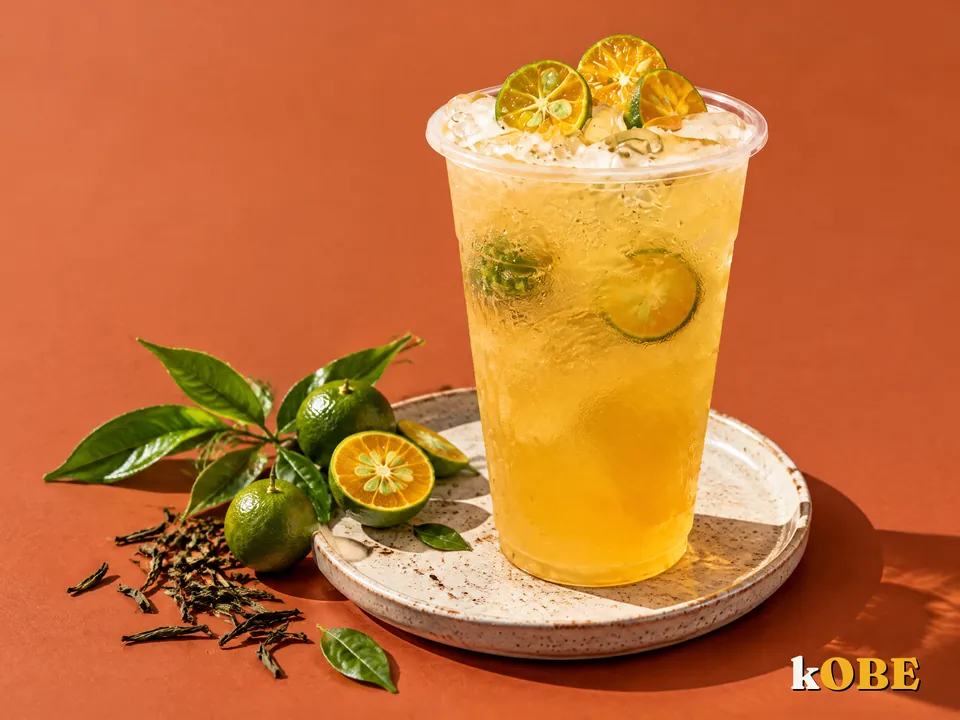
- One large bubble tea: it depends on the shop, but it can hit or pass the 25g mark all by itself.
So one drink in the morning and one in the afternoon, and you are close to the 10% mark without a single bite of cake.
Where does sugar hide in a Vietnamese meal?
Vietnamese food is sweet in its own special way. Not in the dessert, but in the pot and in the dipping bowl.
The favorite hiding spots:
- The dipping bowl. Sweet and sour nước chấm needs sugar to balance the salty and the sour.
- Braised and glazed dishes. Thịt kho, cá kho (braised fish), tôm rim (glazed shrimp) all need sugar, and the dark nước màu (caramel color) is sugar cooked until it browns.
- The broth pot. Many noodle shops add rock sugar or white sugar to make the broth "gently sweet."
- Drinks. Milk coffee, bubble tea, sugarcane juice, smoothies with condensed milk.
- Packaged food. Sweetened yogurt, breakfast cereal, sausages, chà bông (pork floss), bottled dipping sauces.
Here's the fun part: very few items on that list taste obviously "sweet." Nước chấm is salty and tangy, thịt kho is salty and rich. The sugar is there to round out the flavor, so your tongue doesn't notice it.
That's also why cutting sugar should start with seeing it, not with swearing off cake.
Read a label in 30 seconds: three steps are enough
Packaged food has two places where it tells you the truth: the nutrition facts panel and the ingredient list.
Step 1: Find the "sugars" line in the nutrition panel. It usually sits under carbohydrate. Check whether it's per 100g or per serving. Many packs list a "serving" smaller than you'd expect.
Step 2: Read the ingredient list from left to right. Ingredients are listed by weight, largest first. Sugar in the first three words means the product is fairly sweet.
Step 3: Spot sugar under its other names. Sugar has a lot of aliases:
- sucrose, glucose, fructose, dextrose, maltose
- glucose syrup, corn syrup, high fructose corn syrup
- malt syrup, maltodextrin
- honey, molasses, invert sugar
- fruit juice concentrate
A small tip: if the list has three or four names like these, added together they might come first, even if each one sits further down.
Front-of-pack phrases like "sugar free," "no added sugar" and "low sugar" mean quite different things. Don't stop at the front of the package. Always flip it over.
What can replace sugar? A map of the sweetener "families"
Once you cut back, you'll meet a lot of alternatives. The names sound confusing, but they fall into just a few families:
| Family | Examples | Has calories and raises blood sugar? |
|---|---|---|
| "Natural" sugars | honey, coconut sugar, palm sugar, brown sugar | Yes, close to white sugar |
| Sweeteners from plants and fruit | monk fruit, stevia | Almost none |
| Sugar alcohols | erythritol, maltitol, xylitol | Depends on the one, from almost none to about half of sugar |
| Rare sugars | allulose | Very little |
| Synthetic sweeteners | sucralose, aspartame | Almost none, at everyday amounts |
The biggest surprise is in the first row. Honey, coconut sugar and palm sugar sound "healthier." But to your body, they are still sugar, in the same row as white sugar. We explain it in detail in is honey better than sugar and in our piece on coconut sugar, palm sugar and brown sugar.
The other rows are where the rules of the game really change. Each one has its own personality in the kitchen:
- Monk fruit sweetener is a hundred times sweeter than sugar, with almost no calories.
- Stevia and monk fruit are two super-sweet siblings with different tastes.
- Erythritol has the bulk of white sugar and leaves a light cooling feel on the tongue.
- Allulose knows how to turn golden when you bake.
- Maltitol, sucralose, aspartame are the names you often see on "sugar free" labels.
No single sweetener is perfect for every dish. That's why jars of sugar substitute often blend a few of them, so one covers for another.
Beyond counting spoons: blood sugar and a tongue that relearns
Two more ideas help you cut sugar more cleverly.
One: the same amount of carbs can raise blood sugar fast or slow. A bowl of white rice, a glass of orange juice and a slice of bread all become glucose in your blood, but at different speeds. Scientists measure this with the glycemic index (GI) and glycemic load (GL). Eating vegetables and protein first and rice after also softens the blood sugar spike after a meal. And why a glass of "100% pure" juice is still full of sugar? Our article on fructose tells that story.
Two: your tongue can get used to less sweetness. A 2016 study in the US had a group of people cut sugar sharply for three months. By the end, the same food tasted sweeter to them than before. The study is small, but it matches what many people experience: the first few weeks are hard, then the old bubble tea suddenly tastes "too much."
So cutting gradually is easier to stick with than cutting all at once:
- Week 1: just observe. Write down the sweet things you eat and drink, no changes needed.
- Week 2: order drinks at half sugar. For example, bubble tea at 50% sugar, coffee with less condensed milk.
- Week 3: swap the sugar in one home-cooked dish, like nước chấm or a braise.
- Week 4 onward: switch daily sweet drinks to unsweetened tea, water, or versions sweetened with a sugar substitute.
Whatever step you're on is fine. What matters is that the next step is small enough to do today.
Inside the kOBE kitchen
kOBE makes food with no refined sugar. That means we have to answer this article's question every single day: once the sugar is gone, where does the sweetness come from?
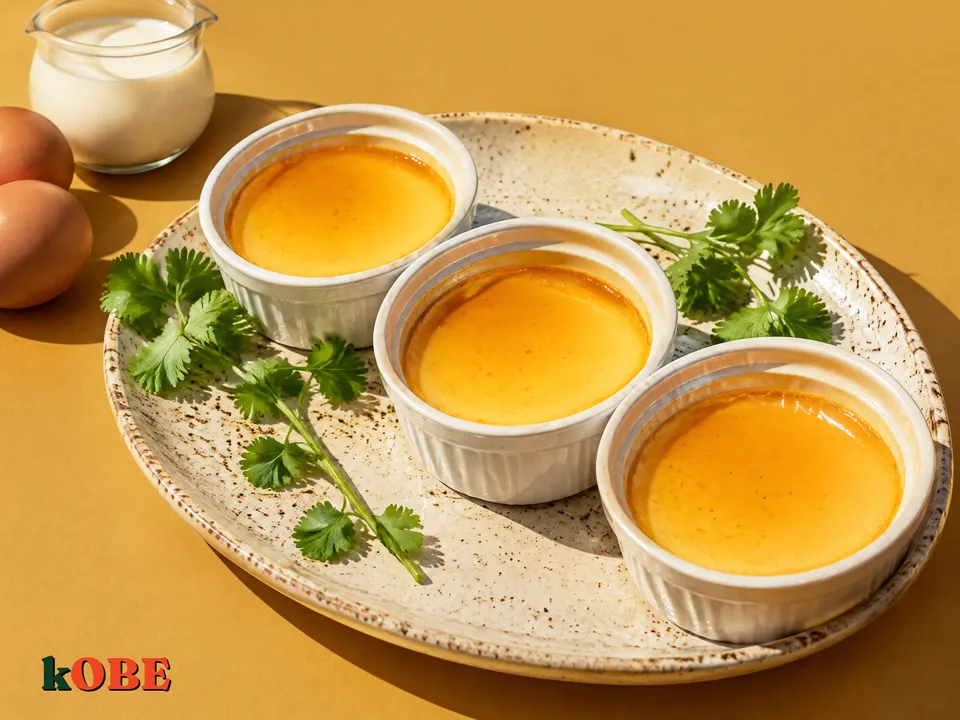
Our answer is the kOBE Signature Monk Fruit Blend, a five-ingredient mix: erythritol, allulose, monk fruit, stevia and inulin (a type of fiber). It swaps for sugar 1:1. If an old recipe says 2 spoons of sugar, you use 2 spoons. This is what we use to sweeten our dishes, from a pot of braised fish to crème caramel.
Our library of 1,480 home recipes on the Recipes page is sweetened with monk fruit sweetener. Every dish lists calories, protein, fat and sugar per 100g. For example, our Mekong-style clay pot braised fish lists about 1.3g of sugar per 100g. You can use these very numbers to practice reading labels.
If you'd like to go step by step with some company, check out the Cutting sugar with kOBE journey.
Frequently asked questions
Does cutting sugar mean giving up fruit?
How much sugar a day is moderate?
Can I use palm sugar or honey instead of sugar?
Will braised dishes lose their flavor without sugar?
Keep reading
Sources
- WHO (2015). Guideline: Sugars intake for adults and children. Geneva: World Health Organization.
- USDA FoodData Central: sweetened condensed milk; sugars, granulated.
- Wise P.M., Nattress L., Flammer L.J., Beauchamp G.K. (2016). Reduced dietary intake of simple sugars alters perceived sweet taste intensity but not perceived pleasantness. American Journal of Clinical Nutrition 103(1):50 to 60.
- National Institute of Nutrition (Vietnam) (2016). Recommended Dietary Allowances for Vietnamese People.
- Further reading: Understanding Nutrition 16th ed., chapter 4; Culinary Nutrition.