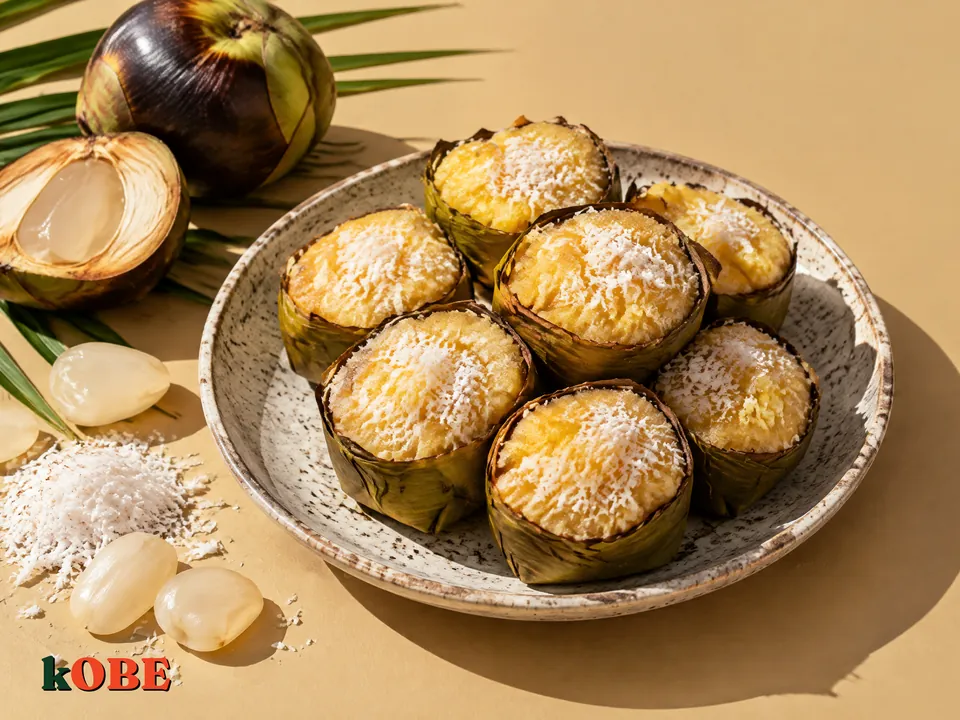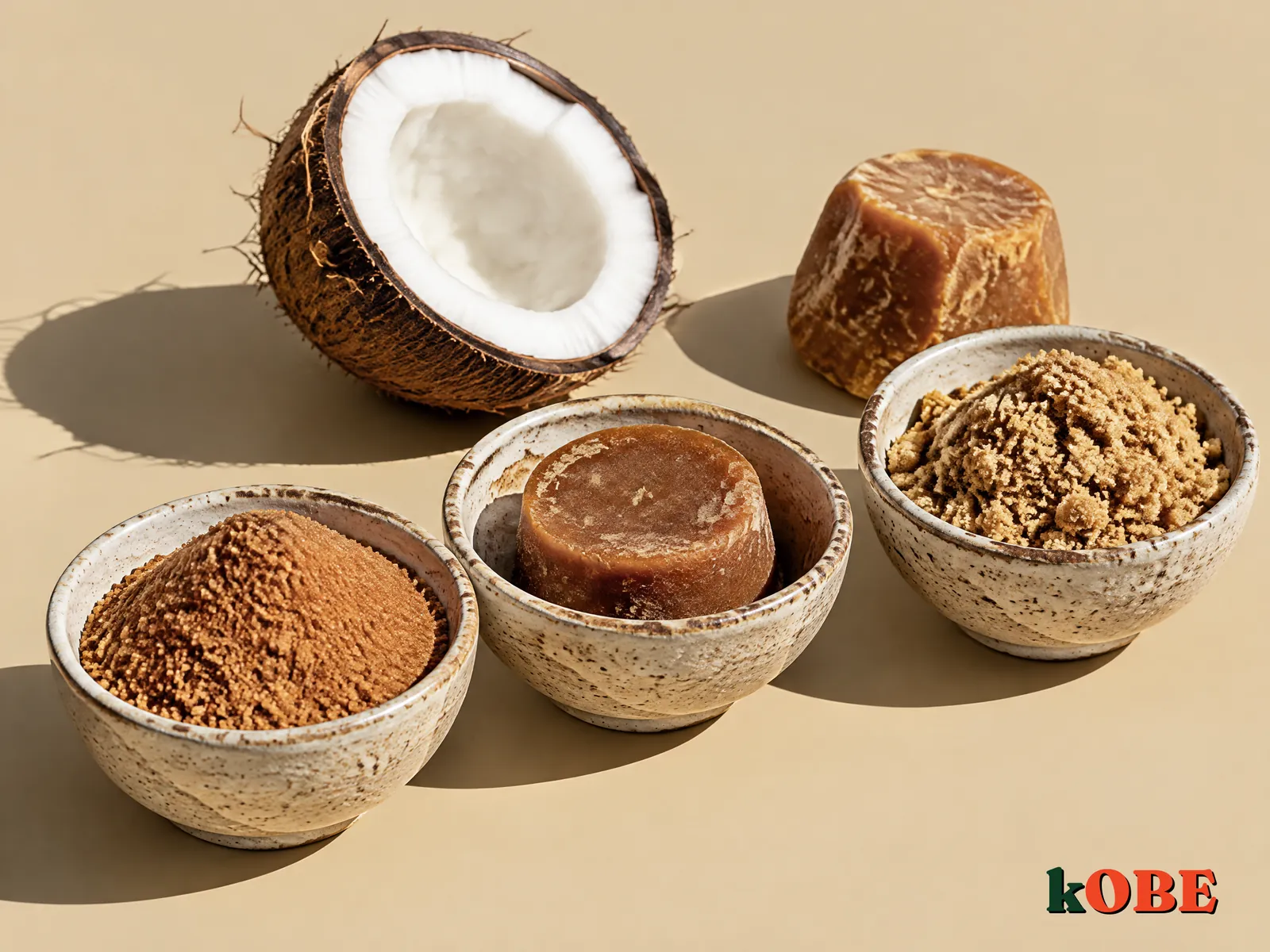
Travel to An Giang in the Mekong Delta and you'll see rows of towering sugar palms (thốt nốt) standing in the rice fields. People climb up to collect the flower sap, then cook it down into golden brown cakes of sugar that smell of wood smoke.
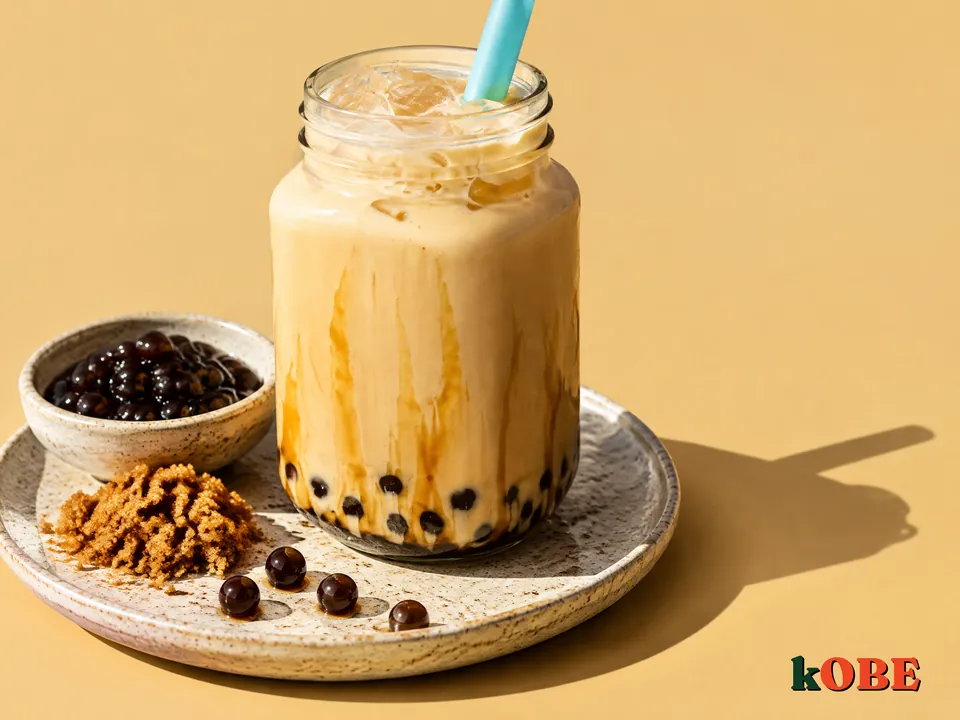
Back in a city café, the menu offers "brown sugar milk tea" and "coconut sugar latte." The names alone sound rustic and wholesome, friendlier than snow-white granulated sugar.
So are these colored sugars really different from white sugar? The short answer: very different in aroma, very little different in what your body receives.
In this article
- They all share the same lead character
- Brown sugar: often white sugar "in costume"
- Palm sugar and coconut sugar: more fragrant, but still sugar
- The minerals are real, but tiny as grains of sand
- Where does coconut sugar's "low GI" number come from?
- So which one? Choose by dish, not by "health"
- Inside the kOBE kitchen
- Frequently asked questions
Brown sugar: often white sugar "in costume"
Here's the fun fact that surprises a lot of people.
Most brown sugar sold in supermarkets is made by mixing white sugar with a little molasses. Molasses is the dark syrup left over when cane sugar is refined. It usually makes up just a few percent.
There are also brown and golden sugars that are less refined and keep their molasses from the start. But whichever way they're made, sucrose is still most of it.
And rock sugar (đường phèn)? Rock sugar is sucrose crystallized into big lumps. In composition, it's almost identical to white sugar. Only the shape is different.
Palm sugar and coconut sugar: more fragrant, but still sugar
Palm sugar (đường thốt nốt) is cooked from the flower sap of the sugar palm. Coconut sugar, or coconut nectar sugar, is cooked from the flower sap of the coconut palm. Both are boiled for a long time to drive off water, until they thicken and set.
That long cooking creates a very distinctive caramel and smoky aroma. That's why chè (Vietnamese sweet soup) and bánh bò (rice sponge cake) made with palm sugar taste so much deeper.
But analyze them and both are still mostly sucrose. The rest is a bit of glucose, fructose, water and minerals. The calories are almost the same as white sugar.
The minerals are real, but tiny as grains of sand
Colored sugars do have more minerals than white sugar. That's true. But let's work it out per teaspoon.
According to the USDA database, 100g of brown sugar has about 83mg of calcium. A teaspoon of brown sugar weighs about 4g. So each teaspoon gives you about 3mg of calcium.
A 200ml carton of milk has about 240mg of calcium. To get the calcium of one carton of milk from brown sugar, you'd need about 80 teaspoons. That's more than 300g of sugar.
Palm sugar and coconut sugar also have a little potassium, iron and zinc. But it's the same story: present, but far too little to be a reason to choose one sugar over another.
Where does coconut sugar's "low GI" number come from?
You may have read the ads: coconut sugar has a low glycemic index (GI), just about 35.
That number comes from a handful of measurements with few people. Different tests have given widely varying results, some much higher. It's not enough to conclude that coconut sugar clearly raises blood sugar more slowly than white sugar.
And remember that GI only describes speed. It doesn't make the amount of sugar any smaller. A spoonful of coconut sugar still carries almost the same sugar and calories as a spoonful of white sugar.
The World Health Organization (WHO) puts all of these sugars in the free sugars group, to be kept below 10% of daily energy.
So which one? Choose by dish, not by "health"
Each colored sugar is a flavoring with its own aroma. Used in the right place, it makes a dish much tastier:
| Sugar | Comes from | Flavor | Goes well with |
|---|---|---|---|
| Palm sugar | Sugar palm flower sap | Smoky, deeply sweet | Chè, bánh bò, Khmer-style braises |
| Coconut sugar | Coconut flower sap | Light caramel, a little rich | Coffee, Thai-style sauces |
| Brown sugar | Cane sugar and molasses | Molasses notes, moist | Chewy cookies, brown sugar milk tea |
| Rock sugar | Crystallized sucrose | Clean sweetness, no aroma | Lotus seed chè, noodle broth |
Every row has one thing in common: they are all still sugar. If your goal is less sugar, count them just like white sugar.
Inside the kOBE kitchen
kOBE Oat Milk, Coconut Nectar is sweetened with coconut nectar sugar. We'll say it straight: that's still sugar, so enjoy it in moderation.
Put the three kOBE oat milks side by side and it's easy to see:
| Per 100ml | Calories | Carbs |
|---|---|---|
| kOBE Oat Milk (no added refined sugar) | 34 kcal | 4.5g |
| kOBE Oat Milk, Monk Fruit | 36 kcal | 9g |
| kOBE Oat Milk, Coconut Nectar | 53 kcal | 9.3g |
The two sweetened versions have almost the same carbs, but quite different calories. The reason: part of the carbs in the monk fruit version come from the erythritol and inulin in the kOBE Signature Monk Fruit Blend, which provide almost no calories. Coconut nectar sugar, on the other hand, delivers full sugar calories. The monk fruit version still has some natural sugar from the oats.
It's a great label-reading exercise: don't just look at carbs, look at calories and ingredients too.
Frequently asked questions
Is rock sugar more "cooling" than white sugar?
Does brown sugar have fewer calories than white sugar?
Is palm sugar less sweet?
Are coconut milk and coconut sugar the same thing?
Keep reading
Sources
- USDA FoodData Central: sugars, brown; sugars, granulated.
- WHO (2015). Guideline: Sugars intake for adults and children.
- Atkinson F.S. et al. (2021). International tables of glycemic index and glycemic load values 2021: a systematic review. American Journal of Clinical Nutrition 114(5):1625 to 1632.
- National Institute of Nutrition (Vietnam). Vietnamese Food Composition Table (sugar, milk).
- Further reading: Understanding Nutrition 16th ed., chapter 4; Culinary Nutrition.