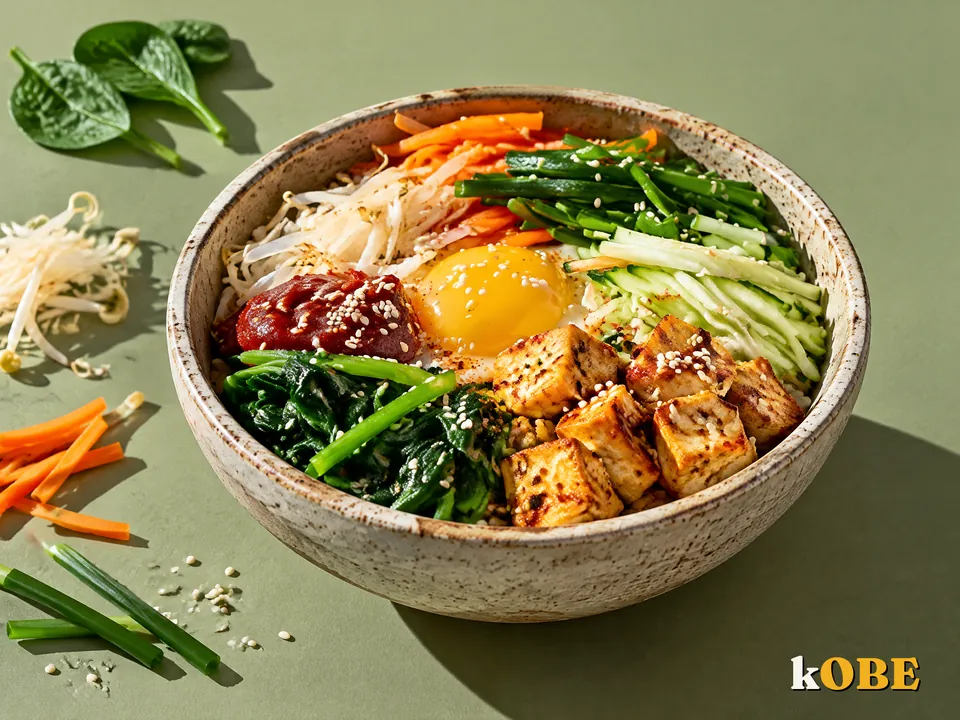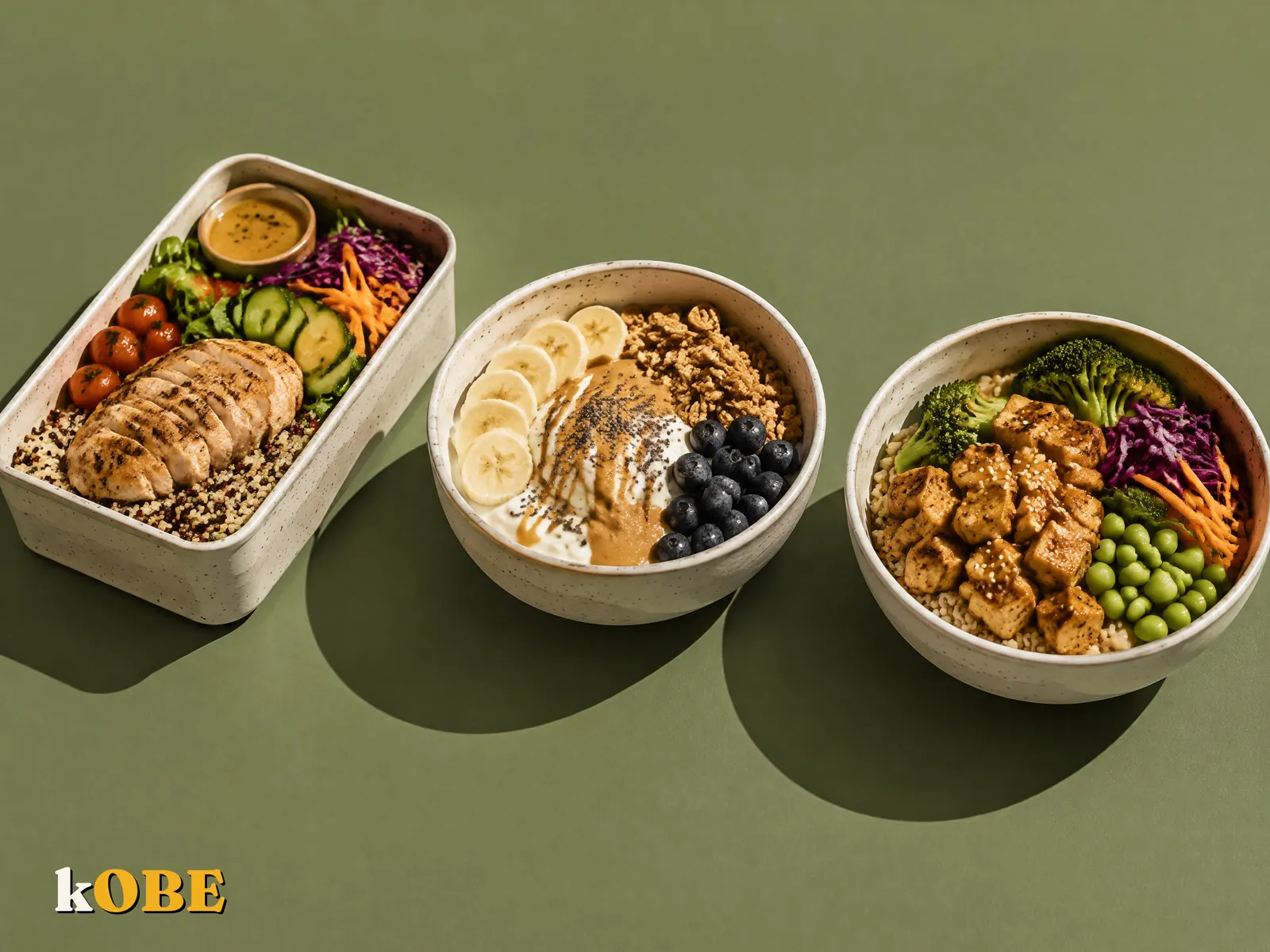
Monday lunch. Three friends walk into the same cơm văn phòng, the little rice shops that feed Vietnam's office crowd. The first sits at a computer for eight hours. The second is running 10 kilometers tonight. The third went vegetarian last year.
The first two order the same plate of cơm sườn (rice with grilled pork chop). At 3 p.m., the first can't stop yawning. At 7 p.m., the second hits kilometer six and his legs turn to lead. The third orders rice with tofu, but every week she finds herself hungry again too soon.
Nobody ate "wrong." It's just that one plate doesn't fit every rhythm of life.
This article is the map for the whole series. We start with a plate model that's easy to remember. Then we look at which part each kind of day should turn up or turn down.
In this article
- One plate, four sections: the shared starting point
- If you work at a desk: the 2 p.m. slump isn't all the rice's fault
- If you train: turn up protein and starch
- If you're vegetarian: same plate, new faces in the protein seat
- Other rhythms: grandparents, little kids and off-schedule days
- Three questions to tune your plate every day
- Inside the kOBE kitchen
- Frequently asked questions
If you work at a desk: the 2 p.m. slump isn't all the rice's fault
Here's a surprise: the early afternoon slump shows up even if you haven't eaten. Your body clock (circadian rhythm) has a natural dip right around this time.
But lunch can make that dip deeper. A heaping plate of rice, little veg, little protein, plus a cup of milk tea. Blood sugar rises fast, falls fast, and you sag along with it.
A few small tweaks for sitting days:
- Keep the protein and veg, trim the rice a little if you'll only be sitting this afternoon.
- Eat the vegetables and dishes first, rice last. This order helps blood sugar rise more gently.
- Get up and walk for a few minutes after lunch. Going down to the lobby for a coffee counts.
- Unsweetened drinks. The free iced tea (trà đá) at rice shops is your friend.
Our article on feeling sleepy after lunch digs into this. And if you eat out for all three meals, see choosing low-sugar dishes when eating out.
If you train: turn up protein and starch
People who train regularly need more in two sections.
The protein section grows. A fairly inactive person needs about 0.8g of protein per kilo of body weight. People who lift regularly are often advised about 1.4 to 2g.
For someone who weighs 60kg, that's from about 50g up to about 85 to 120g of protein a day. Nearly double. Sounds like a lot, but split over four meals it's only about a palm-sized piece of chicken plus an egg each time.
The starch section grows on training days. Starch is stored in your muscles as glycogen, the main fuel when you run fast or lift heavy. On a hard training day, a bigger bowl of rice or a larger sweet potato makes sense. On rest days, scale back.
Lifters and runners also have slightly different priorities:
| Lifting | Long-distance running | |
|---|---|---|
| Top priority | Enough protein, spread across meals | Enough starch before long runs |
| Before training | A light meal with starch and a little protein | Plenty of starch, low fat, low fiber |
| After training | A meal with protein, starch and veg | Starch to refuel, plus protein |
The details are in what to eat on gym days and what to eat before and after running.
If you're vegetarian: same plate, new faces in the protein seat
A vegetarian diet can absolutely cover your needs. The Academy of Nutrition and Dietetics puts it clearly: well-planned vegetarian diets are appropriate for all stages of life.
The key word is "planned." Your protein section is now tofu, tofu skin (tàu hũ ky), beans, edamame. Eggs and dairy if you eat them. Seitan (mì căn) is tasty too, but don't make it carry the whole load.
When you drop meat and fish, a few nutrients are easier to fall short on:
| Nutrient | Why it's easy to miss | Where to get it |
|---|---|---|
| Vitamin B12 | Found almost only in animal foods | Eggs, dairy, B12-fortified foods |
| Iron | Iron from plants is harder to absorb than iron from meat | Beans, leafy greens, eaten with sour fruit |
| Zinc | Phytate in beans and seeds blocks some absorption | Well-soaked beans, seeds, whole grains |
| Omega-3 | Few rich plant sources | Flaxseed, chia seeds, walnuts |
Our article on nutrients vegetarians may miss covers each one and how to fill the gap.
Other rhythms: grandparents, little kids and off-schedule days
Lifestyle isn't only about your job. Each stage of life and each kind of day nudges the plate a little.
- As you get older: muscle naturally thins, and the body uses protein less efficiently. So the protein section should grow, not shrink. See how much protein older adults need.
- With little kids: the goal isn't banning candy, it's helping them get used to less sweetness bit by bit. See kids and sweets.
- Tết and parties: enjoy yourself, just don't starve all day to "save room." See eating at Tết.
- Late-night eating and travel: days when your meal schedule gets scrambled. The trick is keeping a few familiar anchors. See what to eat late at night and eating while traveling.
- Poor sleep, stress: these two make you crave sweet and fatty foods far more. Sometimes what needs adjusting is your bedtime, not your menu. See poor sleep and cravings.
Three questions to tune your plate every day
You don't need to memorize this whole article. Each morning, just ask yourself three questions:
- Am I moving a lot or a little today? A lot means a bigger starch section. A little means scoop less.
- Does this meal have a proper serving of protein? A palm-sized piece, or a block of tofu with a bowl of beans.
- Do vegetables fill half the plate? If not, add a plate of boiled greens or a bowl of soup.
These three work for desk workers, athletes and vegetarians alike. The only difference is how big each section gets.
One more thing: don't try to make every meal perfect. Look at the whole week. One party meal off the plan doesn't ruin a week of steady eating.
Inside the kOBE kitchen
We sort our ready-cooked foods by the sections of the plate, so you can build your own to match your rhythm:
- Protein section: Sous Vide Chicken Breast has 31g of protein per 100g of cooked meat. For vegetarians there are Chickpeas (8.9g protein) and Edamame (11.9g protein per 100g).
- Starch section: Red Brown Rice, Black Brown Rice, White Rice, Quinoa, Sweet Potato. All cooked, then frozen.
- Veg section: Sesame Kale and Green Peas.
On a hard training day, grab an extra pack of rice. On a sitting day, add more veg. If you'd rather not count, our menus by calorie level have ready-made options to choose from. Companies that want to handle lunch for the whole team can see our Business page.
Frequently asked questions
Is there one diet that suits everyone?
Should I eat less protein on rest days?
Do vegetarians need supplements?
Keep reading
Sources
- Harvard T.H. Chan School of Public Health, The Nutrition Source. Healthy Eating Plate.
- Melina V., Craig W., Levin S. (2016). Position of the Academy of Nutrition and Dietetics: Vegetarian Diets. Journal of the Academy of Nutrition and Dietetics 116(12):1970 to 1980.
- Jäger R. et al. (2017). International Society of Sports Nutrition Position Stand: protein and exercise. Journal of the International Society of Sports Nutrition 14:20.
- Monk T.H. (2005). The post-lunch dip in performance. Clinics in Sports Medicine 24(2):e15 to e23.
- National Institute of Nutrition (Vietnam) (2016). Recommended Dietary Allowances for Vietnamese People.
- Further reading: Understanding Nutrition 16th ed.; Campbell B., Sports Nutrition.