Half past one. The office is dead quiet. Your screen is still on, but your eyelids feel like they're made of lead.
You immediately blame the plate of cơm tấm (broken rice with grilled pork) you had at noon. It's guilty, but only partly. The rest of the blame sits with the clock inside your body.
Good news: the part that comes from lunch, you can fix. And it isn't hard.
In this article
The 2 p.m. slump shows up even before you eat
Sleep researchers call this the post-lunch dip. The name is a bit unfair to lunch.
Your body clock (circadian rhythm) gives you two natural sleepy windows a day. The big one falls in the small hours after midnight. The small one lands in the early afternoon.
Many experiments show people still feel sluggish at that hour, even when they skip lunch. That's why so many places around the world have a nap culture. The folding cot tucked under desks in Vietnamese offices is no accident.
But the plate can draw the curtains even tighter
Lunch doesn't create the dip. It can dig it deeper, though.
Three things tend to make afternoons heavier:
- An overly full meal. Eat until your stomach is tight, and your body diverts energy to digestion. No wonder you feel weighed down.
- Lots of refined starch, little protein and veg. A mountain of rice, a small side, plus a cup of milk tea. Blood sugar rises fast and then drops, and the sluggish feeling follows.
- Lots of oil. Deep-fried food sits in your stomach longer, and your belly feels heavy all afternoon.
In short: at 2 p.m., your body already wants a break. An oversized lunch is like drawing one more curtain in a room that's already a bit dim.
The 10 minutes after lunch matter more than you think
This is the cheapest trick of all: get up and walk a little after eating.
A 2022 review pooled many small studies on long sitting. It found that breaking up sitting with light walking kept post-meal blood sugar lower than staying seated.
At the office, you could:
- Walk down to the lobby for your coffee instead of having it delivered to your desk.
- Take the stairs for a floor or two instead of the elevator.
- Stand up to refill your water and stretch every 30 to 45 minutes.
If your company allows it, a short nap of about 10 to 20 minutes fits your body clock nicely. Sleep too long and you may wake up groggy, even more tired than before.
When does coffee fit in?
A coffee after lunch is a ritual for a lot of people. That's fine, just keep two things in mind.
First, a cà phê sữa đá (Vietnamese iced coffee with condensed milk) can hold quite a lot of sugar, especially when the shop pours the condensed milk by hand. Try asking for "less milk," or a black coffee with less sugar.
Second, caffeine lingers in your body for hours. A coffee at 4 or 5 p.m. can make it hard to fall asleep that night. Sleep badly, and tomorrow's 2 p.m. slump gets worse. And round the loop goes.
So if you need coffee, have it early in the afternoon, and stop there.
Inside the kOBE kitchen
If you want a lunch that sits right without standing at the stove, your freezer is a great friend.
kOBE's frozen poke bowls are one example. The 350g Chicken Kale Namul Poke has 379 calories and 29g of protein. Veg, protein and starch share one bowl, with a Lean Mayo based sauce. See the poke bowls.
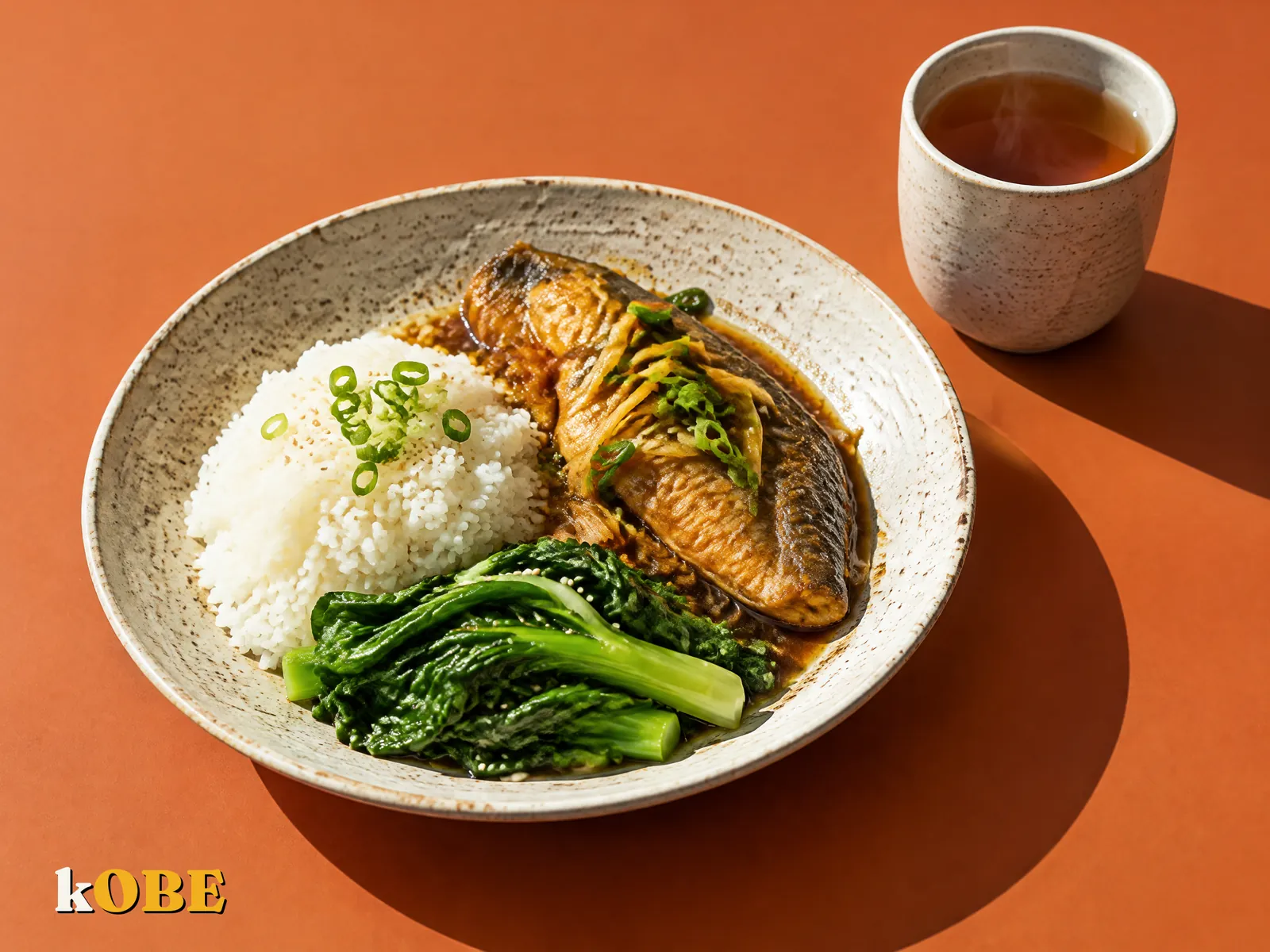
Prefer to build your own? A pack of Sous Vide Chicken Breast, a pack of Red Brown Rice and a serving of Sesame Kale already make the plate above. Thaw in the fridge the night before, and reheat at lunch in the microwave on low.
Companies that want to order lunch for the whole team can see our Business page.
Frequently asked questions
Will cutting rice at lunch leave me hungry in the afternoon?
Is feeling sleepy after lunch a sign my body lacks nutrients?
What time should I eat lunch?
Keep reading
Sources
- Monk T.H. (2005). The post-lunch dip in performance. Clinics in Sports Medicine 24(2):e15 to e23.
- Buffey A.J. et al. (2022). The Acute Effects of Interrupting Prolonged Sitting Time in Adults with Standing and Light-Intensity Walking on Biomarkers of Cardiometabolic Health in Adults: A Systematic Review and Meta-analysis. Sports Medicine 52(8):1765 to 1787.
- Harvard T.H. Chan School of Public Health, The Nutrition Source. Healthy Eating Plate.
- EFSA NDA Panel (2015). Scientific Opinion on the safety of caffeine. EFSA Journal 13(5):4102.
- Further reading: Understanding Nutrition 16th ed., chapter 4.