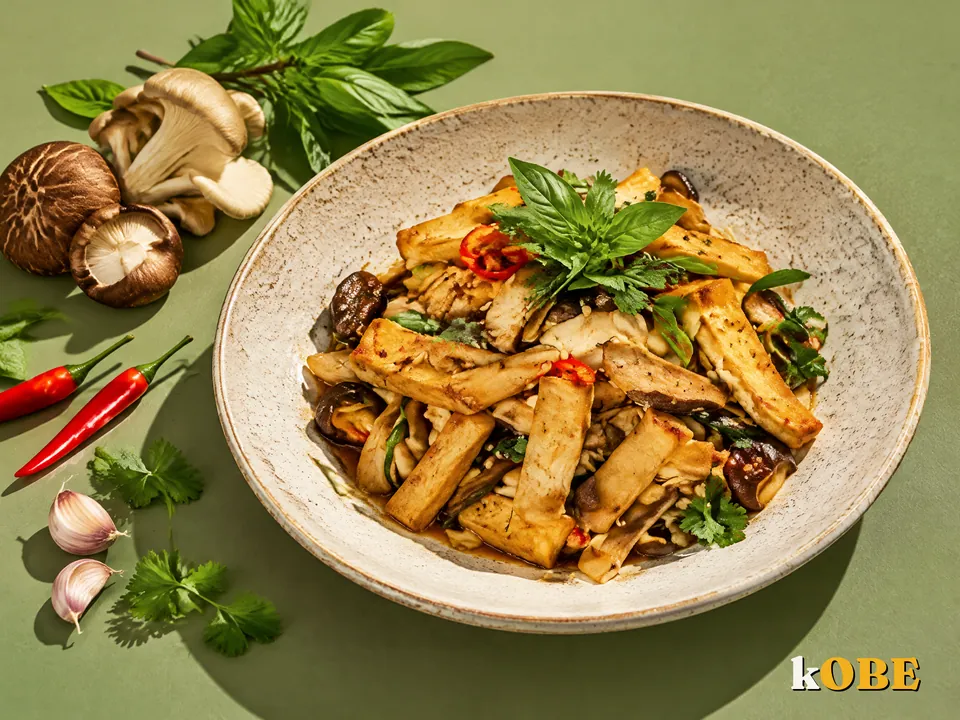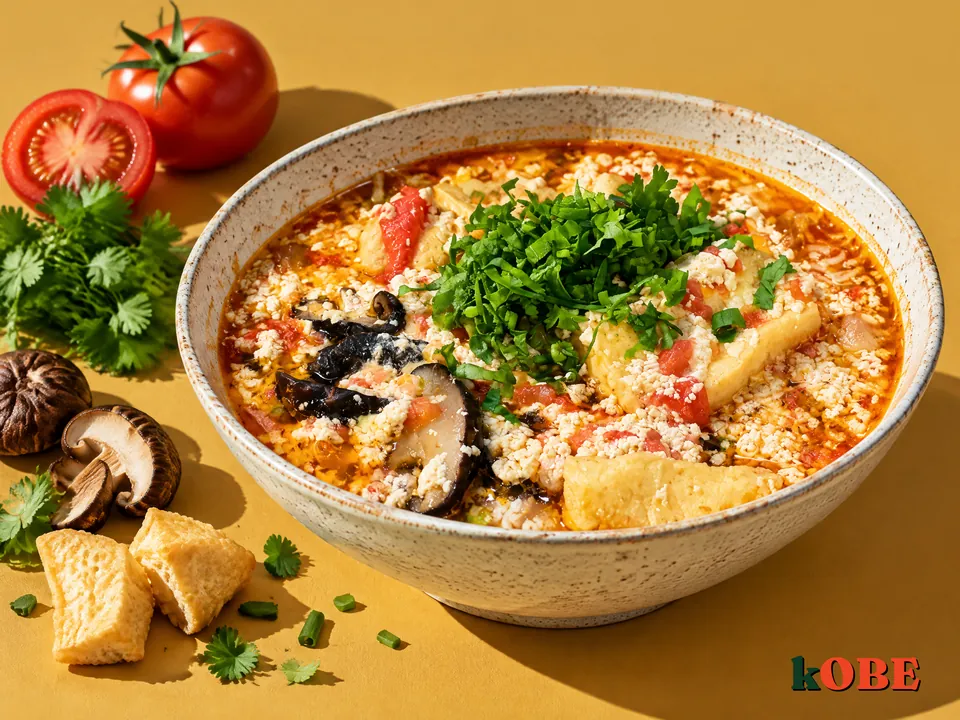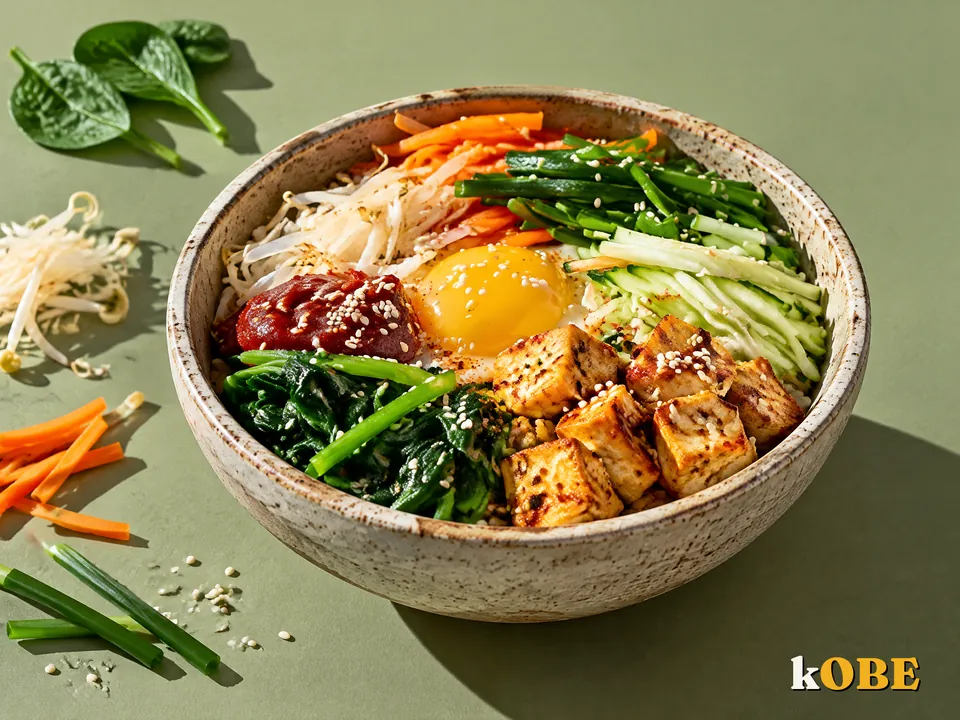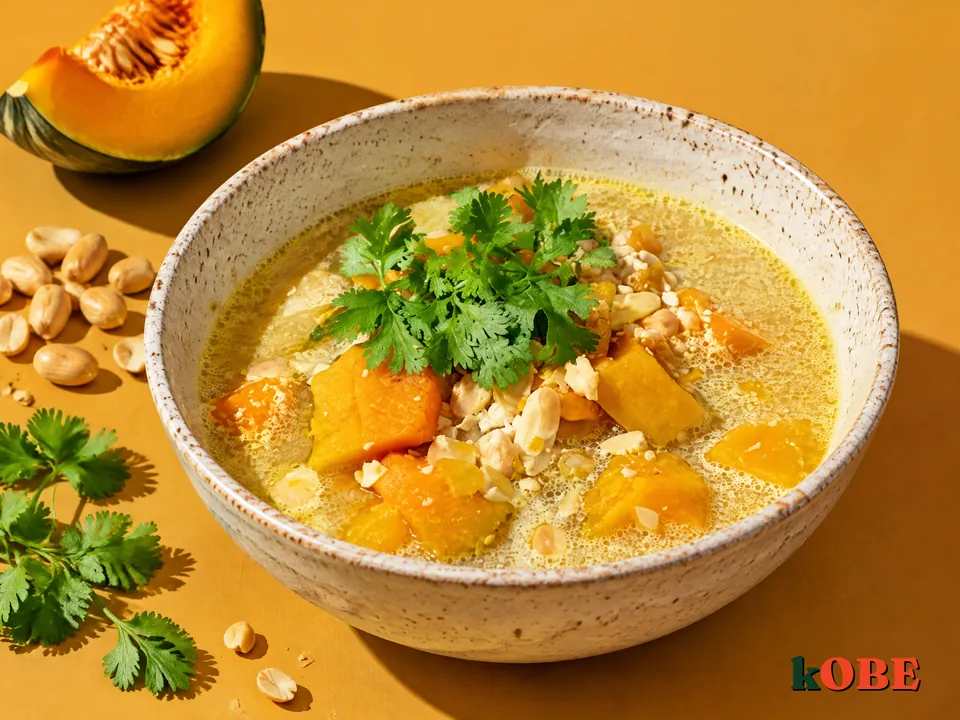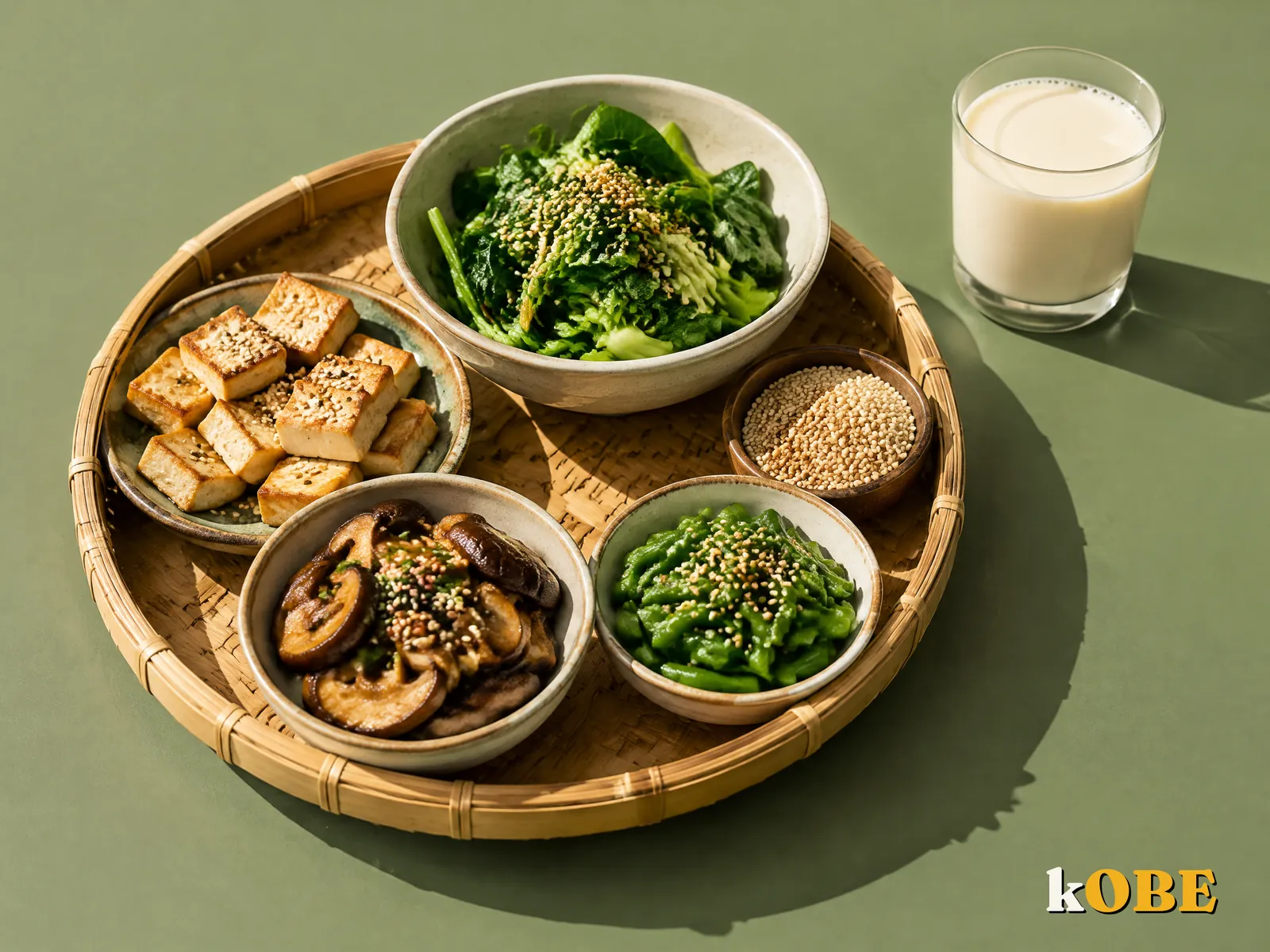
On the first and fifteenth of the lunar month, every cơm chay (vegetarian rice) shop in Vietnam is packed. People eat vegetarian for religion, for the planet, or simply because they love a light meatless tray of rice and dishes.
A vegetarian diet can absolutely cover your needs. But here's something few people mention: when you drop meat and fish, you also drop a few nutrition puzzle pieces that vegetables struggle to replace. Knowing ahead is enough to fill the gaps.
In this article
- How is vegetarian different from vegan?
- Puzzle piece 1: vitamin B12, the nutrient that doesn't grow on trees
- Puzzle pieces 2 and 3: iron and zinc, present but hard to get
- Puzzle piece 4: protein, it just takes a little mixing and matching
- Puzzle piece 5: calcium, omega-3 and iodine
- Inside the kOBE kitchen
- Frequently asked questions
How is vegetarian different from vegan?
"Eating chay" in Vietnam comes in several styles:
- Lacto-ovo vegetarian: no meat or fish, but eggs and dairy are fine.
- Vegan: nothing from animals, including eggs, dairy and honey.
- Chay kỳ (periodic vegetarian): meatless on a few days each month, regular meals the rest of the time.
The more food groups you drop, the more attention you need. If you eat chay kỳ, there's almost nothing to worry about. If you've been vegan for years, the rest of this is for you.
Puzzle piece 1: vitamin B12, the nutrient that doesn't grow on trees
Your body needs B12 to make red blood cells and keep the nervous system working normally. The fun part: neither plants nor animals make B12 on their own. Bacteria make it.
Animals store B12 in their meat, eggs and milk. Vegetables have almost none. Fermented soybean paste (tương), fermented tofu (chao), seaweed and mushrooms sometimes come up. But the amount of usable B12 in them isn't reliable.
So:
- If you're lacto-ovo vegetarian, two eggs and a glass of milk a day already contribute a good share.
- If you're vegan, the reliable source is B12-fortified food or a supplement. This is the general advice of many nutrition organizations.
Your body holds on to B12 for quite a long time, so a shortfall usually creeps in slowly over years. That's also why many people get complacent.
Puzzle pieces 2 and 3: iron and zinc, present but hard to get
Water spinach (rau muống), amaranth greens (rau dền) and red beans all contain iron. But iron from plants (non-heme iron) is absorbed less well than iron from red meat.
Two kitchen tricks help your body take in more:
- Pair it with something rich in vitamin C. Squeeze lime over your greens, add tomato to a stir-fry, finish with guava or orange.
- Drink tea and coffee well apart from meals. Some compounds in tea, like tannins, reduce iron absorption.
Zinc is similar. Beans, seeds and grains contain phytate, which latches onto zinc and iron and holds them back. Soaking beans overnight, sprouting them, or fermenting them as in tương or tempeh cuts down the phytate.
Puzzle piece 4: protein, it just takes a little mixing and matching
Many people worry vegetarians don't get enough protein. In fact, if you eat a variety and enough of it, you're covered.
Protein is built from small bricks called amino acids. Soybeans have all the essential bricks. Rice is a little short on one called lysine, while beans are a little short on methionine. Eat both in a day and they cover each other. They don't have to be in the same meal, just the same day.
Rice with tofu, xôi đậu xanh (sticky rice with mung beans), bread with soy milk: our grandparents were pairing foods correctly long before anyone named an amino acid.
A small tip: every meal gets at least one clear protein source. A block of tofu, a bowl of beans, or a glass of soy milk.
Puzzle piece 5: calcium, omega-3 and iodine
These three get less attention, but they're worth knowing:
| Nutrient | Without dairy or fish | Where to get it |
|---|---|---|
| Calcium | You lose the dairy source | Tofu set with calcium salts, mustard greens (cải bẹ xanh), bok choy, sesame, calcium-fortified soy milk |
| Omega-3 | You lose the oily fish source | Flaxseed, chia seeds, walnuts |
| Iodine | You lose the seafood and dairy sources | Iodized salt, seaweed (levels vary a lot) |
The omega-3 in seeds is a form called ALA. Your body converts only a small part of ALA into EPA and DHA, the two forms found in fish. Whether vegans should take algae oil is still something science is working out.
Inside the kOBE kitchen
We have a few foods that can fill the protein section of a vegetarian meal:
- Chickpeas: 164 calories, 8.9g of protein per 100g, cooked to keep a firm bite, then frozen.
- Edamame: 121 calories, 11.9g of protein per 100g.
- Green Peas: 84 calories, 5.4g of protein per 100g.
Pair them with Black Brown Rice or Quinoa (4.4g of protein per 100g) and you get protein from both beans and grains, exactly the mix-and-match above. See them on our Ingredients page.
For a complete bowl, there's the Vegan Chickpea Sweet Roots Poke in our frozen poke bowls range. If you're vegan, remember to check the sauce ingredients on the label. And when you toss your own salad, kOBE Signature Lean Mayo, Vegan is made from soybean tofu, with no eggs and no dairy.
Frequently asked questions
If I eat chay kỳ a few days a month, do I need supplements?
Are seitan and vegetarian "meat" rolls good protein sources?
Do vegans need to take vitamin B12?
Keep reading
Sources
- Melina V., Craig W., Levin S. (2016). Position of the Academy of Nutrition and Dietetics: Vegetarian Diets. Journal of the Academy of Nutrition and Dietetics 116(12):1970 to 1980.
- NHS (UK). The vegan diet.
- EFSA NDA Panel (2015). Scientific Opinion on Dietary Reference Values for cobalamin (vitamin B12). EFSA Journal 13(7):4150.
- National Institute of Nutrition (Vietnam). Vietnamese Food Composition Table (tofu, beans, leafy greens).
- Further reading: Understanding Nutrition 16th ed., chapter 6 (vegetarian diets section) and chapter 13.