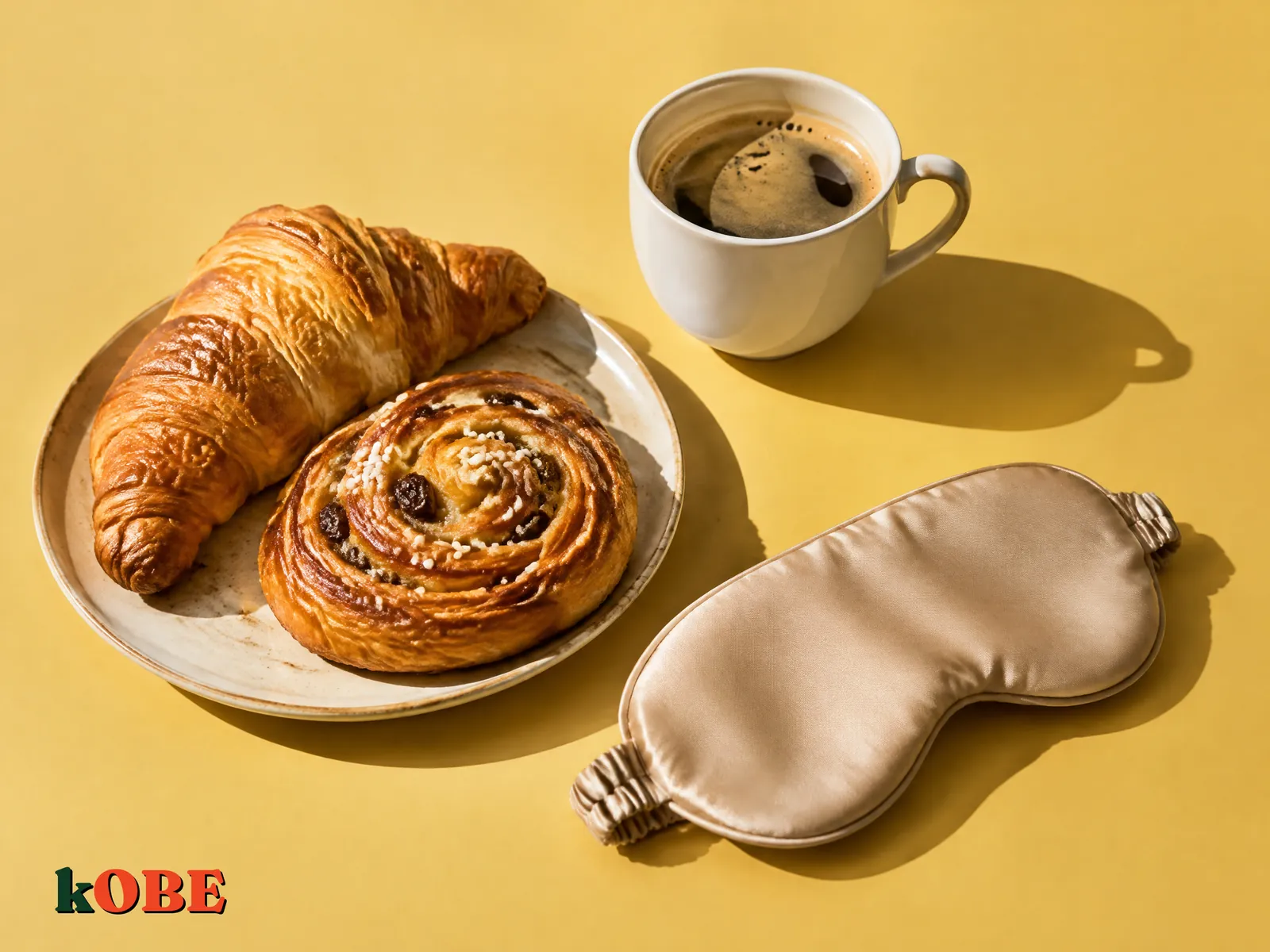
Last night you were up until 2 a.m. This morning, your usual bánh mì suddenly isn't enough. You want a milk tea too. Then the cream puff at the counter starts calling your name.
It's not a lack of willpower. Poor sleep and stress really do reset the control knobs for hunger in your body.
Once you understand how it works, you'll blame yourself less. And you'll know where to make changes.
In this article
Two hunger messengers get scrambled when you don't sleep
Your body has two hormones whose job is to carry messages about eating:
- Ghrelin: the messenger that says "you're hungry, eat." Released in large amounts by the stomach when it's empty.
- Leptin: the messenger that says "that's enough, you're full." Released by fat tissue.
A famous 2004 experiment had healthy young men sleep only 4 hours a night for two nights. The result: ghrelin went up, leptin went down. They felt hungrier. And what they craved most was sweets and starchy foods.
Picture it like this: the hunger speaker gets turned up, and the fullness speaker gets turned down.
A sleep-deprived brain sees food differently
It isn't only hormones. Your brain also changes how it "sees" food.
In 2013, scientists tested one sleepless night. In the morning, participants looked at pictures of food while their brains were scanned. The brain area in charge of weighing things up and reasoning was less active. The area linked to desire reacted more strongly. Sleep-deprived people wanted to pick higher-calorie foods.
A 2017 review pooled many studies. Its estimate: after short sleep, people eat about 385 extra calories the next day. That's about a medium bubble milk tea, even though you never planned to drink one.
Stress: why do we reach for sweets?
Under long-term stress, your body releases more cortisol, a hormone that helps us cope with pressure. Cortisol can increase appetite, especially cravings for sweet and fatty foods.
A 2001 study had participants take a stressful test. Those who released more cortisol ate more afterward, and chose more sweet food.
Sweets give your brain an instant feel-good moment. So comfort eating is a very human reaction. It's just that if it becomes your main way to let off stress, you can slip into a loop. Tired, eat sweets, feel sluggish, tired again.
Some people eat less when stressed, too. Everyone reacts differently.
When the craving has already arrived: a few gentle responses
Some days you still have to stay up late. When that happens:
- Eat a breakfast with protein. Eggs, milk and tofu keep you full longer and cut down on mid-morning snacking.
- Prepare snacks in advance: fruit, yogurt, a handful of nuts. When they're ready, you have fewer decisions to make mid-craving.
- Drink a glass of water first. Tiredness and thirst sometimes get mistaken for hunger.
- If you want something sweet, have a small portion and sit down to enjoy it properly. One piece of cake savored slowly usually satisfies more than a whole box eaten in a rush.
- Add another way to let off stress: a 10-minute walk, a call to a friend, a few slow breaths.
And don't beat yourself up. A day of sugar cravings from poor sleep is your body sending a signal, not you failing.
Inside the kOBE kitchen
We don't have any food that helps you sleep better, and we don't promise that. What we can do is make those sweet cravings a little gentler.
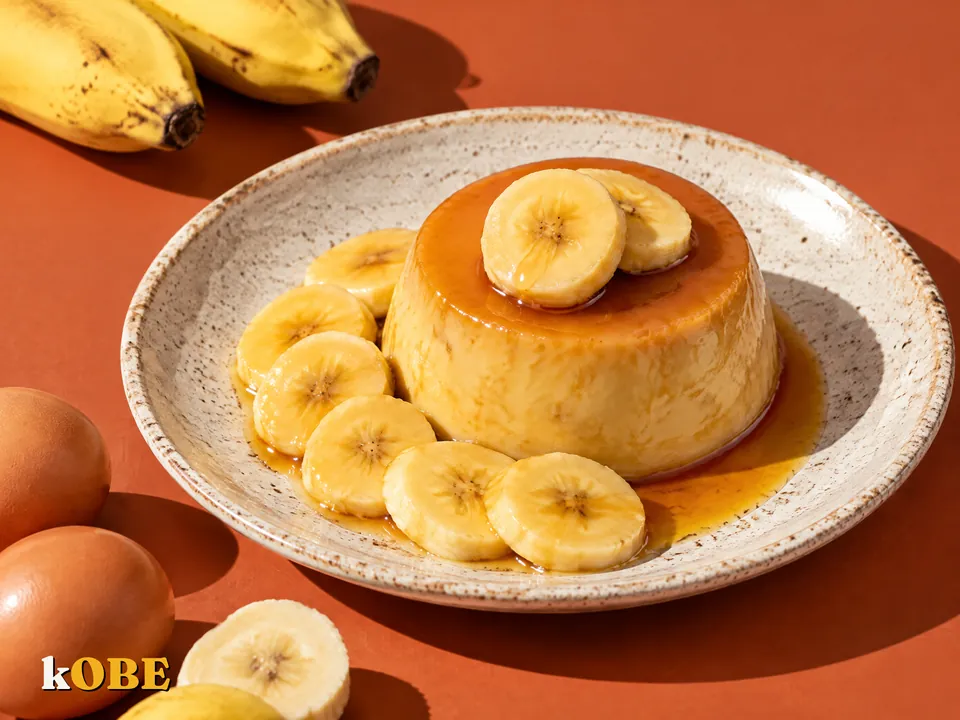
kOBE Signature Monk Fruit Blend is a mix of erythritol, allulose, monk fruit, stevia and inulin, and it replaces cane sugar 1:1. You can cook a pot of chè (sweet dessert soup) or steam a few jars of flan to keep in the fridge for tired afternoons.
All 1,480 home recipes on Recipes list calories and sugar per 100g. If afternoon sugar cravings have become a daily thing, our Cutting Sugar journey page could be your next step.
Frequently asked questions
Can I catch up on sleep over the weekend?
Can stress make me eat less?
Is drinking coffee to make up for poor sleep okay?
Keep reading
Sources
- Spiegel K., Tasali E., Penev P., Van Cauter E. (2004). Brief communication: Sleep curtailment in healthy young men is associated with decreased leptin levels, elevated ghrelin levels, and increased hunger and appetite. Annals of Internal Medicine 141(11):846 to 850.
- Greer S.M., Goldstein A.N., Walker M.P. (2013). The impact of sleep deprivation on food desire in the human brain. Nature Communications 4:2259.
- Al Khatib H.K. et al. (2017). The effects of partial sleep deprivation on energy balance: a systematic review and meta-analysis. European Journal of Clinical Nutrition 71(5):614 to 624.
- Epel E. et al. (2001). Stress may add bite to appetite in women: a laboratory study of stress-induced cortisol and eating behavior. Psychoneuroendocrinology 26(1):37 to 49.
- Watson N.F. et al. (2015). Recommended Amount of Sleep for a Healthy Adult: A Joint Consensus Statement of the American Academy of Sleep Medicine and Sleep Research Society. Sleep 38(6):843 to 844.
- Further reading: Understanding Nutrition 16th ed.