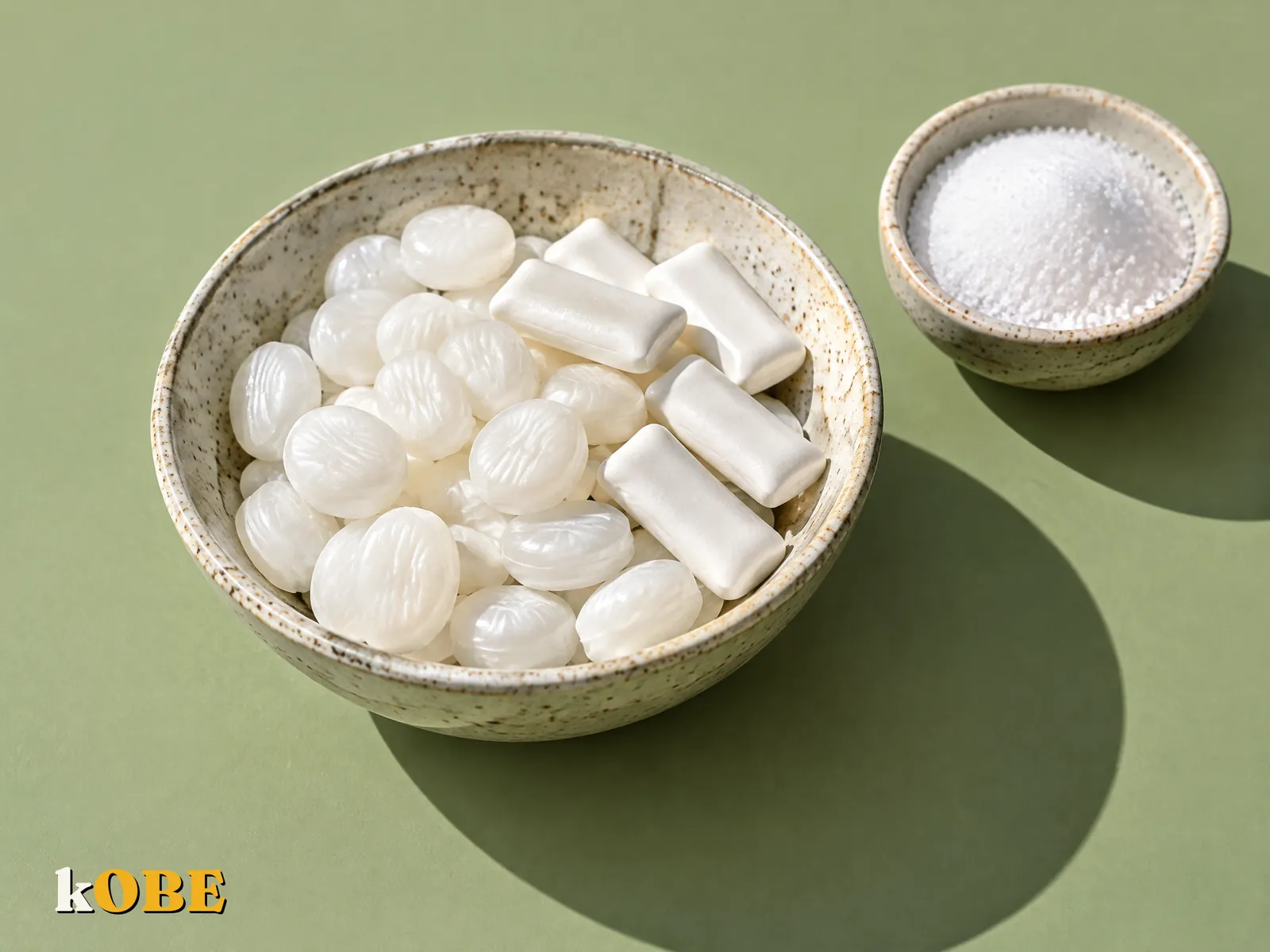
The first time people hear "sugar alcohol", plenty of them frown. There's alcohol in chewing gum? Can I still drive after a pack?
Relax, you can drive. Sugar alcohols don't contain a single drop of booze. And they aren't quite sugar either.
The confusing name comes from chemistry. The more fun story is why finishing a whole bag of "sugar free" candy in one sitting can set your stomach rumbling like thunder.
In this article
A misleading name: won't get you tipsy, and not quite as sweet as sugar
Scientists call this group polyols. In everyday English, they're sugar alcohols.
The word "alcohol" here is chemist's language. It refers to a small attachment on the molecule, a bit like a "hook" with its own name. Drinking alcohol (ethanol) has that same hook, hence the shared name. But the two are completely different things.
In shape, a sugar alcohol molecule looks a lot like sugar. Similar enough to touch your tongue and switch on the "sweet" light. But different enough that your body handles it in its own way.
Who's in the sugar alcohol family?
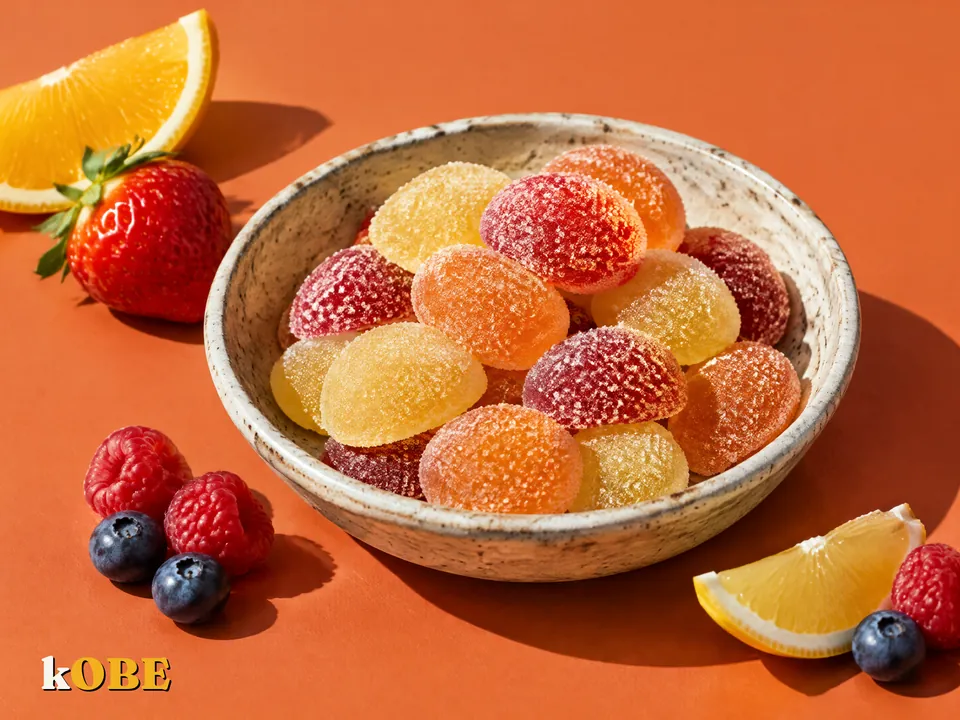
It's a fairly big family. You'll meet them on labels for candy, biscuits and chewing gum:
| Name | Where you'll often find it | Sweetness vs. white sugar |
|---|---|---|
| Sorbitol | chewing gum, lozenges, naturally in prunes, pears, apples | a bit over half |
| Xylitol | chewing gum, toothpaste | almost the same |
| Maltitol | "sugar free" chocolate and biscuits | almost the same |
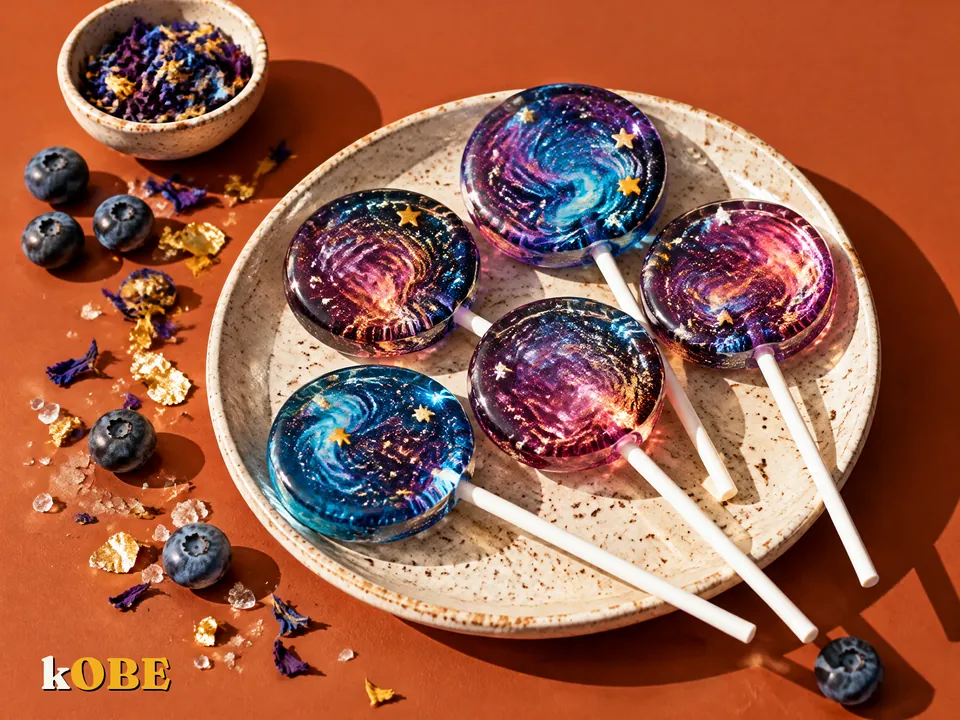
| Isomalt | hard candy, lollipops | about half |
| Mannitol | candy coatings, lozenges | about half |
Then there's erythritol, a name you'll often see in sweetener blends.
A cute fun fact: prunes are famous for keeping things moving, partly thanks to the sorbitol naturally found in the fruit. Nature was using sugar alcohols long before factories started making candy.
Why can lots of sugar free candy upset your tummy?
This is the part many people learn by experience.
When you eat white sugar, your small intestine absorbs almost all of it. But with sugar alcohols like sorbitol, maltitol and xylitol, the small intestine only absorbs part. The rest travels on to the large intestine.
Two things happen there:
- It pulls water into the gut. Like sprinkling salt on cucumber slices, water gets drawn out. More water in the gut means looser stools.
- Gut bacteria ferment it. That process makes gas. Your belly starts to feel tight and gurgly.
A few candies are usually fine. But eat a whole bag of candy or a whole maltitol chocolate bar at once, and many people feel bloated and gassy, and sometimes need to make a dash for the bathroom.
That's why, in Europe, products with more than 10% added polyols must print a warning: excessive consumption may produce laxative effects. Everyone's tolerance is different, and the body usually gets used to small amounts eaten regularly.
Fewer calories than sugar, but not always zero
Because they're only partly absorbed, most sugar alcohols provide fewer calories than white sugar.
Under EU labeling rules:
- Sugar and starch: 4 calories per gram.
- Most sugar alcohols: counted at 2.4 calories per gram.
So a "sugar free" chocolate bar made with maltitol still has calories. Not as few as many people think.
As for blood sugar: sugar alcohols usually raise it more slowly and less than white sugar does. How much depends on the type. Maltitol, for instance, still raises blood sugar noticeably more than its siblings.
Two fun facts about xylitol
- Mouth bacteria don't ferment xylitol the way they ferment sugar. That's why it so often shows up in chewing gum and toothpaste.
- Xylitol is highly toxic to dogs. Even a small amount is dangerous for them. If you have a pup at home, keep the gum well out of reach.
Inside the kOBE kitchen
kOBE Signature Monk Fruit Blend is a five-ingredient blend: erythritol for the sweet base and bulk, allulose to help bakes brown, monk fruit, a small amount of stevia, and inulin (a type of fiber that doesn't add sweetness).
None of those five ingredients is sorbitol, maltitol or xylitol.
We keep one general rule for every sweetener: anything is more pleasant in moderation than in huge amounts. And the long-term goal is to let your taste buds get used to things being a little less sweet.
Frequently asked questions
Can sugar alcohols make you drunk?
How can I tell if a product contains sugar alcohols?
I ate too much sugar free candy and my stomach feels off. What now?
Keep reading
Sources
- European Parliament and Council. Regulation (EU) No 1169/2011, Annex III (warning statement for products with more than 10% polyols) and Annex XIV (energy conversion factors).
- Livesey G. (2003). Health potential of polyols as sugar replacers, with emphasis on low glycaemic properties. Nutrition Research Reviews 16(2):163 to 191.
- EFSA. Scientific opinions on polyol food additives (sorbitol E420, mannitol E421, isomalt E953, maltitol E965, xylitol E967).
- Further reading: Understanding Nutrition 16th ed., chapter 4 (section on alternative sweeteners).