You are standing in front of the yogurt shelf at the supermarket. Every tub shouts in big letters: "low fat", "rich in calcium", "natural flavor". They all sound fine.
Then you turn one tub around. A dense grid of numbers, printed as small as ants. Most of us sigh, drop the tub in the basket and move on.
The good news: you do not need to understand that whole grid. You only need five quick glances, about one minute in total. This article walks you through those five glances. Whenever you want to dig deeper, there is a dedicated article waiting.
In this article
- The front is there to sell, the back is there to read
- Glances 1 and 2: how much is this number for, and how many calories?
- Glance 3: three macro lines tell you which "team" the food plays for
- Glance 4: sugar, sodium and fiber, three lines worth a closer look
- Glance 5: drop down to the ingredient list
- One whole minute in one table
- Inside the kOBE kitchen
- Frequently asked questions
The front is there to sell, the back is there to read
The front of the pack belongs to the designer. Pretty colors, juicy fruit photos, a few words that sound wholesome.
The back belongs to the law. In Vietnam, product labels follow Government Decree 43/2017. The Ministry of Health also has its own guidance on how to declare nutrition information. That is why the backs of different products look fairly alike.
The back holds two things you need:
- The nutrition information table: the numbers. It answers "how much".
- The ingredient list: the words. It answers "made of what".
A tub that says "low fat" on the front may make up for flavor with quite a lot of sugar. Only the back will tell you. So the first habit is simple: pick it up, flip it over.
Glances 1 and 2: how much is this number for, and how many calories?
Glance 1, 10 seconds: look at the top line of the table.
Every number below it is calculated for a certain amount. It might be 100g (or 100ml), one serving, or the whole pack.
This is where most people misread. A packet of cookies says 140 kcal, which sounds light. Look again and that is for "1 serving of 30g", and the packet holds 4 servings. Finish the packet and you have eaten about 560 kcal.
Manufacturers choose their own serving sizes, so every brand is different. To compare two products, compare the per 100g column. We explain it properly in the article on serving size and "per 100g".
Glance 2, 10 seconds: the energy line.
This is usually the big number near the top. On a label, "calories" really means kcal (kilocalories). Many labels also show kJ (kilojoules). The kJ number is always about 4.2 times the kcal number, so do not panic at "1,670 kJ". That is only about 400 kcal.
To picture it: a medium bowl of white rice (about 150g) gives roughly 200 kcal. So 100 kcal is about half a bowl of rice.
Calories are not a good score or a bad score. They are simply a unit for measuring energy. To see where calories come from, read what is a calorie. To learn how much your own body uses each day, read BMR and TDEE.
Glance 3: three macro lines tell you which "team" the food plays for
15 seconds. Right under the energy line sit three important lines:
- Protein
- Fat
- Carbohydrate, or carbs for short (starch and sugars)
Together these three are called macros (macronutrients). Your body needs them in grams, and they are the main sources of calories.
Quick trick: see which line is biggest. It tells you which "team" the food plays for.
| Food | Leading team |
|---|---|
| Chicken breast, fish, eggs, tofu | Team protein |
| Roasted peanuts, sesame, mayonnaise | Team fat |
| Bread, bún (rice vermicelli), rice, cookies | Team carbs |
One small detail: 1g of fat gives about 9 kcal, while 1g of protein or 1g of carbs gives only about 4 kcal. So just a few grams of fat nudge the calories up noticeably.
To find out what each macro does in your body, read what are macros.
Glance 4: sugar, sodium and fiber, three lines worth a closer look
10 seconds. These three lines often hide in the middle of the table, but they tell a lot of stories.
Sugar. Usually the indented line under carbs, written "of which sugars". It includes both sugars already present (like milk sugar in fresh milk) and added sugars. The World Health Organization (WHO) recommends keeping free sugars under 10% of daily energy. On a day of about 2,000 kcal, that is under 50g, roughly 12 teaspoons of sugar.
Sodium. Sodium mostly comes from salt. Quick conversion: multiply sodium by 2.5 to get salt. A pack showing 800mg sodium holds about 2g of salt. WHO recommends adults eat under 5g of salt a day. The full conversion is in the article on sodium and salt.
Fiber. For this line, higher is kinder to your gut. Here is a fun twist: whether carbs include fiber or not depends on the country. That is also where the phrase "net carbs" on keto snack packs comes from. Read fiber and net carbs.
Some labels add a % column, for example "sodium 25%". That is a percentage of a "reference day". Easy rule: 5% or less is low, 20% or more is high. More in what is %DV.
Glance 5: drop down to the ingredient list
15 seconds. The table says "how much". The ingredient list says "what".
The most important rule: ingredients are listed by weight, largest first. The first three words are practically the "body" of the product.
A few things to notice as you glance:
- What is the first word? If an "oat cookie" starts with wheat flour, the oats are only a supporting act.
- How many names does sugar have? Glucose syrup, malt, molasses, dextrose... Split up, each one slides to the bottom of the list, but added together they can be quite a lot.
- Any allergens? Milk, soy, peanuts and eggs are usually named clearly or printed in bold.
Tips for spotting sugar's aliases and other ordering tricks are in the article on ingredient order on labels.
One whole minute in one table
Here are the five glances in one table, ready for a screenshot:
| Glance | Where to look | Ask yourself |
|---|---|---|
| 1 | Top line of the table | Is this for 100g, one serving or the whole pack? |
| 2 | Energy | How many kcal, how many bowls of rice is that? |
| 3 | Protein, fat, carbs | Which team does this food play for? |
| 4 | Sugar, sodium, fiber | Is any line surprisingly high? |
| 5 | Ingredient list | What is the first word, how many names does sugar have? |
Do it a few times and it becomes second nature. By then you will find yourself glancing in well under a minute.
A small note: reading labels is about understanding what you eat, not grading every bite. No number is "forbidden". Some foods you eat for fun, for memories, because the whole family is eating together. Knowing what is in them is enough for you to choose the portion that fits you.
And food with no label, like a bowl of phở or a plate of cơm tấm (broken rice with grilled pork) from a street stall? Label skills still help. You start to see which part of the bowl is starch, which is protein and which is fat.
Inside the kOBE kitchen
We like clear labels, so kOBE writes numbers the same way every time: per 100g.
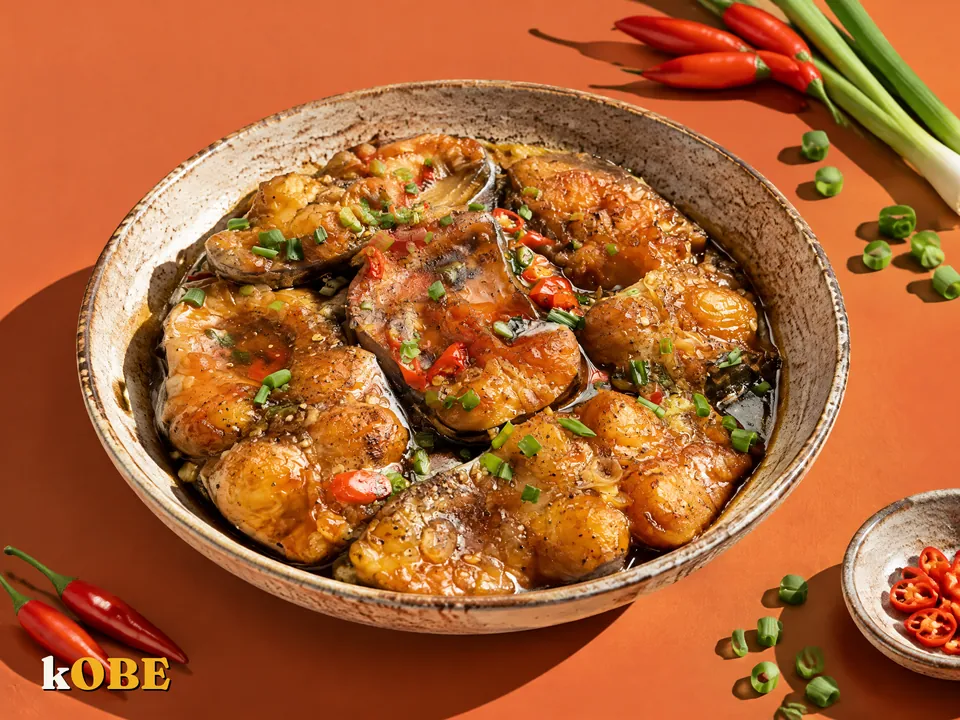
In the 1,480 home recipes on our recipe page, every dish lists calories, protein, fat and sugar per 100g. Take cá kho tộ miền Tây (Mekong-style fish braised in a clay pot), cooked with monk fruit sweetener: about 102 kcal, 8.9g protein, 5.9g fat and 1.3g sugar per 100g. One glance and you know it plays for team protein, with little sugar.
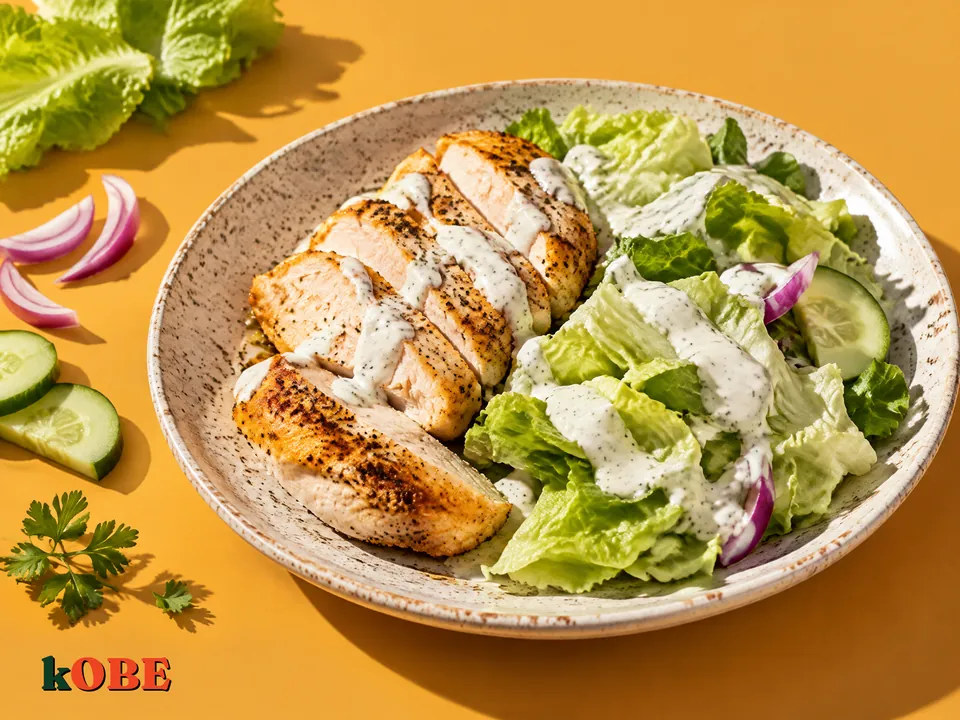
Our ready-cooked ingredients work the same way. Sous Vide Chicken Breast shows 165 kcal, 31g protein, 3.6g fat and 0g starch per 100g cooked. Red Brown Rice shows 123 kcal and 25.6g carbs per 100g. See the ready-cooked ingredients.
Beyond the numbers, every kOBE dish also carries a small tag that tells you where its sweetness comes from. How to read the tags is in the article on the kOBE 4-tag system. And if you want a whole day of eating that fits your needs, visit meal plans by calories.
Frequently asked questions
Does "0g sugar" on a label mean there is no sugar at all?
Which column should I use to compare two products?
What about restaurant food with no label?
Do I need to read labels every time?
Keep reading
Sources
- Government of Vietnam. Decree 43/2017/NĐ-CP on goods labeling (Nghị định 43/2017/NĐ-CP về nhãn hàng hoá).
- Ministry of Health (Vietnam). Circular 29/2023/TT-BYT guiding the content and presentation of nutrition components and nutritional values on food labels (Thông tư 29/2023/TT-BYT).
- Codex Alimentarius (FAO/WHO). Guidelines on Nutrition Labelling (CXG 2-1985).
- U.S. FDA. How to Understand and Use the Nutrition Facts Label.
- WHO. Healthy diet, fact sheet.
- Further reading: Understanding Nutrition 16th ed., sections 1.4 and 2.3; Sizer, Nutrition: Concepts and Controversies.