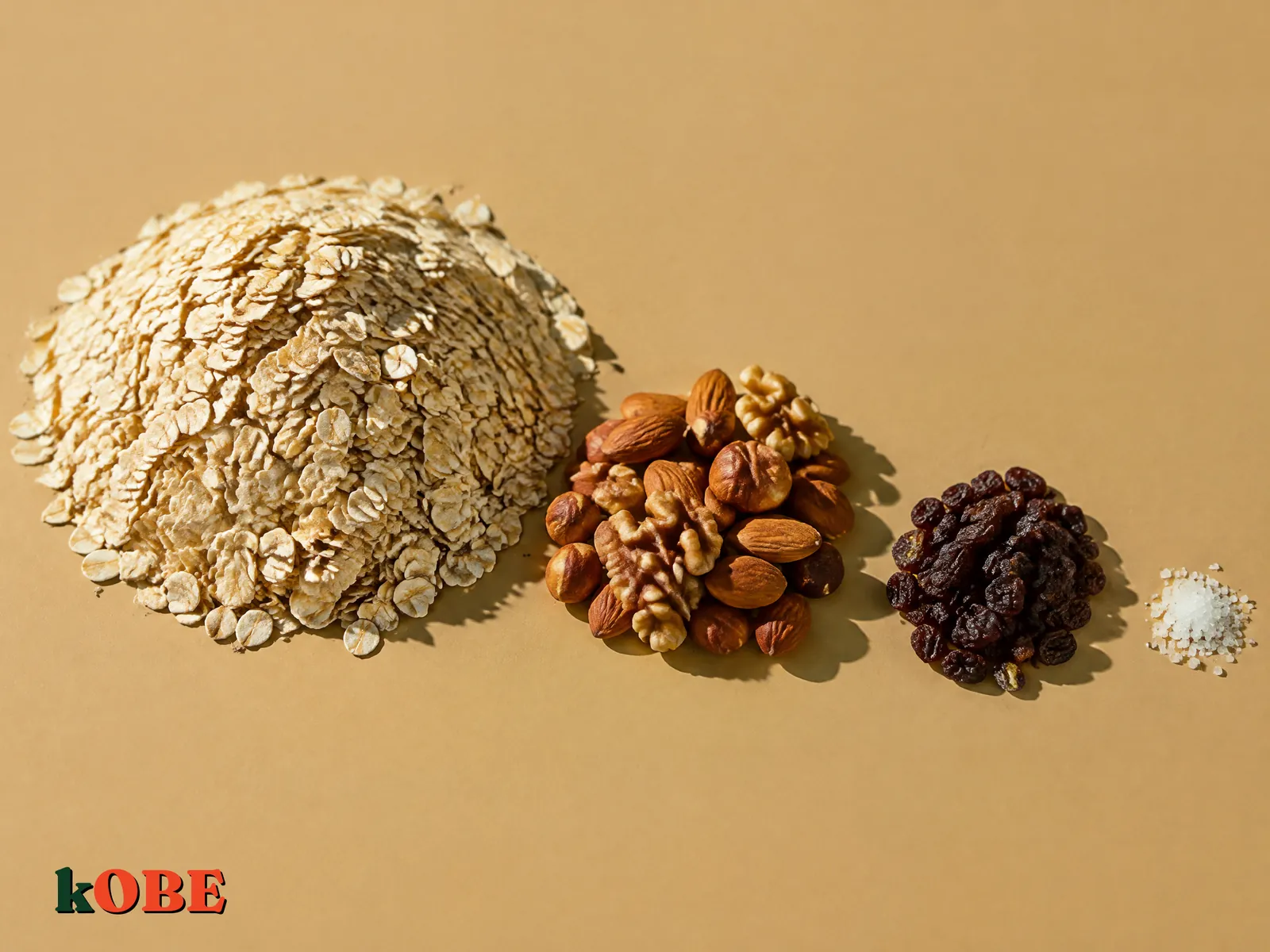
A packet of cookies in big letters: "Whole grain oat cookies". A picture of golden wheat stalks, a few oat flakes tumbling down.
Flip it over, and the ingredient line reads: "Wheat flour, sugar, vegetable oil, oats (12%)...".
Oats come fourth. So the real star of the packet is wheat flour. This does not break any rule, and it is not rare either. It just shows that the ingredient line tells a truer story than the front of the pack.
In this article
The lineup rule: heaviest first, lightest last
In Vietnam, Decree 43/2017 on goods labeling requires ingredients to be listed from most to least by weight. Many other countries do the same.
That means:
- The first word is the heaviest thing in the product.
- The first three words usually make up most of the food's "body".
- The last words are only a pinch, like spices, colorings and preservatives.
A quick trick: if sugar is in the first three words, the food is likely quite sweet. If water comes first, the food is mostly water, like many bottled drinks.
The rule only gives the order, not the proportions. The first word could be 30% or 90%, and you cannot tell from the order alone.
The "split the sugar" trick to drop down the list
This is the most interesting part.
Say a packet of cookies is 25% sweeteners. If only one type of sugar were used, "sugar" would come second, right after wheat flour. Easy to spot.
But split it into three types at about 8% each: cane sugar, glucose syrup, malt. Now each one can slide down to the middle or the end of the list. The total sweetness is the same, but your eye easily skips over it.
Not every manufacturer does this on purpose. Often several sugars are blended to get the texture or color they want. But it helps to know, so you read the list correctly.
Other names for sugar you often see on labels:
| Group | Common names |
|---|---|
| Familiar sugars | Granulated sugar, cane sugar, brown sugar, rock sugar |
| Syrups | Glucose syrup, corn syrup, high-fructose corn syrup, rice syrup |
| Scientific names | Glucose, dextrose, fructose, sucrose, maltose, lactose |
| From plants and flowers | Malt, molasses, honey, coconut nectar |
| From fruit | Fruit juice concentrate |
Honey and coconut nectar sound natural, but to your body they are still sugar. They still count toward the sugar line in the nutrition table.
There is also maltodextrin. Technically it is not a sugar but a short-chain starch. Still, it digests very quickly, so many label readers keep an eye on it.
The product name says one thing, the list says another
"Strawberry flavored milk" and "strawberry milk" sound alike. But "strawberry flavored" may only need strawberry flavoring, not real strawberries.
The Codex Alimentarius general labeling standard has a useful principle: if a label emphasizes an ingredient, it should state that ingredient's percentage. That is why you often see "oats (12%)" or "orange juice (10%)".
That percentage is a golden clue. An "oat cookie" with 12% oats is 88% something else.
A few other phrases worth reading slowly:
- "Nature-identical flavoring", "artificial flavoring": the food has that smell, not necessarily that ingredient.
- "Cereal flour": check which cereal, and whether the word "whole grain" comes with it.
- "Vegetable oil": could be several different oils.
Is a shorter list always better?
Not really. This is a pretty common myth.
A jar of salted roasted peanuts has two ingredients: peanuts and salt. Short, but the salt may be quite a lot.
On the other hand, a tub of yogurt may add a few bacterial cultures and vitamin D. The list is longer, but it is no worse for it.
Additives are often listed with a code number. For example, INS 330 is citric acid, which occurs naturally in lemons. Approved additives have all been through safety assessment at permitted levels. A code number does not mean something scary.
What is most worth checking is still the first three words and how many names sugar has. Those two things tell you more than the length of the list.
Do not forget the allergen line
Many labels add a separate line like "Contains: milk, soy, wheat", or print these ingredients in bold within the list.
For people with allergies, this is the most important line on the whole pack. Watch for the phrase "may contain traces of peanuts" too. It means the product was made on the same line as peanuts.
Inside the kOBE kitchen
Let us read the ingredient lines of two kOBE products.
Sous Vide Chicken Breast: chicken breast soaked only in sea salt. That is it. No sugar, no sauce, no flour.
kOBE Signature Monk Fruit Blend is a five-ingredient blend, each doing its own job:
- Erythritol: the sweet base, giving bulk so it measures like granulated sugar.
- Allulose: helps bakes brown in the oven, with a taste close to cane sugar.
- Monk fruit: an intensely sweet extract.
- Stevia: used in a small amount.
- Inulin: a type of fiber, not a sweetener.
The blend replaces sugar 1:1 and has no bitter aftertaste. We use it in kOBE's sweet dishes. See kOBE Signature Monk Fruit Blend.
Frequently asked questions
Does a shorter ingredient list mean a "cleaner" product?
Is water counted as an ingredient?
If I do not see the word "sugar", is there definitely no sugar?
Keep reading
Sources
- Government of Vietnam. Decree 43/2017/NĐ-CP on goods labeling (Nghị định 43/2017/NĐ-CP về nhãn hàng hoá), and Decree 111/2021/NĐ-CP amending and supplementing it.
- Codex Alimentarius (FAO/WHO). General Standard for the Labelling of Pre-packaged Foods (CXS 1-1985), section on quantitative ingredient declaration.
- U.S. FDA. Added Sugars on the Nutrition Facts Label.
- Further reading: Sizer, Nutrition: Concepts and Controversies 16th ed.; Understanding Nutrition 16th ed., chapter 4.