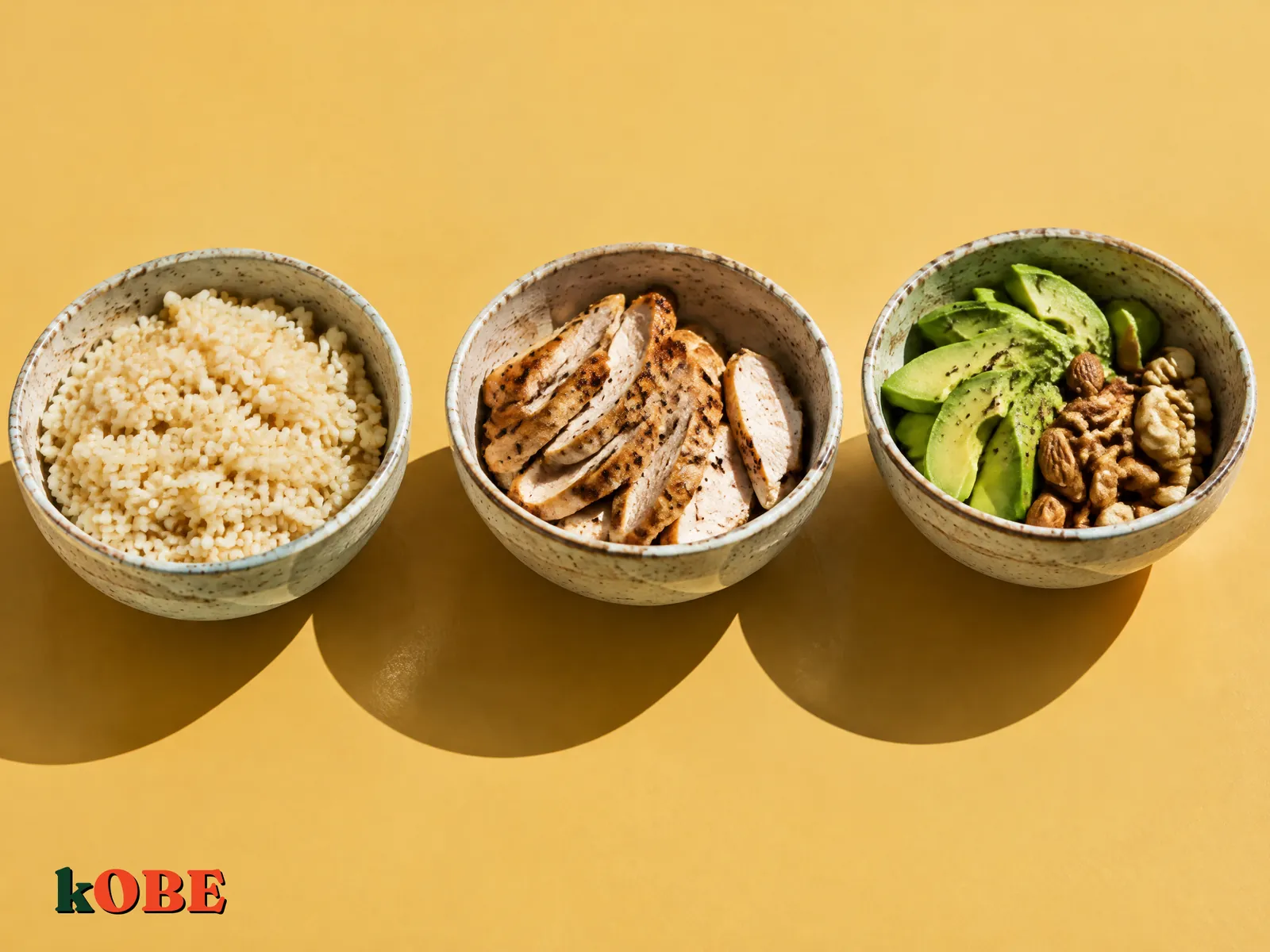
"Did you hit your macros today?" You hear it at the gym, or in food videos online. It sounds like something you need an app to calculate.
Truth is, your grandmother has been "balancing macros" for decades. A family meal with a bowl of rice, a plate of cá kho (caramel-braised fish) and a bowl of vegetable soup. That is all three main characters, right there.
This article introduces those three characters. No app, no kitchen scale required.
In this article
What does "macro" stand for?
Macro is short for macronutrient. "Macro" because your body needs a lot of them, measured in grams every day.
There are three main macros:
- Protein
- Fat
- Carbohydrate, or carbs for short: starch, sugars and fiber
The opposite of macros are micronutrients: vitamins and minerals. Your body needs them only in milligrams, even micrograms. Small amounts, but running short still causes trouble.
Another key difference: macros give energy, vitamins and minerals do not. Almost every calorie on a label comes from these three macros (plus alcohol, if it is an alcoholic drink).
Each character has its own job
The three macros cannot fully replace one another. Each has its "day job".
| Macro | Day job | Calories per gram | Found in |
|---|---|---|---|
| Protein | Builds and repairs the body: muscle, skin, hair, enzymes | about 4 | Meat, fish, eggs, tofu, beans |
| Fat | Energy store, cell membranes, helps absorb vitamins A, D, E, K | about 9 | Cooking oil, lard, peanuts, sesame, avocado |
| Carbs | Quick fuel, and the brain loves glucose | about 4 | Rice, bún, phở noodles, bread, sweet potato, fruit |
A few small fun facts:
- Your brain is a "regular customer" of carbs. Under normal conditions, the brain runs mainly on glucose.
- Stir-fried carrots beat boiled carrots for a reason. The vitamin A in carrots dissolves in fat. A little oil helps your body absorb it better.
- Protein is not just for building muscle. Antibodies, digestive enzymes and the hormone insulin are all made of protein.
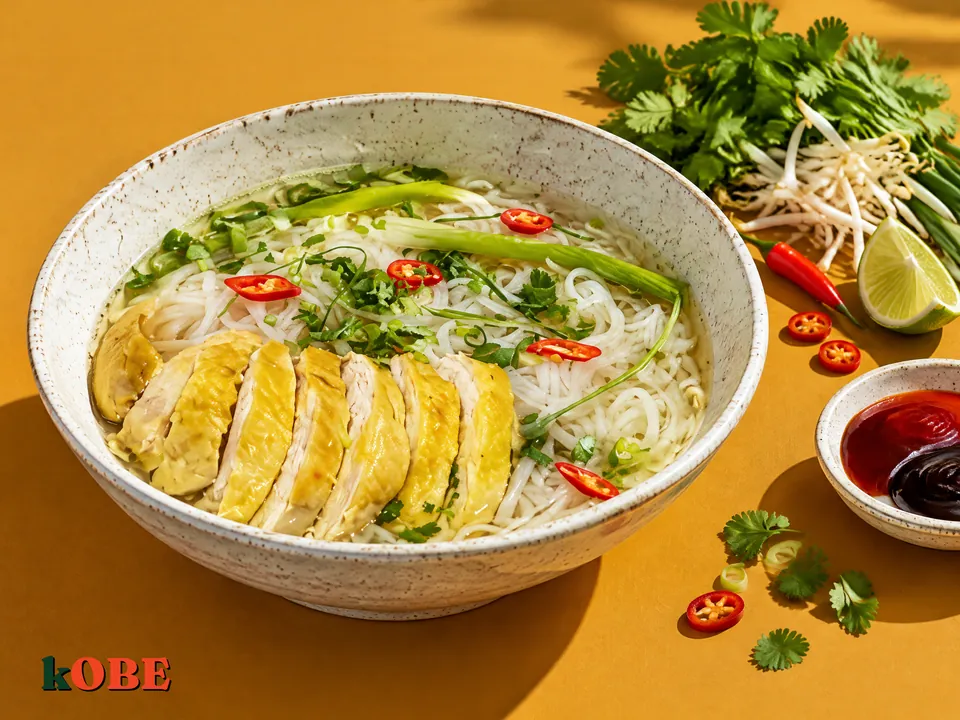
Does a bowl of phở have all three macros?
Yes, and quite nicely too.
- Phở noodles are carbs, mostly rice starch.
- Beef or chicken is protein.
- The shimmer of fat on the broth and the fatty cuts of meat are fat.
- Fresh herbs and bean sprouts add a little fiber and vitamins.
Many Vietnamese dishes naturally hold all three macros in one bowl: bún bò (spicy beef noodle soup), hủ tiếu (clear noodle soup), cơm tấm (broken rice), bánh mì thịt (pork baguette). Only the ratio differs.
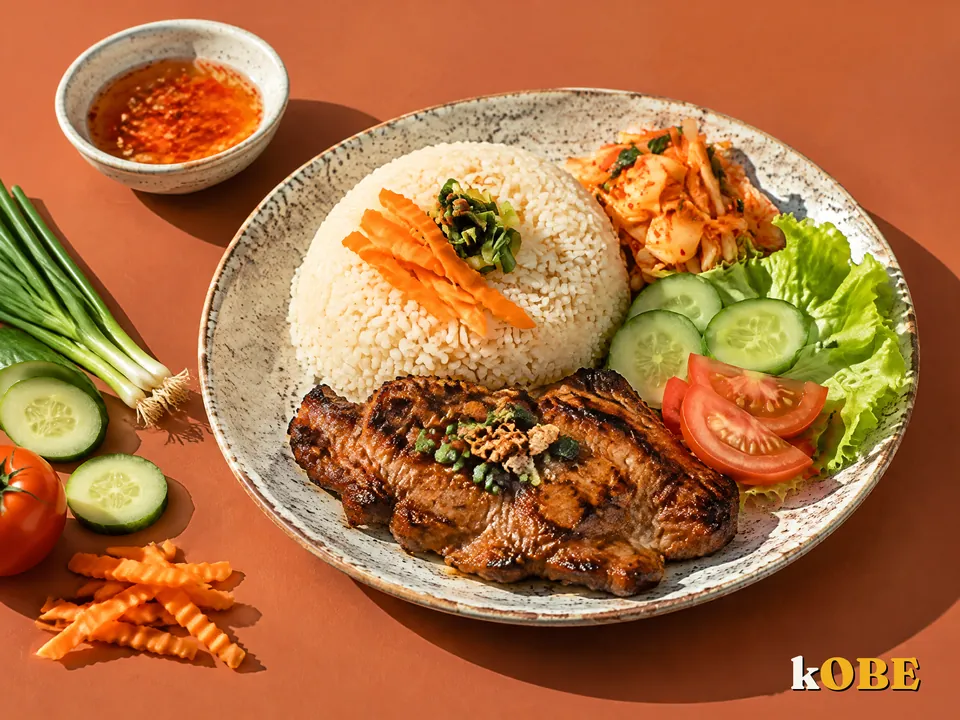
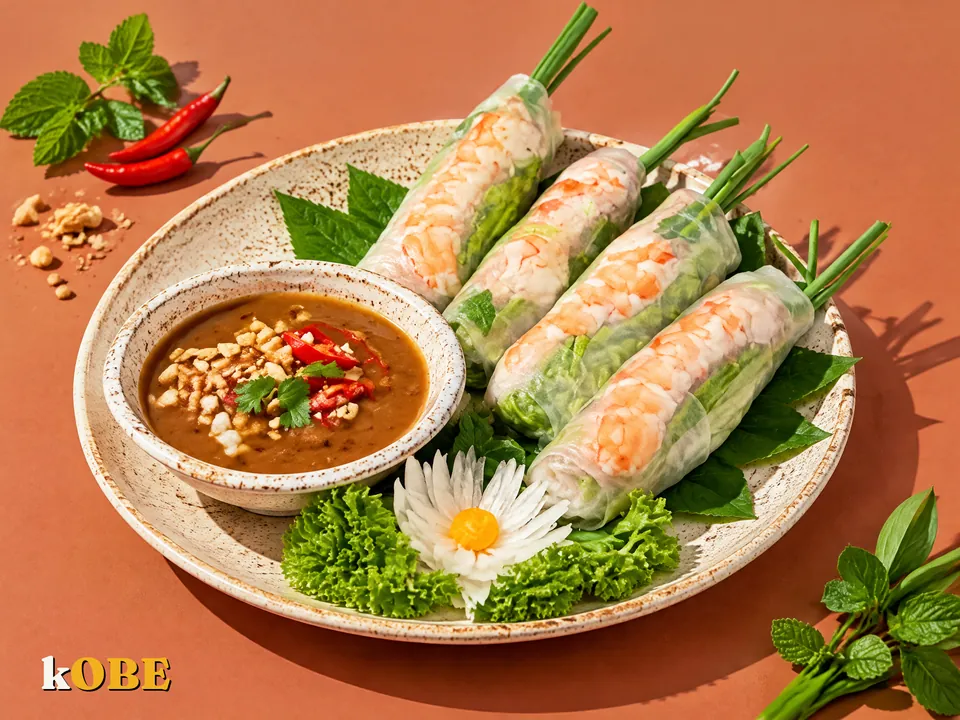
Take a plate of cơm tấm with grilled pork chop: the big mound of rice tips it toward carbs. The grilled chop brings both protein and fat. Gỏi cuốn (fresh spring rolls with shrimp and pork) are more balanced, thanks to all the greens rolled inside.
What ratio is right? Wider than you think
The US Institute of Medicine (IOM) gives ranges for adults, as a percentage of the day's calories:
| Macro | Recommended range |
|---|---|
| Carbs | 45 to 65% |
| Fat | 20 to 35% |
| Protein | 10 to 35% |
What stands out is how wide the ranges are. There is no single "golden" number for everyone. Someone who eats plenty of rice the Vietnamese way and someone who eats lots of meat and fish can both sit comfortably inside these ranges.
If you would rather not calculate percentages, there is an easy way to look at your plate. The Harvard School of Public Health suggests splitting it like this:
- Half the plate: vegetables and fruit
- A quarter of the plate: protein (fish, chicken, beans, eggs)
- A quarter of the plate: starch, preferably whole grains like brown rice
For a Vietnamese family meal, you can read it as: a bit more boiled greens or vegetable soup, a moderate savory dish, and a comfortable bowl of rice.
Do you need to count macros at every meal?
For most people, no.
Counting macros helps people who train seriously, or curious people who want to understand their bodies. But if counting stresses you out, skip it. A meal is not a math problem.
A simpler approach is to use your hand as a ruler:
- A portion of protein is about the size of your palm.
- A portion of starch is about the size of your fist.
- Vegetables: two fists or more.
- Fat: about the size of your thumb tip, like a spoonful of oil or a pinch of peanuts.
Hands come in different sizes, so this ruler scales with you automatically. Handier than any app.
When reading a label, just glance at the three lines for protein, fat and carbs to see which team the food plays for. The quick-glance method is in the article on reading a nutrition label in one minute.
Inside the kOBE kitchen
Let us look at the macros of one kOBE frozen Chicken Kale Namul Poke. The 350g bowl has 379 kcal and 29g protein.
Quick math: 29g protein times 4 is about 116 kcal. That means nearly a third of the bowl's energy comes from protein. The rest comes from the fat and carbs in the other ingredients, plus the Lean Mayo base sauce.
kOBE's ready-cooked ingredients also list macros per 100g, so you can build your own plate the half-veg, quarter-protein, quarter-starch way. For example, Sous Vide Chicken Breast for protein, Red Brown Rice or Japanese Sweet Potato for starch, and Sesame Kale for the veg. See the ready-cooked ingredients.
If you want a whole day already worked out to your energy needs, take a look at meal plans by calories.
Frequently asked questions
Is fiber a macro?
Is water a macro?
Is eating fewer carbs better?
Keep reading
Sources
- Institute of Medicine (2005). Dietary Reference Intakes for Energy, Carbohydrate, Fiber, Fat, Fatty Acids, Cholesterol, Protein, and Amino Acids. National Academies Press.
- Harvard T.H. Chan School of Public Health, The Nutrition Source. Healthy Eating Plate.
- National Institute of Nutrition (Vietnam) (2016). Recommended Dietary Allowances for Vietnamese People (Nhu cầu dinh dưỡng khuyến nghị cho người Việt Nam).
- Further reading: Understanding Nutrition 16th ed., section 1.4; Culinary Nutrition, chapter 1.