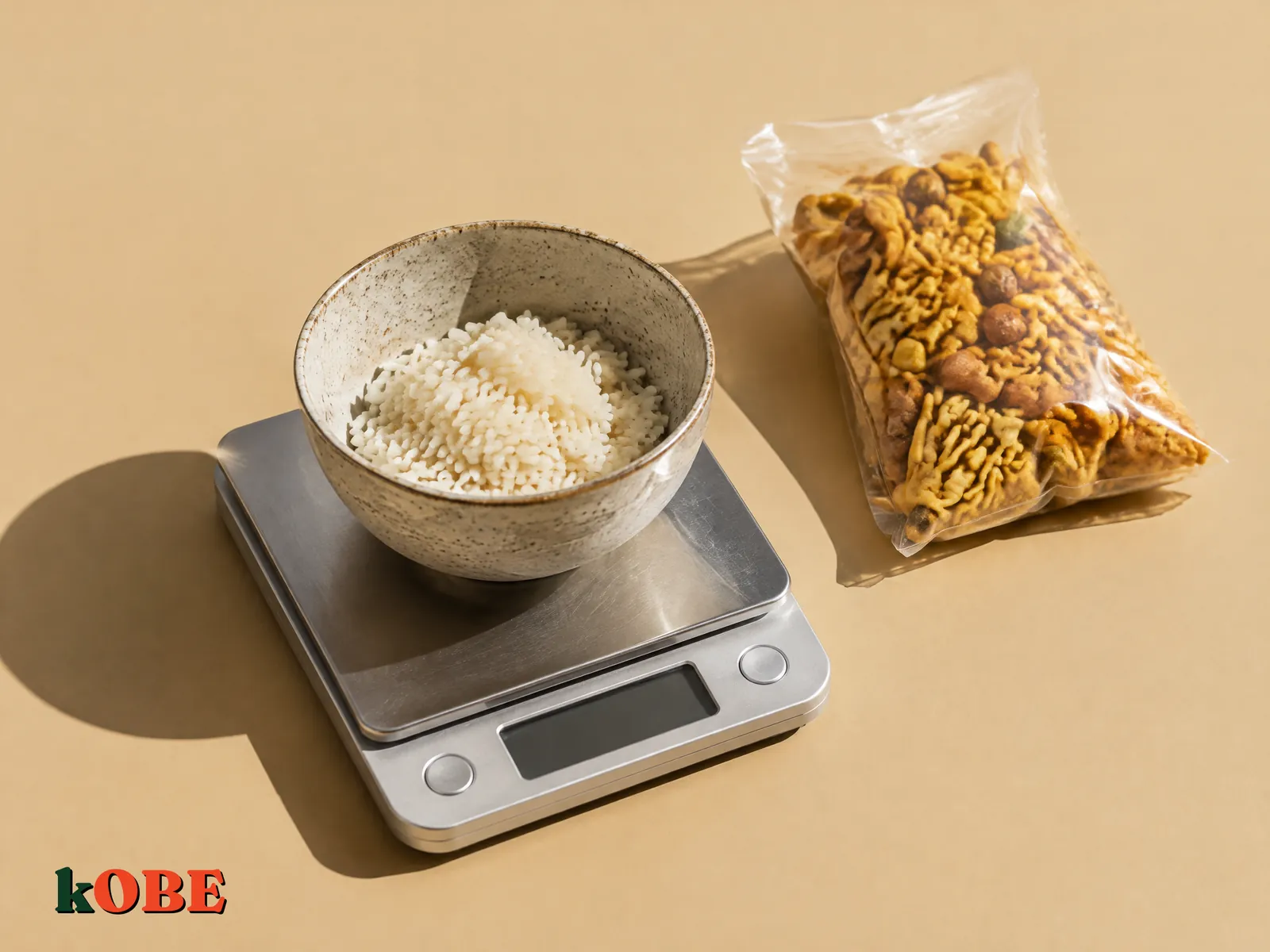
A 60g bag of potato chips. The back says: "1 serving: 25g. Servings per pack: about 2.4".
Two point four. Ask around whether anyone opens a bag of chips, eats exactly 25g, then clips the bag shut. That is probably rare.
Serving sizes sound dull, but they are one of the easiest places to misread a label. Once you get them, you will also see why we chose to list every number per 100g.
In this article
Who decides the serving size?
Serving size is the amount the manufacturer chooses as the reference for printing the nutrition numbers.
In some countries, like the United States, the regulator has a table of reference amounts for each type of food. Serving sizes have to follow it. In many other places, manufacturers have more freedom to choose.
The result: two products of the same kind can use two different serving sizes.
| Cookie A | Cookie B | |
|---|---|---|
| Serving size on the label | 20g | 35g |
| Calories per serving | 95 kcal | 160 kcal |
At a quick glance, cookie A looks much "lighter". But bring both to the same 100g, and cookie A is about 475 kcal while cookie B is about 457 kcal. Cookie A is actually slightly higher.
A small serving does not make the food lighter. It only makes the number printed on the label smaller.
"Per 100g" is like the price per kilo at the market
When you buy meat at the market, nobody asks "how much for one piece?". Pieces come big and small, so how would you compare? People ask the price per kilo.
The per 100g column (or per 100ml for drinks) works the same way. It is the common ruler.
Want to know which yogurt has less sugar? Put the two 100g columns side by side. Want to know which sauce has more fat? Same two 100g columns. No conversions, no multiplying or dividing.
The nutrition labeling guidelines of Codex Alimentarius, the international food standards body, also use 100g or 100ml as the basic way of declaring numbers. A serving can be listed too, alongside.
But 100g of soup is not like 100g of braised meat
Here is the fun part. It is 100g either way, but every dish is "dense" in its own way.
Dishes with lots of liquid have low per-100g numbers, because water has no calories. Braised, fried and dry dishes have high per-100g numbers, because much of the water has cooked off.
Examples from kOBE's recipe collection:
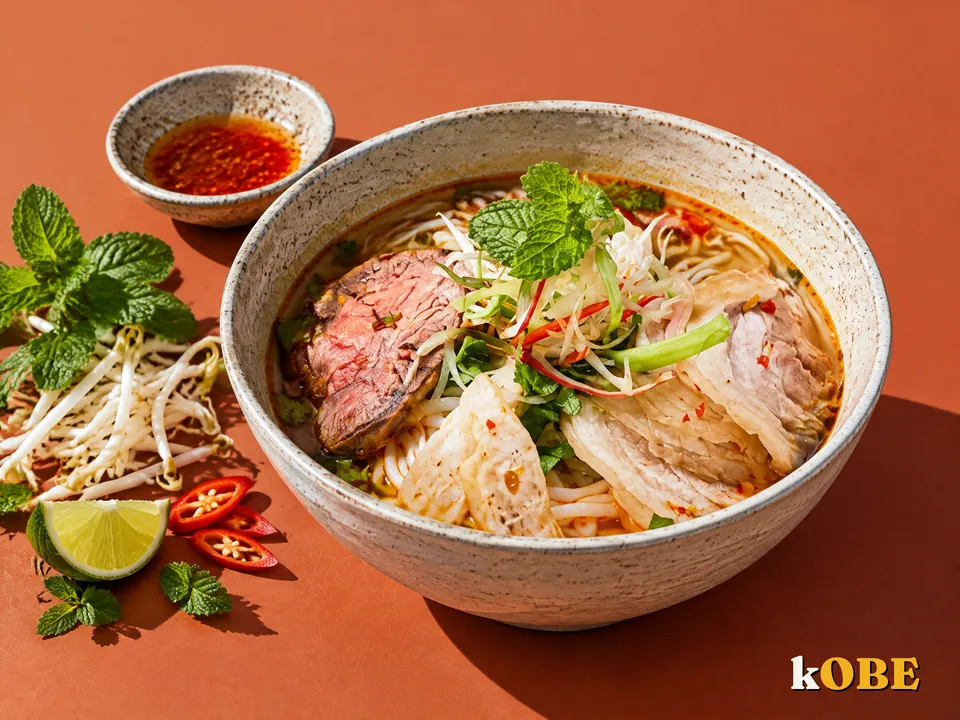
- Bún bò Huế (spicy Huế beef noodle soup): about 65 kcal per 100g, because most of the bowl is broth.
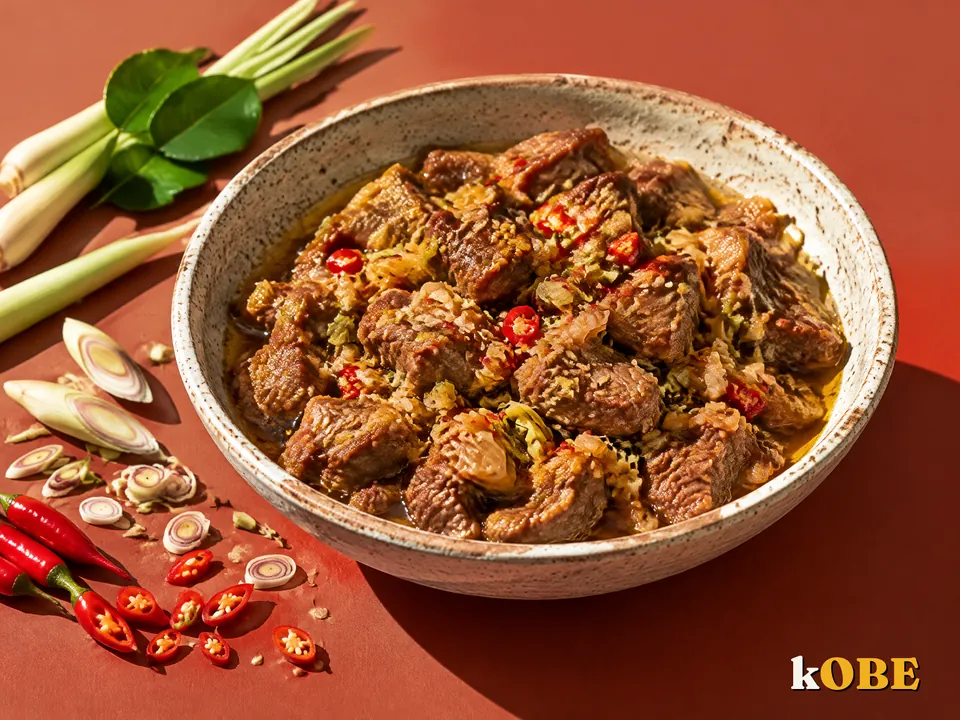
- Bò kho sả ớt (lemongrass chili beef stew): about 228 kcal per 100g, because the sauce has reduced and the meat is concentrated.
See the number 65 and do not rush to think the bún bò is "feather-light". A full bowl can weigh several hundred grams, which still adds up to a properly filling meal.
So "per 100g" is for comparing. To know how much you actually eat, you need one more step.
The 5-second multiplication
The formula is just one line:
Per-100g number × (grams you eat ÷ 100)
Say a dish lists 150 kcal and 20g protein per 100g. You eat 250g:
- Calories: 150 × 2.5 = 375 kcal
- Protein: 20 × 2.5 = 50g
A few tips to make the math easier:
- Check the grams printed on the pack. Packaged food almost always shows net weight.
- A small kitchen scale trains your eye. Weigh things a few times and later you can guess by looking.
- Estimate what you cannot weigh. A medium bowl of rice is about 150g. A palm-sized piece of meat is about 100g.
Also remember the rule from the article on how much protein is in 100g of chicken breast: weigh raw, use raw numbers; weigh cooked, use cooked numbers.
So is serving size useless?
No. A serving size is helpful when it matches how you really eat.
A 180ml carton of milk lists numbers for the whole carton, and you drink the whole carton. Great, no multiplying. A pack of instant noodles lists numbers for one pack, and you eat one pack. Handy too.
Serving sizes only become a trap when they are smaller than what you usually eat. Simple tip: whenever you see "serving", glance at the next line, "servings per pack". If that number is more than 1, ask yourself whether you will finish the pack.
Inside the kOBE kitchen
We chose to list numbers per 100g for everything, because it lets you compare fairly.
In the 1,480 home recipes on our recipe page, every dish lists calories, protein, fat and sugar per 100g. So you can put a soup next to a braise, a savory dish next to a sweet one, and read them with the same ruler.
The ready-cooked ingredients are the same. Take White Rice: 130 kcal and 28g carbs per 100g. The pack weighs 200g, so the whole pack is about 260 kcal and 56g carbs. For Sous Vide Chicken Breast, a 100g pack is 31g protein, and a 120g pack is about 37g. See the ready-cooked ingredients.
Frequently asked questions
Why are drinks listed per 100ml rather than 100g?
If a label only has a serving column, how do I compare?
Are dishes with lots of liquid always low in calories?
Keep reading
Sources
- Codex Alimentarius (FAO/WHO). Guidelines on Nutrition Labelling (CXG 2-1985).
- U.S. FDA. 21 CFR 101.12, Reference amounts customarily consumed per eating occasion.
- U.S. FDA. How to Understand and Use the Nutrition Facts Label.
- Further reading: Culinary Nutrition, chapter 1; Understanding Nutrition 16th ed., section 2.3.