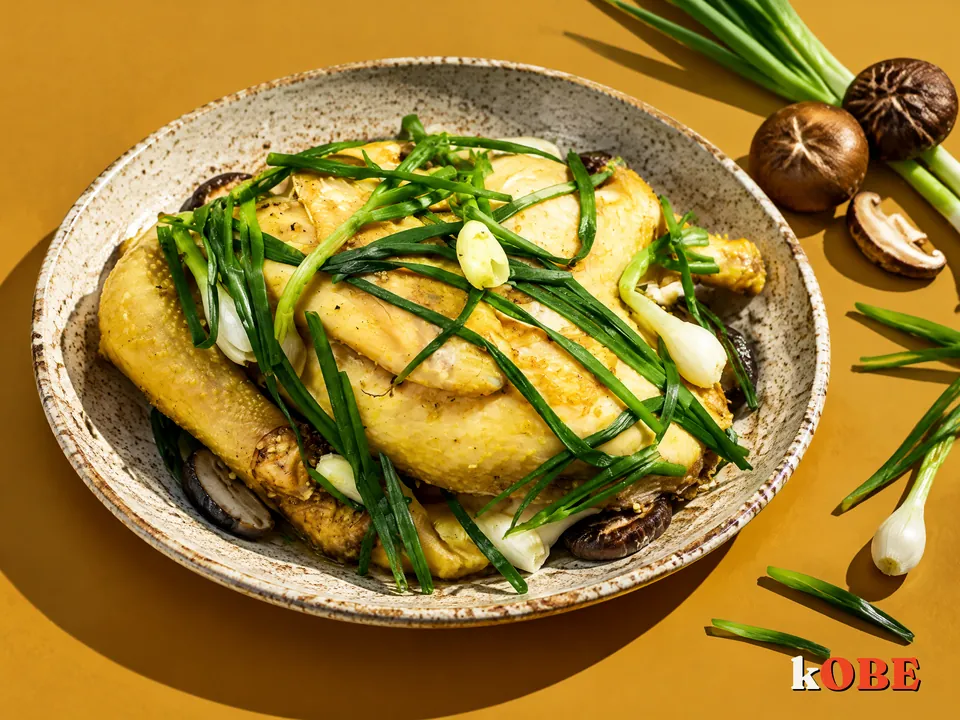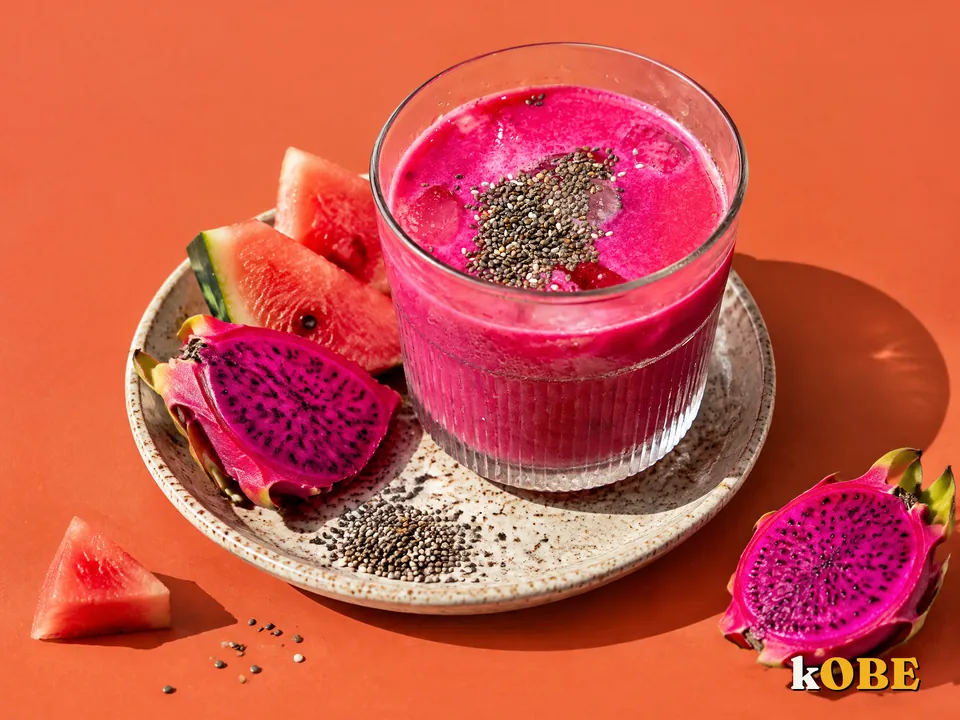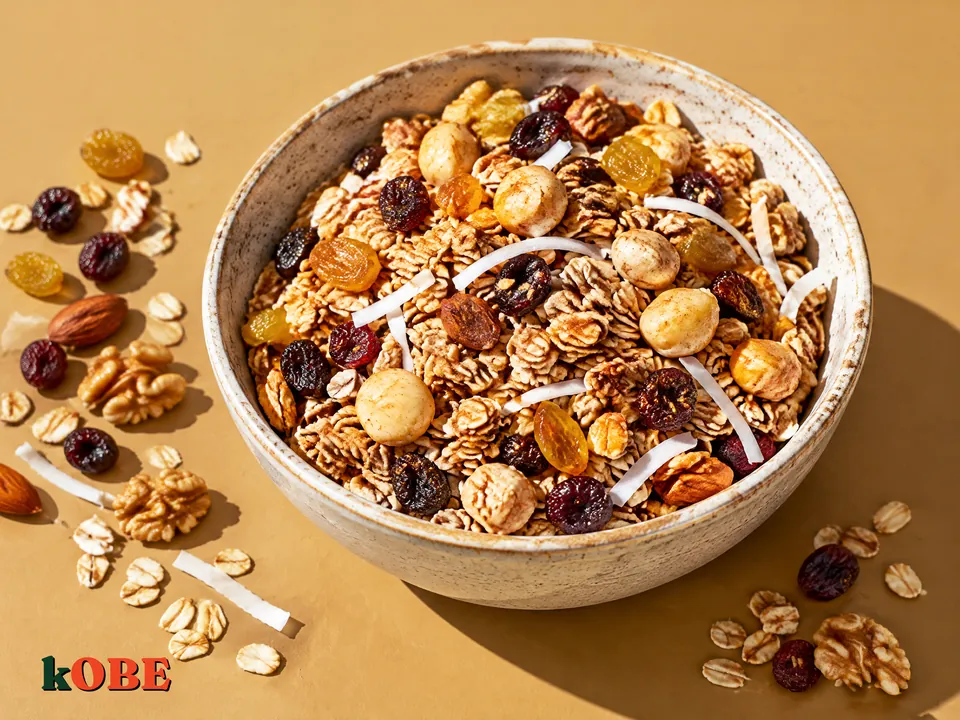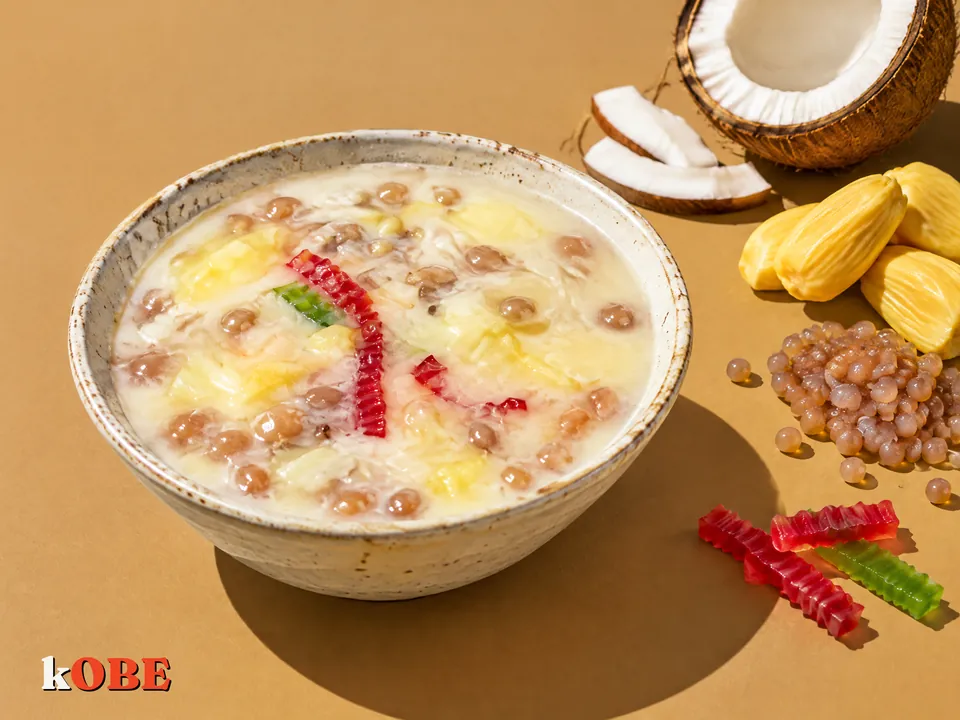
Throughout this series, we have read the numbers table together: calories, macros, sugar, sodium, fiber. The numbers table answers "how much" very well.
But there is one question the numbers cannot answer: where does this dish's sweetness come from?
Two dishes that both show 5g of sugar can be very different. One is sweet from a ripe mango. The other is sweet from honey. That is why every kOBE dish carries a small extra label. One glance tells you what makes it sweet. This article shows you how to read that label.
In this article
One thing that never changes, under every label
Before we get to the labels, there is one thing we keep in every kOBE dish: we never add refined sugar ourselves.
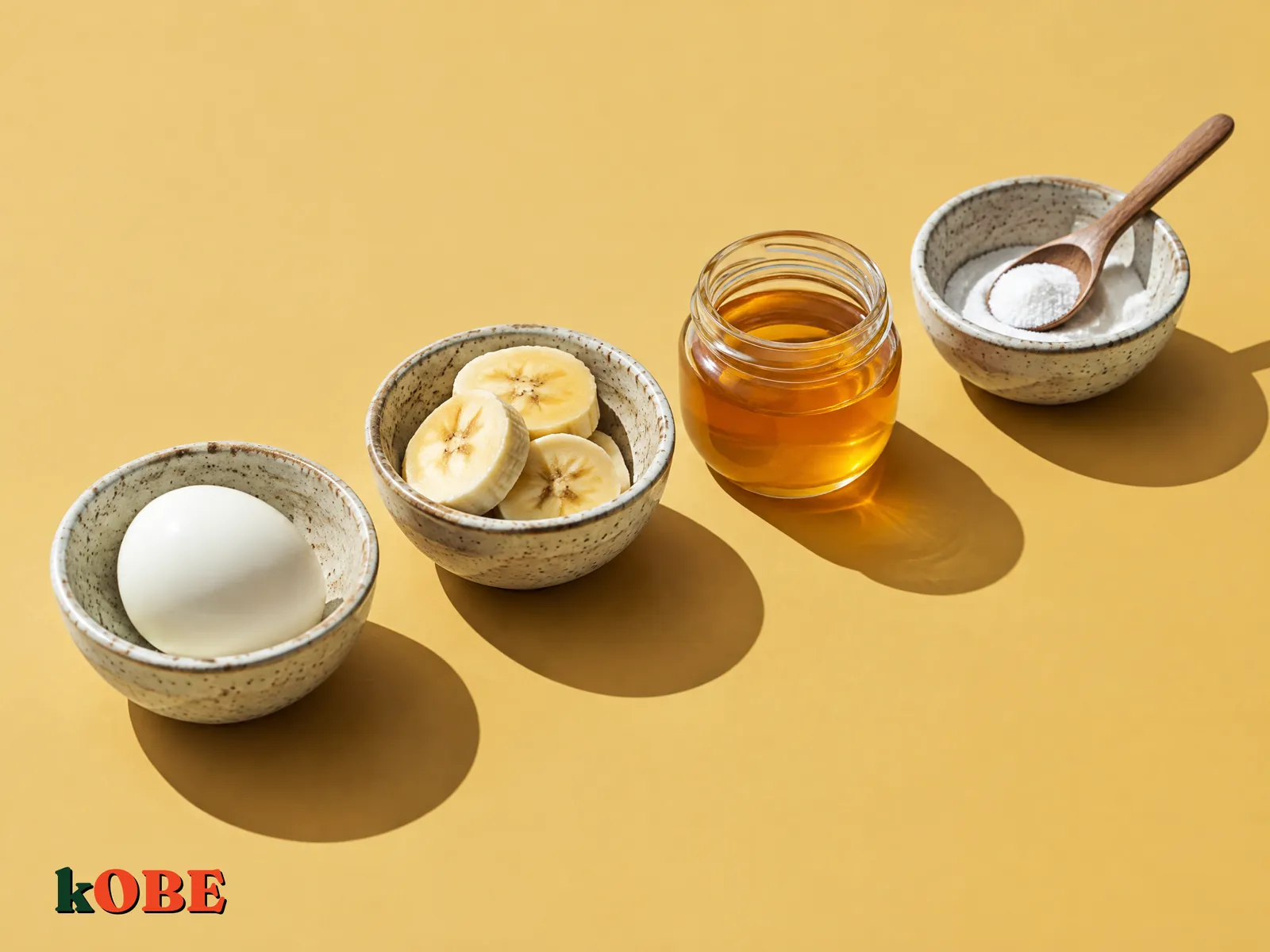
Sweetness comes from just three places:
- Real whole ingredients: fruit, vegetables, grains.
- Natural nectars: honey, coconut nectar, maple.
- No-sugar sweeteners: monk fruit, stevia and a few friends.
There is one more case. Some store-bought ingredients may already contain a little sugar. When that happens, we write down exactly what percentage, no hiding.
Four labels side by side
The four labels sit side by side, with no good-or-bad ranking. No label is "better" than another. You look at the label to pick the group that fits you at that moment.
| Label | Where the sweetness is from | Good when |
|---|---|---|
| Zero Sugar | Nothing added for sweetness. Usually savory, like chicken breast or eggs. | You want a purely savory meal. |
| Whole | Sweetness sits inside whole ingredients: fruit, vegetables, grains, fiber still there. | You want to eat as naturally as possible. |
| Nectar | Sweetness from concentrated natural nectars: honey, coconut nectar, maple. | You like a clearer natural sweetness. |
| Monk Fruit | Sweetness from no-sugar sweeteners like monk fruit and stevia. Almost no effect on blood sugar. | You are watching calories or want to go light on sugar. |
A few small but useful things:
- A dish can carry more than one label at once. If the sweetness comes from several sources, there can be more than one label.
- Each label comes in two versions: a color one and a black-and-white one. Both mean the same thing; only the way they are printed on the packaging differs.
The "bold corner": a note, not a fifth label
Some store-bought savory sauces, like oyster sauce or soy sauce, already carry a little sugar from the manufacturer.
When a dish contains some, we fill one corner of the label block solid and write the exact percentage. The bold corner is not a label of its own. It is just a note for you.
This is also why reading the ingredient list matters, as the article on ingredient order on labels explained. Sugar can slip into a dish through ingredients that sound entirely savory.
The no-sugar group has four members
For dishes in the no-sugar group, we use only the four sweeteners below. Each one has its own job:
- Erythritol, the main sweet base. Almost no calories, no effect on blood sugar. Leaves a slight cool feel on the tongue.
- Allulose, for better-looking bakes. Helps pastries turn a natural golden color in the oven, and softens erythritol's cool feel.
- Monk fruit, to lift the sweetness. Very intensely sweet, so a tiny bit brings total sweetness up to the level of regular sugar.
- Stevia, extracted from the leaf. Strongly sweet. We use the pure kind, nothing cut in.
The label says "where from", the numbers say "how much"
Labels and numbers do not replace each other. They complete each other.
- The label tells you the source of sweetness. It does not say whether a dish is high or low in calories.
- The per-100g numbers table tells you calories, protein, fat and sugar. It does not say where the sugar comes from.
Read both and you get the full picture. One example: a dish with the Nectar label is sweet from honey or coconut nectar. To your body, honey and coconut nectar are still sugar. So with a Nectar dish, glance at the sugar per 100g line too, to see how sweet the dish really is.
Or a dish with the Whole label: sweet from fruit with its fiber intact. Fiber makes the sweetness arrive more slowly than juice does. But fruit still has natural sugar, and the numbers table will show you that figure.
How to glance at the numbers table in one minute is in the pillar article of this series: reading a nutrition label in one minute.
Inside the kOBE kitchen
You can read the full explanation of the labels on the kOBE standard page, then try spotting the labels on the dishes in our frozen savory kitchen.
If you want to make no-sugar-group sweets at home, kOBE Signature Monk Fruit Blend is a five-ingredient blend: erythritol, allulose, monk fruit, stevia and inulin. Inulin is a type of fiber and does not sweeten. The blend replaces sugar 1:1, with no bitter aftertaste. Bakes made with it turn a paler golden color than with cane sugar. See kOBE Signature Monk Fruit Blend.
Frequently asked questions
Which label is better than the others?
Can one dish have two labels?
What does the bold corner on a label mean?
Keep reading
Sources
- kOBE Food Lab. The kOBE standard (kobelab.vn/en/standard).
- WHO (2015). Guideline: Sugars intake for adults and children (free sugars include honey and fruit juices).
- Harvard T.H. Chan School of Public Health, The Nutrition Source. Added Sugar.
- Further reading: Understanding Nutrition 16th ed., chapter 4.