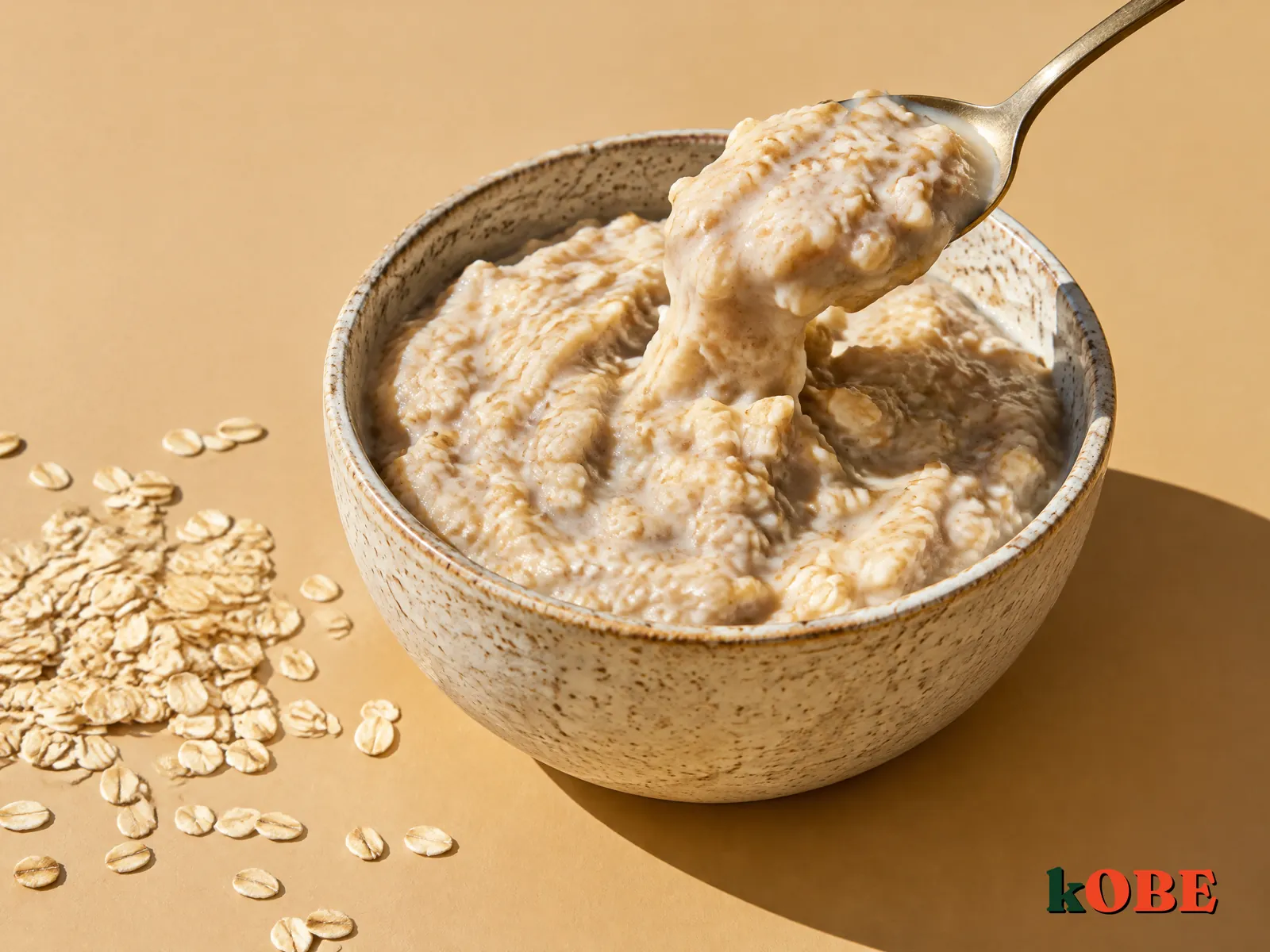
You cook a pot of oatmeal in the morning. When you take it off the heat, it is nicely creamy. Forget it on the table for half an hour, come back, and the whole pot has set thick, clinging to the spoon like glue.
The culprit behind this has a rather "scientific" name: beta-glucan.
This same substance is the reason Europe's food safety authority recognizes a specific benefit of oats. Oats are one of only a few foods to earn that.
In this article
Who is beta-glucan?
Beta-glucan is a type of soluble fiber. It is made of long chains of glucose, but the links are joined in a way that human digestive enzymes cannot cut.
So even though it is built from glucose, beta-glucan does not turn into sugar in your blood. It passes through the small intestine almost intact.
It is abundant in two grains: oats and barley. In 100g of rolled oats, beta-glucan usually makes up about 3 to 5g, depending on the variety and how they are processed.
Mushrooms and baker's yeast also contain beta-glucan, but with a different structure, and it is not the kind this article is about.
Add water, and it turns into gel
The most important trait of oat beta-glucan: when it meets water, it soaks it up and forms a thick, viscous liquid. That is exactly why the pot of oatmeal sets.
Inside your belly, something similar happens. The food mixture in your gut becomes thicker. And that leads to two effects that have been studied fairly thoroughly:
- Sugar enters the blood more slowly. Glucose from your meal has to "wade" through the gel, so blood sugar after eating rises more gently.
- Bile acids get held back. Your liver uses cholesterol to make bile acids, the fluid that helps digest fat. The gel holds some bile acids back and carries them out with your stool. The liver then has to take more cholesterol from the blood to make new bile.
The second mechanism is the reason beta-glucan gets talked about the most.
What EFSA has recognized
The European Food Safety Authority (EFSA) is very strict about health claims. Most applications are rejected.
But beta-glucan from oats and barley was accepted, for two statements:
- About 3g of beta-glucan per day contributes to maintaining normal blood cholesterol levels.
- Beta-glucan eaten with a starchy meal helps blood sugar rise less after eating, when the amount is large enough compared with the starch in the meal.
These are things science is fairly sure about. Broader marketing lines like "oats flush out toxins" or "oats burn fat" are not on this list.
How many oats make 3g of beta-glucan?
If rolled oats have about 4g of beta-glucan per 100g, then 3g equals:
| Food | Amount for about 3g of beta-glucan |
|---|---|
| Dry rolled oats | about 75g, roughly one heaping rice bowl |
| Cooked oatmeal | about two bowls |
That sounds like a lot for one meal. But you do not have to eat it all at once. Half at breakfast, half in a cake or another dish during the day works too.
A fun detail: processing affects beta-glucan. The longer the beta-glucan chains, the thicker the gel. Thick rolled oats, cooked just until done, usually keep their long chains better than finely ground instant oats. Long baking or long freezing can also shorten the chains somewhat.
How much beta-glucan is in a glass of oat milk?
This is a question we get a lot, and we want to answer it honestly.
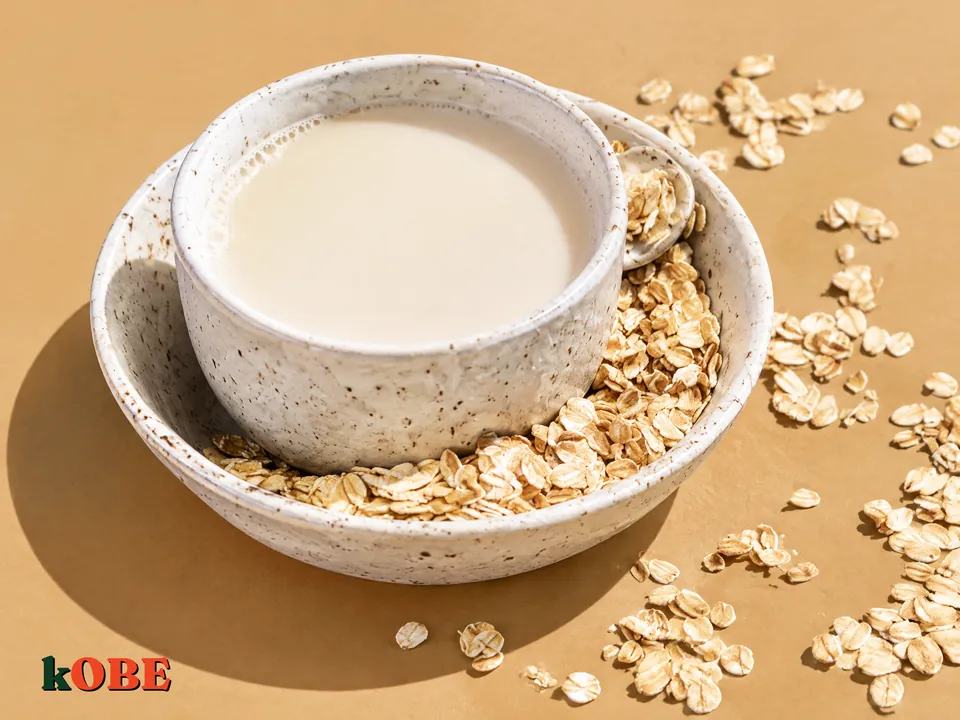
Oat milk is made by blending oats with water and then straining out the pulp. Some of the beta-glucan dissolves into the milk, but some stays behind in the pulp. The milk is also diluted with plenty of water.
So a glass of oat milk usually contains much less beta-glucan than a bowl of oatmeal. The exact amount varies with each maker's recipe.
Oat milk is still a pleasant, easy-on-the-stomach drink. But if you want beta-glucan, eat oats in whole form: oatmeal, overnight oats, or mixed into baking. To learn more, read how oat milk is made and what is in it.
Inside the kOBE kitchen
kOBE Oat Milk is cooked fresh in small batches, with no added refined sugar. Every 100ml has 34 kcal, 0.6g protein, 4.5g carbs and 1.5g fat.
We have not published the beta-glucan content of our milk, so we will not promise any number. Think of oat milk as a light drink, and leave the beta-glucan job to a bowl of oats.
A nice combination: cook your oatmeal with half water and half oat milk. You get both the thickness of whole oats and the gentle, creamy aroma of the milk. kOBE Oat Milk is on our Ingredients page.
Frequently asked questions
Do oats contain gluten?
Do instant oats still give you beta-glucan?
Will eating oats every day make me bloated?
Keep reading
Sources
- EFSA NDA Panel (2010). Scientific Opinion on the substantiation of a health claim related to oat beta-glucan and lowering blood cholesterol and reduced risk of (coronary) heart disease. EFSA Journal 8(12):1885.
- EFSA NDA Panel (2011). Scientific Opinion on the substantiation of health claims related to beta-glucans from oats and barley. EFSA Journal 9(6):2207.
- Whitehead A. et al. (2014). Cholesterol-lowering effects of oat β-glucan: a meta-analysis of randomized controlled trials. American Journal of Clinical Nutrition 100(6):1413 to 1421.
- USDA FoodData Central: Oats (rolled oats).
- Further reading: Understanding Nutrition 16th ed., chapter 4.