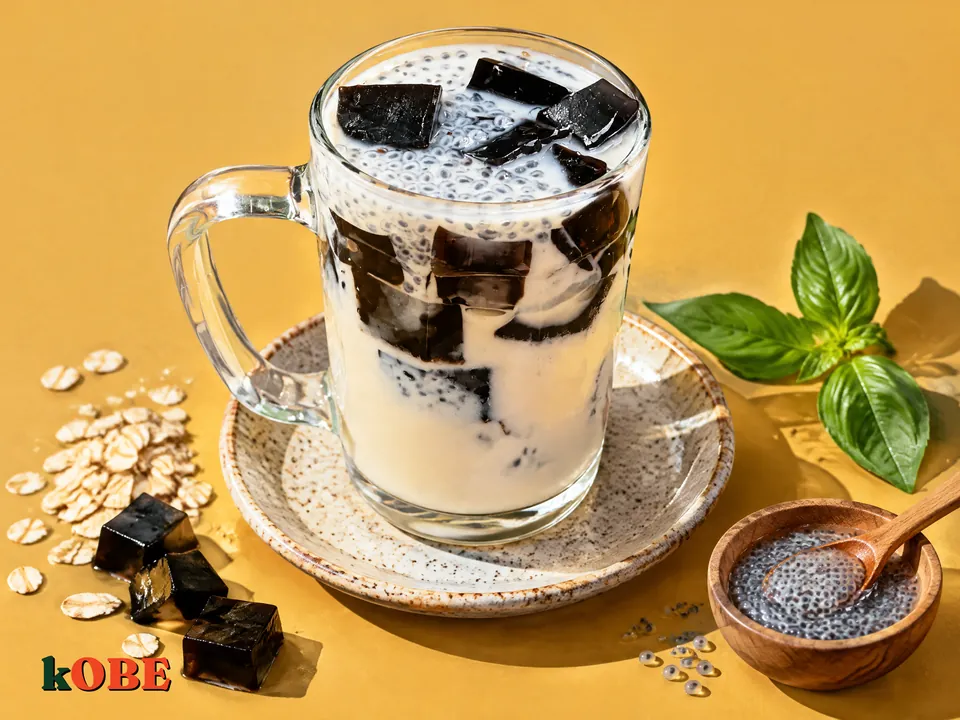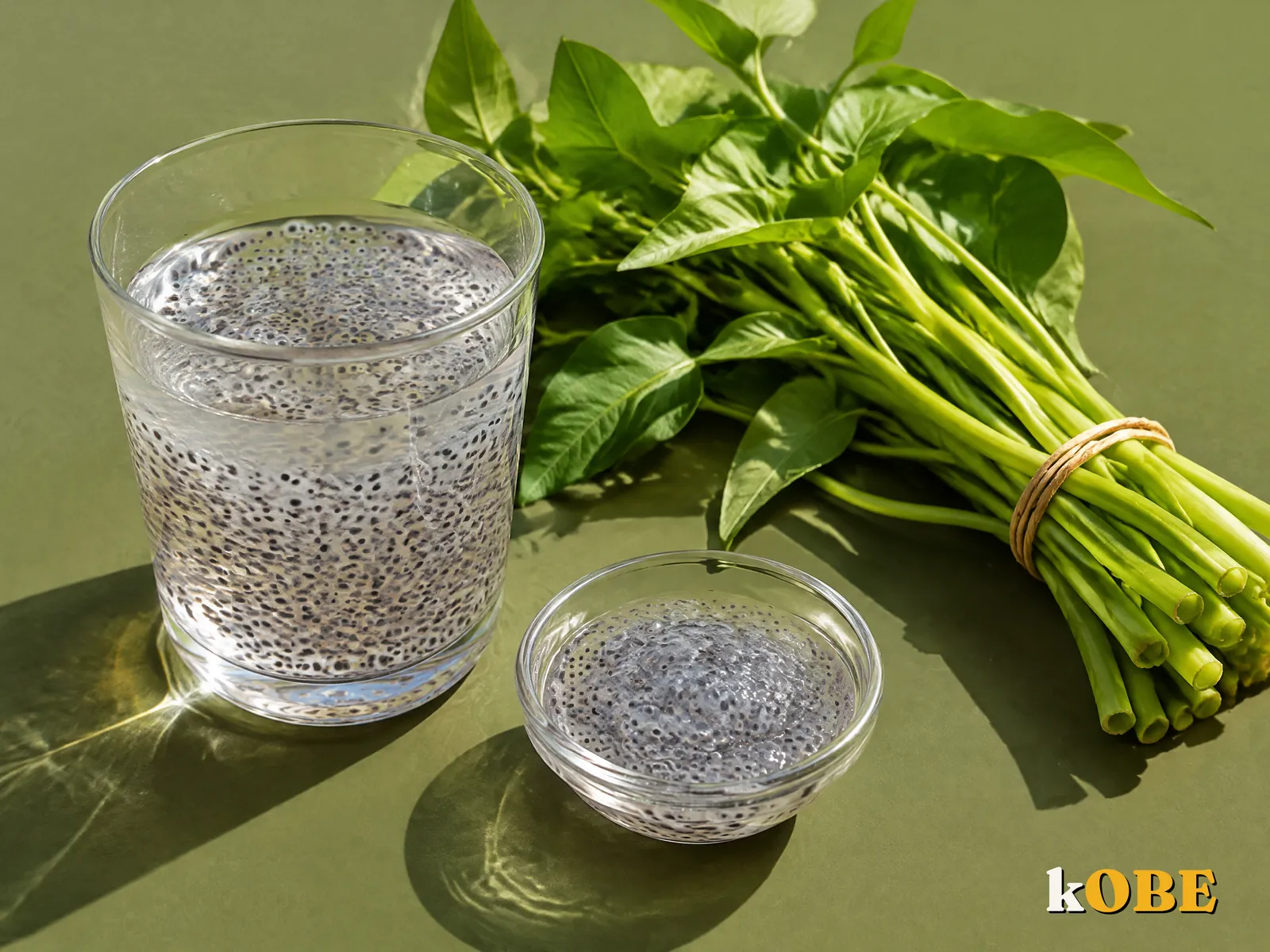
Drop a spoonful of hạt é (Thai basil seeds) into a glass of water. Wait ten minutes. Every tiny black seed puts on a clear, slippery coat several times its own size.
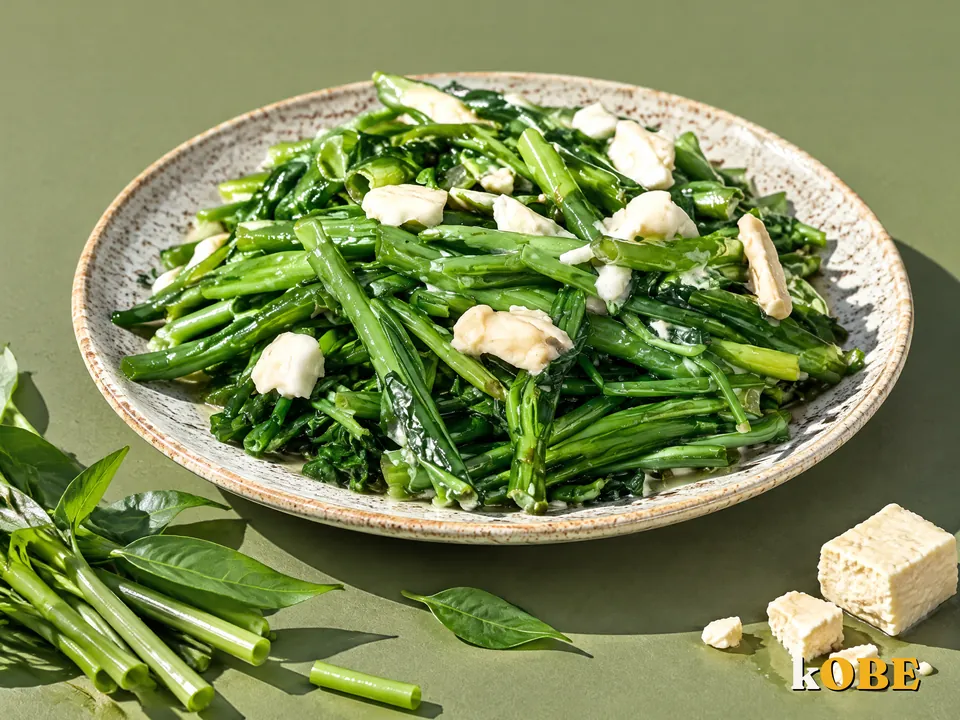
Now drop a stem of rau muống (morning glory) into another glass. Wait as long as you like. It is still a stem of rau muống.
Both are fiber. But they belong to two different "teams", and they do two different jobs inside you.
In this article
Team one: soaks up water, turns into gel
The slimy coat around a basil seed is soluble fiber. "Soluble" here does not mean it vanishes like sugar in water. It means it pulls in water, swells and forms something thick and gel-like.
You meet this team in lots of familiar places:
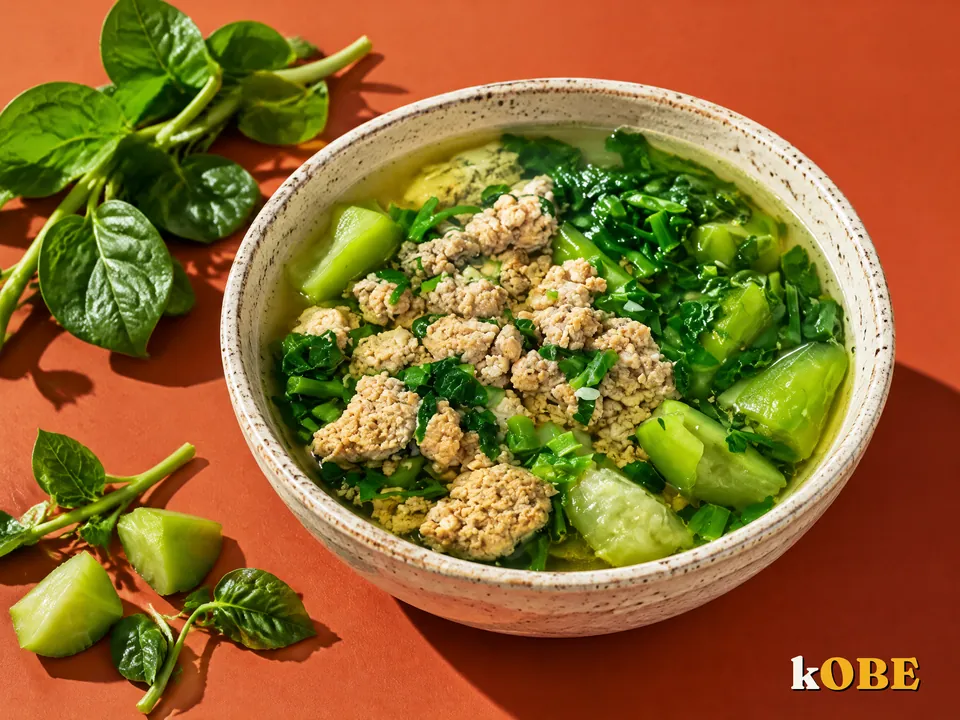
- The slime in okra and mồng tơi (Malabar spinach). That is soluble fiber.
- Pectin in guava, apples and orange peel. This is what makes fruit jam set.
- Beta-glucan in oats. The reason cooled oatmeal turns thick and stiff.
- The fiber in beans, such as chickpeas, black beans and mung beans.
Once it reaches the stomach and small intestine, this gel makes food thicker and slower moving. So the sugar from your meal seeps into the blood at a more relaxed pace, and you feel full a little longer.
Many soluble fibers are also a favorite snack of the bacteria in your large intestine. They ferment easily and produce short-chain fatty acids that feed the gut lining. We tell that story in detail in our pillar article on the microbiome.
Team two: keeps its shape, works like a broom
Morning glory stems, bean skins and the bran of brown rice are full of insoluble fiber. Their real names are cellulose, hemicellulose and lignin. They sound like chemicals, but they are simply the frame of plant cell walls.
This team does not make gel. It holds its shape, takes on a little water and makes stools bigger and softer.
An easy picture: if soluble fiber is a damp towel that slows everything down, insoluble fiber is a broom that sweeps things along faster. That is why people always say "eat your greens to stay regular".
Where this team hangs out:
- Stems, stalks and older, tougher greens.
- Bean skins, sweet potato skins, apple peel.
- Brown rice bran, whole grain bread.
- Seeds such as sesame and flaxseed.
Good news: every plant has both
This is the point many articles skip. No vegetable contains only one team.
An apple has pectin (soluble) in its flesh and cellulose (insoluble) in its peel. A bean has soluble fiber inside and an insoluble skin outside. The ratio of each team varies from plant to plant.
| Food | Leans toward which team |
|---|---|
| Soaked basil seeds, chia seeds | Soluble (obvious gel) |
| Oats, barley | Soluble (beta-glucan) |
| Okra, Malabar spinach | Soluble (slime) |
| Beans and lentils | Both, fairly balanced |
| Leafy greens, morning glory stems | More insoluble |
| Brown rice bran | More insoluble |
So you do not need to calculate "how many grams of soluble fiber today". Eat a variety of vegetables, beans, grains and fruit, and you naturally get plenty of both.
Scientists are slowly moving away from this split
A fun fact: the "soluble vs insoluble" split was born because it is easy to measure in the lab. It does not capture everything fiber does inside the body.
For example, inulin (found in scallions, garlic and onions) dissolves very well but barely forms a gel. On the other hand, resistant starch in cooled rice does not dissolve, yet bacteria ferment it very well.
So many scientists now prefer to ask two different questions:
- Does it form a gel, does it thicken (viscosity)? Thick types usually help slow sugar absorption and keep you full longer.
- Can bacteria ferment it? Fermentable types feed the microbiome.
Remember these two questions and you will understand why different "fibers" get marketed for completely different jobs.
What do the two teams do for your everyday meals?
To sum up, here is what is fairly well established:
- Gel-forming fiber (such as oat beta-glucan) helps sugar enter the blood more slowly after a meal. Europe's EFSA also recognizes that oat beta-glucan contributes to maintaining normal blood cholesterol levels. See more in beta-glucan in oats.
- Insoluble fiber makes stools bulkier and softer, and keeps you more regular.
- Fermentable fiber is food for the bacteria in your large intestine.
As for claims like "this fiber flushes out toxins", we suggest you skip them. Your liver and kidneys already do that job. Fiber is not a magic broom.
Inside the kOBE kitchen
The Chickpeas on our Ingredients page are cooked through but keep a firm bite, then frozen. Every 100g has 164 kcal, 8.9g protein and 27.4g carbs. Beans like chickpeas are a lovely example of "one food, both fiber teams".
Our Red Brown Rice and Black Brown Rice keep their bran layer, so they carry more insoluble fiber than white rice.
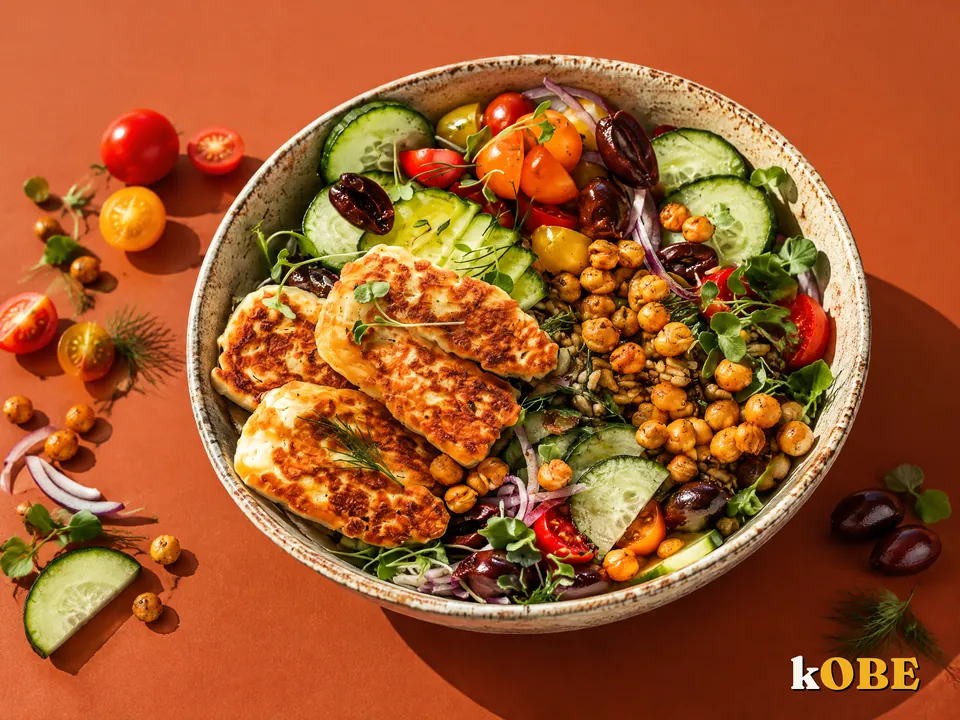
A small trick: add a spoonful of chickpeas to a bowl of brown rice and toss with some vegetables. One bowl, both the gel and the broom. See Chickpeas on our Ingredients page.
Frequently asked questions
Do basil seeds and chia seeds need soaking first?
Does soluble fiber add calories?
Does cooking vegetables destroy the fiber?
Keep reading
Sources
- Institute of Medicine (2005). Dietary Reference Intakes for Energy, Carbohydrate, Fiber, Fat, Fatty Acids, Cholesterol, Protein, and Amino Acids. Chapter on dietary fiber.
- EFSA NDA Panel (2010). Scientific Opinion on Dietary Reference Values for carbohydrates and dietary fibre. EFSA Journal 8(3):1462.
- EFSA NDA Panel (2011). Scientific Opinion on the substantiation of health claims related to beta-glucans from oats and barley. EFSA Journal.
- Harvard T.H. Chan School of Public Health, The Nutrition Source: Fiber.
- Further reading: Understanding Nutrition 16th ed., chapter 4; Culinary Nutrition.