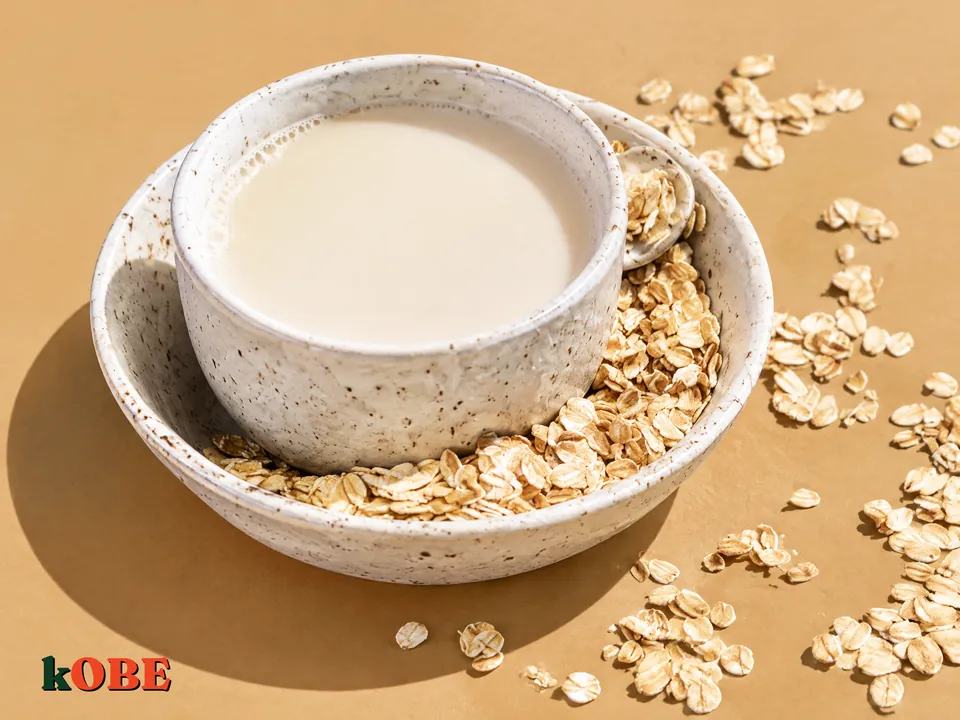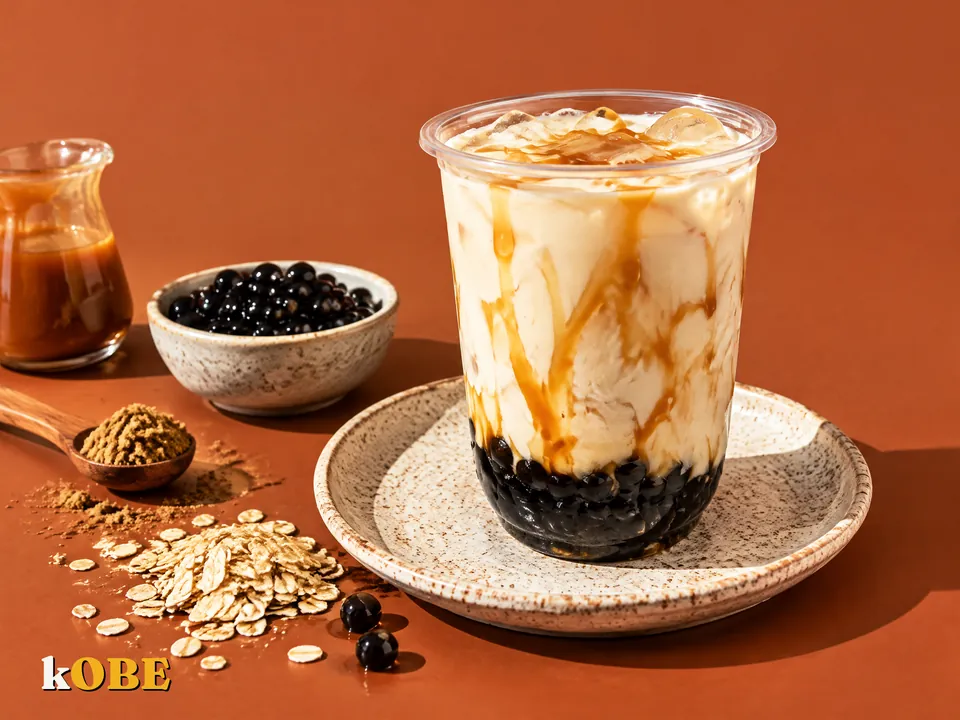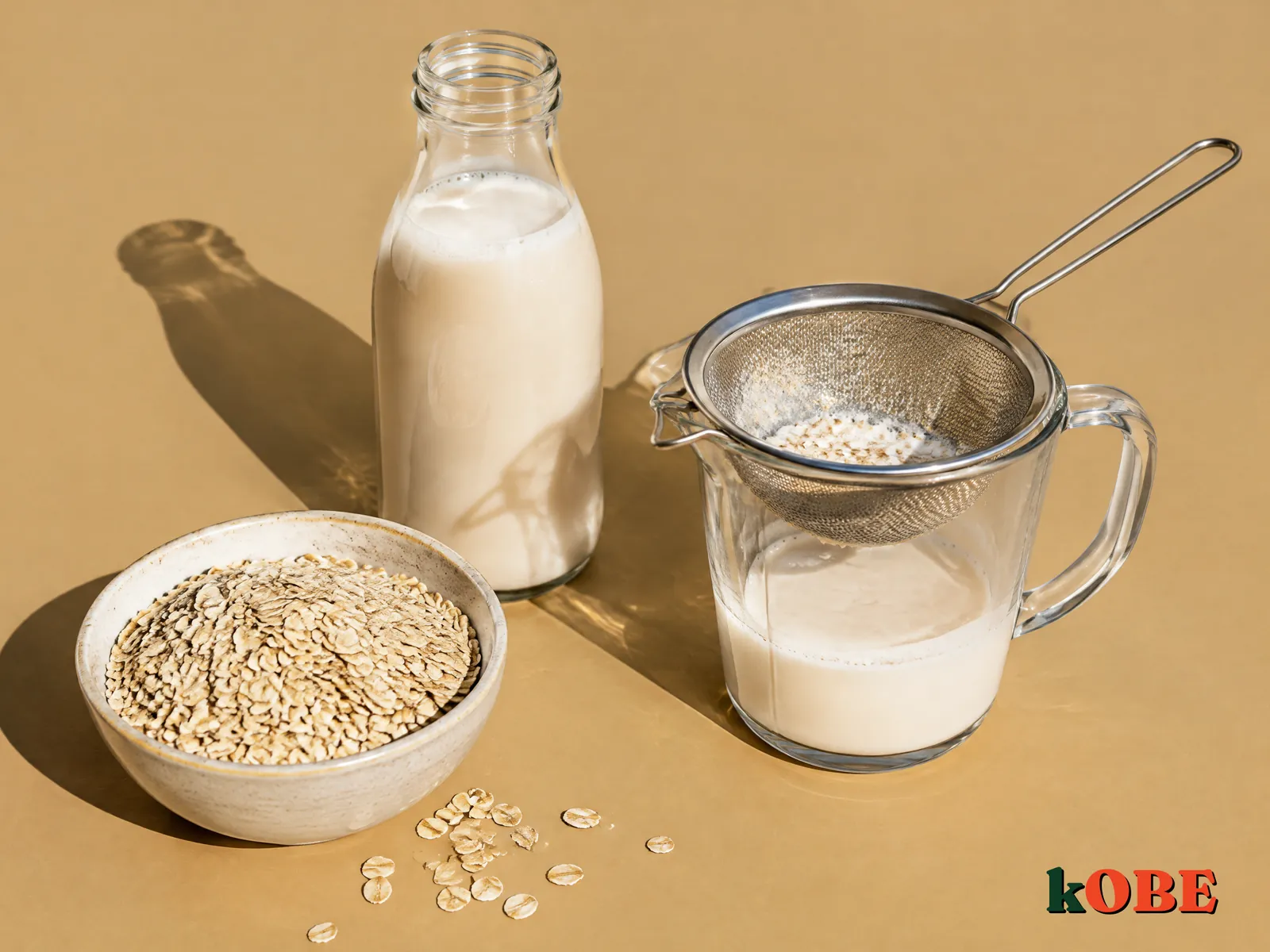
In the last few years, just about every café in Saigon has added a line to the menu: "switch to oat milk". The oat latte, with its silky foam and toasty cereal aroma, has become an everyday order.
But think about it for a second and it's a little strange. Oats are a grain. They don't hold "milk" the way a coconut holds coconut water. So where does that cloudy white drink come from?
The answer is simpler than you'd guess, with one really fun piece of science in the middle.
In this article
From oat grain to glass: four steps
Whether it's made at home or in a factory, oat milk goes through four basic steps:
- Mix oats with water. Usually a lot of water compared with the grain. Oat milk is mostly water.
- Blend it smooth. The grain breaks apart, and starch, fat, protein and some fiber move into the water.
- Strain out the pulp. The coarse fiber stays in the sieve, and the cloudy liquid passes through. That's the milk.
- Finish it. It depends who's making it: a pinch of salt, a little oil for creaminess, then cooking or sterilizing so it keeps longer.
At industrial scale, there's one more important step between steps 2 and 3. That step creates the signature taste of many cartons on the shelf.
The secret of the gentle sweetness: starch gets "snipped"
Oats are packed with starch. Starch is made of long chains of glucose, and on its own it barely tastes sweet.
Many manufacturers add enzymes, tiny biological "scissors" similar to the enzymes in your saliva. The enzymes cut long starch chains into short pieces, including maltose, a double sugar. Maltose tastes lightly sweet.
That's why many cartons say "no added sugar" yet still taste gently sweet. Nobody poured sugar in. But part of the oats' own starch has turned into sugar.
We mention this so you can read labels correctly: "no added sugar" doesn't mean "no sugar". Look at the carb line and the sugar line in the nutrition panel. For more on reading labels, see the "sugar free" and "no added sugar" labels.
Why does homemade oat milk turn slimy?
Anyone who's tried making oat milk at home has probably met this: a thick, gloopy glass, sticky like paste, nothing like the café version.
There are two culprits:
- Starch meets heat. Once the temperature reaches about 60°C or higher, starch granules soak up water and swell, just like tapioca starch does when you cook chè (Vietnamese sweet soup). The warmer the blending water, the thicker the milk.
- Beta-glucan. This is the soluble fiber in oats, and it loves to form a gel. Blend too long or squeeze the pulp too hard and you pull lots of beta-glucan into the milk. We have a whole article on beta-glucan in oats.
Home tips for clean, smooth milk:
- Use cold water, even a few ice cubes.
- Blend briefly, about 20 to 30 seconds is enough.
- Strain through a fine cloth, and let it drip on its own. Don't squeeze hard.
- Don't boil the milk after straining. If you want it hot, just warm it gently.
What's in 100ml of oat milk?
Every brand has its own recipe, so the numbers vary quite a bit. Taking kOBE Oat Milk (no refined sugar added) as the example, each 100ml has:
| Nutrient | Amount | Picture it |
|---|---|---|
| Energy | 34 kcal | About one sixth of a bowl of rice |
| Protein | 0.6g | Very low, cow's milk has about 3g |
| Carbs | 4.5g | Mostly from oat starch and oats' natural sugar |
| Fat | 1.5g | Lightly creamy |
A 250ml glass comes to about 85 kcal and under 2g of protein. Light and easy to drink, but not a protein source.
What about calcium, vitamin D and vitamin B12? Oats don't naturally have much. Many big brands add them. If the label doesn't say fortified, don't assume it replaces cow's milk on that front. The detailed comparison is in oat milk vs cow's milk.
Why does plant milk curdle in coffee?
Pour plant milk into hot coffee and sometimes you see little lumps, as if the milk went off. It didn't.
Coffee is acidic and very hot. Acid plus heat makes the protein and other parts of plant milk clump together. Soy milk does it most often.
"Barista" versions made for cafés are usually adjusted to handle acid and heat, and are a bit richer so they foam nicely. At home, the easy fix is to let the coffee cool a little, or pour the milk first and the coffee second.
Inside the kOBE kitchen
kOBE Oat Milk is cooked fresh in small batches, with no refined sugar added. 34 kcal, 0.6g protein, 4.5g carbs and 1.5g fat per 100ml.
If you like it sweeter, there are two more versions. kOBE Oat Milk, Monk Fruit is sweetened with kOBE Signature Monk Fruit Blend: 36 kcal and 9g carbs per 100ml, still with the natural sugar from oats. kOBE Oat Milk, Coconut Nectar is sweetened with coconut nectar: 53 kcal and 9.3g carbs per 100ml. Coconut nectar is still sugar, so enjoy this one in moderation.
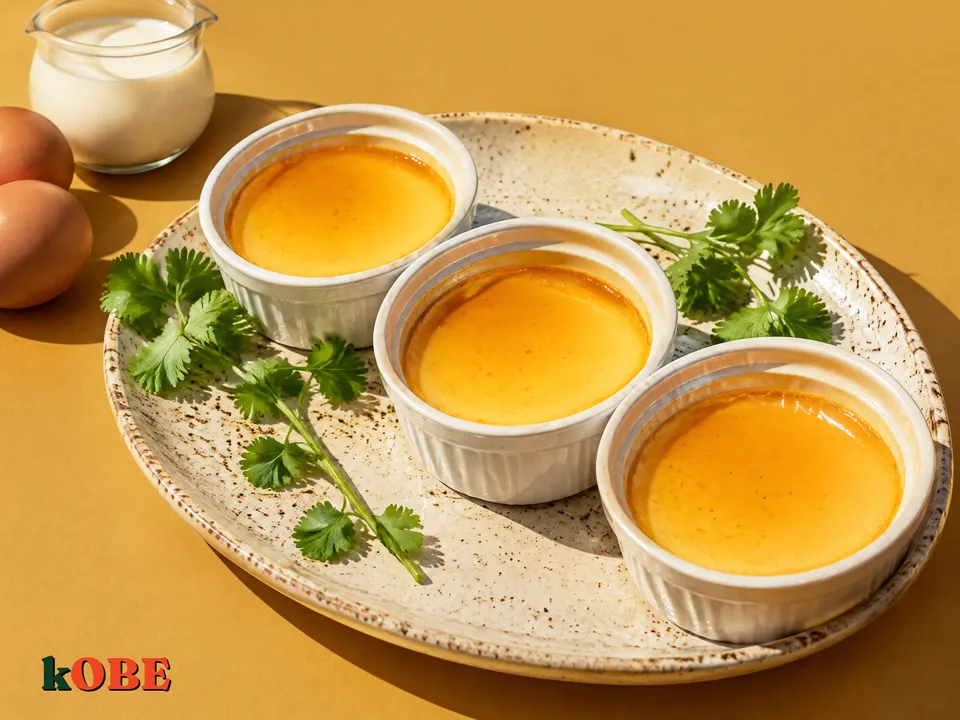
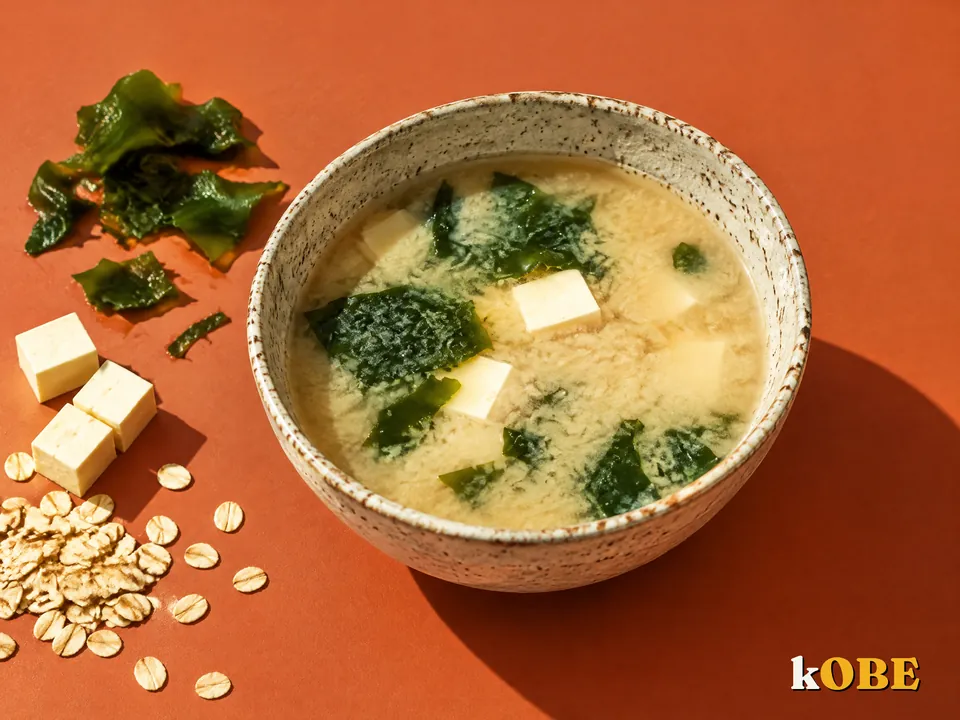
Oat milk is also a familiar ingredient across our recipe collection, from flan and pumpkin soup to curry. See our oat milk on the Ingredients page.
Frequently asked questions
Does oat milk contain gluten?
How long does homemade oat milk keep?
If I can't drink cow's milk, can I switch to oat milk?
Keep reading
Sources
- USDA FoodData Central: oat beverage and whole cow's milk.
- Sethi S., Tyagi S.K., Anurag R.K. (2016). Plant-based milk alternatives an emerging segment of functional beverages: a review. Journal of Food Science and Technology 53(9):3408 to 3423.
- Harvard T.H. Chan School of Public Health, The Nutrition Source: Milk.
- Further reading: Understanding Nutrition 16th ed., chapter 4; Culinary Nutrition.