Data source: USDA FoodData Central, SR Legacy, FDC 169124 (Pineapple, raw, all varieties).
Fun facts
- A pineapple is really many small flowers fused together. Each "eye" on the skin is what is left of one flower.
- Fresh pineapple contains bromelain, an enzyme that breaks down protein. That is why a lot of pineapple makes your tongue sting, and why fresh pineapple stops gelatin jelly from setting.
- 100g of pineapple gives 47.8mg of vitamin C, close to the same weight of orange, with 50 kcal and 9.8g of sugar.
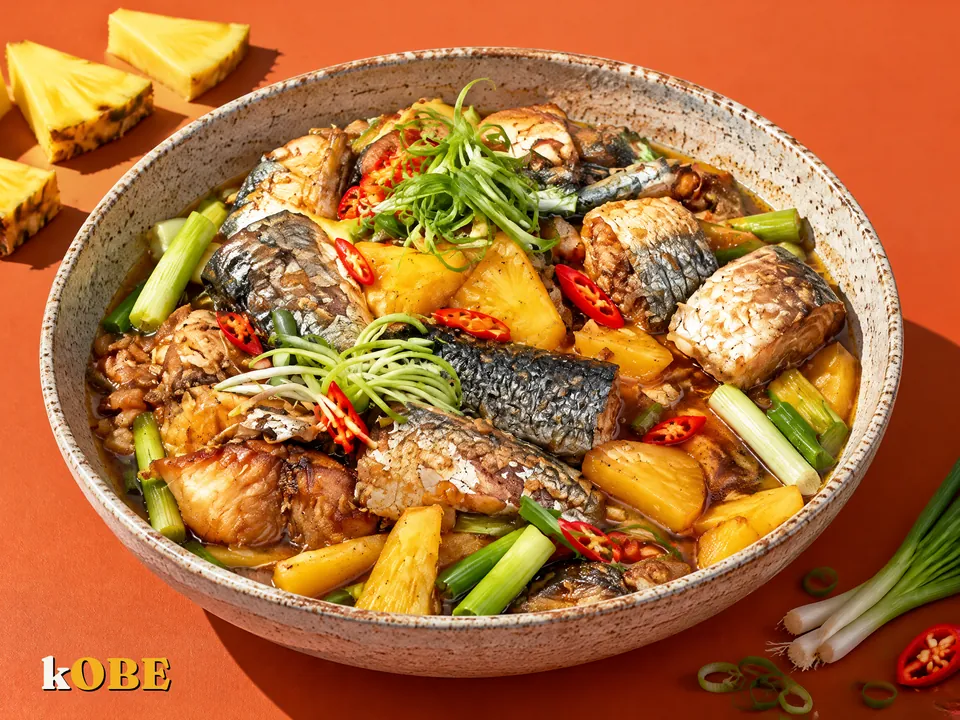
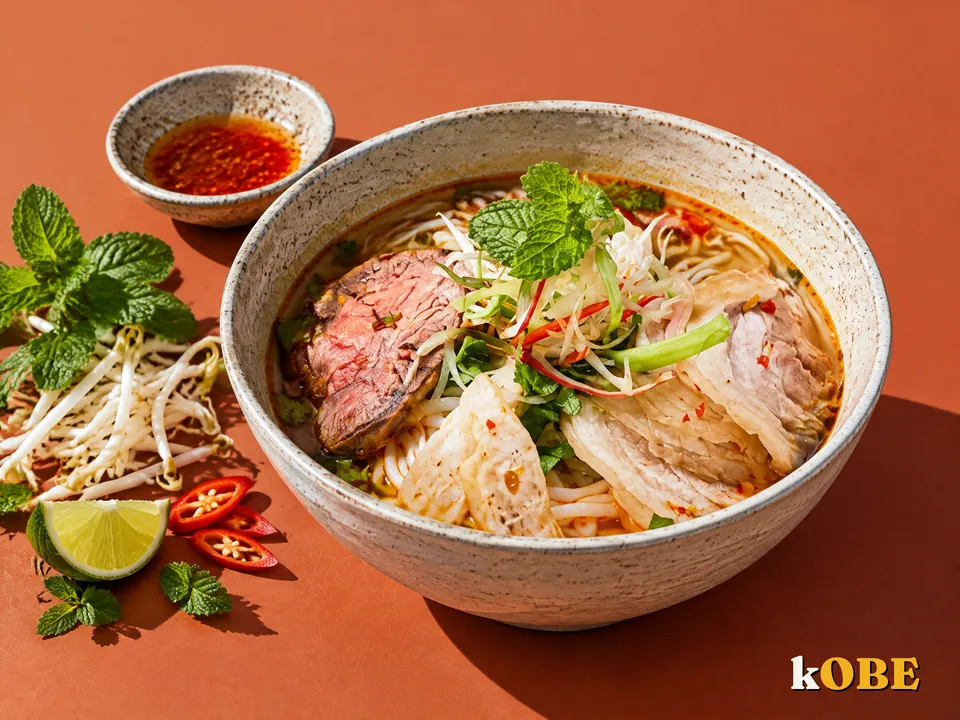
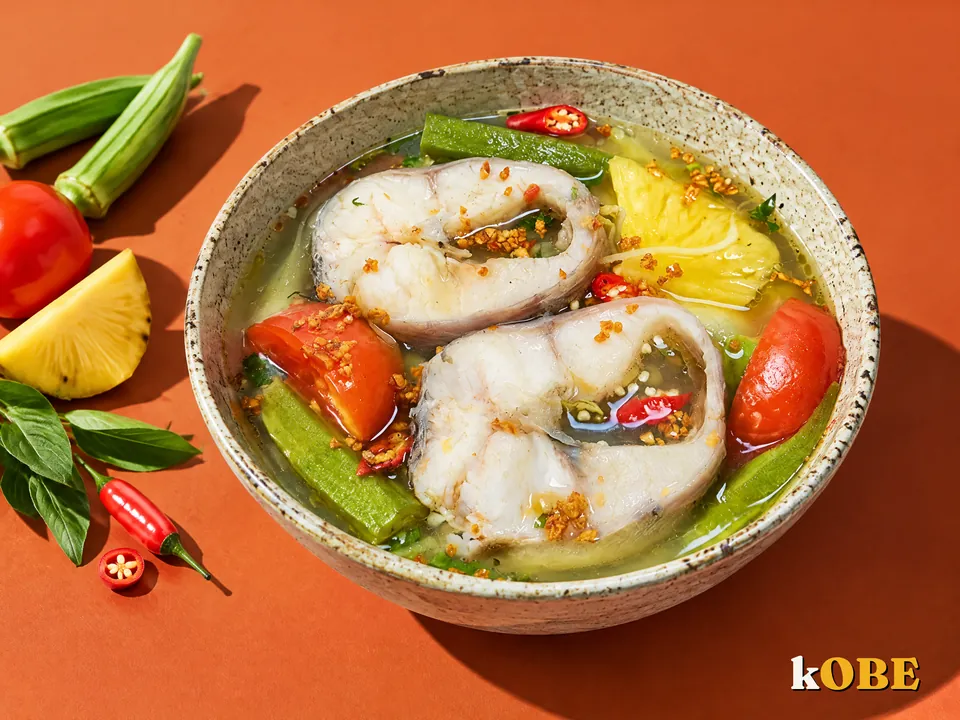
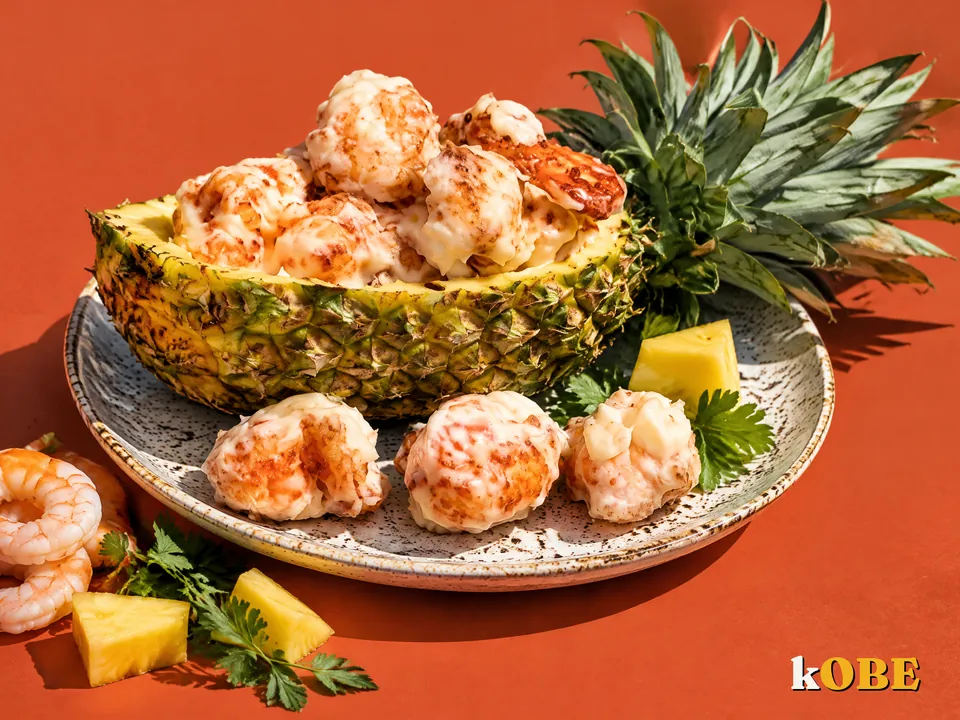
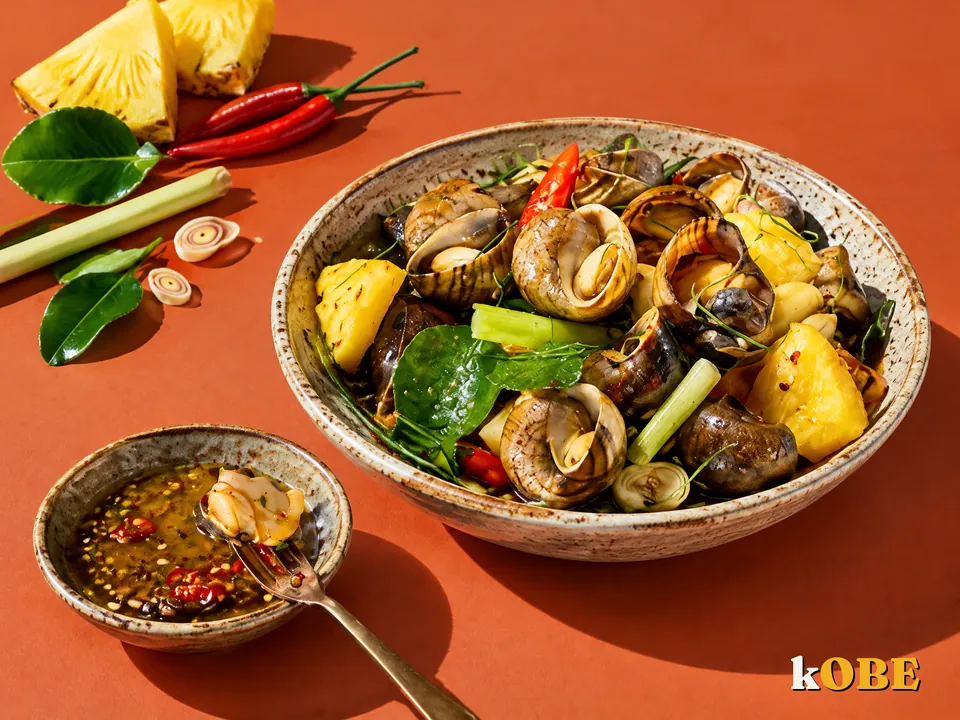
- Pineapple is a Vietnamese kitchen staple: sour soup, fish braised with pineapple, stir-fried pineapple, pineapple dipping sauce. At kOBE it shows up in 126 recipes.
Choosing and storing
Pick one that feels heavy, with taut skin, large even eyes and a sweet smell at the base, not sharp or boozy. Pineapple barely gets sweeter after harvest, so do not buy a green one hoping it will sweeten on the counter. Keep a whole fruit at room temperature for a day or two; once cut, store it in a sealed box in the fridge and eat it within a few days. Pineapple chunks freeze well too.
Cooking it well
To tenderize beef or ribs, marinate with a little blended pineapple for a short time only, because too long turns the meat mushy. Cooking switches bromelain off, so sour soup and stir-fried pineapple will not sting. Heat also takes away some vitamin C, so add pineapple near the end and cook it just until done. More on this in does cooking destroy vitamin C.