As kids, many of us got a glass of fresh orange juice squeezed by Mom on Sunday mornings. As adults, every time we boil greens, someone pipes up: "Boil them too long and all the vitamins are gone."
That warning is half right. Vitamin C really does drop when you cook. But it is not "all gone", and the way you cook decides how much you keep.
One more surprise: if you are hunting for the fruit richest in vitamin C, the orange does not necessarily win.
In this article
Humans are one of the few species that have to "buy in" vitamin C
Most animals make their own vitamin C in the liver. Dogs, cats, cows and pigs all do.
Humans do not. Our distant ancestors could, but a gene needed for the job broke millions of years ago. Monkeys, guinea pigs and some bats are "in the same boat".
So we have to get vitamin C from food every day. It is needed to make collagen, the protein that keeps skin, blood vessels and cartilage strong. It also helps absorb iron from greens and beans, as we explained in the iron article.
WHO and FAO recommend about 45mg of vitamin C a day for adults. It sounds like a number, but pictured in food it is tiny, as you will see just below.
Guava beats orange
Per 100g, here are some familiar fruits and vegetables:
| Food | Vitamin C compared with orange |
|---|---|
| Guava | About 4 times |
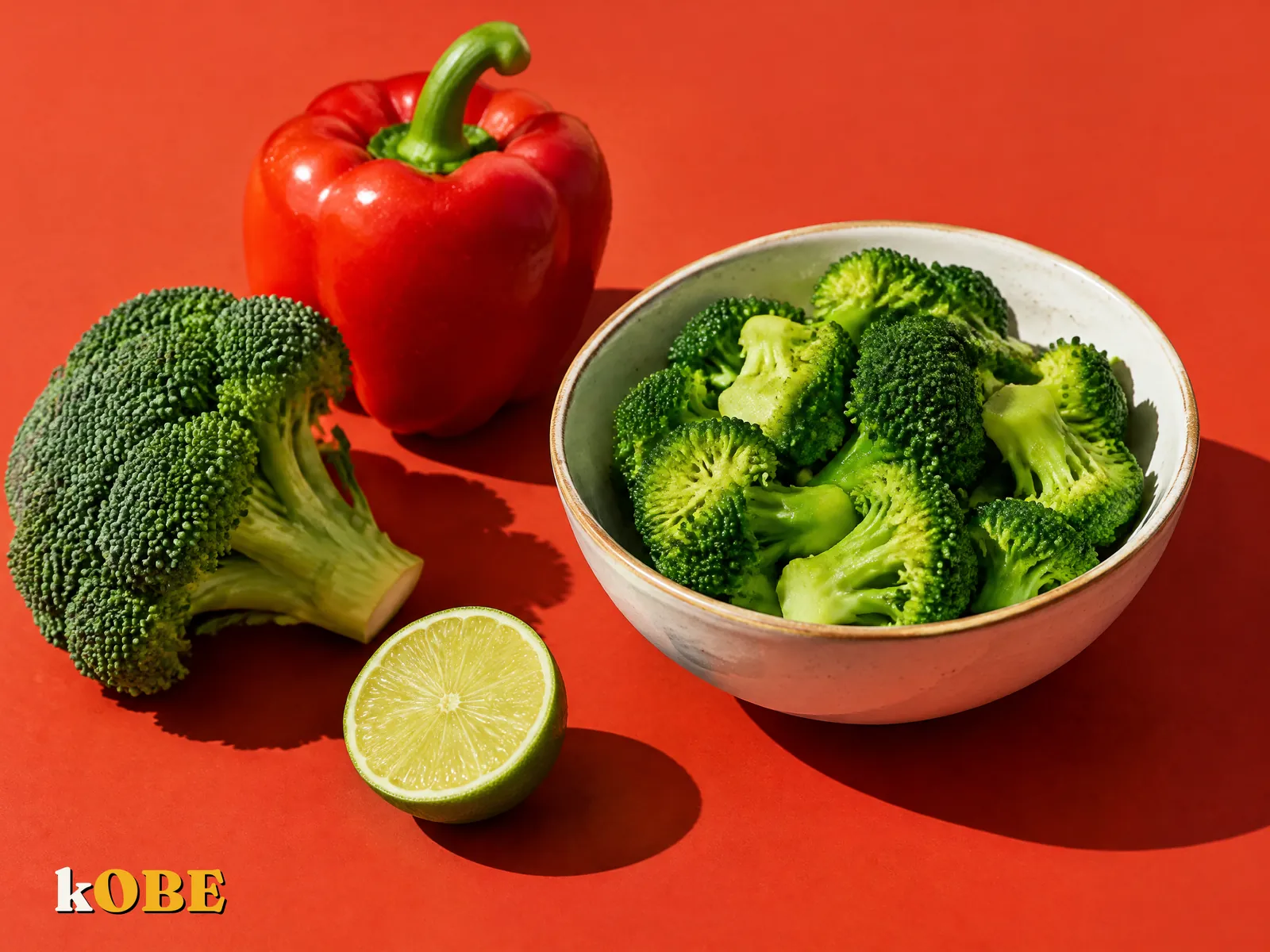
| Red bell pepper | More than 2 times |
| Broccoli (raw) | Nearly double |
| Pomelo, ripe papaya | A little more than orange |
| Orange | The benchmark |
| Ripe mango, tomato | Less |
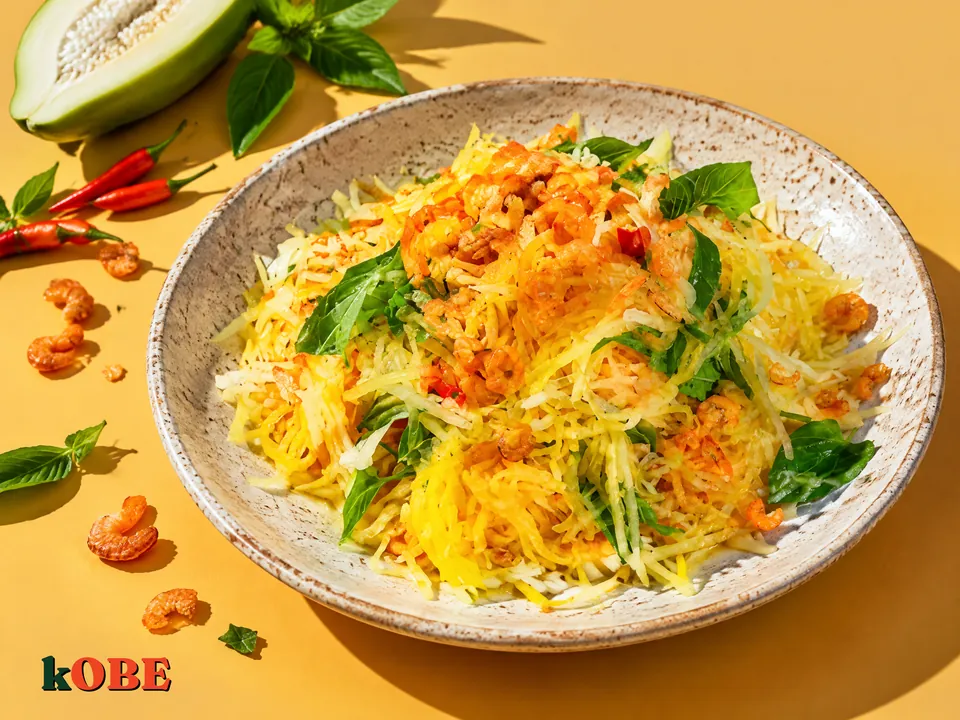
Half a guava can cover WHO's recommended amount for the whole day. The green guava dipped in chili salt, sold at every school gate, turns out to be a tasty "vitamin C tablet".
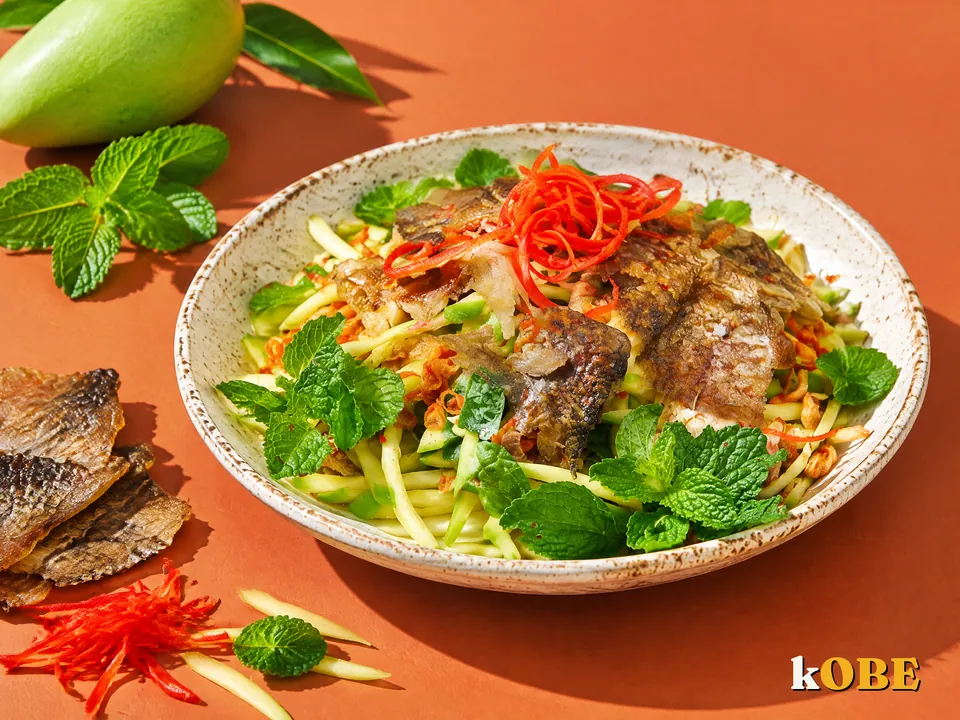
Fresh herbs and raw greens served on the side (cilantro, Thai basil, perilla, Vietnamese coriander) chip in too. They skip the heat, so their vitamin C stays almost intact.
Vitamin C's three fears
Vitamin C is a rather fragile molecule. It is afraid of three things:
- Heat. The longer and hotter you cook, the more it drops.
- Water. Vitamin C dissolves in water. Boil in lots of water and it runs off into the pot.
- Air. Oxygen oxidizes vitamin C. Vegetables chopped small and left sitting, with lots of cut surface exposed to air, also lose it gradually.
Understand these three fears and you understand why each cooking method keeps a different amount.
Boiling, steaming, stir-frying, microwaving: which keeps more?
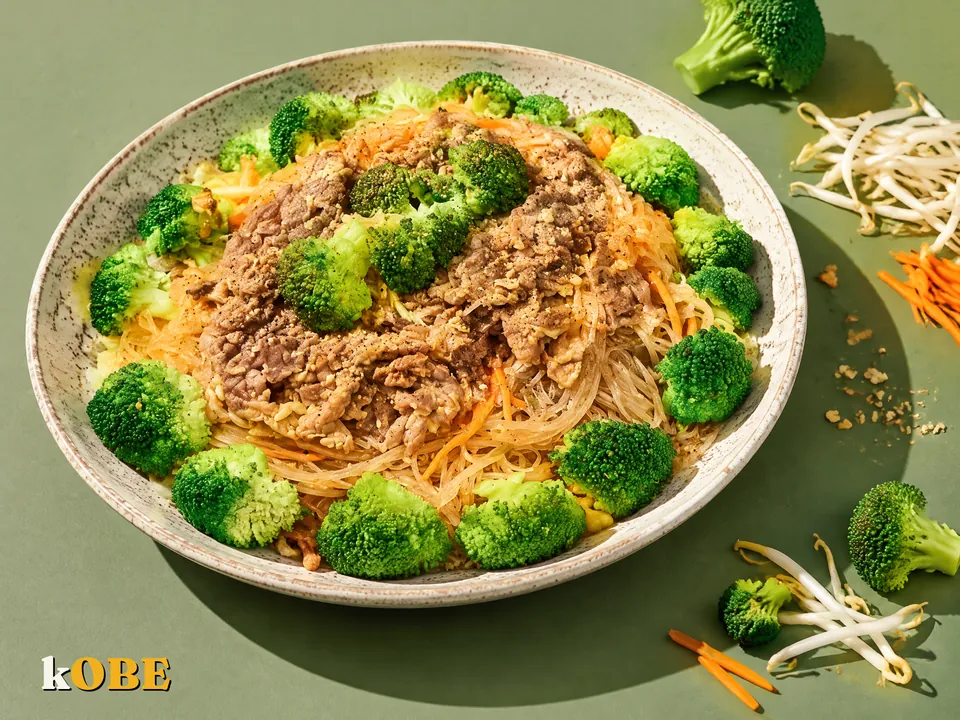
Studies comparing cooking methods, often done with broccoli, give fairly similar results:
| Cooking method | Vitamin C kept | Why |
|---|---|---|
| Raw | Almost all | No heat, no water |
| Steaming | Quite good | The vegetables do not sit in water |
| Microwave, little water | Quite good | Fast, little water |
| Quick stir-fry, high heat | Moderate | Fast, but high heat |
| Long boiling, lots of water | The biggest loss | Long heat, plus it dissolves into water |
Long boiling can cost vegetables up to half their vitamin C, sometimes more, depending on the vegetable and the time. Steaming or microwaving usually keeps noticeably more.
But there is a very Vietnamese saving grace: the soup pot. The vitamin C that dissolves into the water is still in your bowl if you drink the broth. Boiling greens and pouring the water away is where the real loss happens.
To be fair, not every nutrient prefers raw food. The beta-carotene in carrots and the lycopene in tomatoes are easier to absorb when cooked with a little oil. So do not eat everything raw. Mixing up your cooking methods is the smart approach.
Seven kitchen tips to keep vitamin C
- Wash first, then cut. Cut first and wash after, and the vitamin C washes away.
- Cut right before cooking, not in the morning for a dinner that evening.
- Add greens only once the water boils, and cook them just until tender, still bright and crisp.
- Use little water and put the lid on, so the greens cook faster in the steam.
- Drink the broth, or use the vegetable cooking water for soup.
- Squeeze lime at the end, just before eating, not into the pot from the start.
- Skip the baking soda people add to keep boiled greens green. An alkaline environment makes vitamin C break down faster.
And on storage: leafy greens kept in the fridge for days slowly lose vitamin C. Commercially frozen vegetables, blanched and flash-frozen soon after harvest, often keep vitamin C better than "fresh" greens that sat in the fridge all week.
Inside the kOBE kitchen
kOBE's ready-cooked ingredients are proteins, starches and vegetables that have been cooked and then frozen. We do not list vitamin C numbers, and honestly, cooked food is not your main vitamin C source.
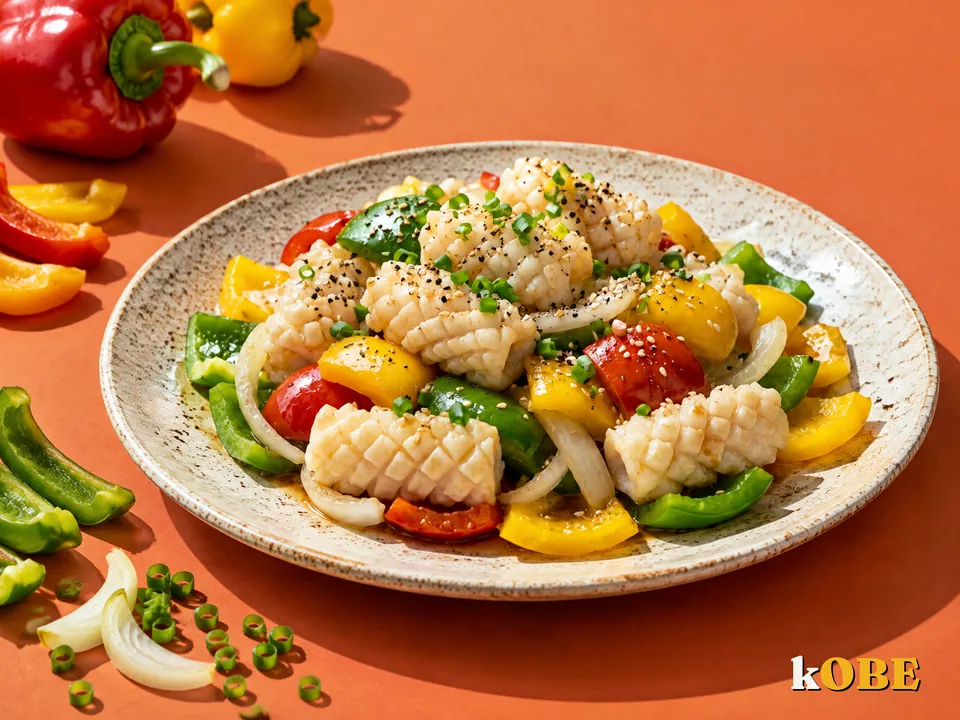
The sensible way to eat is to let the "ready-cooked" part handle protein and starch, and hand the vitamin C job to fresh food. Reheat your rice box in the microwave on low, then add a handful of fresh herbs, a few slices of bell pepper and a lime wedge squeezed over as you eat. Finish with a few slices of guava. See our ready-cooked ingredients.
Frequently asked questions
Does orange juice lose vitamin C if it sits for a while?
Does taking lots of vitamin C build up in the body?
Do stir-fried greens still have vitamin C?
Keep reading
Sources
- Rickman J.C., Barrett D.M., Bruhn C.M. (2007). Nutritional comparison of fresh, frozen and canned fruits and vegetables. Part 1. Vitamins C and B and phenolic compounds. Journal of the Science of Food and Agriculture 87(6):930 to 944.
- Drouin G., Godin J.R., Pagé B. (2011). The genetics of vitamin C loss in vertebrates. Current Genomics 12(5):371 to 378.
- WHO and FAO (2004). Vitamin and mineral requirements in human nutrition, 2nd ed., chapter on Vitamin C.
- USDA FoodData Central (guava, orange, red bell pepper, broccoli).
- Further reading: Understanding Nutrition 16th ed., chapter 10; Culinary Nutrition.