Data source: USDA FoodData Central, SR Legacy, FDC 168883 (Rice, white, glutinous, unenriched, uncooked).
Fun facts
- Sticky rice is sticky because its starch is almost all amylopectin, a branched starch that clings together. Regular rice has more amylose, so its grains stay separate.
- Its English name, glutinous rice, sounds like "contains gluten", but it has none. Glutinous here simply means glue-like.
- 100g of raw glutinous rice gives about 370 kcal, 81.7g of carbs and 6.8g of protein, almost the same as white rice.
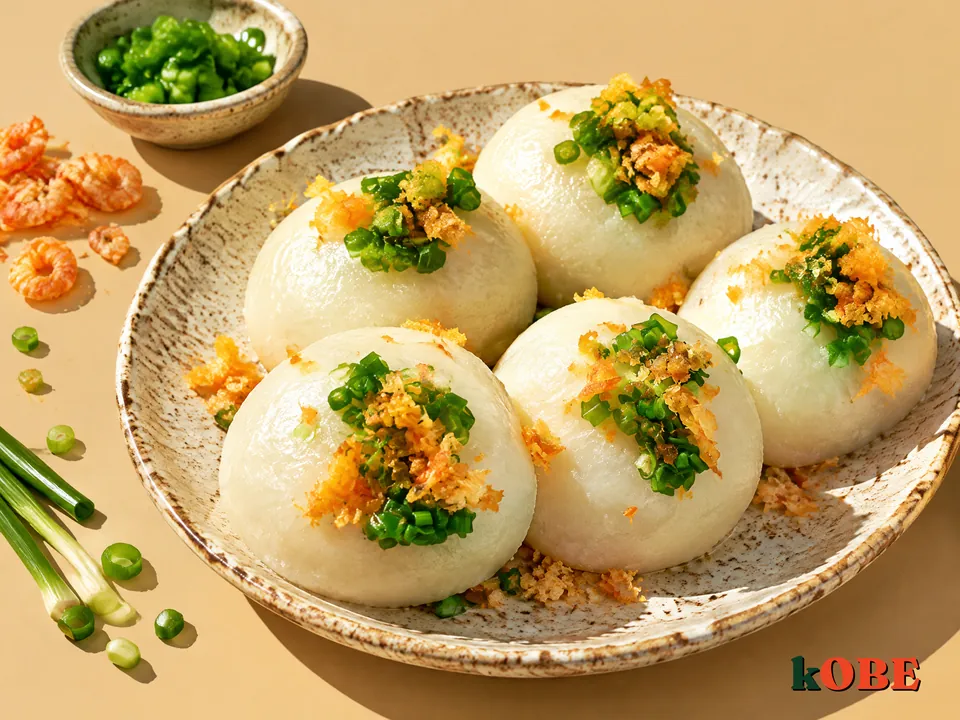
- Vietnamese people fold the whole year into sticky rice: xoi for breakfast, banh chung and banh tet at Tet, fermented com ruou at the Doan Ngo festival, plus sweet che and banh it.
Choosing and storing
Good sticky rice has plump, milky-white, even grains, few broken pieces and a light fragrance. Nep cai hoa vang is a favorite for xoi and banh chung because it is especially soft and fragrant. Store it like regular rice: sealed, cool and dry, away from moisture and weevils. New-crop sticky rice is usually softer and more fragrant, so buy only what you need.
Cooking it well
Great xoi starts with soaking the rice for a few hours or overnight, then steaming it rather than boiling it in water. Sprinkling a little water over the rice halfway through helps it cook evenly while staying fluffy. Steamed sticky rice holds less water than boiled rice, so a bowl of xoi usually packs in more rice and feels heavier. To see why some rice is sticky and some fluffy, read what is amylose.