Data source: USDA FoodData Central, SR Legacy, FDC 174256 (Mung beans, mature seeds, raw).
Fun facts
- The bean sprouts served with pho and banh xeo are mung beans that have been left to sprout. In just a few days, a tiny bean stretches into a long white sprout.
- The numbers here are for dry, uncooked beans: 100g has 347 kcal, 23.9g of protein, 16.3g of fiber and 1,246mg of potassium.
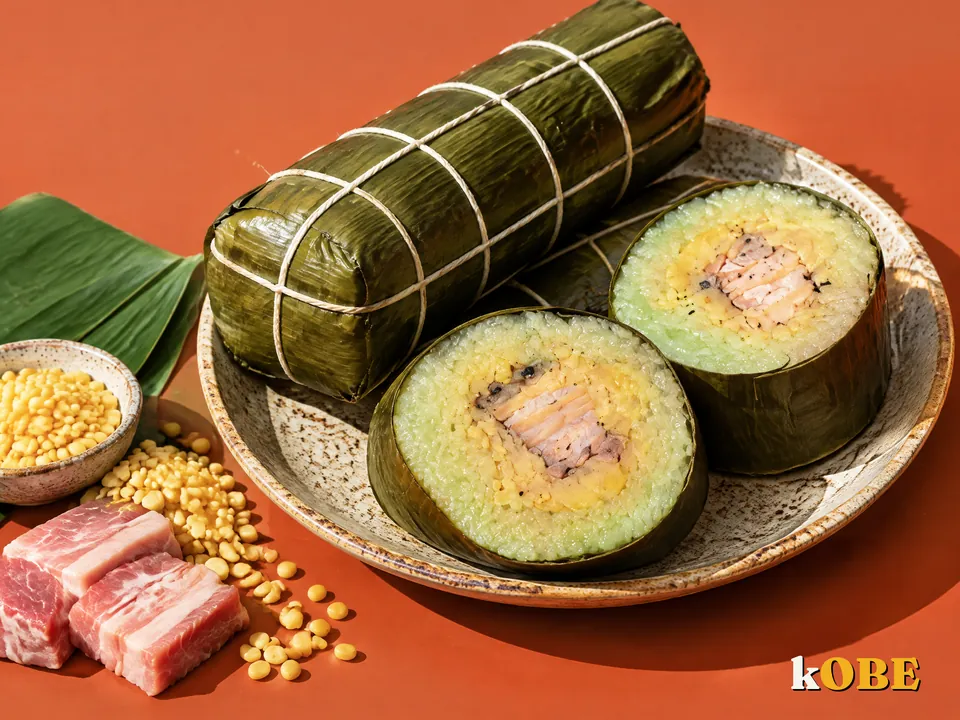
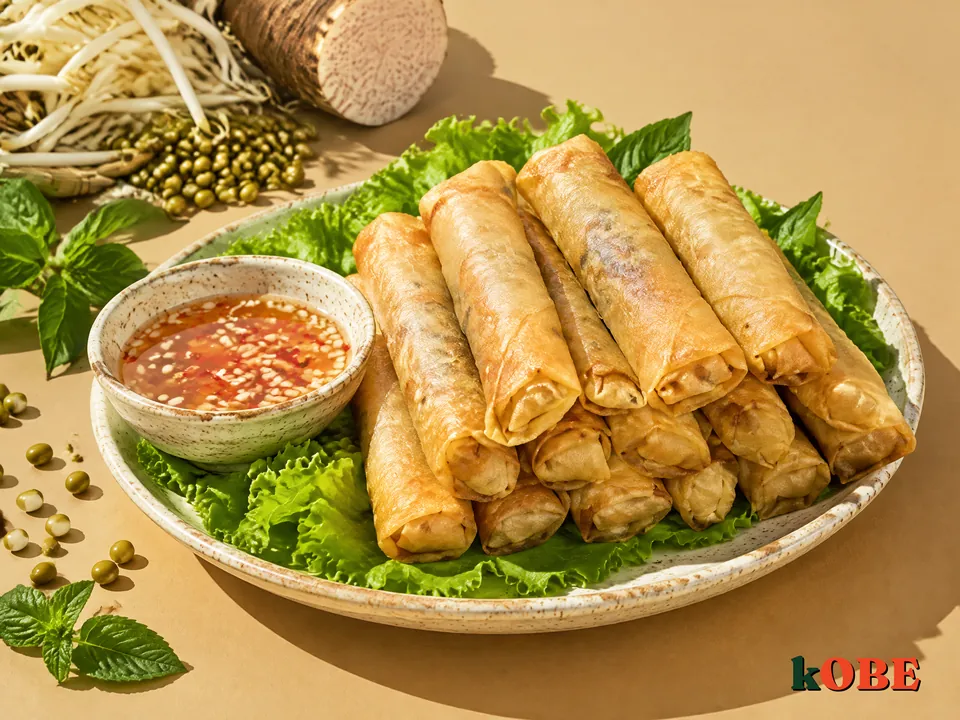
- Mung beans turn up in many Vietnamese dishes: the filling of banh chung, sticky rice with mung beans, mung bean sweet soup and Hai Duong mung bean cakes. Mung beans appear in 51 kOBE recipes.
- Whole green mung beans and split, hulled yellow mung beans are the same bean. Hulled ones cook soft faster; keeping the skin adds more fiber.
Choosing and storing
Choose even, glossy beans with no weevil holes and no musty smell. Hulled beans should be bright yellow, not dull, without many broken bits. Keep them in an airtight jar somewhere cool and dry; in humid season the fridge helps keep bugs away. Cooked sweet soup or sticky rice is best eaten the same day, or covered and refrigerated.
Cooking it well
Soaking the beans for a few hours helps them cook evenly and soften faster. Hulled beans turn soft much faster than whole ones, which makes them ideal for fillings and sweet soups. When making sweet soup, try using less sugar and adding a pinch of salt so the bean flavor comes through. There is also a fun nutrition reason behind pairing mung beans with sticky rice, explained in Complete protein and plant protein.