Data source: USDA FoodData Central, SR Legacy, FDC 173944 (Bananas, raw).
Fun facts
- A banana plant has no woody trunk. What looks like a trunk is a bundle of leaf stalks rolled tightly together, so botanists call it a herb, even though it grows taller than you.
- Green bananas are full of starch. As they ripen, that starch turns into sugar, which is why a spotty banana tastes sweeter. Ripe banana has 12.2g of sugar per 100g, about 3 teaspoons.
- Bananas are famous for potassium, with 358mg per 100g. They are not the champion though: avocado has 485mg and guava 417mg.
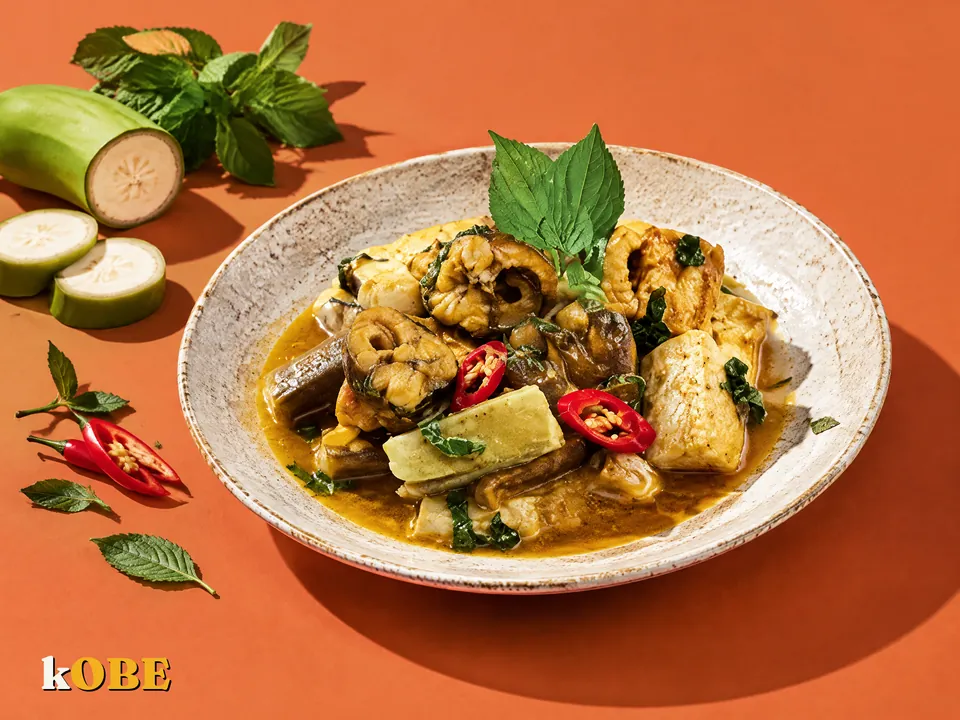
- In Vietnam nothing goes to waste: ripe bananas become dessert, grilled snacks, sweet soups and steamed cakes; the flower and tender stem go into salads; the leaves wrap sticky rice cakes.
Choosing and storing
If you want to eat them through the week, pick a bunch that is still a little green near the stem and let it ripen at room temperature. Bananas give off ethylene gas, so bagging them with apples speeds things up, while hanging them alone slows it down. Green bananas in the fridge tend to stall and never ripen properly. Once ripe, the fridge turns the peel black but keeps the flesh good for a few more days. Overripe ones can be peeled, chopped and frozen for smoothies.
Cooking it well
Frozen ripe banana blends into something as smooth as ice cream with no added sugar. In baking, mashed banana makes cakes moist and sweet, but remember it is still sugar, just sugar that was already in the fruit rather than added. Grilling or steaming does not cost you potassium, since minerals do not escape with heat. To see why a whole banana is different from a smoothie loaded with condensed milk, read does fruit have too much sugar.